Today's Recommendation: Exploring the adsorption behaviour of 2,4-dichlorophenol onto coconut coir fibre
Published in Materials

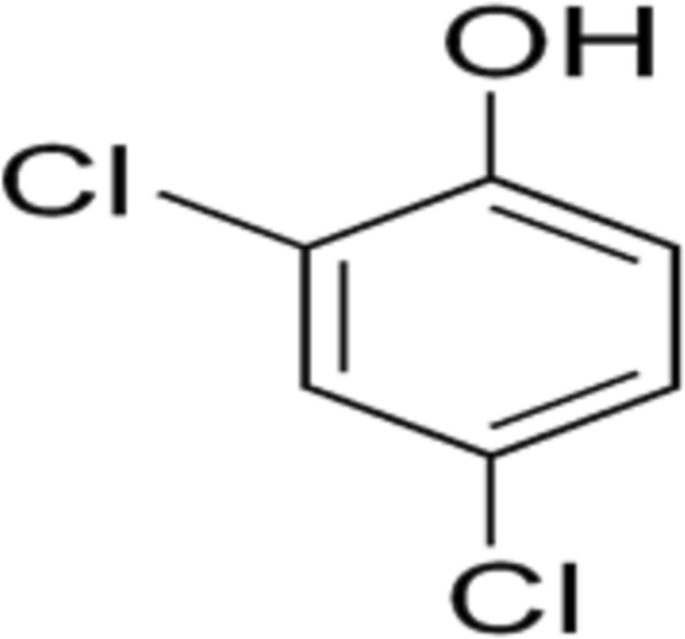

A cost-effective method was used to investigate the adsorption behaviour of 2,4-dichlorophenol onto coconut coir fibre, a low-cost bioadsorbent that can be treated with sodium chlorite or left unaltered. On both adsorbents, the 2,4-dichlorophenol adsorption capacity, equilibrium time, kinetics and thermodynamics were studied under different physicochemical conditions. The adsorption efficacy of modified fibre was shown to be higher at pH 8.00 (4.8 × 10⁻⁴ mol/g) than at pH 2.00 (2.4 × 10⁻⁴ mol/g). In basic media, the equilibrium was attained within half an hour for both adsorbents, and the percent removal of 2,4-dichlorophenol was equivalent for both unmodified (78%) and modified (80%) coconut coir fibres. The isotherm data exhibited good fitting with Freundlich model for unmodified coconut coir in basic media. The kinetic data for 2,4-dichlorophenol adsorption over modified coconut coir fibre fitted well with Ho's pseudo-second order model. The FT-IR spectra of 2,4-dichlorophenol on both adsorbents revealed that the phenomenon is physisorption as no remarkable shifting of peak was observed. SEM image governs the porous morphology of the coconut coir fibre which was further advocated by BET surface analysis. The whole adsorption process is endothermic as the value of the heat of adsorption (ΔH) is positive.
Follow the Topic
-
Surface Science and Technology
This is an open access journal, to promote innovations on science, technology and engineering in surface and interface science.

Related Collections
With Collections, you can get published faster and increase your visibility.
Corrosion and Protection
This collection is mainly about the corrosion mechanism, technology and process of anti-corrosion; anti-corrosion materials, film and coating.
Topics include but not limited:
- Corrosion mechanism
- Corrosion preventive technology
- Corrosion-resistant material
- Coatings and films
Publishing Model: Open Access
Deadline: Ongoing
Functional coatings
This collection is mainly about the thermal barrier coating, environmental barrier, high temperature stealth coating, wear-resistant corrosion resistant coating, high temperature oxidation resistance and thermal corrosion resistant coating, sealing coating and ablative coating.
Topics include but not limited:
- Thermal barrier coating
- Environmental barrier
- High temperature stealth coating
- Wear-resistant corrosion resistant coating
- High temperature oxidation resistance and thermal corrosion resistant coating
- Sealing coating and ablative coating
Publishing Model: Open Access
Deadline: Ongoing