Tumor shape matters: discovery of COPA mutation in small intestinal tumors
Published in Cancer, Cell & Molecular Biology, and Genetics & Genomics



When morphology meets genetics: identification of COPA-mutated small intestinal tumors
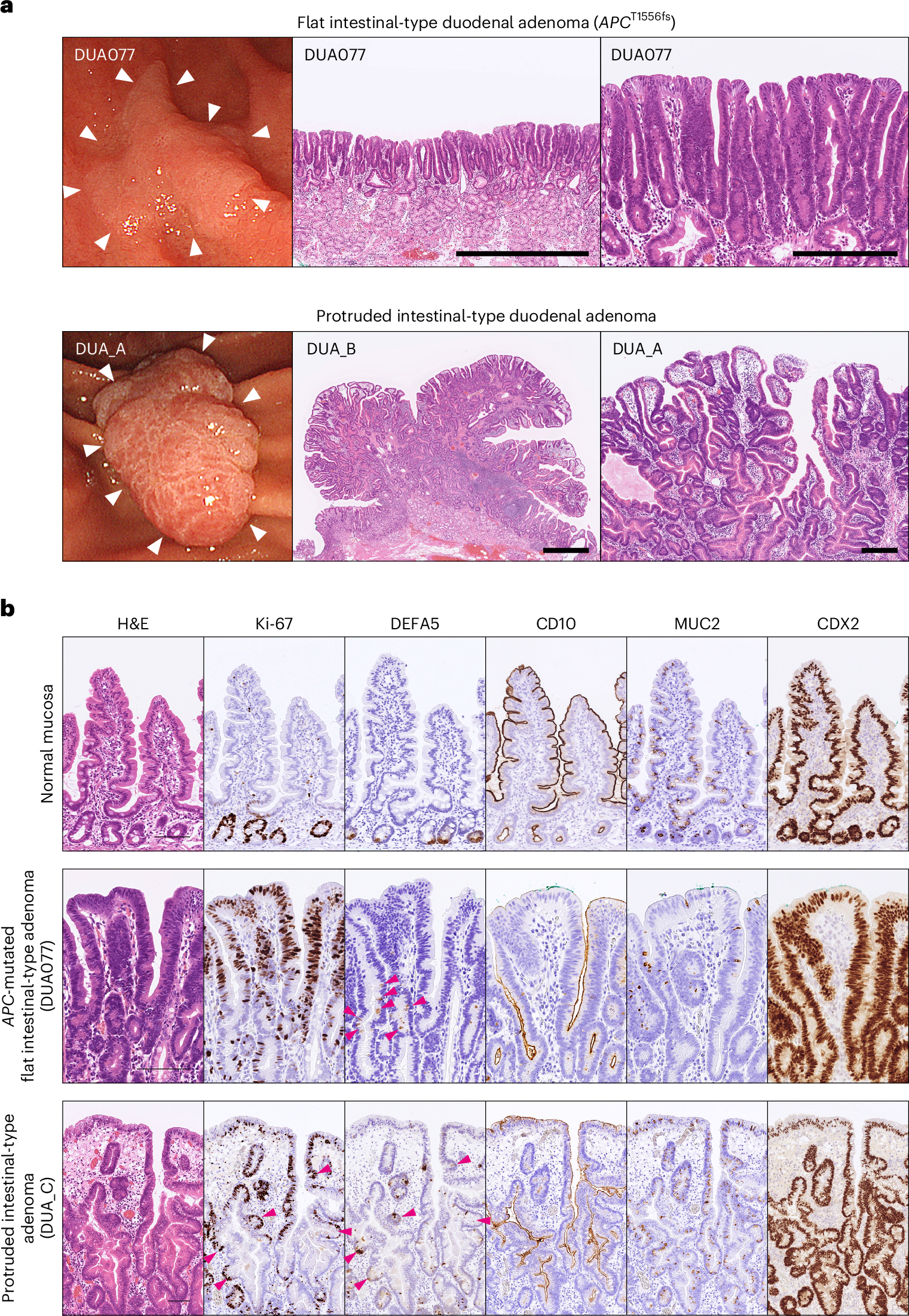
Every tumor has its own appearance but in most cases can be fit into a certain category based on the macroscopic and microscopic structure. Such categorization not only helps physicians to make clinical decisions but also informs molecular programs and alterations that are actually going on in tumors. For example, most small intestinal adenomas, benign tumors of the small intestine, exhibit a flat appearance and carry APC mutation which constitutively activates Wnt signaling. However, during our routine pathological examination practice, we by chance came across adenomas with a bulging and protruded appearance, clearly distinguishable from typical flat ones.
This was when our story began.
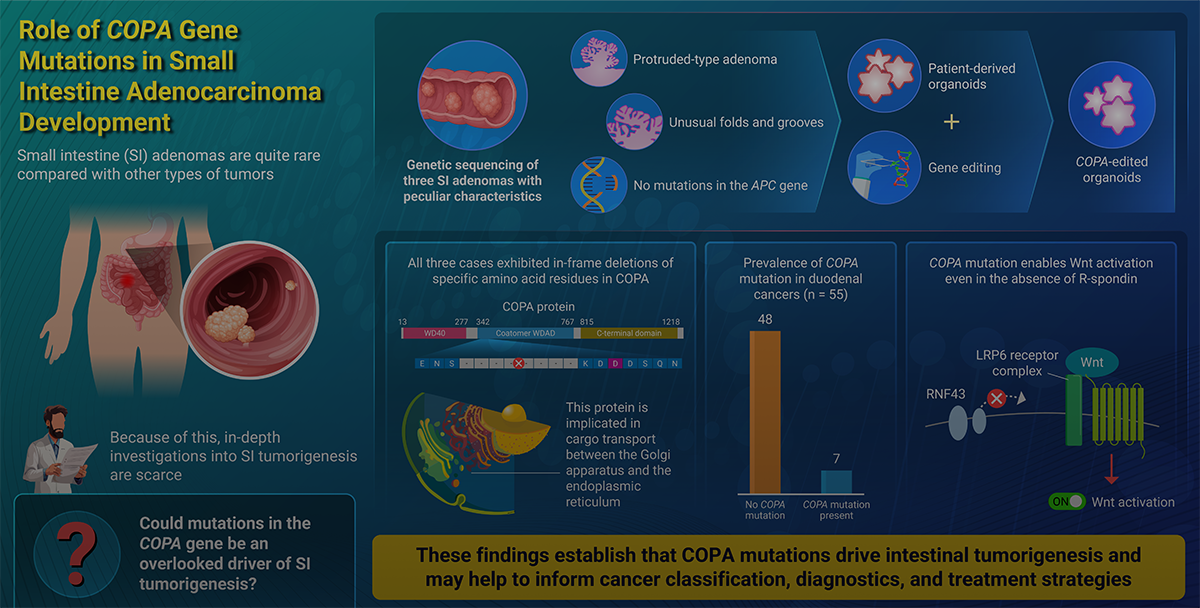
This distinct morphology raised a simple question: do these protruded adenomas have any alterations in the Wnt pathway other than APC mutation? The answer turned out to be half true. Genomic analysis of protruded adenomas did not identify mutation in known Wnt pathway genes, but instead unexpectedly revealed that all of them have a mutation in the same gene, COPA, which occurred in the exactly the same exon. At first, the finding was deemed too consistent to be true, because COPA is not at all typical as a cancer driver. Most cancer drivers fall into specific types based on their functions, including cell proliferation, epigenetic state, metabolism, or cell adhesion. However, COPA has not been related to such functions but instead participates in protein cargo transport between the endoplasmic reticulum and Golgi apparatus. COPA mutation is also not listed in the catalogue of genetic mutations of more than 20,000 cancer cases. As such, the discovery of COPA mutation as a new atypical cancer driver stirred up our enthusiasm but also urged us to authenticate it in a broader context. Analyses of additional small intestinal adenoma and cancer cases indeed revealed that half of protruded-type adenomas, which constitute around 4% of all adenomas, as well as around 10% of cancers actually harbor COPA mutation.
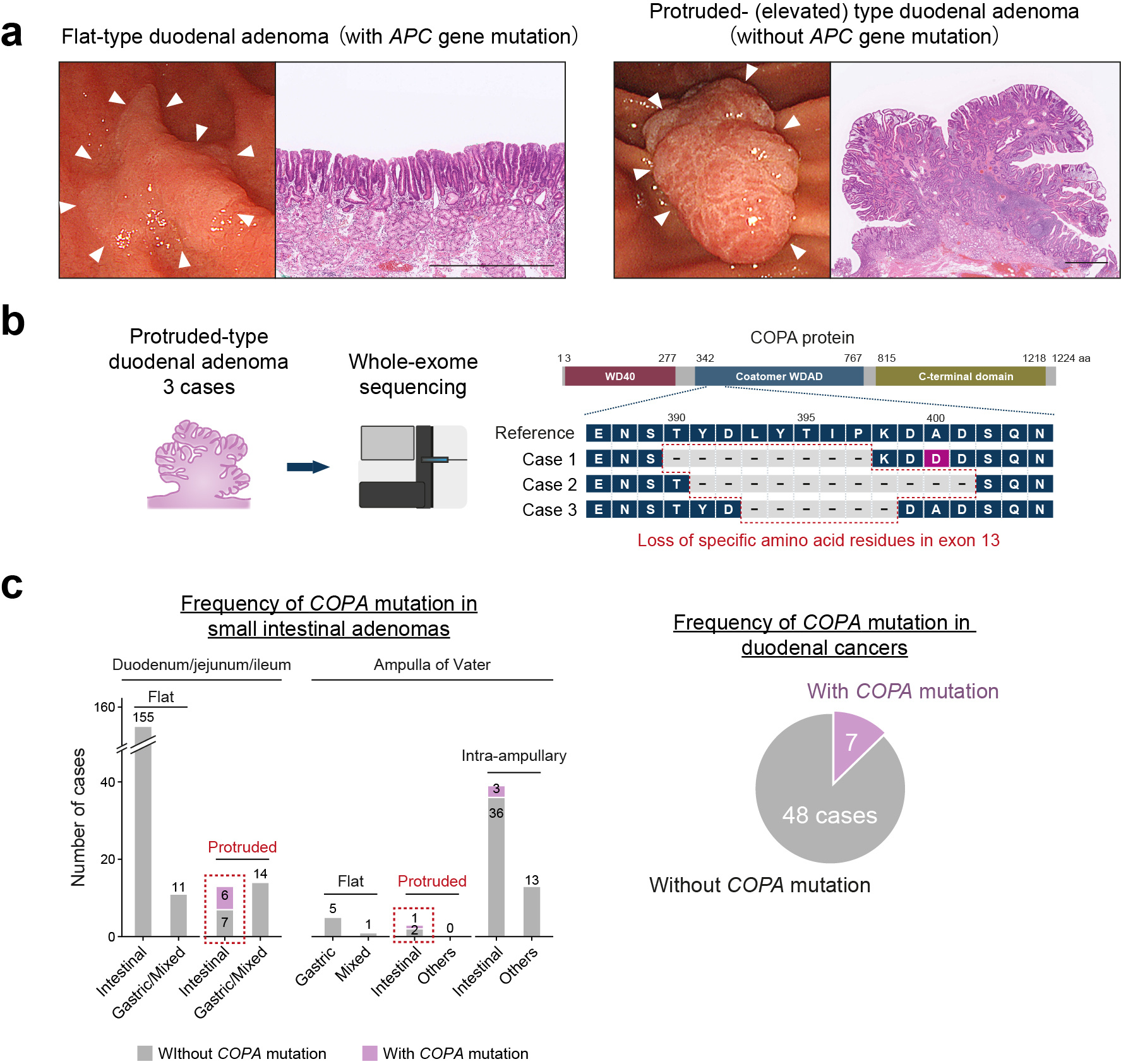
Fig. 1: COPA mutation in small intestinal tumors. a, Images of APC-mutated flat-type adenoma and COPA-mutated protruded-type adenoma. b, Detection of COPA mutation in protruded-type small intestinal adenomas. c, Frequency of COPA mutation in small intestinal adenomas and adenocarcinomas.
Mechanisms
This discovery of COPA mutation raised a next question: how does COPA mutation functionally matter? There had been no living tumor models with a COPA mutation, so we turned to organoid technology, which enables stable expansion of various human tissues including the intestinal epithelium on a dish while preserving their biological traits. Despite the rarity, a keen eye of endoscopists allowed us to accurately select protruded adenomas with COPA mutation, enabling establishment of 3 lines of patient-derived organoids. Strikingly, all COPA-mutant organoids exhibited a distinct pattern of growth: they were able to proliferate independently of a growth factor called R-spondin that activates Wnt signaling and is essential for intestinal organoid culture. This property was further validated by COPA gene engineering in organoids derived from the healthy intestinal epithelium. Thus, COPA mutation enables Wnt activation irrespective of R-spondin and APC mutation, and represents an alternative route to small intestinal tumorigenesis.
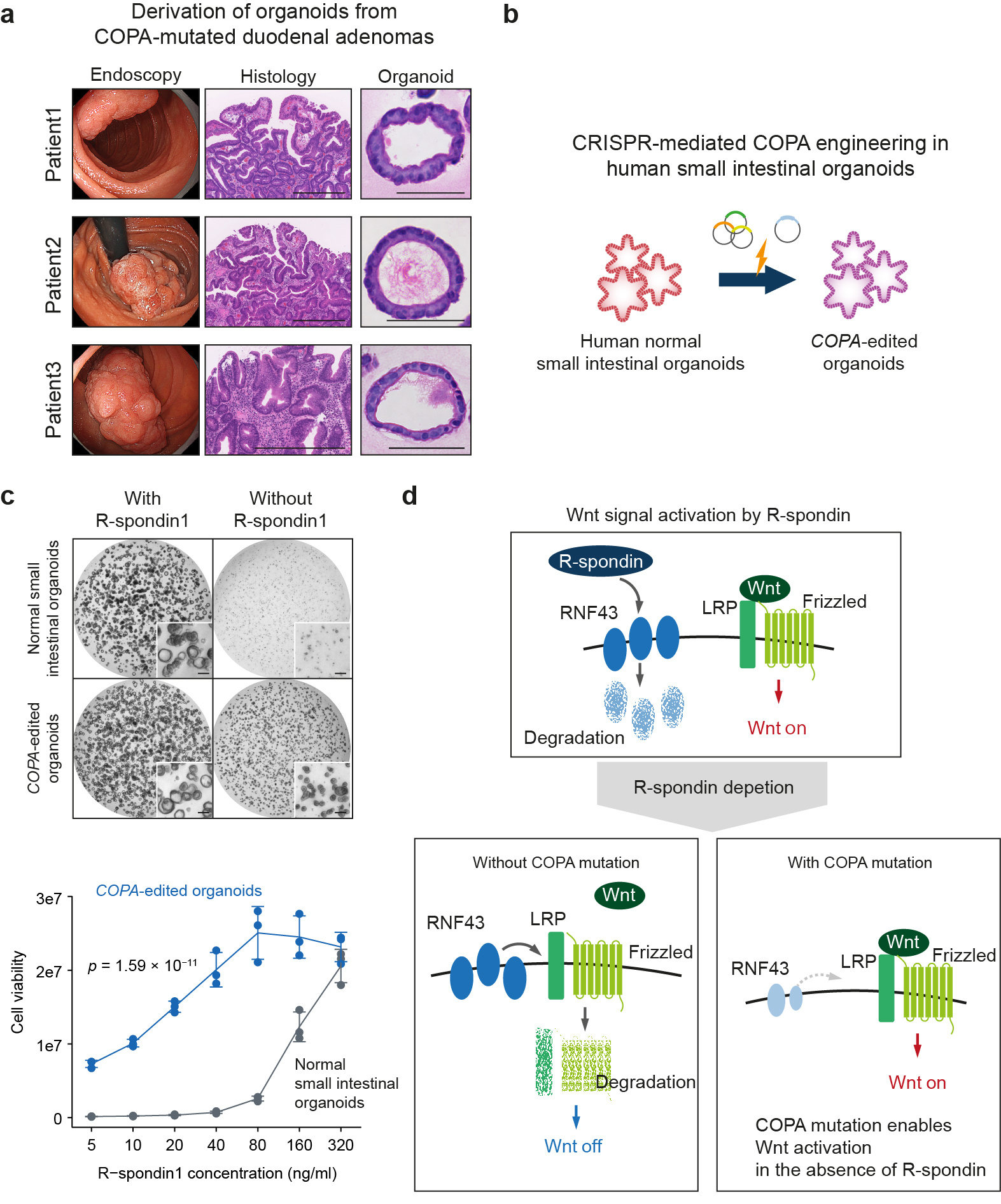 Fig. 2: COPA mutation activates Wnt signal. a, Establishment of COPA-mutant patient-derived small intestinal adenoma organoids. b, COPA gene editing in normal small intestinal organoids. c, R-spondin independence in COPA-edited organoids. d, Mechanism of R-spondin-independent Wnt activation by COPA mutation.
COPA mutation: an overlooked atypical cancer driver
At this point, multiple lines of evidence finally converged. Morphology, genomics, and functional behavior all pointed to the same underlying mechanism. What began as a naïve visual observation in clinics had now been translated into a mechanistic insight.
Our findings point to a broader implication.
Most cancer driver genes are directly attributed to familiar cancer-related programs, including signaling pathways, cell cycle, regulators of cell growth, differentiation, epigenetic state, metabolism, and so on. COPA does not fit easily into these frameworks. Instead, it functions in intracellular protein trafficking which gives proteins instructions on where they should be transported and processed within the cell. Our study suggests that disruption of this intracellular logistics system can itself drive tumorigenesis. In this sense, COPA mutations may define a distinct mechanistic route to cancer development.
Given the clarity of these findings, an obvious question arises: why were these tumors not recognized earlier?
Several factors may have contributed. All of the mutations we identified were relatively large in-frame deletions spanning least 18 nucleotide base pairs, which are sometimes challenging to detect with standard next-generation sequencing pipelines and may have been overlooked. In addition, small intestinal tumors are relatively rare, limiting opportunities for systematic genomic analysis. These lesions may also not have been recognized as a distinct morphological group, despite their unusual appearance. Finally, COPA itself may not have attracted attention as a candidate cancer gene, as it does not belong to canonical signaling pathways. Taken together, these factors may have obscured the recurrence and biological impact of COPA mutation.
Also, the prevalence of COPA mutation was higher in cancers than in adenomas, which is in contrast to the lower percentage of APC mutation in cancers versus adenomas. This suggests that COPA-mutant adenomas may have higher odds of becoming a cancer than flat adenomas. Therefore, when an adenoma is found in the small intestine and suspected to have COPA mutation from its appearance, its proactive removal may be recommended.
Revisiting tumor morphology
This study was made possible by the collaboration of multiple clinical and research domains. Clinical observation first highlighted these unusual tumors. Pathology emphasized their distinct morphology and histology. Endoscopy enabled efficient capture and selection of adenomas with a distinct appearance. Genomic analysis revealed a shared mutation, and organoid models provided functional validation. This work could not have been accomplished if any of these was lacking. It was their integration that allowed us to decode a clinical observation into a mechanistic understanding.
Several open questions still remain. How does COPA mutation alter protein trafficking? How does alteration in protein trafficking lead to R-spondin-independent Wnt activation? Are similar mutations present in other protein trafficking machineries and in other cancers as well? Are COPA-mutant adenomas really likely to progress to cancer? And could this pathway be therapeutically targeted? Future studies will hopefully address these questions.
This study builds upon a simple question stemming from our visual inspection and reminds us of the importance of research fundamentals — make observations with your own eyes. In the era of modern science, we are often prone to seeing living systems, including tissues, cells and tumors as digital data on a computer screen, and may overlook their most rudimental aspects such as the texture, morphology and histology. Sometimes, it may worth taking the time to have a glimpse of tumor faces, as you might be lucky enough to encounter a strange tumor that tells you a completely different story, just as we were.

Follow the Topic
-
Nature Genetics
This journal publishes the very highest quality research in genetics, encompassing genetic and functional genomic studies on human and plant traits and on other model organisms.

Related Collections
With Collections, you can get published faster and increase your visibility.
Mechanisms and impact of 3D genome organisation
Publishing Model: Hybrid
Deadline: Nov 30, 2026
Human Admixture and Migration
Publishing Model: Hybrid
Deadline: Feb 28, 2027