Turning plants into rare earth resources with ultrafast electrothermal heating
Published in Sustainability





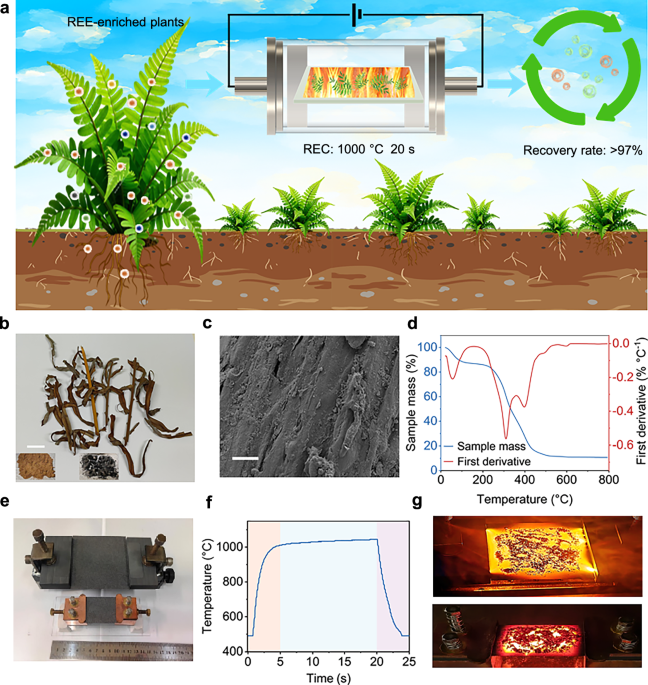

Rare earth elements (REEs) underpin many of the technologies driving the global energy transition, from wind turbines and electric vehicles to advanced electronics and energy storage systems. As demand for these critical elements continues to grow, concerns about the environmental footprint and geopolitical concentration of traditional mining have intensified. Developing alternative and more sustainable strategies to obtain rare earth elements is therefore becoming increasingly important.
One intriguing possibility is phytomining. Certain plants, known as hyperaccumulators, possess the remarkable ability to absorb and concentrate metals from soils into their tissues. By cultivating such plants on rare-earth-bearing soils or mine tailings, it is possible to harvest the biomass and recover the accumulated elements. In this sense, plants can act as biological collectors of dispersed metals. Over the past decade, phytomining has attracted growing interest as a potential route for recovering rare earth elements from low-grade ores or contaminated land. However, despite its conceptual appeal, the practical recovery of rare earth elements from plant biomass remains challenging.
A bottleneck in phytomining: processing plant biomass
The difficulty arises largely from the complex structure of plant biomass. Rare earth elements accumulated in plants are embedded within intricate organic matrices and can associate with various biomolecules and mineral components. Conventional recovery methods typically rely on furnace calcination followed by acid leaching to extract the metals. These processes often require prolonged heating at high temperature and can consume substantial energy.
More importantly, slow thermal treatments may lead to the formation of stable mineral phases that immobilize rare earth elements. Once incorporated into these phases, the metals become more difficult to dissolve during subsequent chemical extraction. As a result, the efficiency of rare earth recovery from biomass can be limited, and the overall process may become economically or environmentally unattractive. Overcoming this processing bottleneck is therefore essential for translating the concept of phytomining into practical resource recovery technologies.
An ultrafast electrothermal approach
In our recent study, we explored whether a fundamentally different thermal treatment strategy could improve rare earth recovery from plant biomass. Instead of conventional furnace calcination, we employed a rapid electrothermal calcination method based on direct electrical heating.
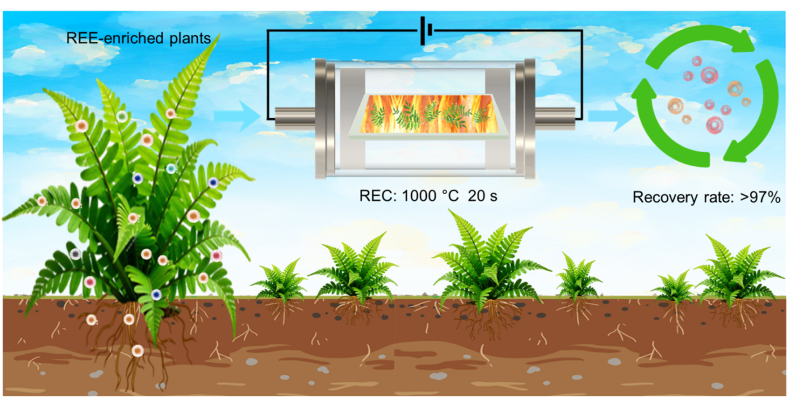
In this process, short electrical pulses are applied to the biomass, rapidly heating the material to around 1000 °C within seconds. The entire treatment lasts only about twenty seconds, creating an extremely fast heating and cooling cycle. This ultrafast thermal environment differs dramatically from the hours-long heating typically used in conventional calcination.
During the rapid electrothermal treatment, the organic components of the plant biomass decompose quickly, leaving behind a porous carbonaceous matrix and mineral residues in which the rare earth elements become more accessible. At the same time, the extremely short duration of high-temperature exposure suppresses the formation of stable mineral phases that could trap the metals.
When followed by mild acid leaching, this treatment significantly enhances the extraction of rare earth elements. In our experiments, the recovery efficiency reached up to about 97%, substantially higher than what is typically achieved with traditional thermal processing methods.
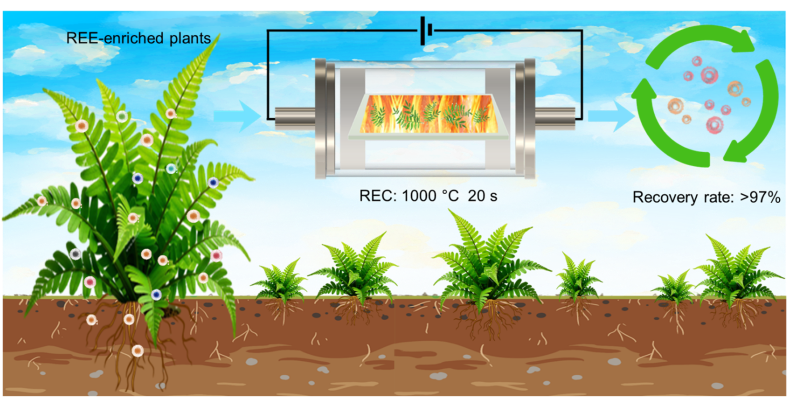
Figure 1. Rapid electrothermal calcination enables rare earth recovery from biomass.
Why ultrafast heating matters
One of the key insights from this work is the importance of heating dynamics. Conventional calcination operates close to thermodynamic equilibrium because the heating process is slow and prolonged. Under these conditions, metals may gradually diffuse into mineral matrices and form stable compounds that resist dissolution.
By contrast, rapid electrothermal heating creates a highly non-equilibrium environment. The heating and cooling occur within seconds, leaving little time for equilibrium mineral transformations to occur. As a result, rare earth elements remain in more reactive chemical environments that are easier to extract during subsequent leaching.
In addition, the violent release of volatile organic species during ultrafast heating produces a highly porous solid residue. This porous structure improves mass transport during acid leaching, allowing the leaching solution to access the rare earth elements more efficiently.
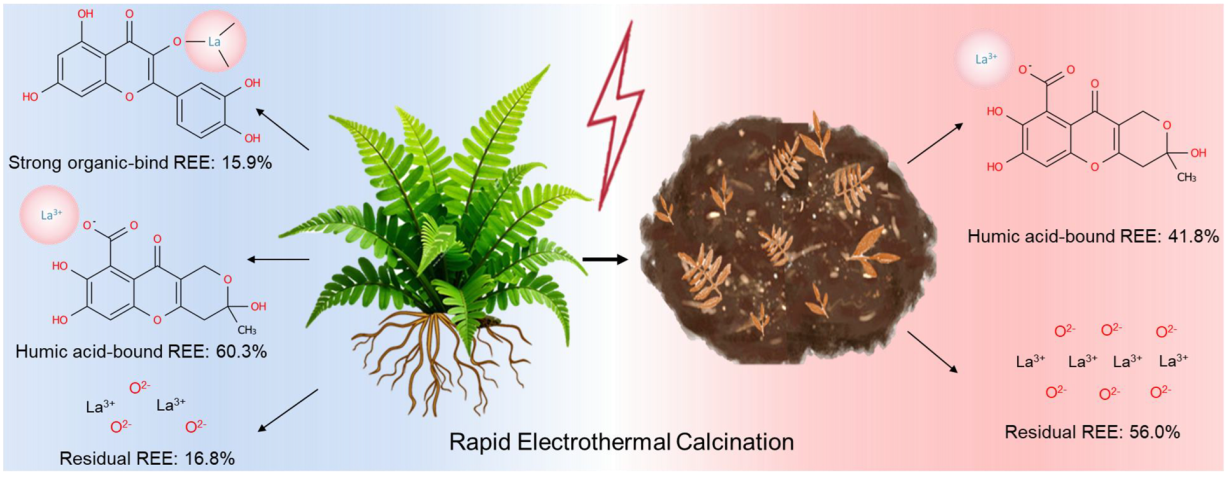
Figure 2. Rapid electrothermal calcination converts strong organic-bind REE into soluble REE.
Toward more sustainable rare earth recovery
Beyond improving extraction efficiency, the electrothermal approach may also offer environmental advantages. Life-cycle analysis comparing the rapid electrothermal process with conventional furnace calcination indicates that the new approach can significantly reduce carbon emissions, primarily because of the much shorter processing time and the efficiency of direct electrical heating.
As energy systems increasingly integrate renewable electricity, electrically driven thermal processes may provide a pathway toward lower-carbon materials processing technologies. Rapid electrothermal treatment therefore represents not only a scientific advance in biomass processing but also a step toward more sustainable resource recovery.
More broadly, this work illustrates how combining biological metal accumulation with advanced electrothermal processing could help unlock unconventional resource pathways. Plants growing on metal-rich soils, mine tailings, or contaminated lands may serve as natural collectors of dispersed rare earth elements. When coupled with efficient downstream processing technologies, these biological systems could become part of a more circular and diversified supply chain for critical materials.
As global demand for rare earth elements continues to rise, innovations at the intersection of biology, materials science, and electrothermal engineering may play an increasingly important role in shaping future resource systems. In this context, ultrafast electrothermal heating offers a promising tool for transforming plant biomass from a complex organic matrix into a practical and sustainable source of rare earth elements.
Follow the Topic
-
Communications Materials
A selective open access journal from Nature Portfolio publishing high-quality research, reviews and commentary in all areas of materials science.

What are SDG Topics?
An introduction to Sustainable Development Goals (SDGs) Topics and their role in highlighting sustainable development research.
Continue reading announcementRelated Collections
With Collections, you can get published faster and increase your visibility.
Orbitronics and unconventional spin-orbit torque for next-generation magnetic memory and spin logic devices
Publishing Model: Open Access
Deadline: Oct 31, 2026
Smart windows for sustainable buildings
Publishing Model: Open Access
Deadline: Oct 31, 2026