Two new South American native ungulates and the refusal to comply with Argentina’s National University Funding Law
Published in Earth & Environment, Ecology & Evolution, and Education
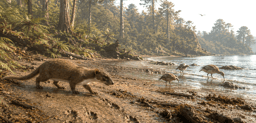
A study published in the Biological Journal of the Linnean Society, (Gelfo J.N. & López G.M. Untangling the diversity of the South American native ungulates Adianthidae and Indaleciidae) describes two new species of the extinct South American native ungulates (SANUs), which included at least five major orders. Among them were the Litopterna, a group of ungulates that occupied ecological niches that, on other continents, were largely filled by two major groups of herbivorous mammals: artiodactyls, which include animals with an even number of functional toes, such as cattle, pigs, deer, and camels, and perissodactyls, characterized by an odd number of toes, such as horses, zebras, and tapirs. Litopterns independently evolved body forms and ecological adaptations comparable to those of these groups.
Most people who have heard of litopterns are familiar with Macrauchenia patachonica, the peculiar long-necked, trunk-nosed mammal whose fossil remains were collected by Charles Darwin in Patagonia, Argentina, in 1834. However, two of the least-known families within this group, Adianthidae and Indaleciidae, remain among the major unanswered questions in the evolutionary history of litopterns, owing to the scarcity of fossils and the fragmentary nature of the known remains.
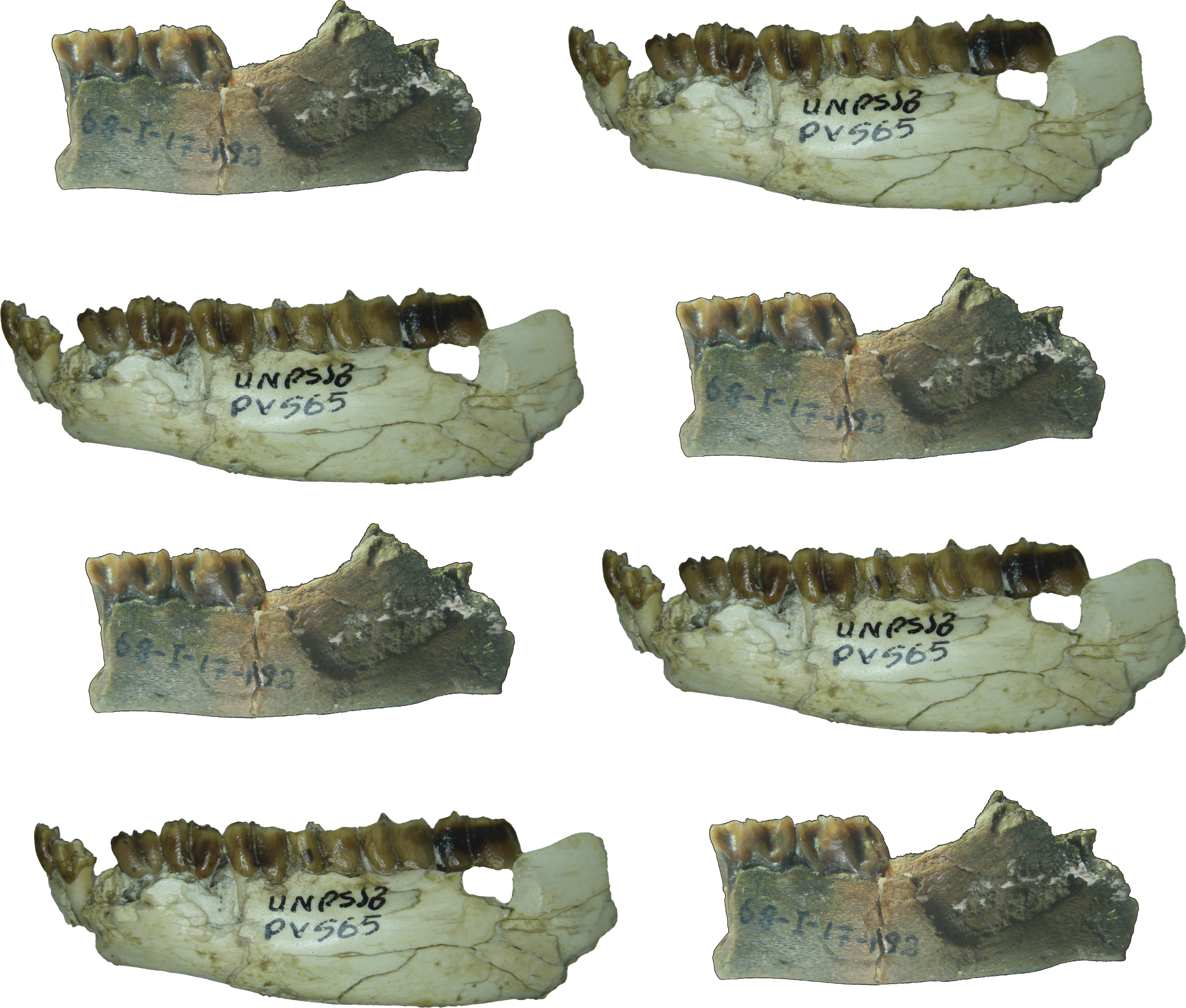
The new study addresses this gap through the detailed analysis of two small fossil mandibles from Patagonia, Argentina. Their anatomical features distinguish them from other known litopterns and led to the recognition of two new species, providing new information on the diversity, evolution, and phylogenetic relationships of these small SANUs.
The new litopterns: Leindacia unpasajubo and Dianthusa unlapla
The first specimen is an almost complete mandible discovered at the Cabeza Blanca locality in Chubut Province. It was collected in the early 1980s by Pujana of the Universidad Nacional de la Patagonia San Juan Bosco (UNPSJB), and was identified by paleontologist Miguel Soria as a possible new indaleciid. The specimen subsequently remained in the UNPSJB collections and had never been studied in detail.
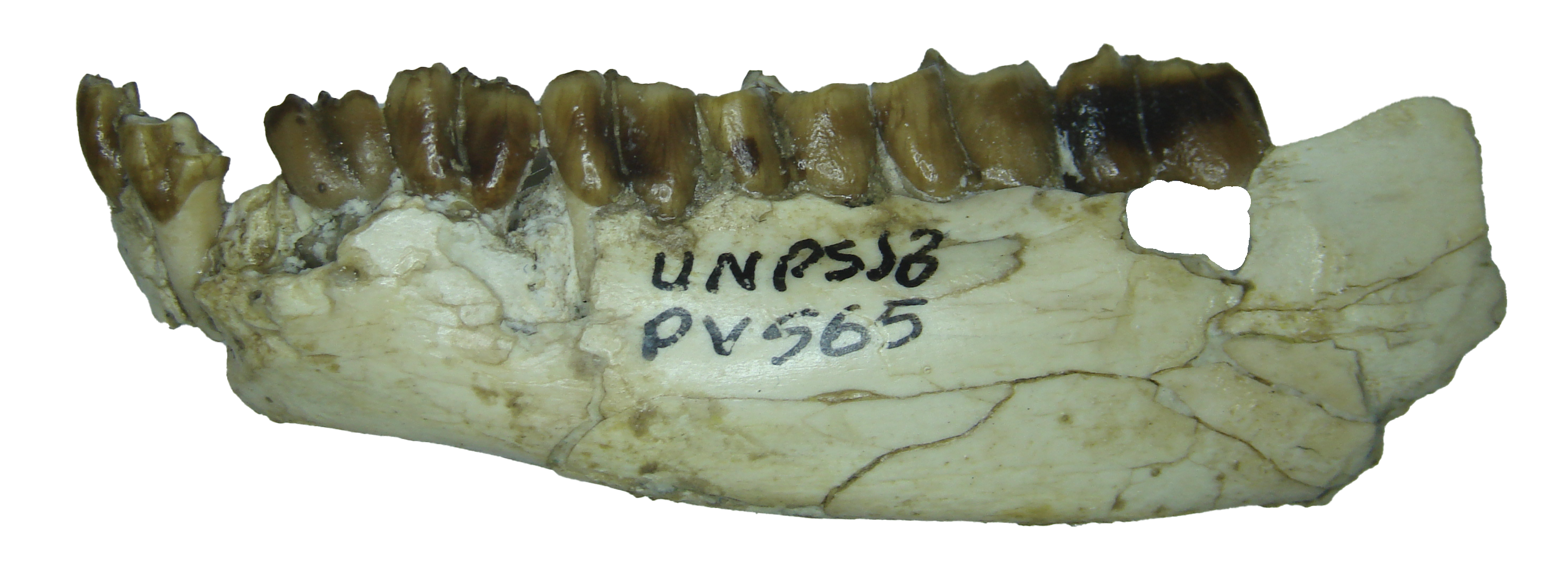
This paper re-examined the material and recognized a new taxon: Leindacia unpasajubo, a highly specialized small herbivore approximately the size of a rabbit that lived during the late Oligocene, between approximately 24 and 29 million years ago. The generic name is an anagram of Indalecia, the genus after which the family Indaleciidae is named, while the specific name honours the Universidad Nacional de la Patagonia San Juan Bosco, the institution that houses the fossil.
One of the most remarkable features of Leindacia is its dentition. Its incisors and canines are molarized, acquiring the complex, multicuspid morphology more typically associated with molars. Such a degree of dental specialization is extremely unusual among South American native ungulates. This morphology suggests a diet involving relatively hard and abrasive plant material, compared with the softer vegetation likely consumed by its ancestors with lower-crowned teeth.
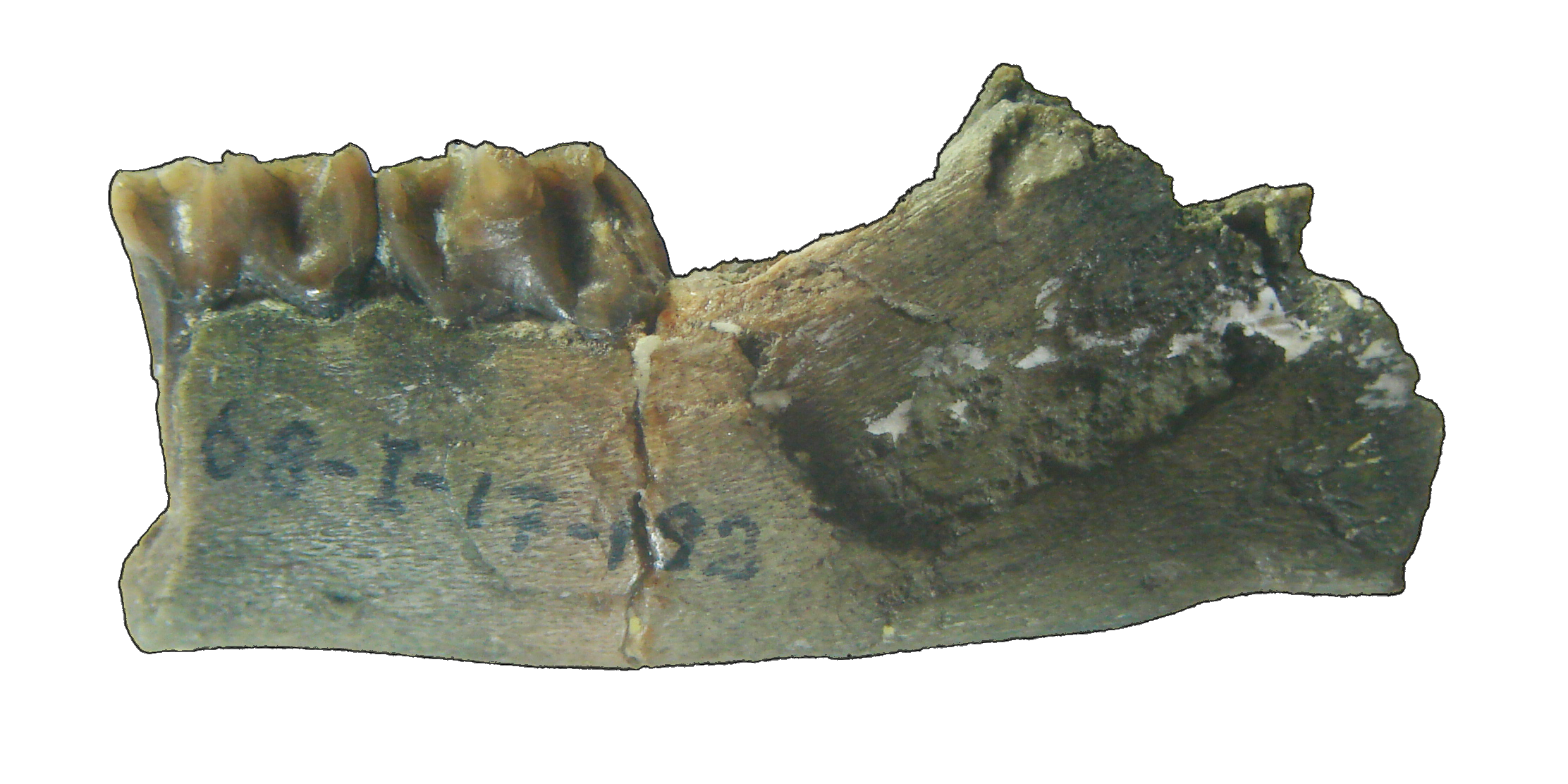
The second fossil is a fragmentary mandible from a juvenile individual, with the last molar in the process of erupting. It was discovered at Cerro Centinela in Santa Cruz Province by the eminent paleontologist Rosendo Pascual. Although the specimen had been mentioned informally in the literature since the 1980s, it had never been examined in detail.
The authors name this species Dianthusa unlapla. The generic name is an anagram of Adianthus, the type genus of the family Adianthidae, while the specific name honours the Universidad Nacional de La Plata. Dating to approximately 18–19 million years ago, in the early Miocene, Dianthusa is one of the youngest known adianthids.
Its molars possess an unusual roots number, since each lower molar is anchored by four roots. This configuration may have helped the mandible withstand high masticatory forces. The unusual root morphologies may also provide clues to possible evolutionary relationships with other litoptern families, including Proterotheriidae, which also present four-rooted lower molars.
Two lineages, one changing Patagonian landscape
As a family, indaleciids appear to disappear from the fossil record after the Eocene–Oligocene Transition, a period associated with major global climatic cooling. Adianthids, by contrast, diversified later and became particularly prominent during the Miocene.
Leindacia, from the late Oligocene, is the youngest known indaleciid and exhibits striking dental similarities with later adianthids such as Dianthusa. These similarities raise the possibility that the two families may have occupied similar ecological niches at different times. The ecological niche left vacant by the extinction of indaleciids may have subsequently been occupied by adianthids.
Leindacia unpasajubo and Dianthusa unlapla improve our understanding of the small-bodied members of litopterns. These provide new information for reconstructing more robust phylogenetic hypotheses for a group of mammals that represents one of the most remarkable evolutionary experiments in the history of South America.
Two new species honour Argentina’s public universities
The names of these two new species are not simply linguistic inventions. Although the generic names are constructed as anagrams of names, as Florentino Ameghino did too many times for several litopterns, the specific epithets were deliberately chosen as a tribute to the public universities that safeguard the fossils.
The name unpasajubo evokes the Universidad Nacional de la Patagonia San Juan Bosco, while unlapla honours the Universidad Nacional de La Plata. In both cases, the institutions are the official repositories of the specimens studied. As said in the paper, these names honour the spirit of public, non-fee-charging, and secular universities in Argentina.

This gesture carries particular significance at a time when Argentina’s public universities face severe financial pressures and when the National Executive arbitrarily refused to comply with Law No. 27.795 on university funding. A law passed by Congress, vetoed by President Javier Milei, and subsequently reaffirmed by Congress with the constitutionally required two-thirds majority in both chambers, following massive nationwide mobilizations in support of public universities.
These two species were described thanks to researchers trained at these institutions, fossil collections preserved within their institutional framework, scientific equipment and technical support they provided, and funding from these universities and the National Scientific and Technical Research Council. (CONICET). Yet today, Argentina’s public universities and its entire scientific research system are under severe strain due to sustained and profound underfunding. Public investment in science and technology fell to 0.207% of GDP in 2024 and 0.167% in 2025, and is projected to reach approximately 0.140% during 2026 (values from Grupo EPC–CIICTI).
Unfortunately, we already live in interesting times. An era in which anti-scientific ideas have become part of the mainstream discourse of certain political parties, threatening and undermining scientific and educational institutions around the world. Attacking science and education in a nation is perhaps the most effective way to erode critical thinking and undermine the foundations of democracy.
Yet these fossils also tell a more contemporary story. Their study was made possible by a public scientific and educational system that has fostered academic excellence, social mobility, broad access to knowledge, and professional education for generations. At a time when Argentina’s public universities and scientific research system face severe and sustained underfunding, Leindacia unpasajubo and Dianthusa unlapla remind us that scientific achievements depend on strong institutions and sustained public investment. They bear witness to where and how science is produced in the far south of South America: within public, non-fee-charging, and secular universities.

I'm a lecturer at the Faculty of Natural Sciences and Museum of the National University of La Plata (UNLP), Argentina. I also conduct my research as a CONICET researcher in the Vertebrate Paleontology Division of the Museo de La Plata, Argentina. Main research: Origin, evolution, paleobiogeography, and paleobiology of mammals, particularly South American and Antarctic native ungulates, as well as their biostratigraphic and biochronological importance. The taxonomic groups included in these studies are the orders Notoungulata, Litopterna, Astrapotheria, Pyrotheria, Xenungulata, and the "Condylarthra" of the families Diodolodontidae and Kollpaniinae.