Two tales of one hormone axis—how parasitic nematodes exploit a conserved developmental switch to survive and thrive
Published in Microbiology

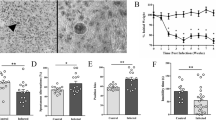

This month, our team published two studies in Nature Communications that, at first glance, might seem to belong to different worlds. One maps the molecular landscape of roundworm larvae wandering through the mouse brain. The other reveals how a blood-feeding parasite steals insulin from sheep to fuel its reproduction. But behind the scenes, these two stories emerged from a single, decade-spanning curiosity: How do parasitic nematodes decide when to pause their development and when to resume it? And more provocatively—who holds the remote control?
The worm that wouldn't wake up
Like many projects, this one began with a stubborn observation that refused to fit existing models. Years ago, when we started working with Toxocara canis—the dog roundworm that occasionally finds its way into human brains—we expected to see a typical inflammatory battlefield. Instead, we found something eerily quiet. Larvae nestled in brain tissue with barely a whisper from the immune system. They weren't growing. They seemed to be… waiting.
Around the same time, another puzzle was brewing in a different parasite system. Haemonchus contortus, a voracious blood-feeder that costs the global livestock industry billions annually, had a curious genomic quirk. Compared to its free-living cousin C. elegans—which boasts tens of insulin-like peptides to fine-tune every aspect of its life—this parasite had stripped its repertoire down to a handful. And critically, all the ones that should say "wake up and grow" were missing.
Two parasites. Two hosts. One shared mystery: If you've lost the genetic instructions to restart your own development, how do you ever become an adult?
The "Aha" moment: insulin isn't just for sugar
The breakthrough came during a late-night lab meeting that I still remember vividly. We were staring at a phylogenetic tree on the screen, frustrated. The parasitic nematode insulin-like peptides clustered exclusively with C. elegans peptides known to promote dauer entry—the "sleep" signal. The "wake-up" peptides? Nowhere to be found.
"What if they don't need their own?" someone asked. "What if they just use the host's?"
The room went quiet. It was one of those ideas that is either brilliant or completely absurd. Insulin is one of the most tightly regulated hormones in the mammalian body. The idea that a worm could simply "steal" it and use it as a developmental trigger seemed almost too audacious for evolution to have permitted.
But the structural modeling convinced us. When we simulated the binding between sheep insulin and the H. contortusinsulin receptor, the predicted affinity was staggering—stronger, in fact, than the sheep's own insulin binding to its native receptor. The worm hadn't just kept the door unlocked; it had remodeled the lock to fit the host's key better than the host's own.
Connecting the dots: one pathway, two strategies
This realization cast the Toxocara brain infection work in a completely new light. We had observed that brain-dwelling larvae suppress their DAF-9–DA–DAF-12 hormone axis—the very same pathway that Haemonchus activates with stolen insulin. The parasites weren't using two unrelated tricks; they were executing opposite maneuvers on the exact same molecular machinery.
In the brain, Toxocara larvae actively shut down the pathway. This keeps them in a dormant, energy-conserving state that also happens to make them less visible to the immune system. They are essentially pressing the "pause" button and hiding the remote.
In the abomasum, Haemonchus larvae hijack host insulin to jam the pathway into the "on" position. They press "fast-forward," racing toward reproductive maturity using someone else's fuel.
The elegance of this duality struck me. Evolution had taken a single, deeply conserved developmental rheostat and turned it into a versatile tool for parasitism. Depending on the niche—immune-privileged brain versus nutrient-rich gut—the parasite could either dial the signal down to zero or crank it up using borrowed ligands.
The people behind the pipettes
Science writing tends to sanitize the process, but the truth is these papers are the product of extraordinary resilience from a team that refused to let technical barriers win. Spatial transcriptomics on parasite-infected brain tissue? Let's just say that the first several attempts produced more noise than signal. In vitro culture of Haemonchus through its entire parasitic development? We had to reinvent the protocol three times based on literature before larvae would cooperate.
I owe particular gratitude to Xiaocui Huang, Minyao Zou, Zhendong Du, Sishi Liu the lead authors who drove these projects day and night, and to our collaborators in Melbourne and Tübingen who brought complementary expertise we simply didn't have in-house. This was team science at its most authentic—not because it was trendy, but because the questions demanded it.
What comes next?
Publishing these papers feels less like an endpoint and more like a door swinging open. The DAF-9–DA–DAF-12 axis now stands out as a compelling target for intervention. Because parasitic nematodes rely on this pathway so heavily—and because their receptors differ subtly from mammalian counterparts—there may be opportunities to develop drugs that specifically block parasite development without affecting host insulin signaling.
But beyond the translational potential, I find myself thinking about the broader evolutionary implications. How many other parasites have learned to "eavesdrop" on host endocrine conversations? What other host signals—thyroid hormones, steroids, neuropeptides—might be moonlighting as parasite developmental cues?
These two papers represent five years of work, countless late nights, and more troubleshooting emails than I care to count. But if they help the field see parasitic nematodes not just as pathogens to be killed, but as masterful molecular manipulators worthy of mechanistic dissection, then every gel and every failed sequencing run was worth it.
The two studies discussed are:
Zou, M., Liu, S., Chen, Y. et al. Spatial transcriptomic atlas of murine neurotoxocariasis reveals region-specific host responses and dysfunction in the brain. Nat Commun (2026). https://doi.org/10.1038/s41467-026-72114-3
Huang, X., Du, Z., Chen, X. et al. Host insulin hijacking by a nematode receptor mediates developmental plasticity and sex ratio shifts. Nat Commun (2026). https://doi.org/10.1038/s41467-026-72333-8

Research focus on the developmental plasticity of parasitic worms of public health significance (e.g., Toxocara canis and Echinococus species) and how they orchestrate host-parasite interactions and parasitism within animals.
Follow the Topic
-
Nature Communications
An open access, multidisciplinary journal dedicated to publishing high-quality research in all areas of the biological, health, physical, chemical and Earth sciences.

Related Collections
With Collections, you can get published faster and increase your visibility.
Women's Health
Publishing Model: Hybrid
Deadline: Ongoing
Biosensing
Publishing Model: Hybrid
Deadline: Jun 30, 2026
Please sign in or register for FREE
If you are a registered user on Research Communities by Springer Nature, please sign in