Unlocking the therapeutic potential of Solanum species as alternatives for pain and inflammation management
Published in Research Data, Biomedical Research, and Agricultural & Food Science
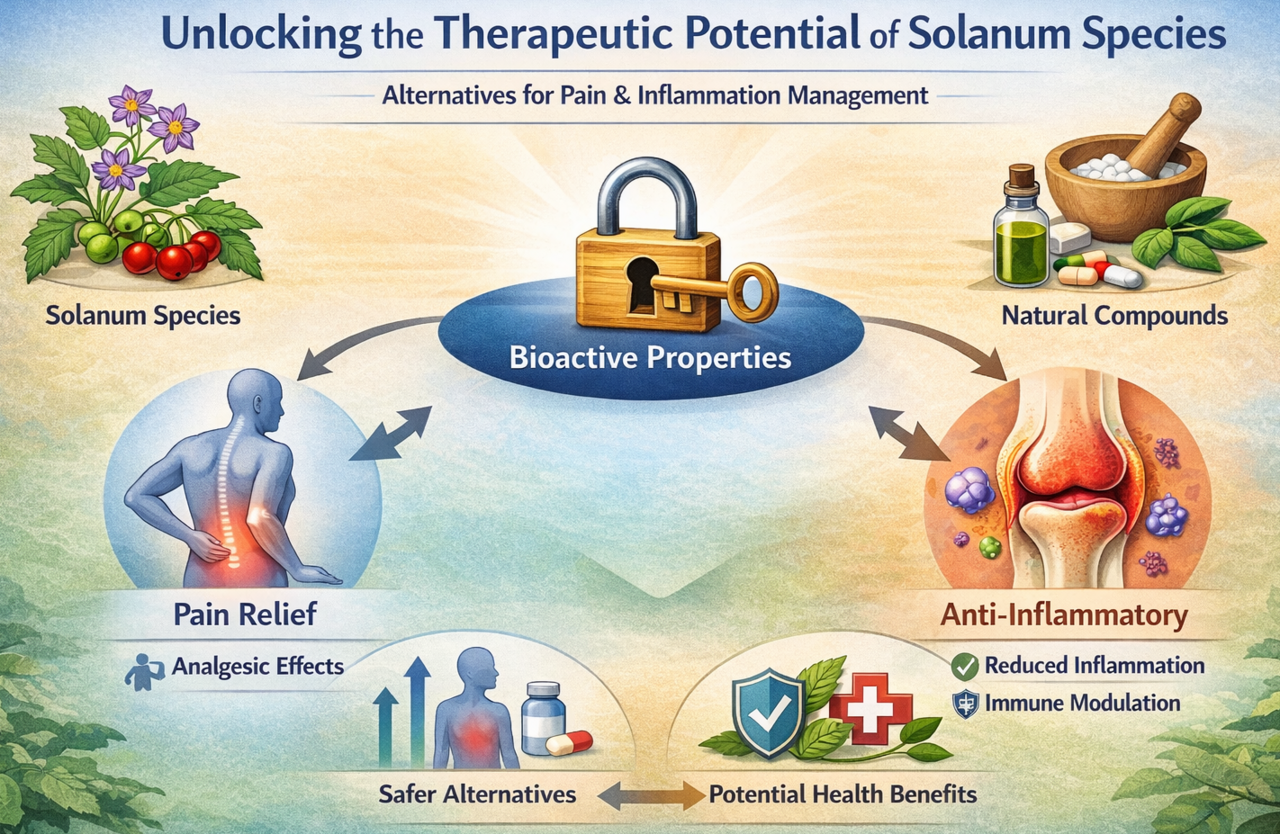
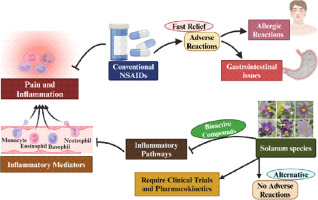
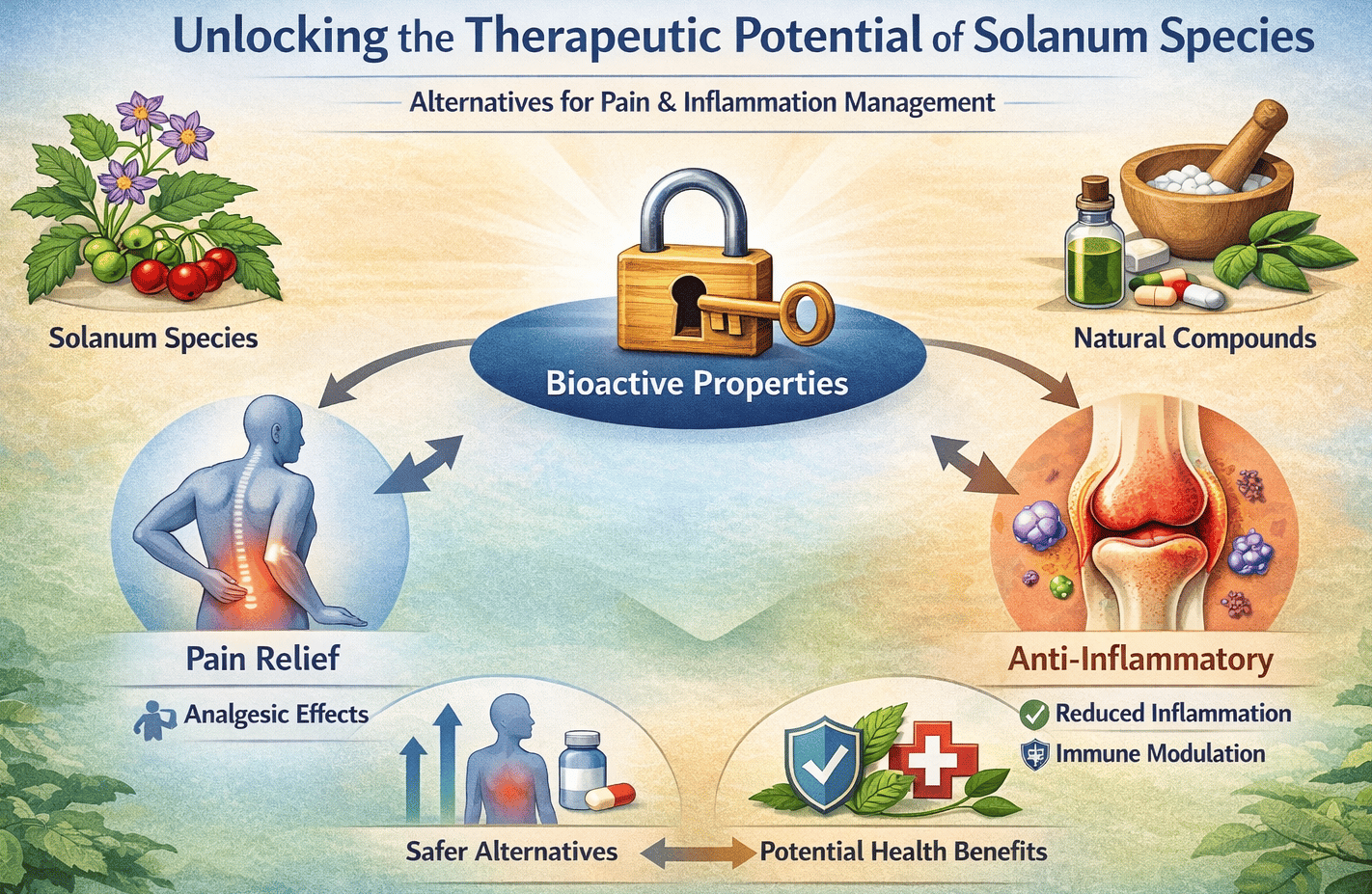
Pain and inflammation are among the most common reasons people seek medical care. From joint pain and toothache to gastric discomfort and inflammatory skin conditions, these problems cut across age groups, cultures, and healthcare systems. As a researcher working at the interface of traditional medicine and modern pharmacology, I have often asked a simple question: Can we manage pain effectively without paying the price of long-term side effects?
This question is what led me to explore the therapeutic potential of Solanum species—plants that many of us recognize as everyday vegetables or traditional remedies, but rarely as serious candidates for pain and inflammation management.
Why Look Beyond Conventional Painkillers?
Non-steroidal anti-inflammatory drugs, commonly known as NSAIDs, are widely used because they work fast. However, anyone involved in clinical or pharmacological research knows that prolonged use of these drugs is linked to gastric irritation, kidney complications, and cardiovascular risks.
This has pushed researchers like me to look more closely at plant-based alternatives, particularly those with a long history of traditional use. Ethnopharmacology—the study of traditional medicines—often provides valuable clues about plants that may contain safer, multi-target bioactive compounds.
My Journey into Solanum Research
The Solanum genus is vast and diverse, distributed across tropical and subtropical regions worldwide. Growing up in South Asia, I encountered Solanum species not only in traditional remedies but also in daily diets. Local healers used them for toothache, joint pain, ulcers, and inflammatory skin conditions—often with remarkable confidence.
What intrigued me was the consistency of use across cultures. Different communities, separated by geography, were using different Solanum species for surprisingly similar inflammatory conditions. That consistency rarely happens by chance.
How We Approached the Review
In this work, we systematically explored published studies documenting the traditional and pharmacological relevance of Solanum species in pain and inflammation management.
We focused on:
- Geographical distribution of species
- Traditional uses and ethnomedicinal claims
- Plant parts used (leaves, roots, fruits, whole plant)
- Preparation methods (decoctions, pastes, infusions)
- Routes of administration
Peer-reviewed studies were identified through widely used academic databases, ensuring that our analysis was grounded in reliable scientific evidence.
What the Evidence Revealed
Our review identified 29 distinct Solanum species traditionally used to treat pain and inflammation-related conditions. These uses were not limited to musculoskeletal pain but extended to:
- Toothache and oral inflammation
- Gastric ulcers and abdominal pain
- Skin disorders and wound inflammation
- Urinary tract and respiratory infections
What makes these findings particularly compelling is that preclinical studies support many of these traditional claims.
The Bioactive Compounds Behind the Effects
One of the most exciting aspects of Solanum research is its rich phytochemical diversity. Preclinical studies have shown that Solanum species contain several classes of bioactive compounds, including:
- Alkaloids such as solasodine and solasonine
- Flavonoids known for antioxidant and anti-inflammatory properties
- Phenolic acids that modulate inflammatory mediators
- Steroidal saponins with analgesic and immunomodulatory effects
These compounds work through multiple pathways—reducing inflammatory mediators, modulating pain perception, and protecting tissues from oxidative stress. Unlike single-target synthetic drugs, plant-derived compounds often act synergistically, which may explain their effectiveness in traditional systems.
What Makes Solanum Species Especially Promising?
From a pharmacological perspective, Solanum species offer three major advantages:
-
Multi-target activity
Pain and inflammation are complex processes. The ability of Solanum-derived compounds to act on multiple biological pathways makes them especially valuable. -
Ethnomedicinal validation
Centuries of traditional use provide an important layer of safety and efficacy evidence. -
Chemical diversity
The wide range of bioactive compounds opens opportunities for drug discovery, formulation development, and even combination therapies.
Challenges That Still Remain
Despite the promising evidence, translating Solanum research into clinical practice is not straightforward. Most studies remain at the preclinical stage. Standardization of extracts, dose optimization, safety profiling, and well-designed clinical trials are still needed.
As a researcher, I see this not as a limitation but as an opportunity for future work—especially for interdisciplinary collaborations between pharmacologists, botanists, clinicians, and formulation scientists.
Looking Ahead: From Tradition to Therapeutics
What excites me most about Solanum research is its potential to bridge traditional knowledge and modern medicine. These plants are not just historical remedies; they are living chemical libraries waiting to be explored responsibly.
With rigorous scientific validation, Solanum-derived compounds could contribute to safer, more sustainable strategies for managing pain and inflammation—especially in populations where long-term NSAID use is problematic.
Final Thoughts
Working on this review reinforced a belief I’ve developed over years of research: traditional medicine is not an alternative to science—it is often its starting point.
By studying Solanum species through a modern scientific lens, we move one step closer to developing pain and inflammation therapies that are effective, affordable, and safer for long-term use. I hope this perspective encourages fellow researchers, clinicians, and early-career scientists to look more closely at the therapeutic wisdom rooted in medicinal plants.

Salman Ahmed (ORCID: 0000-0003-2033-0181) holds a B.Pharm. degree from the University of Karachi, Pakistan, and a PhD and M.Phil. in Pharmacognosy from the same institution. He has gained valuable experience in the pharmaceutical industry, having worked at Helix Pharma, Pharm Evo (Pvt.) Ltd., and Searle Pakistan Ltd. Currently, he holds the position of Assistant Professor in the Department of Pharmacognosy at the Faculty of Pharmacy, University of Karachi, Pakistan.
Salman Ahmed has made significant contributions to the field with a decade-long career dedicated to teaching Pharmacognosy, also known as Natural Products Sciences. He has authored 125 research papers with an impact factor of 100 with 2297 citations, a h-index of 24, and an i10-index of 59. He has secured multiple research grants in Pharmacognosy (2021, 2018, 2016, and 2014) to study plants traditionally used for analgesic, anti-inflammatory, diuretic, and antidiarrheal purposes and their effects on digestive enzymes. Additionally, he has authored seven books and presented 16 posters at national and international conferences. Salman Ahmed's expertise is acknowledged by various esteemed journals published by Elsevier, Springer Nature, Wiley, MDPI, Hindawi, and Dove Medical Press Limited, as he serves as an invited reviewer for these publishers.
Scientific Achievements (2011–2015): He pioneered a cost-effective copper sulfate-induced chick emesis model for evaluating natural antiemetics. His research explores antiemetic, analgesic, and anti-inflammatory properties in Pakistani plants, herbs, and spices, reporting fixed oil's analgesic effects and discovering Bergenin as an antiemetic. He authored two state-of-the-art reviews on natural antiemetics, "Antiemetic effects of bioactive natural products" and "Natural antiemetics- an overview". He was awarded Nishan-e-Zafar by the University of Karachi in 2014.
Scientific Achievements (2016–2024): Dr Salman Ahmed pioneered glass slide models to grow Whewellite, Brushite, and Urate crystals for the evaluation of antiurolithiatic and anti-gout drugs, presenting key findings at international conferences such as MMDR-7, STEP-5, ISNPC-14, and ISNPF-2. His book “How to Grow Urinary Stone and Gouty Crystals on Glass Slide” provides detailed methodologies for replicating crystal growth in vitro and discusses the implications for understanding crystal morphologies, disease mechanisms and developing herbal treatment strategies.
Dr Ahmed's research highlights the antiurolithiatic potential of pentacyclic triterpenes and polyphenols. These compounds inhibit calcium oxalate crystallization, reduce oxidative stress, and modulate inflammation. They also promote nephroprotection, diuresis, and ACE inhibition, advancing natural therapeutics for kidney stone prevention.
His contributions include “Glossary of Globally Used Herbs and Animals for Urolithiasis” (2024), a comprehensive book exploring medicinal plants covering botanical families from A to Z and animal-based remedies covering their historical use, mechanism of action, and therapeutic spectrum against Whewellite, Brushite, and Urate crystals separately. His research on antiurolithiatic formulations compiles mono- and polyherbal remedies from diverse regions, including Appalachia, Canada, India, and the Middle East. His work provides critical data for future phytochemical, pharmacological, and toxicological studies, aiding in the discovery of safer, more effective treatments for kidney stones.
Additionally, he explores the anticancer potential of marine peptides against breast, ovarian, cervical, malignant melanoma, prostate, neuroblastoma, glioblastoma, leukemia and lymphoma, advancing natural therapeutics for cancer treatment.
Please sign in or register for FREE
If you are a registered user on Research Communities by Springer Nature, please sign in