Urban wetlands: Neglected hotspots of antibiotic resistance genes and key vectors for viral transmission
Published in Earth & Environment




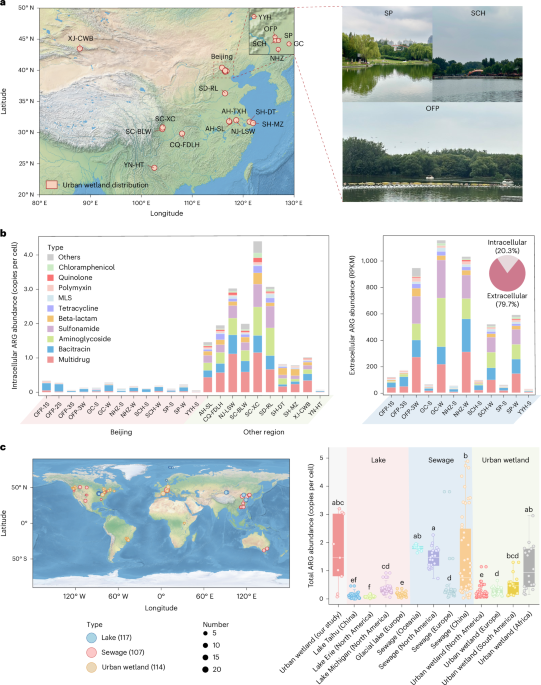

It has been over a decade since the World Health Organization enacted Global Action Plan on Antimicrobial Resistance. During this time, the importance of the environment which acts as a key medium for the transmission of antibiotic resistance genes (ARGs) has gained increasing recognition. With rapid urbanization, the number of urban wetlands has surged. Urban wetland is a complex social-ecological system subject to continuous, high-intensity interference from human activities. Our research began with a fundamental yet urgent question: Could these wetlands, which provide “sponge” functions and recreational spaces for cities, be becoming “hidden nodes” of ARG risk?
- The Spark: A Serendipitous Walk and a Critical Question
This study began with a thought-provoking scene while walking through an urban wetland park. The wetland was bustling with human activity around water. For instance, residents were playing by the water's edge, and some were even fishing. As researchers in the field of biological pollutants, we wondered whether these wetlands which receive rainwater and treated tailwater could harbor potential risks invisible to the naked eye, especially for biological risks. Given the importance of urban wetlands on regional ecological security and public health, we initiated a sampling investigation immediately after a thorough discussion. This research was published in Nature Cities in 2026 through multi-party discussions and collaborative efforts. This work highlights the potential threat of microbial pollution in the urban wetlands, providing insightful evidences to guide informed decision on their water quality management and risk management of ARGs.
- A Long Path from Field to Discovery
From the initial research design and field sampling to laboratory analysis, data interpretation, and final publication, our team spent nearly four years. During this period, we adjusted our analysis strategies multiple times based on review comments and even reorganized sampling efforts to supplement key data. This work was not only a pursuit of result reliability but also an endeavor to clarify the true risk level of urban wetlands within the “One Health” framework. Our study conducted systematic sampling across 9 provinces in China, covering 17 urban wetlands. The analysis clearly showed that although the routine water quality indicators of these wetlands met national standards, 749 different ARG subtypes and even 67 human bacterial pathogens were detected. Our data was significantly different with other global water bodies: the average abundance of ARGs in urban wetlands was approximately 9 times of natural lakes and comparable to the levels found in raw urban sewage. This data objectively demonstrates that urban wetlands have become important reservoirs for ARGs.
- Viruses: Potential Vectors for ARG Transmission
Our results provide evidence that viruses (bacteriophages) may mediate the transmission of ARGs among bacteria in urban wetland systems. We successfully assembled 274 bacterial genomes and found that 91.6% of the bacterial subpopulations were infected by viruses carrying ARGs. Notably, we discovered a large abundance of bacteria belonging to the Pseudomonas genus, which are important opportunistic pathogens and multidrug-resistant bacteria. The associated bacteriophages not only had larger genomes but also carried same multidrug resistance genes (e.g., MexB and OprM) as their hosts. This indicates that viruses may facilitate the transfer of ARGs among bacteria in these wetlands, accelerating the evolution and dissemination of antibiotic resistance.
- Socioeconomic Factors InfluenceRisk Distribution
Scientific discoveries are often closely linked to social realities. Our research reveals a double burden pattern. In more economically developed regions such as Beijing, ARG abundances of urban wetlands were significantly lower. This may be attributed to advanced “Sponge City” infrastructures, and effective management strategies, which can intercept and treat stormwater runoff, thereby reducing the direct discharge of contaminated runoff into wetlands. While, in many developing or economically underdeveloped regions, urban wetlands serve as sinks for untreated stormwater runoff and pollutants and face higher ARG risk, exacerbating the inequality of risk exposure among different communities. This could enhance our understanding of the evolving relationship between urban society and water health, and inform future urban policy development.
- From Ecological Risk to Public Health Concerns
ARGs cross boundaries via food chains and animal migration routes in wetlands. Other global surveys have depicted similar scenarios, such as the intercontinental spread of antibiotic-resistant bacteria via migratory birds in wetlands1. These evidences indicate that resistance issues in urban wetlands have substantially impacted their ecological value and posed potential threats to biodiversity and human health through ecological links, constituting a complex challenge from the "One Health" perspective.
In urban wetlands, zones of close interaction between human and natural activities, ARGs can enter the human body through various pathways including recreational activities, food intake particularly fish and shellfish, and aerosol inhalation2-4. This would ultimately compromise antibiotic treatment efficacy and increase disease burden. Currently, the water-friendly cultural activities strongly advocated in urban wetlands inadvertently make the public directly expose to risks from viruses and ARGs, exacerbating public health threats.
-
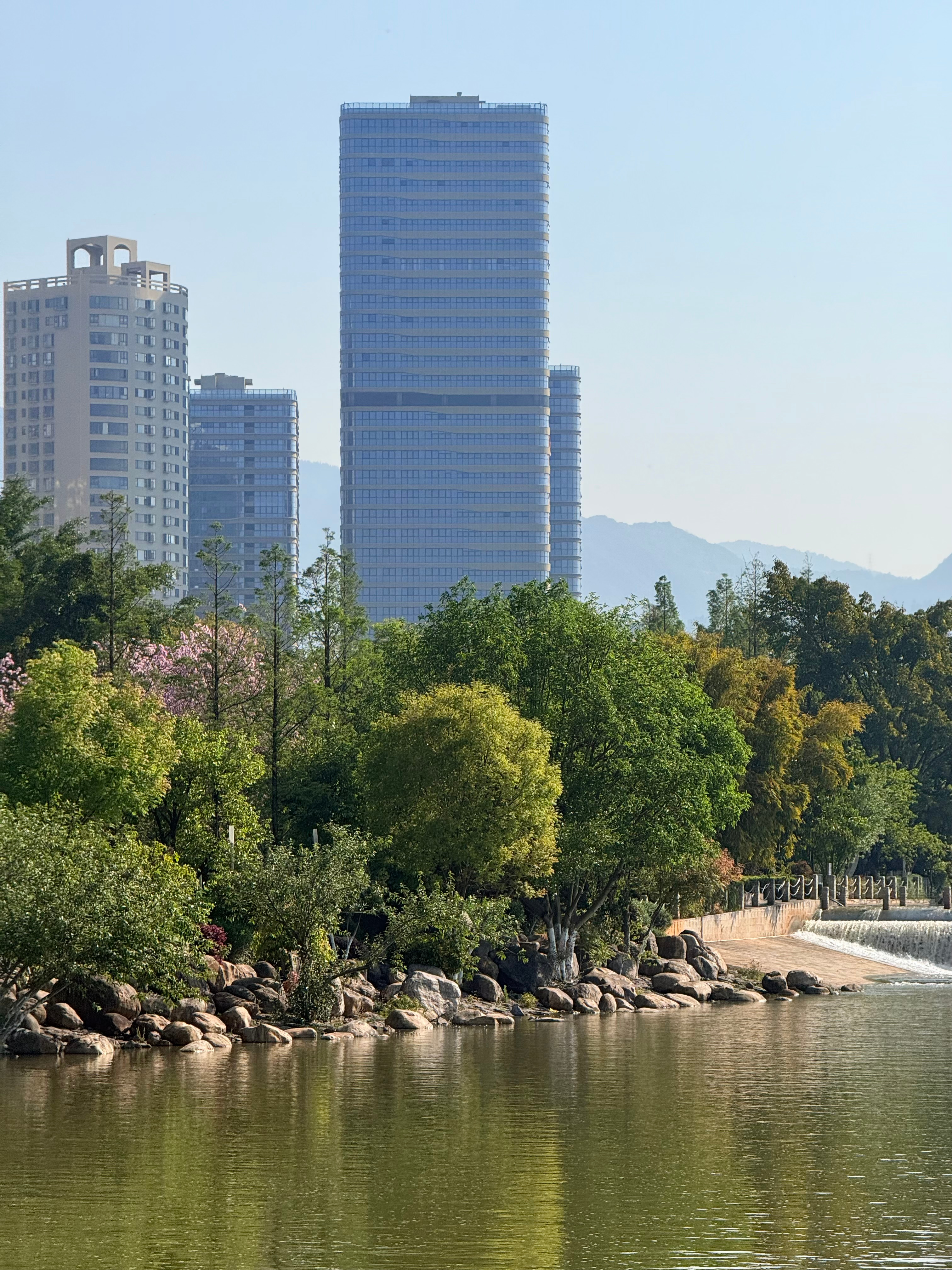
Urban wetland (Photo credit: Dr. Xiaohui Liu, Ocean University of China) - Looking ahead
Facing this challenge requires a multi-dimensional collaborative response encompassing Kunming-Montreal Global Biodiversity Framework, Ramsar Convention on Wetlands, and Global Action Plan on Antimicrobial Resistance. We hereby call for the updated Global Action Plan on Antimicrobial Resistance in 2026 to consider integrating key ecosystems, such as urban wetlands, into monitoring and control networks. Specifically:
- Policy Level:Recommend enacting specific regulations to clarify the ecological positioning of urban wetlands, avoiding their simple equation with extensions of wastewater treatment facilities. Establish control standards for ARG emissions and list high-risk wetlands as priority management objects.
- Research Level:Focus further on the mechanisms of ARGs and virus transmission in wetlands, particularly virus-mediated pathways, and systematically assess the purification thresholds and ecological risks of wetlands regarding new pollutants. Develop nature-based remediation technologies, such as exploring the use of bioelectric technology or regulating plant rhizosphere microbiomes to block ARG transmission.
- Management Level:In wetland design and operation, moving beyond traditional nitrogen and phosphorus removal targets to incorporate the reduction of virus, pathogenic bacteria and ARGs as important functional considerations.
Urban wetlands should no longer be a "regulatory blind spot" for ARG risks, but should serve as "frontline outposts" guarding public health and ecological security, requiring our concerted efforts to ensure they serve city residents safely.
References
- Wang, Y. et al. A Genomic Catalog of Migratory Microbiomes from Wild Birds across China's Habitats. Advanced Science, e74581 (2026).
- Ni, N. et al. Fibrous and Fragmented Microplastics Discharged from Sewage Amplify Health Risks Associated with Antibiotic Resistance Genes in Aquatic Environments. Environmental Science and Technology 59, 15919-15930 (2025).
- Mao, D., Wang, Z., Song, K. & Yang, H. Rescue urban wetlands for flood resilience. Nature 624, 42 (2023).
- Li, R. et al. Viral metagenome reveals microbial hosts and the associated antibiotic resistome on microplastics. Nature Water 2, 553-565 (2024).
Follow the Topic
-
Nature Cities
This journal aims to deepen and integrate basic and applied understanding of the character and dynamics of cities, including their roles, impacts and influences — past, present and future.





Please sign in or register for FREE
If you are a registered user on Research Communities by Springer Nature, please sign in