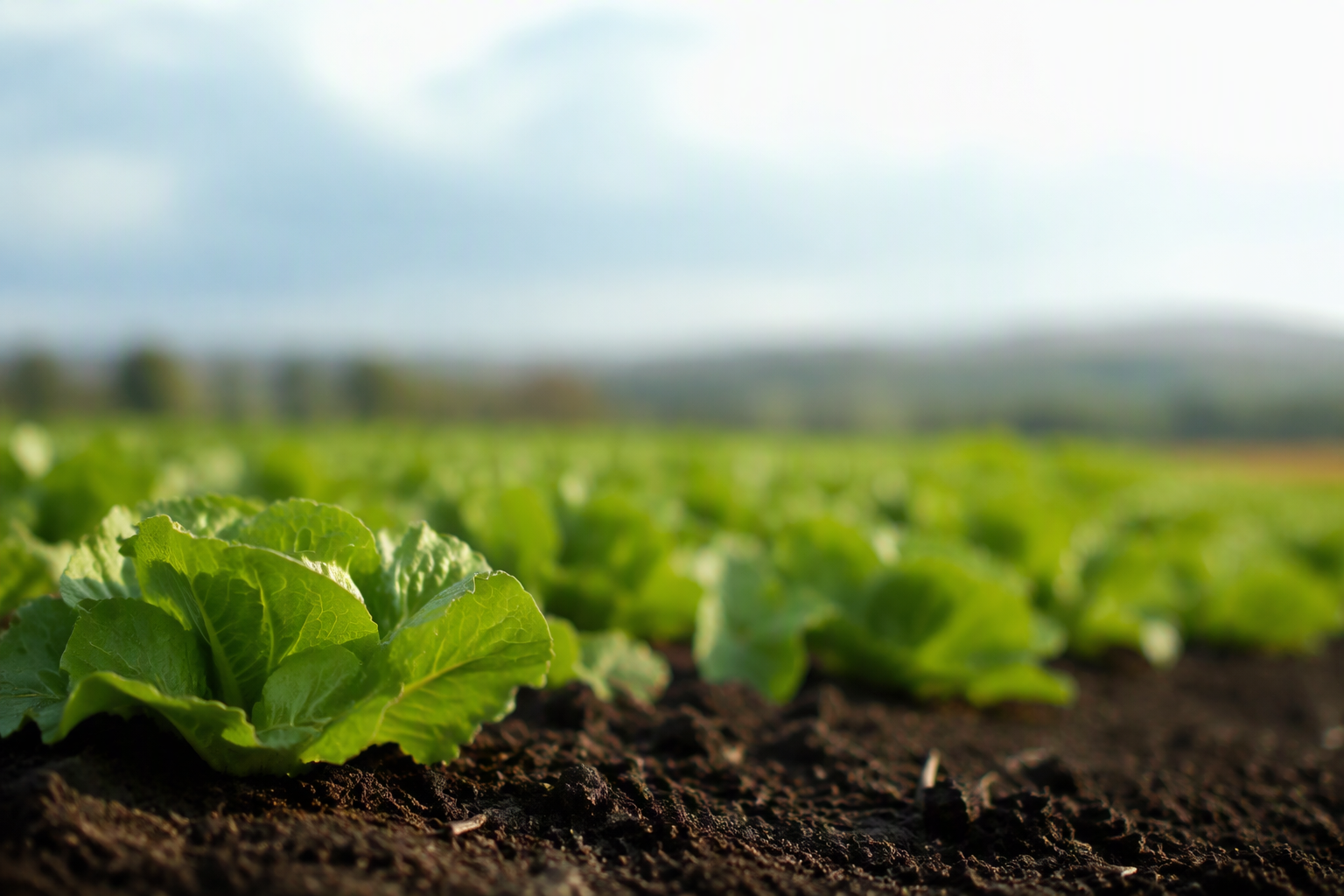
Virtual Event | 23 September 2026 Beyond Nutrients: How Plant Microbiomes May Shape the Future of Food

Discover how the invisible microbial communities living on our food crops may help shape more sustainable food systems. Join Marco Giovannetti to explore groundbreaking lettuce microbiome research and the Citizen Salad project, combining cutting-edge science with public participation.
Virtual Event | 23 September 2026 Beyond Nutrients: How Plant Microbiomes May Shape the Future of Food
Like

Share this post

Choose a social network to share with, or copy the URL to share elsewhere

This is a representation of how your post may appear on social media. The actual post will vary between social networks

Explore the Research

BioMed Central
BioMed Central BioMed Central

Plant phenotypic differentiation outweighs genetic variation in shaping the lettuce leaf microbiota - Environmental Microbiome

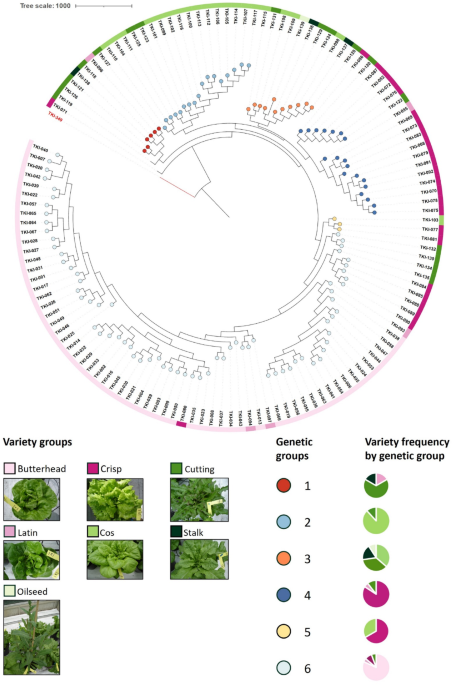
Lettuce, a widely consumed raw vegetable, harbors leaf-associated microbial communities whose understanding and prediction are crucial for plant and human health. While environmental factors are known to strongly influence plant leaf microbiomes, the role of plant-specific determinants in shaping microbial diversity remains unclear. In this study, we investigated how three key plant factors -genetic distance, plant variety and leaf micro- and macronutrient content- influence the composition and diversity of lettuce leaf bacterial communities, by analyzing 131 fully-sequenced Lactuca sativa genotypes via 16S rRNA amplicon sequencing. Our findings revealed that variety, as defined by breeders, exerts a greater influence on bacterial community diversity than genetic distance or variations in leaf nutrient levels. Together with available and detailed shoot traits they explained 13.4% of the observed bacterial diversity. Inspection of 9 specific leaf morphological traits, with further validation by MAGs analysis, showed that heart formation, head height, and venation types significantly shaped bacterial richness and evenness, mainly acting on non-hub members. These results highlight the strong relationship between leaf morphology and bacterial community structure, suggesting that phenotypic traits play an outsized but understudied role in shaping the leaf microbiota, a crucial aspect of the edible microbiome.

As part of Springer Nature's SDG Talks series, we are delighted to invite you to an engaging discussion on the hidden microbial communities living on our food crops and their potential role in shaping more sustainable and resilient food systems.
🌱 Beyond Nutrients: How Plant Microbiomes May Shape the Future of Food

This webinar will feature Marco Giovannetti (University of Turin, Italy), who will present recent findings published in Environmental Microbiome demonstrating that the physical characteristics of lettuce plants can have a greater impact on leaf-associated bacterial communities than genetic variation itself. The talk will also explore how these microbial communities may influence the broader food system and contribute to our understanding of plant and human health.

In addition, Marco will discuss Citizen Salad, an innovative citizen-science initiative that has engaged more than 100 volunteer growers across Italy in investigating how plant varieties and growing environments shape the microbiome of edible crops. By combining cutting-edge research with public participation, the project offers a unique perspective on the future of food and sustainable agriculture.

đź“… Wednesday, 23 September 2026
⏰ 15:00–16:00 CEST (GMT+2)

Register here: https://cassyni.com/events/CRdy9CJEoRCVDtZuCb2tub

The event will be chaired by Valeriana Ramondo and Eleana Pegg and will conclude with a live discussion and audience Q&A session.

What will be covered?

  • How plant traits influence microbial communities living on leaves
  • The concept of the "edible microbiome" and its relevance to human health
  • New insights from lettuce microbiome research
  • The Citizen Salad participatory science project
  • The role of microbiome research in supporting more sustainable food production systems

Speaker
Marco Giovannetti is Associate Professor at the University of Turin, Italy. His research focuses on plant–microbe interactions, with particular emphasis on plant microbiomes, root genetics, and mycorrhizal symbioses. His work aims to advance sustainable crop management through a deeper understanding of the relationships between plants and their associated microbial communities. He is also actively involved in citizen-science initiatives that bring research closer to the public.

Can't join us live?
No problem. The webinar will be recorded and made available to everyone who registers for the event so that you can watch it at your convenience.
This is a great opportunity to explore cutting-edge research on plant microbiomes, sustainable agriculture, and the future of food production.

Please sign in or register for FREE

If you are a registered user on Research Communities by Springer Nature, please sign in

Follow the Topic

Sustainability
Research Communities > Community > Sustainability
Agriculture
Life Sciences > Biological Sciences > Agriculture
SDG 2: Zero Hunger
Research Communities > Community > Sustainability > UN Sustainable Development Goals (SDG) > SDG 2: Zero Hunger

What are SDG Topics?

An introduction to Sustainable Development Goals (SDGs) Topics and their role in highlighting sustainable development research.

Continue reading announcement

Related Collections

With Collections, you can get published faster and increase your visibility.

The global virome across changing ecosystems

Viruses are the most abundant biological entities on Earth, shaping microbial communities, driving biogeochemical cycles, and influencing their ecosystems in many ways. As environmental change accelerates (e.g. ocean warming, freshwater acidification, soil degradation, agricultural intensification, atmospheric shifts, and the emergence of space‑associated microbial habitats) the global virome is surely being affected – but how and to what extent remains largely unexplored.

This cross‑journal special Collection brings together research highlighting how viral diversity, ecology, function, and evolution are responding to our rapidly changing planet, maybe even impacting the change themselves and potentially acting as solutions to ameliorate some changes.

We would like to see submissions that go beyond describing the viral communities: we are looking for are studies that deepen our understanding of the roles viral communities play in our changing environments. Methodological advances (including metagenomics, multi‑omics, modelling, remote sensing, and experimental ecosystem approaches) are also encouraged. Through this Collection we would like to advance a holistic view of the planetary virome and its influence on life and the environment across our interconnected ecosystems.

Publishing Model: Open Access

Deadline: Mar 31, 2027
The Apple Microbiome

Microbiome and Environmental Microbiome are calling for submissions to our Collection on the Apple Microbiome.

With world apple production estimated at 84 million tons, the microbiome of the apple has significant implications for agriculture, food security, and human health. Understanding the complex interactions between apple plants and their associated microbial communities can lead to improved crop management strategies, enhanced fruit quality and longevity, and sustainable agricultural practices. Recent advances have highlighted the role of specific bacteria and fungi in promoting plant health and resilience against specific pathogens. Moreover, detailed profiling of these microbial communities, revealing their diversity and functional potential facilitate exciting future developments, such as the identification of beneficial microbial consortia for biocontrol and the formulation of tailored probiotic treatments for both plants and humans. By advancing our collective understanding in this area, we can work towards a more sustainable and resilient agricultural system.

Topics of interest include but are not limited to:

-Microbial diversity and function associated with apples

-Effects of soil health and rhizosphere interactions on apple production

-Impact of climate change on the apple microbiome

-Role of the apple microbiome in fruit quality

-Microbiome-driven strategies for disease resistance

This collection is open for submissions from all authors on the condition that the manuscript falls within both the scope of the collection and the journal it is submitted to.

All submissions in this collection undergo the relevant journal’s standard peer review process. Similarly, all manuscripts authored by a Guest Editor(s) will be handled by the Editor-in-Chief of the relevant journal. As an open access publication, participating journals levy an article processing fee (Microbiome, Environmental Microbiome). We recognize that many key stakeholders may not have access to such resources and are committed to supporting participation in this issue wherever resources are a barrier. For more information about what support may be available, please visit OA funding and support, or email OAfundingpolicy@springernature.com or the Editor-in-Chief of the journal where the article is being submitted.

Publishing Model: Open Access

Deadline: Sep 30, 2026