Humanities & Social Sciences Festival | Why Humanities Matter in Scientific Publishing
Published in Social Sciences, Agricultural & Food Science, and Arts & Humanities
In April 2026 we held an internal Springer Nature Humanities and Social Sciences Festival. Across a series of keynote presentations, town halls, panel discussions, lightning talks, quizzes, and social events, we celebrated our rich HSS research output in book and journal article form, and our heritage, highlighting the impact and value of what we publish.
This series of short videos, with accompanying blog posts, are developed from a series of initial lightning talks that were delivered by Springer Nature colleagues during the festival. They build on individual experience to tell compelling stories about what we publish and why we value our work with academic communities in the varied disciplines that comprise the Humanities and the Social Sciences.
What if one of the most important parts of science isn’t scientific at all?
When we talk about research, we often focus on data, methods, and results. But anyone who has ever submitted a paper, reviewed one, or worked with an editor knows that this is only part of the story. Because scientific publishing is not just about knowledge, it is about people.
In my recent Lightning Talk, I have reflected on something that has become very clear to me over the years: the humanities and social sciences are not separate from science.
They are part of how science actually works in practice.
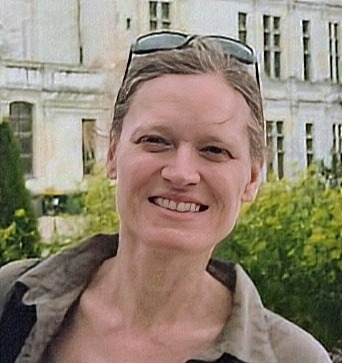
I come from a humanities background. From the beginning, everyone was used to telling me that studying literature would not lead anywhere particularly useful. Yet after almost 20 years in publishing, 15 of them in scientific publishing, I have found that those so‑called soft skills are exactly what I rely on every day: the ability to understand different perspectives, to embrace doubt, to keep learning, and to see people beyond their roles.
As I already mentioned, scientific publishing is a matter of people, and it is also full of conversations. Whether we think about peer review or editorial processes, we always speak about dialogues among people with different expectations, experiences, and sometimes very strong views.
What makes those processes work is not only scientific expertise, but also the ability to listen, to interpret, and to keep discussions constructive.
There are no soft skills in publishing; these are useful everyday tools each publisher should be equipped with.
Humanities also help to enlarge our vision and see the bigger picture outside our frame.
Research does not happen in isolation, and neither do publications. Especially in areas like plant sciences, where research connects directly to large fields such as food security, sustainability, and climate change, it is impossible to separate scientific questions from their broader context. Understanding how different fields fit together and how research connects to society is essential.
When it comes to addressing global challenges such as the SDGs, this becomes even more evident. In my role as co-chair of the SDG 1 (No Poverty) working group, I realized that while scientific research is essential, it cannot solve these problems on its own. Poverty is shaped by complex factors, including social structures, education, inequality, and access to resources. Without a clear understanding of these dimensions, scientific advances risk failing to reach the people who need them most.
And this is where the humanities and social sciences make a real difference.
So, we are not asked to choose between science and the humanities, but it is mostly about recognizing that they have always been working together in what the researchers do.
And we come to the key point: behind every paper, every review, and every editorial decision, there is a human story, and if we are able to pay attention to that story, we can help to do better science.
Not instead of science, but alongside it.
Here is our video, What Makes us Human, highlighting highly impactful HSS research published by Springer Nature.
Follow the Topic
Introducing the Palgrave Macmillan Campaign for the Humanities
At Palgrave Macmillan we publish cutting-edge humanities research that has real-world impact. This research community brings together the voices of our authors and editorial team to highlight and publicize the value of the humanities and humanities research in our world today.
Continue reading announcement