What does a mother's gut microbiota tell the placenta?
Published in Microbiology, Protocols & Methods, and Immunology
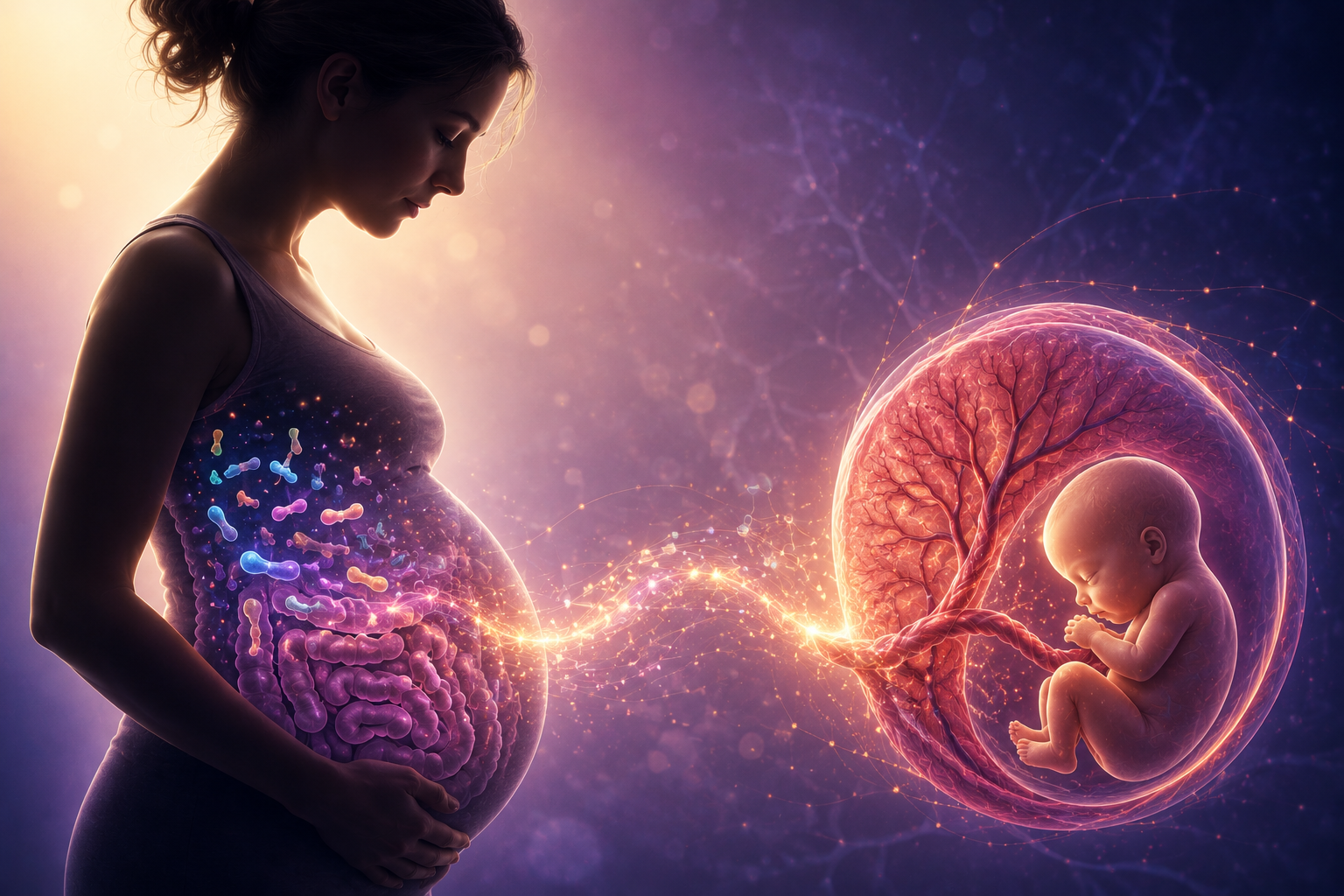


The maternal gut microbiota undergoes profound changes during pregnancy and has emerged as an important regulator of host metabolism and immune function. Alterations in the maternal microbiota have been associated with several pregnancy complications, including preeclampsia, but the mechanisms linking the gut microbiota to the maternal-fetal interface remain poorly understood.
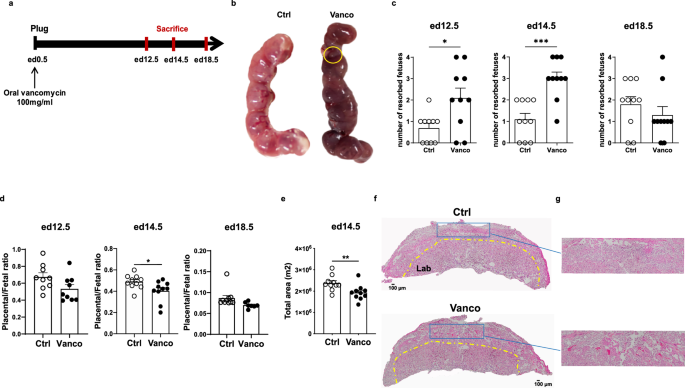
Our interest in this question arose while studying how maternal microbiota alterations influence immune system development in the offspring. Unexpectedly, antibiotic-treated pregnant mice showed a marked increase in fetal resorptions, prompting us to investigate whether disruption of the maternal gut microbiota could directly affect placental development and pregnancy outcome.
Histological analyses revealed impaired placental vascularization, increased hypoxia and altered placental architecture in antibiotic-treated dams. Because several of these features resemble abnormalities observed in preeclampsia, we sought to identify the mechanisms connecting maternal microbiota disruption to placental dysfunction.
One possible explanation was that bacteria, or bacterial products, might reach the placenta directly. However, although antibiotic treatment profoundly altered the maternal gut microbiota, we found no major differences in the placental microbial community. This suggested that the effects of the maternal microbiota on pregnancy were likely mediated by other mechanisms. We therefore turned our attention to metabolic and immune pathways that could link gut dysbiosis to placental dysfunction.
Our results showed profound alterations in carbohydrate metabolism both in the intestine and in the placenta. At the same time, we observed significant changes in placental natural killer (NK) cells, a specialized immune cell population that plays a crucial role in vascular remodeling and healthy placental development.
Among the most striking findings was the reduced production of IFN-γ by placental NK cells following microbiota disruption. Because immune cell function is tightly linked to cellular metabolism, we investigated whether altered carbohydrate metabolism could contribute to this phenotype. Metabolomic analyses repeatedly highlighted glucose-related pathways, leading us to examine the effects of glucose and galactose availability on NK-cell activity.
Our experiments demonstrated that conditions limiting efficient glucose utilization impaired IFN-γ production, whereas glucose supplementation restored NK-cell function and significantly reduced fetal resorption. These findings identified a mechanistic link between maternal microbiota alterations, carbohydrate metabolism and immune regulation at the maternal-fetal interface.
Overall, our study demonstrates that the maternal gut microbiota can influence pregnancy outcome through metabolic signals that reshape placental immune responses rather than through direct placental colonization. These findings reveal a previously unrecognized microbiota–metabolism–immunity axis involved in placental development and fetal survival.
Although the study was performed in mice, it raised new questions that continue to drive our research today. We are currently investigating whether similar microbiota-associated metabolic and immune signatures can be detected during human pregnancy and contribute to complications such as preeclampsia.

Follow the Topic
-
Nature Communications
An open access, multidisciplinary journal dedicated to publishing high-quality research in all areas of the biological, health, physical, chemical and Earth sciences.

Ask the Editor - Immunology, Pathogenesis, Inflammation and Innate Immunity
Got a question for the editor about the complement system in health and disease? Ask it here!
Continue reading announcementRelated Collections
With Collections, you can get published faster and increase your visibility.
Women's Health
Publishing Model: Hybrid
Deadline: Ongoing
Biosensing
Publishing Model: Hybrid
Deadline: Sep 30, 2026




Please sign in or register for FREE
If you are a registered user on Research Communities by Springer Nature, please sign in