What Does Evidence-Based Mentalization Therapy Look Like in Practice?
Published in Behavioural Sciences & Psychology
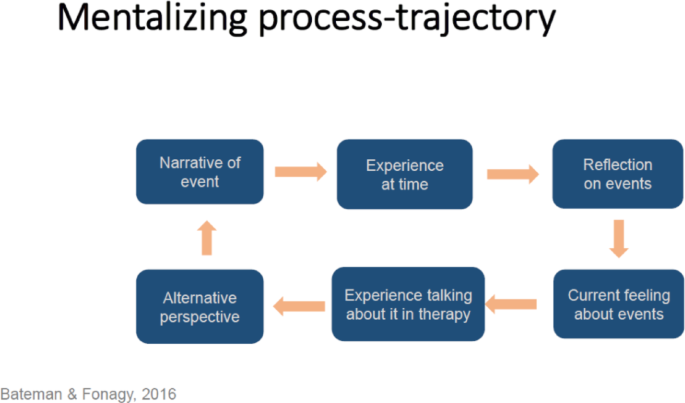

Mentalization has become one of the central concepts in contemporary psychotherapy, attachment research, and developmental psychology. The term refers to the capacity to form mental representations of intentional mental states — such as emotions, needs, desires, beliefs, and purposes — and thereby to understand these states in oneself and others. In recent decades, Mentalization-Based Therapy (MBT), developed by Peter Fonagy and Anthony Bateman, has emerged as an evidence-based treatment approach specifically aimed at strengthening this capacity.
Yet despite the growing popularity of the concept, one important question often remains surprisingly unclear: what does mentalization actually look like in clinical practice? Many clinicians may understand the concept theoretically while still lacking a vivid picture of how mentalizing is restored within actual therapeutic dialogue.
Our article, Making Visible the Clinical Practice of Mentalization-Based Therapy as Illustrated by Therapy Session Material, was written to clarify these questions in a concrete and educational manner. The background to the article was itself deeply dialogical. During the autumn of 2024, we began a series of conversations about mentalization and related concepts from two different professional perspectives. One of us approached the topic primarily as a doctoral researcher interested in conceptual clarity and theory development; the other as a practicing psychotherapist with years of direct clinical experience. Very quickly, we noticed that achieving a shared understanding of mentalization required far more than simply reviewing theoretical definitions.
This realization led us to examine an actual MBT session example in detail, and our dialogue gradually evolved into the idea of presenting our shared reflections in the form of an article.
The therapy example we analyze centers on a fictional patient, Susan, whose therapist unexpectedly had to cancel a session while she is already on her way to the appointment. What initially appears to be a relatively minor event gradually reveals itself to be emotionally overwhelming for the patient. Following the cancellation, Susan experiences intense distress and eventually induces vomiting. At first, however, she is unable to describe clearly what she felt. Her experience appears only as a vague “bad feeling” rather than as a differentiated emotional state connected to a meaningful relationship.
Our article describes how MBT helps transform such unmentalized emotional states into experiences that can gradually be recognized, reflected upon, and shared. The therapist does not impose interpretations from outside or claim to know the patient’s mind. Instead, the therapist adopts what MBT describes as a mentalizing stance: a curious, exploratory, and not-knowing attitude that repeatedly invites the patient to examine experience more closely.
When the therapist’s understanding feels sufficiently accurate and emotionally attuned, it strengthens the patient’s epistemic trust: the capacity to receive and internalize personally meaningful information from another person. In the session example, the gradual restoration of mentalizing ultimately leads to a shared relational state described as we-ness — a moment of mutual understanding in which both therapist and patient experience emotional connection and shared meaning.
We also aim to discuss how the mentalization-based approach relates to other forms of psychotherapy. MBT proposes that mentalizing is restored and strengthened primarily within the therapeutic relationship itself. What distinguishes the approach, however, is its particular focus on moments of rupture and repair, and on the careful working through of these moments in accordance with MBT principles. MBT focuses on helping the patient regain the capacity to reflect on feelings, intentions, and relationships while consistently working within the patient’s zone of proximal development.
In many ways, the process through which we wrote the article mirrored the very principles we were describing. The text itself emerged through dialogue, mutual questioning, clarification, and the gradual development of shared understanding. In this sense, the writing process itself reflected what mentalizing fundamentally is: a deeply human process through which people create meaning together.
By closely examining a single therapy interaction, we hope to offer psychotherapists, researchers, and students a clearer understanding of how mentalization can be supported, restored, and stabilized in therapeutic work. Making the mechanisms of action in MBT visible is important for all therapists interested in the role of mentalizing in psychotherapy. Psychotherapists interested in this approach may compare the mentalizing approach presented here with their own clinical way of working.

Follow the Topic
-
Discover Mental Health
This is an international, open access journal that publishes research across the transdisciplinary field of mental health research.

Related Collections
With Collections, you can get published faster and increase your visibility.
Workplace Mental Health and Occupational Wellbeing: From Prevention to Intervention
The workplace is a critical setting for mental health promotion, prevention, and intervention. With adults spending approximately one-third of their waking hours at work, occupational environments strongly shape psychological wellbeing, stress exposure, and mental health outcomes across the life course. The COVID-19 pandemic has further transformed work patterns—accelerating remote and hybrid arrangements—while highlighting persistent and emerging mental health challenges across sectors.
This Collection advances evidence-based knowledge on workplace mental health through two interconnected anchor themes, spanning diverse industries, organizational structures, and cultural contexts. We welcome original research, systematic reviews, meta-analyses, and perspective articles.
Theme 1: Organizational Determinants and Workplace Interventions
We invite research examining how organizational factors influence employee mental health and how workplace-based interventions can be designed, implemented, and evaluated, including:
• Occupational stress and burnout, and their neurobiological and psychological mechanisms
• Organizational culture, leadership styles, and workplace practices
• Prevention and early intervention programmes at individual and organizational levels
• Digital mental health interventions and employee assistance programmes (EAPs)
• Work–life balance, flexible work arrangements, and mental health outcomes
• Mental health outcomes in remote, hybrid, and gig-economy work arrangements
• Psychological safety, teamwork dynamics, and wellbeing
• Economic impacts and cost-effectiveness of workplace mental health programmes
• Workplace accommodations and legal frameworks supporting employee mental health
• Mental health literacy and training for managers and HR professionals
Theme 2: Vulnerable Workforce Groups and Health Equity
This theme focuses on populations and contexts facing heightened occupational mental health risks, including:
• Work-related depression, anxiety, and trauma (including PTSD in high-risk occupations)
• Mental health stigma in the workplace and disclosure challenges
• Shift workers, precarious employment, migrant workers, and underrepresented groups
• Workplace violence, harassment, and their mental health consequences
• Intersections with physical health, chronic disease management, and social determinants of health
To distinguish this Collection from existing calls and support practical translation, we particularly encourage submissions with strong methodological rigor and real-world relevance, such as longitudinal and intervention designs, implementation science approaches, cross-country comparative work, and mixed-methods studies. We also welcome research leveraging novel data sources (e.g., wearables, digital phenotyping, organizational HR analytics), alongside careful consideration of ethics and equity.
Overall, this Collection aims to bridge research, practice, and policy to support healthier, more inclusive, and more sustainable workplaces worldwide.
Keywords: Occupational mental health; workplace wellbeing; occupational stress; burnout; employee assistance programs; organizational psychology; work–life balance; occupational health psychology; workplace interventions; mental health stigma
Publishing Model: Open Access
Deadline: Nov 05, 2026
Gender and Psychosocial Factors in Mental Health: Rethinking Determinants, Experiences, and Outcomes
This collection examines the complex interplay between gender and psychosocial factors in shaping mental health across diverse populations. Giving equal attention to both domains, it brings together empirical and theoretical contributions from psychology, psychiatry, public health, and the social sciences to analyze how gender norms, identities, roles, and inequalities intersect with psychosocial dimensions such as social support, stigma, stress, violence, work and family conditions, and broader structural determinants. Adopting intersectional perspectives and context-sensitive methodologies, the contributions seek not only to document how gendered arrangements and psychosocial contexts jointly contribute to mental health disparities, but also to identify protective processes and promising avenues for prevention and intervention. In doing so, this collection aims to advance a more integrated and nuanced understanding of how gender and psychosocial factors influence mental health experiences and to inform policies and practices that promote equity and well-being.
Submissions are welcome on mental health in relation to gender and/or psychosocial factors across diverse populations and settings. We particularly encourage contributions that adopt a gender perspective, an intersectional approach, or other critical frameworks that illuminate how social positions, identities, and contexts shape mental health outcomes, access to care, and experiences of distress and well-being. Empirical, theoretical, and methodological articles that advance understanding of these issues or offer innovative insights with clear implications for research, practice, or policy will be considered especially relevant for this Collection.
These are some suggested, though by no means exhaustive, thematic lines and study designs for contributions. Submissions may, for example, address: (1) gender norms, roles, and systemic imbalances in relation to common psychological problems and health; (2) how gender interacts with other social locations such as sexual orientation, ethnicity/race, disability, migration, and chronic illness; (3) psychosocial processes including stigma, social support, caregiving, work–family balance, discrimination, and stress/trauma; and (4) implications for prevention, clinical practice, and policy (e.g., gender-transformative interventions, workplace or educational policies, etc.). We particularly welcome longitudinal and cross-sectional empirical studies, qualitative and mixed-methods research, intervention or implementation studies, and theoretical or model papers that address a wide range of determinants (e.g., gendered labor, caregiving, stigma, minority stress, chronic illness, body image, sexuality, etc.). However, other innovative and relevant proposals that fall within the broader scope of gender and mental health are also highly encouraged.
Keywords:
Gender; Mental Health; Psychosocial Factors; Well-being
Publishing Model: Open Access
Deadline: Dec 31, 2026


