What happens when robots move out of factories and into our everyday lives?
Published in Social Sciences

Unlike industrial robots, social robots are designed not just to perform routine tasks, but to interact with humans. They speak, gesture, respond, and, in some cases, try to show empathy. They are built to be noticed socially, not just mechanically.
As researchers, we were fascinated by how quickly this field has grown. Social robots are discussed in connection with autism support, dementia care, rehabilitation, education, companionship, customer service, and artificial intelligence. But despite this momentum, one thing was missing: a broad picture of how the field itself has evolved. That gap motivated our study.
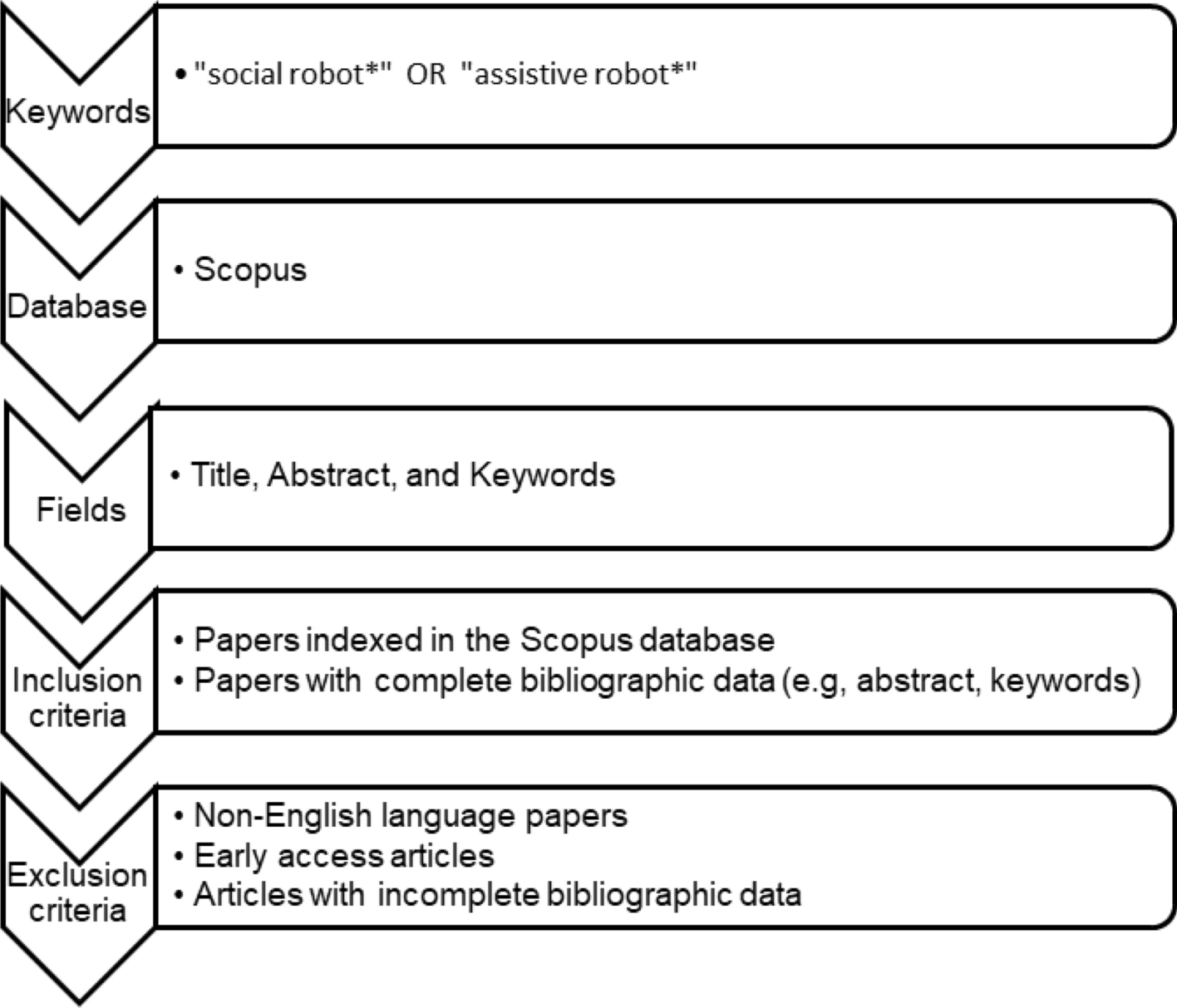
Rather than focusing on one type of robot or one application area, we stepped back and asked a bigger question: what does the global research landscape of social robotics actually look like? To answer it, we examined more than 5,300 publications published between 1989 and 2024. In doing so, we investigated how the field expanded, who shaped it, where the most influential work came from, and which ideas are now driving it forward.
One of the most striking findings was the speed of growth. Social robot research began as a small, scattered field, but over time it has developed into a large, international, and highly multidisciplinary research area. We identified five growth phases, showing how a niche topic gradually became a major research domain. Publication output reached its highest point in 2021, a sign that social robots are no longer a futuristic curiosity. They have become a serious object of scientific, social, and practical interest. Another important insight was that social robotics is not one conversation, but many. When we mapped the field, four major themes stood out.
The first is human-robot interaction and design. This theme asks a deceptively simple question: How should robots behave around people? Researchers here study trust, emotions, anthropomorphism, usability, and the design choices that make robots seem helpful, friendly, or unsettling. This matters because people do not respond to social robots as they respond to ordinary machines. A robot’s voice, face, gestures, and timing can shape whether we accept it or reject it.
The second theme is healthcare and assistive use. This emerged as one of the strongest and most developed parts of the field. Social robots are being explored as companions for older adults, as tools in dementia care, and as supports in rehabilitation and healthcare environments. That makes this line of research especially timely. Many societies are aging, care systems are under pressure, and loneliness has become a major public health concern. Social robots will not replace human care, but they may help extend it, supplement it, and in some contexts make it more accessible.
The third theme centers on education and development. Here, social robots are studied as tutors, learning companions, and supports for children, including children with autism spectrum disorder. This is one of the most publicly visible uses of social robots because it directly touches the future. If robots can help children practice communication, improve attention, or support individualized learning, then the implications go far beyond technology. They reach into how we teach, how we include, and how we imagine the classroom of tomorrow.
The fourth theme involves AI-driven technological advances. Machine learning, computer vision, human-machine interfaces, and collaborative robotics are becoming deeply intertwined with social robotics. In other words, social robots are getting smarter, more adaptive, and more context-aware. But that progress also raises difficult questions. The more capable these systems become, the more relevant topics such as privacy, safety, transparency, and ethics become.
Our study matters beyond academia, as social robots are no longer merely technical systems. They are social actors entering spaces shaped by vulnerability, care, trust, and emotion. A robot in a warehouse is one thing. A robot interacting with a child, an older adult, or a patient is something else entirely.
Our findings suggest that the future of social robotics will depend not only on better hardware or AI, but also on better collaboration across disciplines and countries. Engineers, computer scientists, educators, psychologists, designers, ethicists, and healthcare professionals all play a role. So do policymakers and institutions decide how these systems should be introduced responsibly.
Looking back at decades of research has helped us see that social robots are no longer just about what machines can do. They are about what kinds of relationships we are willing to build with technology, and under what conditions.
That is why we wrote this paper. To understand where the field has been, where it is heading, and why this matters now.
Read the full paper here:
https://link.springer.com/article/10.1007/s10758-026-09965-8
Abderahman Rejeb is a researcher at the Faculty of Business and Economics of Széchenyi István University in Győr, Hungary. His published work is situated at the intersection of business, technology, and supply chain research, with a strong interest in emerging digital applications and interdisciplinary analysis.
Karim Rejeb is affiliated with the Faculty of Sciences of Bizerte at the University of Carthage, Tunisia. His academic profile reflects research activity in information and communication technologies, with public records also linking his work to artificial intelligence, cybersecurity, and bibliometric studies.
Imen Zrelli is affiliated with the College of Business at the University of Jeddah, Saudi Arabia. Her published work spans marketing, tourism, and business research, and more recently includes bibliometric and review-based studies in logistics, supply chains, and emerging technologies.
Edit Süle serves as an associate professor at Széchenyi István University’s Faculty of Business and Economics. Her teaching and research focus on supply chain management, operations management, complex networks, and decision sciences, and she is currently the head of the MSc in Supply Chain Management program.
Abdo Hassoun is a researcher affiliated with Sustainable AgriFoodTech Innovation & Research (SAFIR), Arras, France, and the Faculty of Agricultural Engineering at the University of Aleppo, Syria. His research focuses on food science, agrifood systems, sustainability, and technology-oriented studies in food production and supply chains.
Horst Treiblmaier is a Full Professor at Modul University Vienna, Austria. His research interests include the business implications of blockchain and artificial intelligence, the evolution of Web3, and digital transformation in general. He teaches blockchain-related topics and frequently speaks at academic conferences and industry events. In 2022, he won the Blockchain Frontier Award from the Blockchain Research Institute (BRI).

I am a Full Professor at Modul University Vienna, Austria. My research interests include the business implications of blockchain and artificial intelligence, the evolution of Web3, and digital transformation in general. I teach blockchain-related topics and frequently speak at academic conferences and industry events. In 2022, I won the Blockchain Frontier Award from the Blockchain Research Institute (BRI).
Follow the Topic
-
Technology, Knowledge and Learning
This is a journal that emphasizes the increased interest in context-aware adaptive and personalized digital learning environments.