What is Science for a Sustainable Future?
Published in Healthcare & Nursing, Astronomy, and Social Sciences


Science and research stand as a vital pillar in our pursuit of the SDGs by 2030. It offers invaluable solutions to our most pressing global challenges.
Yongyi Min, Chief of the SDG Monitoring Section, UN Statistics Division at Science for a Sustainable Future 2024.
Every year, Springer Nature and the UN Sustainable Development Solutions Network (SDSN) bring together policymakers, government representatives, UN officials and leading global scientists to discuss and advance the objectives of the Sustainable Development Goals (SDGs).
The result, Science for a Sustainable Future (SFSF), is an international discussion between academic, policy and technical experts, and clear recommendations to progress the goals.
What’s special each year is seeing the interaction between speakers who represent various disciplines, countries, organisations and expertise.
Academic experts demonstrate their deep understanding of complex development challenges, while those working on the frontline of sustainable development share the challenges and information gaps they need help to address.
Every year, the SFSF events facilitate new connections and knowledge exchange, showing the value of having science and research at the heart of discussions around achieving the SDGs. As the opening quote from Yongyi Min shows, researchers are well-equipped to offer practical, technical and detailed insights to all those seeking to achieve the goals.
What else makes this series important?
In previous years, we’ve invited speakers who are experts in specific SDGs – like SDG 7: Clean and Affordable Energy - or identified topics that cut across multiple Goals, that we feel need greater attention in research and policy, for example migration.
Our aim is to raise the profile of these overlooked areas or shine a light on the researchers focusing in on these complex issues, who can provide policy makers with the information they need to fill gaps, make decisions and ultimately move the dial forward.
We keep our discussions focused on tangible, practical recommendations for next steps so they are of most help to those working on the goals. And we make sure these recommendations don’t remain in the confines of the webinar: we compile policy briefings after the event and create visual summaries of each session for any audience interested in the goals, including those beyond academia.
We want to make sure each year SFSF is of value to the research community by seeking out new voices and high-profile representatives who are leading global discussions on important SDG-related topics and can answer questions directly from our webinar audience. In joining us, we hope our audience feel inspired but also informed of the latest policy and research developments – and we collect feedback each year to improve.
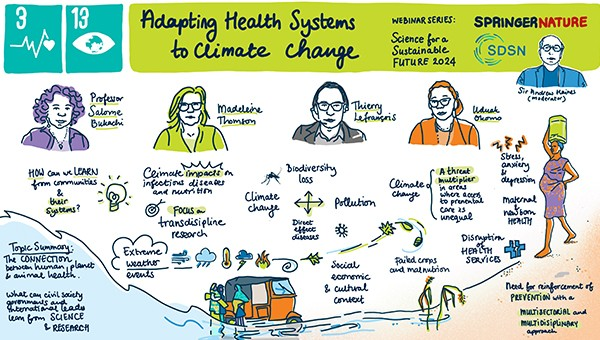 Image credit: Suzanne Seton, Springer Nature.
What’s happening this year?
Now in its fifth year, we would like to invite members of the research community to join our webinar series as we explore the question: What is needed to make the SDGs happen by 2030?
We’re hosting two webinars on topics that we think could provide helpful answers to this question. First, Impacting SDG policy: the role of science and research in driving sustainable change (20 May, 12.00 BST). This session will showcase best practice examples of policy and research collaboration and identify tangible recommendations to ensure policy makers and researchers work closely together for the benefit of global society.
Our second session, 10 Years of a World that Counts: Where has the data revolution taken us in global education? (27 May, 15.00 BST). This session seeks to address if SDG data has been impactful, relevant, and sufficient to provoke the progress needed to meet global aspirations in education a decade after the UN’s A World that Counts report.
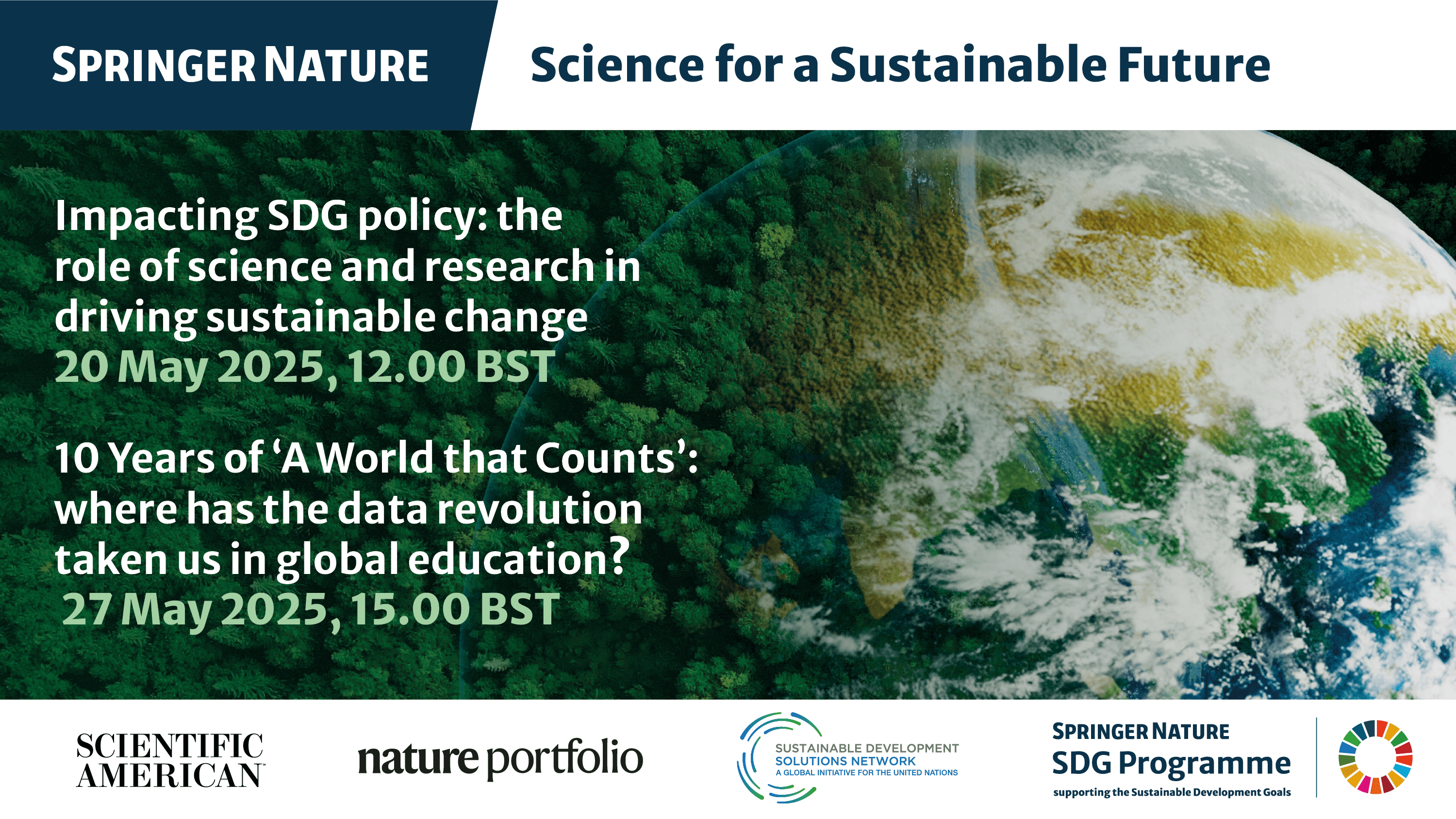 Science for a Sustainable Future 2025
How do I sign up and learn more?
You can register for both sessions by visiting our Zoom event homepage. Additionally, the summaries and policy briefings from previous years of Science for a Sustainable Future can be found on our main website and YouTube channel.
Follow the Topic
What are SDG Topics?
An introduction to Sustainable Development Goals (SDGs) Topics and their role in highlighting sustainable development research.
Continue reading announcement