What limits woody plants from restoring metal-contaminated soils? A global synthesis
Published in Earth & Environment and Sustainability




Soils are often described as the foundation of terrestrial ecosystems. They support food production, regulate water and nutrient cycling, store vast amounts of carbon, and sustain biodiversity across landscapes. Yet in many parts of the world, soils have become increasingly contaminated by heavy metals as a consequence of mining, smelting, industrial emissions, wastewater irrigation, and intensive agricultural activities. Unlike many organic pollutants, heavy metals do not simply disappear through natural degradation processes. They can persist in soils for decades or even centuries, creating long-term ecological risks and raising concerns for food security and human health.
Against this backdrop, phytoremediation has emerged as one of the most promising ecological approaches for managing contaminated soils. Instead of relying entirely on excavation, chemical treatment, or expensive engineering technologies, phytoremediation uses plants themselves to stabilize, extract, or transform pollutants. The appeal of this approach lies not only in its relatively low cost, but also in its compatibility with ecosystem restoration. In many degraded landscapes, remediation is not only about removing contaminants; it is also about rebuilding vegetation cover, reducing erosion, restoring ecological functions, and improving long-term environmental quality.
When phytoremediation is discussed, attention is often directed toward herbaceous hyperaccumulator species that rapidly concentrate metals in their tissues. However, woody plants such as trees and shrubs represent another important but comparatively underexplored pathway. Woody species generally possess deeper and more extensive root systems, larger biomass, and longer life spans than herbaceous plants. These traits make them especially valuable for stabilizing contaminated soils over long periods and across large areas. In mining regions, riparian zones, urban-industrial landscapes, and degraded ecosystems, woody plants may contribute simultaneously to pollution control, vegetation recovery, carbon sequestration, habitat restoration, and erosion prevention.
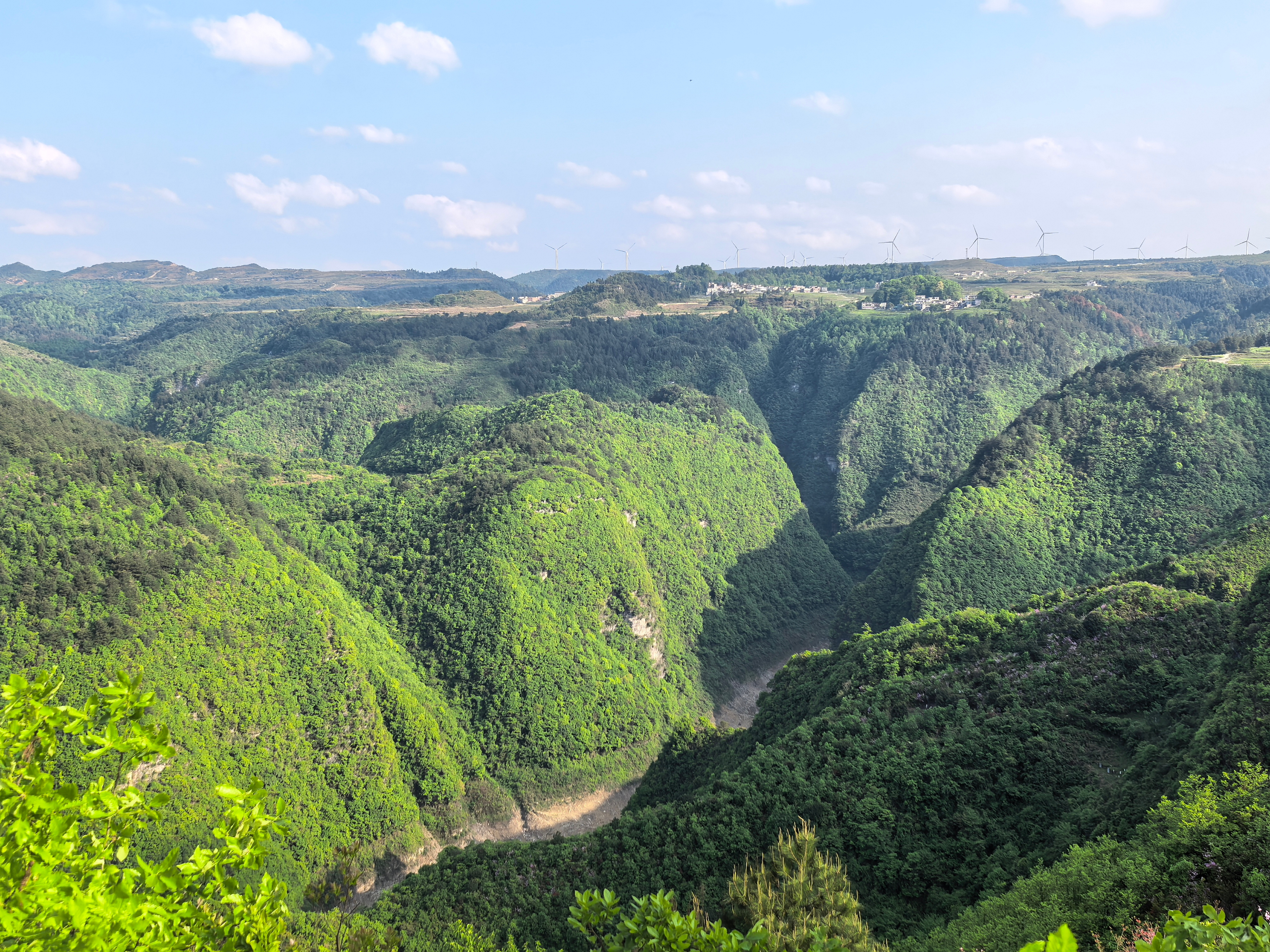
This broader ecological role was one of the key motivations behind our study. We wanted to move beyond a simple species-centered perspective and ask a more practical ecological question: under what environmental and contamination conditions are woody plants most effective for phytoremediation of heavy metal-contaminated soils?
At first glance, this question appears straightforward. It is tempting to assume that some woody species are inherently “good” accumulators whereas others are not. However, as we synthesized studies from different regions and ecosystems, it became increasingly clear that phytoremediation performance cannot be explained by plant identity alone. Studies differed substantially in target metals, contamination intensity, soil properties, climate, plant tissues examined, and experimental design. Some focused on cadmium or lead, whereas others investigated copper, zinc, chromium, arsenic, or mercury. Soil pH varied widely among sites, and initial contamination levels ranged from moderate pollution to severely contaminated conditions.
Importantly, this variation is not simply statistical noise. It reflects the ecological reality that phytoremediation is fundamentally a plant–soil–metal interaction process. A woody species that performs well under one set of soil conditions may behave very differently elsewhere because metal uptake depends not only on plant traits, but also on metal chemistry, soil acidity, background contamination levels, and environmental context. In other words, phytoremediation success is highly context dependent.
To address this complexity, we conducted a global meta-analysis of published studies on woody plant phytoremediation. Rather than simply asking whether woody plants can accumulate metals, we aimed to identify the broader drivers that explain variation in remediation efficacy across studies and environmental conditions. By integrating data from multiple regions, contamination scenarios, and metal types, we sought to detect general patterns that may not be visible in individual experiments.
One of the clearest patterns emerging from our synthesis was the importance of initial metal concentration. This finding may appear intuitive, yet it carries important ecological and practical implications. At relatively low contamination levels, plant uptake may remain limited simply because little metal is available in the soil solution. In contrast, extremely high concentrations may inhibit root growth, impair physiological functioning, and reduce plant survival, ultimately constraining remediation potential. More contamination therefore does not necessarily translate into more effective phytoextraction. There may be thresholds beyond which plant-based remediation becomes increasingly inefficient without additional management interventions.
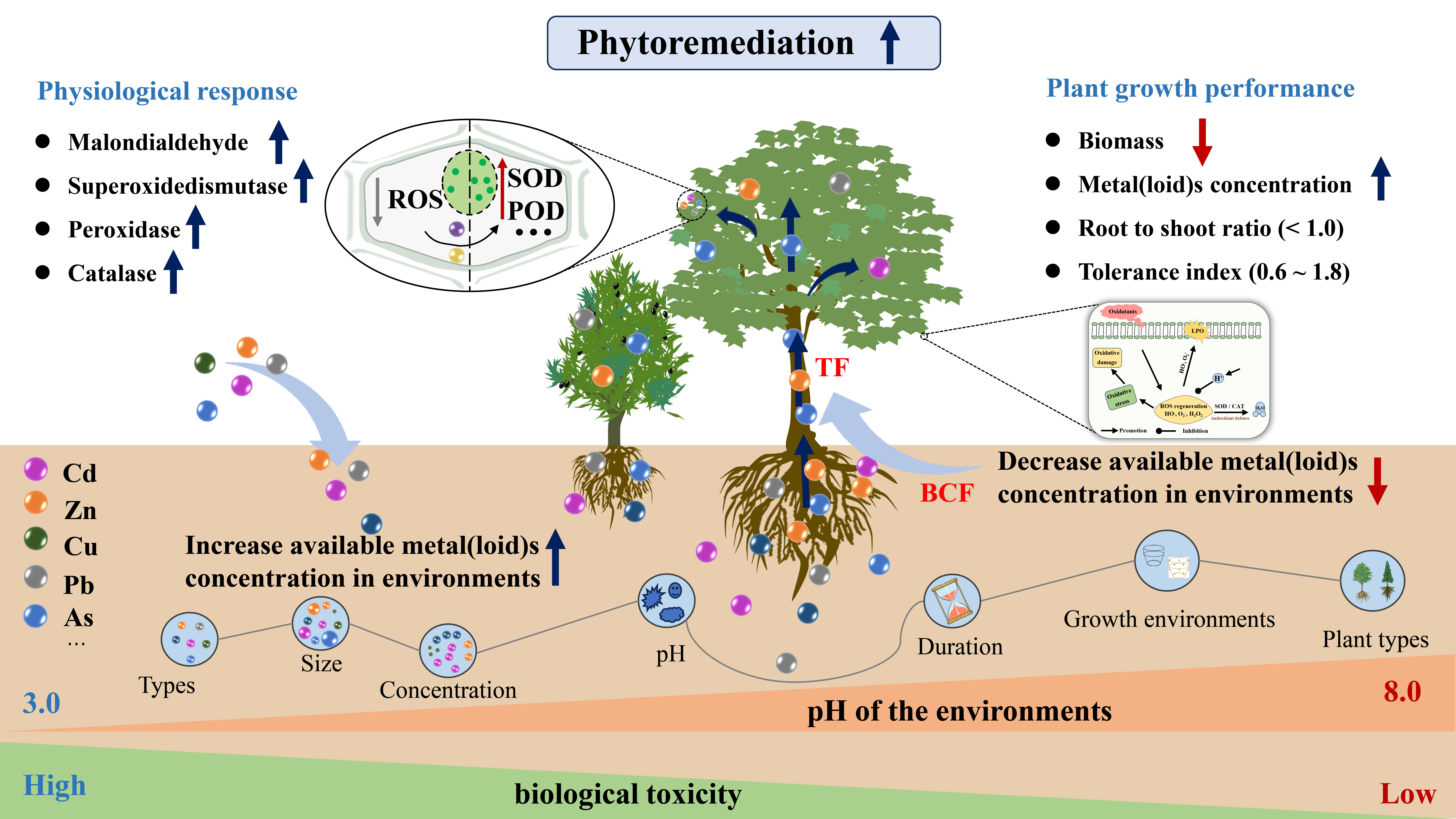
A second major finding was that metal identity itself strongly shapes phytoremediation outcomes. Heavy metals are often grouped together conceptually, but they differ substantially in mobility, bioavailability, toxicity, and uptake pathways within soil–plant systems. Cadmium, zinc, copper, chromium, arsenic, mercury, and lead each interact differently with soils and plant tissues. Treating them as ecologically equivalent can therefore lead to oversimplified conclusions. Our results reinforce the idea that phytoremediation strategies should be designed specifically around the target contaminant rather than assuming that a single species or approach can perform equally well across all metals.
Soil pH also emerged as a key controlling factor. Because pH strongly influences metal solubility and availability, it indirectly regulates both plant tolerance and metal uptake. In acidic soils, some metals become more mobile and more accessible for plant absorption, but this may simultaneously increase toxicity stress. In alkaline soils, metals may become less bioavailable, potentially reducing uptake while lowering ecological risk. This dual role highlights the importance of considering soil chemistry alongside plant characteristics when evaluating phytoremediation potential.
Another insight from this work concerns the challenge of synthesizing phytoremediation studies at a global scale. Meta-analysis is often viewed primarily as a statistical exercise, yet much of the difficulty lies in data harmonization before analysis even begins. Different studies report metal concentrations in different units, focus on different plant tissues, apply different experimental conditions, and use different remediation indicators. Extracting comparable information required extensive screening, repeated validation, and careful standardization. This process also underscored the importance of consistent reporting practices in environmental research. Information such as initial soil metal concentration, soil pH, plant tissue type, and experimental context may appear routine within individual studies, but becomes essential when attempting to understand broader ecological patterns.
Ultimately, our findings suggest that woody plant phytoremediation should be understood as a context-dependent ecological strategy rather than a fixed property of individual species. Effective remediation depends on interactions among plants, soils, metals, and environmental conditions. Before selecting woody plants for restoration or remediation projects, practitioners should consider not only species identity, but also the target metal, contamination intensity, soil acidity, and restoration objective. In some cases, woody plants may be particularly valuable for phytostabilization and long-term ecosystem recovery rather than rapid contaminant extraction. In others, especially where metal availability and plant tolerance are favorable, they may contribute more directly to pollutant removal.
For contaminated landscapes, the key question is therefore not simply whether trees can clean the soil. The more meaningful question is: which trees, for which metals, in which soils, and under which environmental conditions? That is the question our study set out to explore.
Follow the Topic
-
Communications Earth & Environment
An open access journal from Nature Portfolio that publishes high-quality research, reviews and commentary in the Earth, environmental and planetary sciences.

What are SDG Topics?
An introduction to Sustainable Development Goals (SDGs) Topics and their role in highlighting sustainable development research.
Continue reading announcementRelated Collections
With Collections, you can get published faster and increase your visibility.
Drought
Publishing Model: Hybrid
Deadline: Jun 30, 2026
Remote sensing and forests
Publishing Model: Hybrid
Deadline: Jul 31, 2026



Please sign in or register for FREE
If you are a registered user on Research Communities by Springer Nature, please sign in