What We Learned About Virtual Skeletal Assessment
Published in Social Sciences



Forensic anthropologists have relied on direct examination of skeletal remains to estimate biological profile. Although digital technologies have transformed documentation and visualization, one important question has remained surprisingly difficult to answer: How well do the observations we make on physical bone translate into virtual models?
That question is the foundation of a student’s work in our laboratory at George Mason University.
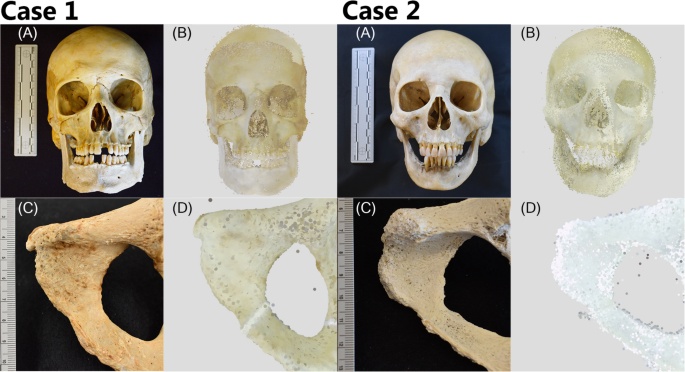
The project initially seemed straightforward. We planned to compare biological profile assessments made on physical skeletal elements with assessments performed on handheld laser scan-derived 3D models. Like many validation studies, we expected to determine whether the virtual models were “good enough.”
The results were far more interesting: we found that some traits translated remarkably well into the digital environment. Others did not.
Perhaps the most surprising finding was that agreement and estimation accuracy did not always move together. Generally speaking, skeletal sex estimation maintained comparably accurate despite relatively modest agreement in trait scores, whereas population affinity traits showed comparatively better agreement between physical and virtual observations but lower classification accuracy. This disconnect forced us to think more carefully about what agreement statistics actually tell us, and what they do not.
A more nuanced interpretation of the findings is that traits that depend primarily on overall morphology and shape appeared to be more resilient in virtual environments. In contrast, traits requiring subtle surface texture, fine morphological detail, or tactile assessment proved considerably more challenging.
The review process also shaped the final paper in meaningful ways. In response to reviewers, we took a deeper look into the effects of participant experience, survey attrition, and the limitations of the study. These additions strengthened the manuscript and improved transparency and honesty.
Another aspect that makes this publication particularly meaningful is that it represents the first peer-reviewed publication originating from student thesis research in our laboratory at George Mason University. Seeing a master’s thesis develop into a publication in the International Journal of Legal Medicine has been tremendously rewarding and reflects the dedication of everyone involved in the project.
I am a biological and forensic anthropologist at George Mason University, where I am affiliated with the Forensic Science Research and Training Laboratory (FSRTL), a human taphonomic research facility. My work integrates forensic anthropology, skeletal biology, and quantitative methods, with an emphasis on applied research, method validation, and ethical practice. My research focuses on forensic skeletal analysis, trauma interpretation, and population variation in biological profile estimation, particularly addressing the underrepresentation of Asian groups in skeletal biology and forensic standards. I also work in forensic taphonomy and decomposition research, contributing to regionally grounded, empirical approaches to postmortem interval estimation and case interpretation. I am actively engaged in forensic anthropology consultation, including human vs. non-human determinations, skeletal assessment, search and recovery, and secondary review, and have worked with medical examiner’s and coroner’s offices across multiple U.S. jurisdictions. I am particularly interested in building sustainable bridges between research, practice, and training in forensic anthropology.
Follow the Topic
-
International Journal of Legal Medicine
It is the aim of the International Journal of Legal Medicine to improve the scientific armamentarium necessary for the elucidation of crime and for related forensic applications at a high level of evidential proof.

Related Collections
With Collections, you can get published faster and increase your visibility.
Quality assurance in legal medicine
Quality assurance in medicine is crucial for ensuring the reliability and accuracy of diagnoses and treatments. In clinical practice, these are typically guided by evidence-based approaches outlined in detailed guidelines or recommendations. In the field of medicolegal sciences, including forensic toxicology, genetics, and age estimation, there has been significant effort to establish a common knowledge base and recommend best practices. Forensic medicine and pathology still lack comprehensive references, which are urgently needed. This topical collection seeks to highlight papers addressing quality assurance and standards, guidelines and recommendations in key areas of interest within legal medicine.
All articles undergo a single blind peer review process with 2 reviewers. The decision on acceptance of an article is made by the Editors-in-Chief.
Publishing Model: Hybrid
Deadline: Ongoing
New developments in clinical legal medicine
Clinical legal medicine has significantly grown in importance within the field of forensic medicine over the past decades. Formerly confined to the autopsy room, forensic physicians are now increasingly tasked with investigating cases involving survivors of child abuse, sexual assault, or torture, among other notable categories of victims. In many countries, victim support centers offer medicolegal assistance, even in the absence of ongoing legal proceedings. This collection aims to underscore the increasing significance of clinical legal medicine in society.
All articles undergo a single blind peer review process with 2 reviewers. The decision on acceptance of an article is made by the Editors-in-Chief.
Publishing Model: Hybrid
Deadline: Ongoing