When a PhD Is Judged Before It Is Read|Three supervisors, one PhD, and the stigma faced after graduating from Southeast Asia
Published in Education and Arts & Humanities

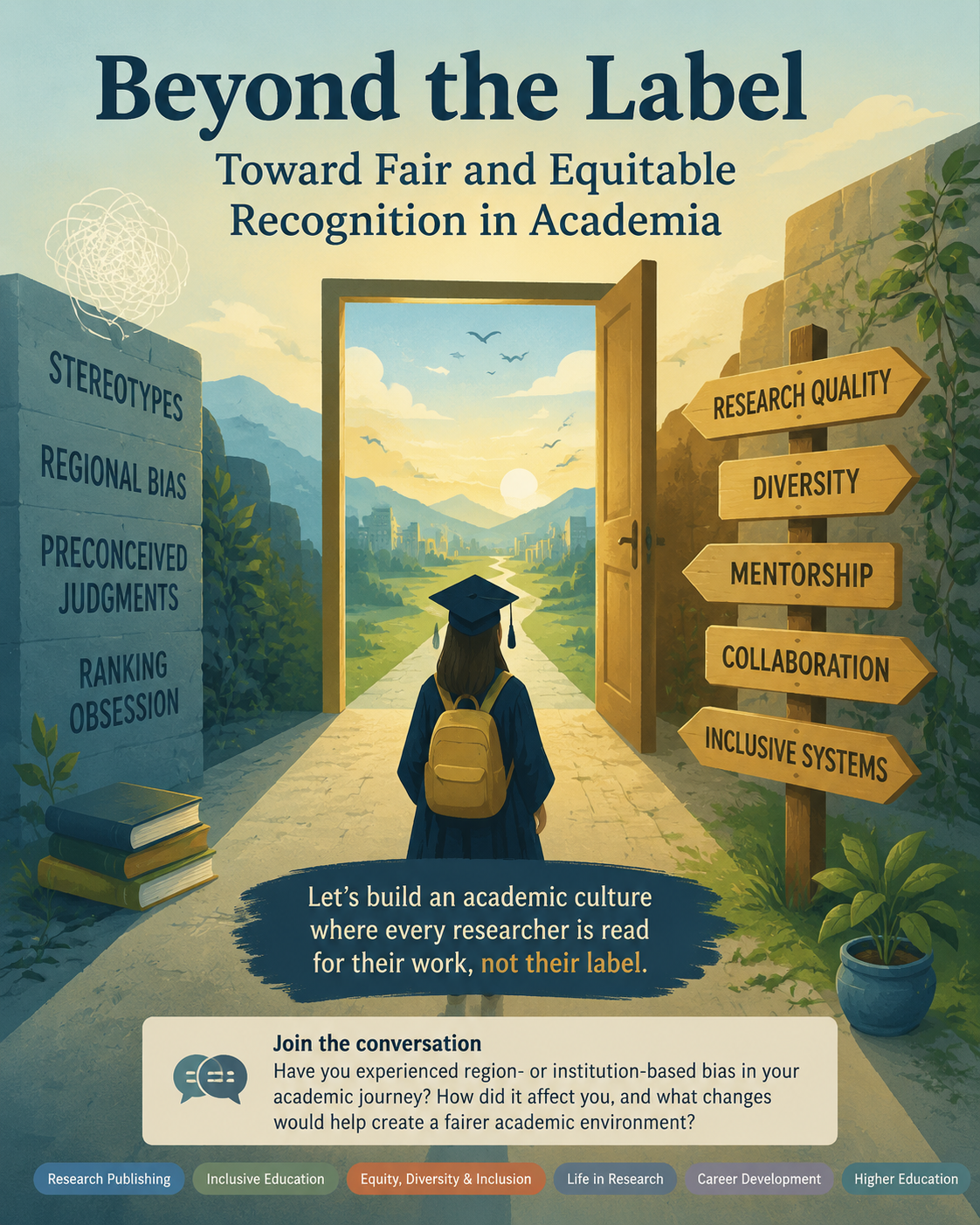


Before completing my PhD, I had already begun noticing a phrase appearing frequently in discussions surrounding overseas education and academic recruitment in mainland China: “Southeast Asian PhD.”
The term was rarely used as a neutral geographical description. More often, it appeared as a stigmatizing label associated with assumptions about lower academic standards, easier doctoral training, weak research ability, or “shortcut” academic credentials. What concerned me was not the criticism of specific universities. Academic systems should remain open to evaluation and debate. The problem was the emergence of a one-size-fits-all perception in which highly diverse universities, disciplines, and doctoral experiences across Southeast Asia were flattened into a single negative category.
Importantly, this was not something I encountered broadly across all international academic contexts. This one-size-fits-all logic appeared most clearly in discussions surrounding the mainland Chinese academic employment market, where overseas degrees are often interpreted through highly structured prestige hierarchies. In these discussions, regional labels sometimes seemed to outweigh institutional distinctions, publication records, or individual research trajectories (see research on academic stratification and labor market hierarchy in China: https://scholar.xjtlu.edu.cn/en/publications/perceived-academic-working-conditions-and-career-choices-of-chine).
At the time, I did not fully realize how much such perceptions could shape academic careers.
Before beginning my doctorate, I completed a master’s degree in bilingual education in Madrid, Spain. I later pursued a PhD in applied linguistics at a Malaysian public university ranked within the global top 150. During my doctoral studies, I published journal articles, developed a clear research focus, and built international academic connections. Like many doctoral students, I believed that academic work would eventually speak for itself.
My doctoral experience itself, however, complicated many of the assumptions embedded within the “Southeast Asian PhD” label.
Within the first month of my studies, my original supervisor resigned. I was reassigned to another supervisor whose research area differed significantly from mine, creating months of uncertainty before I eventually transferred to another school within the university. By the end of my doctorate, I had worked under three supervisors.
Concurrently, adapting to a multilingual academic environment required far more than simply studying in English. Academic writing, supervision, administrative communication, and institutional expectations often operated across different linguistic and cultural systems simultaneously. Navigating these environments required continuous adjustment, flexibility, and institutional learning that remained largely invisible in simplified public discussions about overseas doctoral education.
Beyond institutional instability, doctoral training also exposed another dimension of academic precarity. Near the end of my PhD, I encountered unequal academic power relationships during the publication process. After drafting a manuscript based on my dissertation under the expectation that I would lead the publication, the authorship arrangement later changed. Approaching graduation and dependent on supervisory approval, contesting the decision did not feel realistic (see literature on academic precarity and doctoral vulnerability: https://link.springer.com/article/10.1007/s10734-023-01176-9).
In mainland China, “Southeast Asian PhD” has increasingly become a label in some public and academic discussions, often associated with assumptions about lower standards, easier doctoral training, and weaker academic credibility through a one-size-fits-all evaluative lens. Yet the lived reality for many internationally mobile doctoral students often involves navigating unstable supervision, multilingual communication challenges, publication pressure, unfamiliar institutional systems, and vulnerable academic positions that remain largely invisible behind this form of regional stigma.
The stigma attached to the regional label often obscures these realities.
It was only after graduation, however, that I began to understand how strongly such stigma could shape academic opportunities.
As I entered the academic job market, I realized that completing a PhD and having that PhD equally recognized were not necessarily the same thing. Academic value was not interpreted solely through publications, research topics, or training quality. It was also filtered through assumptions about regional prestige and perceptions of academic legitimacy.
In some conversations connected to academic hiring in mainland China, the label “Southeast Asian PhD” seemed to function less as a description than as a pre-existing judgment. Before the research itself was read, broader regional stereotypes had already begun speaking for it.
For early-career researchers, this creates an important but uncomfortable reality. International academic mobility may expand educational opportunities, but mobility alone does not guarantee equal recognition after graduation. Degrees obtained outside traditionally dominant academic centers may still be evaluated through simplified regional perceptions rather than individual academic merit (see global higher education stratification: https://www.timeshighereducation.com/news/expansion-in-global-higher-education-has-increased-inequality).
For doctoral students considering international education pathways, this does not mean avoiding Southeast Asia or abandoning international mobility altogether. Rather, it means recognizing that academic mobility operates within uneven global prestige systems that continue to shape how degrees are interpreted after graduation. Conversations about rankings, publications, and internationalization remain important, but they are not enough. Understanding how regional stigma and prestige hierarchies influence employability may be equally important for early-career researchers navigating an increasingly competitive academic landscape.
Internationalization in higher education is often presented as a story of openness and global opportunity. Yet for some internationally mobile researchers, the transition from doctoral study to academic employment also reveals how unevenly academic recognition continues to operate.
A PhD is never evaluated solely through the work it produces. It is also filtered through systems of prestige, hierarchy, and perception. In an increasingly internationalized academic world, perhaps the more difficult question is whether academic work can ever be read on its own terms before regional assumptions begin speaking first.
My hope for the future
Looking ahead, I hope academic communities around the world can adopt more thoughtful and fair ways to evaluate doctoral work. Acknowledging the variety of doctoral experiences across different regions and institutions can help challenge simplistic, one-size-fits-all stereotypes. I hope that hiring committees, journals, and fellow researchers focus more on the quality, originality, and rigor of the work itself rather than on labels linked to location. Open discussions about fairness, mentorship, and institutional support could also make the academic environment more transparent and supportive for early-career researchers.
As higher education becomes more international, it is important that mobility comes with equal recognition. Early-career researchers should have their work judged on its own merits, without assumptions based on where their degree was earned.
Open question for discussion
Although I experienced regional stigma in my own academic journey, I am curious whether early-career researchers in other parts of the world have faced similar biases based on the location of their degrees or institutions. How might these perceptions influence academic opportunities, and what approaches could help create a fairer, more inclusive environment for all researchers?
Hello! I’m Wen’ou Xue, a researcher in Applied Linguistics with a focus on international higher education. My work explores the academic, sociocultural, and psychological adaptation challenges faced by international students, particularly those transitioning to English-medium instruction (EMI) programs.
I recently completed my PhD, where I examined how regional perceptions and academic hierarchies shape the recognition of overseas doctoral degrees. My research combines insights from intercultural communication, acculturation theory, and higher education studies.
I’m passionate about supporting early-career researchers and fostering inclusive academic environments. Outside research, I enjoy exploring cross-cultural education, international student mobility, and promoting fairness and equity in academia.
I look forward to connecting with fellow researchers, sharing experiences, and contributing to meaningful discussions in the community!


Please sign in or register for FREE
If you are a registered user on Research Communities by Springer Nature, please sign in
Bless you for a fresh beginning
All the best for your new chapter