When Dysphagia Is More Than a Local Problem: A Diagnostic Lesson in Light-Chain Amyloidosis
Published in Biomedical Research

Case Summary
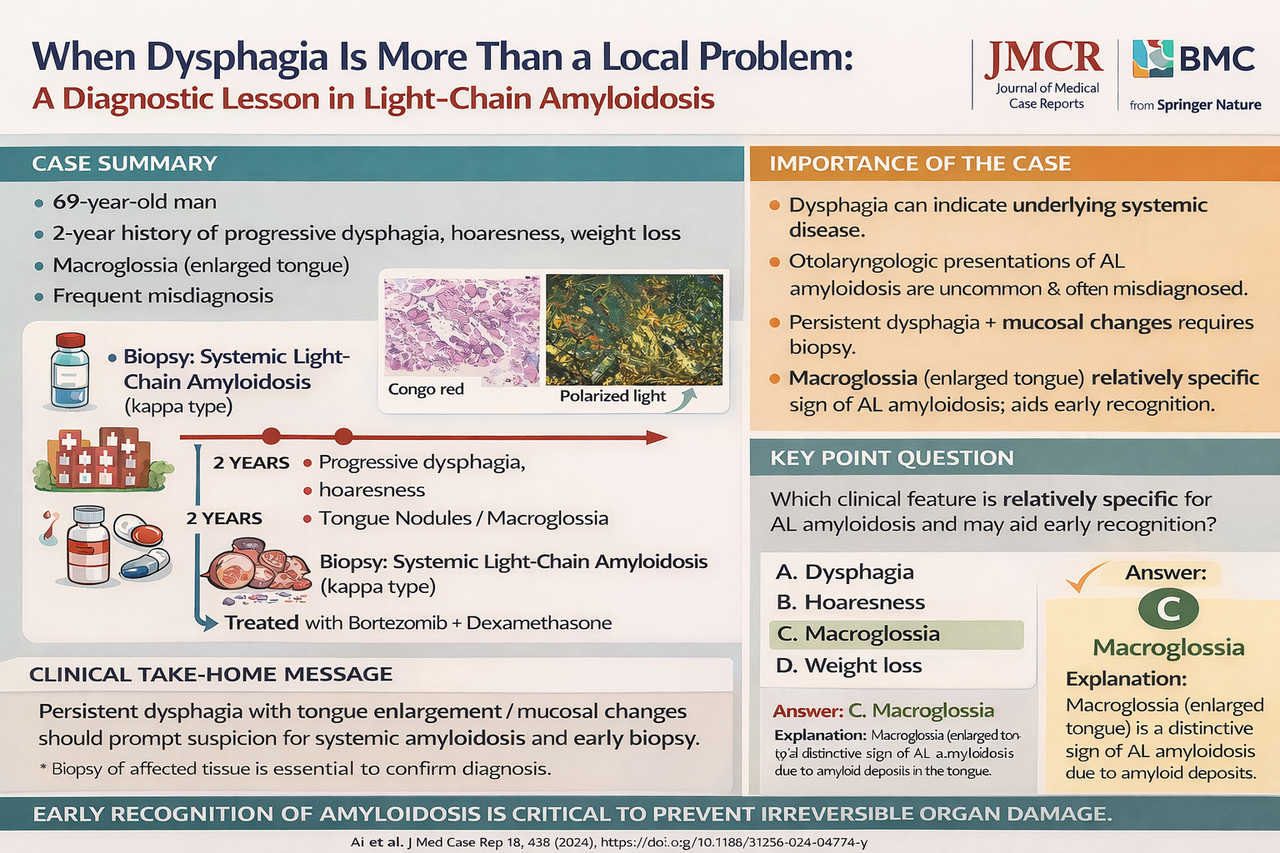
A 69-year-old man presented with a 2-year history of progressive dysphagia, accompanied by hoarseness, aspiration, impaired tongue mobility, and weight loss .Despite multiple healthcare encounters, the diagnosis remained elusive.
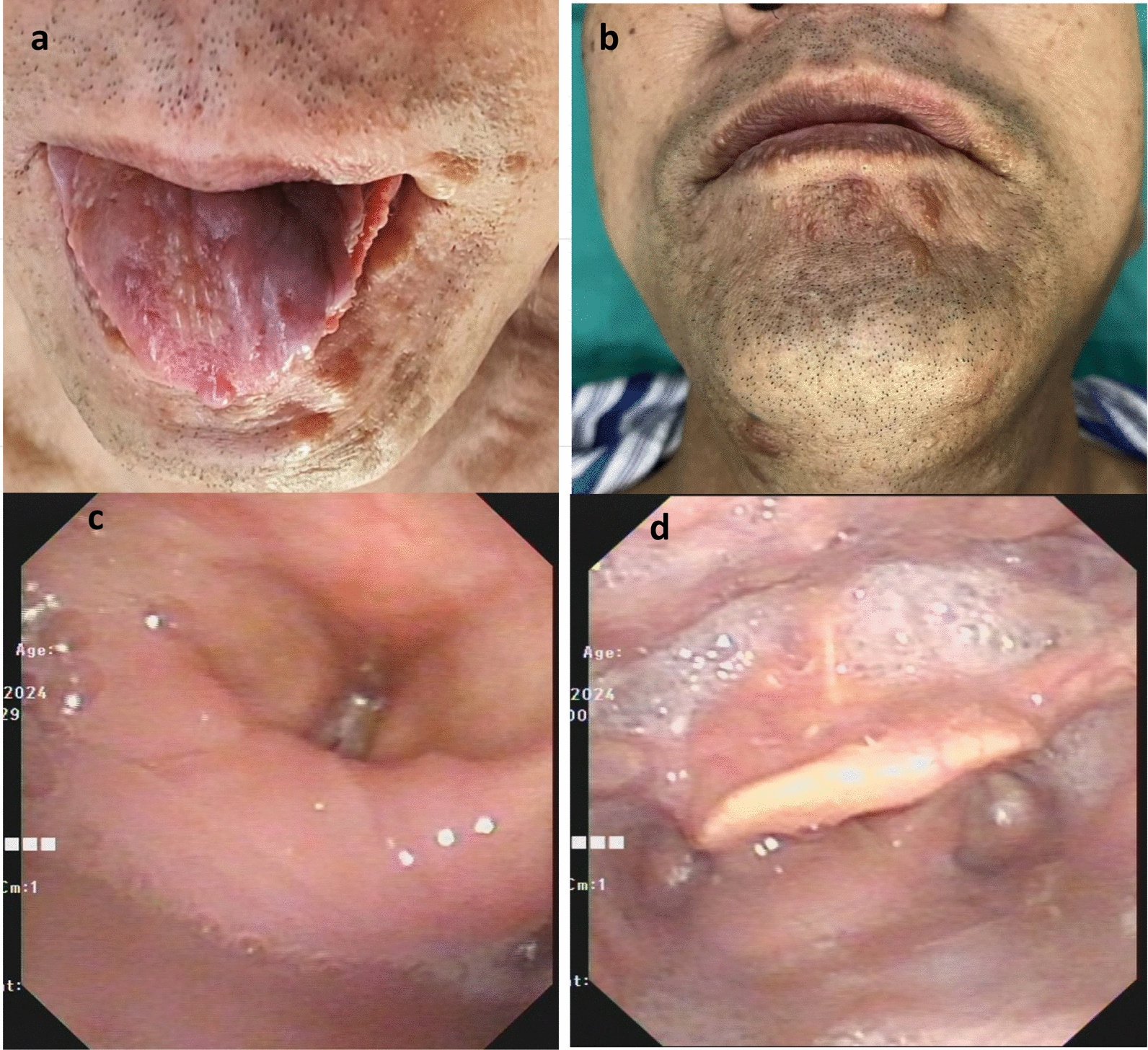
Examination revealed diffuse mucosal swelling of the pharynx and larynx, along with nodular tongue and skin lesions (Figure 1, page 2), raising suspicion for an infiltrative process . Definitive diagnosis was established through biopsy, demonstrating subepithelial amyloid deposition, and confirmed as systemic light-chain (AL) amyloidosis (kappa type) .
The patient was treated with bortezomib and dexamethasone, achieving partial reduction in mucosal swelling, though clinical symptoms persisted .
Why This Case Matters
AL amyloidosis is a multisystem protein misfolding disorder with protean manifestations. While cardiac and renal involvement dominate, otorhinolaryngologic presentations are uncommon and frequently misdiagnosed .
This case highlights several key clinical realities:
Diagnostic delay is common—median time to diagnosis ~2.7 years
Patients often see multiple physicians before recognition
Localized symptoms (e.g., dysphagia, macroglossia) may precede systemic diagnosis
No single test confirms amyloidosis—tissue biopsy remains essential
For neurologists and general clinicians alike, progressive bulbar symptoms without clear etiology should prompt consideration of infiltrative or systemic disease processes, including amyloidosis.
Clinical Take-Home Message
Persistent, unexplained dysphagia—especially with tongue enlargement or mucosal changes—should raise suspicion for systemic amyloidosis and prompt early biopsy.
Early recognition is critical, as delayed diagnosis risks irreversible organ damage despite emerging therapies.
Question
Which clinical feature is relatively specific for AL amyloidosis and may aid early recognition?
A. Dysphagia
B. Hoarseness
C. Macroglossia
D. Weight loss
Correct Answer:
C. Macroglossia
Explanation:
While many symptoms of AL amyloidosis are nonspecific, macroglossia and periorbital purpura are among the more characteristic findings, reflecting amyloid deposition in soft tissues . Recognition of these signs can significantly shorten diagnostic delay.
Final Perspective
This case exemplifies the enduring value of careful clinical observation and histopathologic confirmation—principles that remain foundational despite advances in imaging and biomarkers.
Journal of Medical Case Reports is the world’s first international, PubMed-listed, medical journal devoted to publishing case reports from all medical disciplines and will consider any original case report that expands the field of general medical knowledge, and original research relating to case reports.
Richard Alan Rison is the interim Editor-in-Chief of Journal of Medical Case reports. He is also an associate neurology editor (editorial board) for BMC Neurology, and the former lead editor for case reports of BMC Research Notes (currently on the editorial board). His scholarly work focuses on medical case reporting, reporting standards, and editorial methodology. Dr. Rison participated in the development and dissemination of the CARE guidelines for clinical case reporting and has authored numerous publications addressing both neurological disorders and the role of case reports in advancing medical knowledge. Dr. Rison practices general neurology and served as the founding medical director of the PIH Health Hospital-Whittier Stroke Program and the PIH Health Hospital-Whittier Non-Invasive Vascular Laboratory, is a clinical assistant professor of neurology at the University of Southern California Keck School of Medicine and Los Angeles County Medical Center, and is a Fellow of the American Academy of Neurology, the American Neurological Association, and the American Association of Neuromuscular and Electrodiagnostic Medicine. Dr Rison is board-certified by the American Board of Psychiatry and Neurology in neurology and vascular neurology, and neurocritical care and neuroimaging by the United Council of Neurologic Subspecialties. He is also board-certified by the American Board of Electrodiagnostic Medicine in electrodiagnostic medicine. Dr. Rison is a former president of the Los Angeles Neurological Society.
Follow the Topic
-
Journal of Medical Case Reports
This journal will consider any original case report that expands the field of general medical knowledge, and original research relating to case reports.

Please sign in or register for FREE
If you are a registered user on Research Communities by Springer Nature, please sign in