When Strategy Outpaces Theory: What Sri Lanka's Facebook Health Posts Taught Us About NCD Communication
Published in Social Sciences, Public Health, and Arts & Humanities




The Question That Started It All
Every day, millions of Sri Lankans scroll past health messages on Facebook posted by government health institutions. These posts warn about sugar, promote physical activity, and encourage healthy diets. They look professional, they reach large audiences, and they are produced with good intentions. But are they actually designed to change behaviour?
That was the question that set this study in motion. Not whether the posts were visually appealing, and not whether they reached a large number of people, but whether they were built on the kind of theoretical foundations that decades of health communication research tells us are necessary to actually shift what people think, feel, and do about their health.
Two Frameworks, One Big Gap
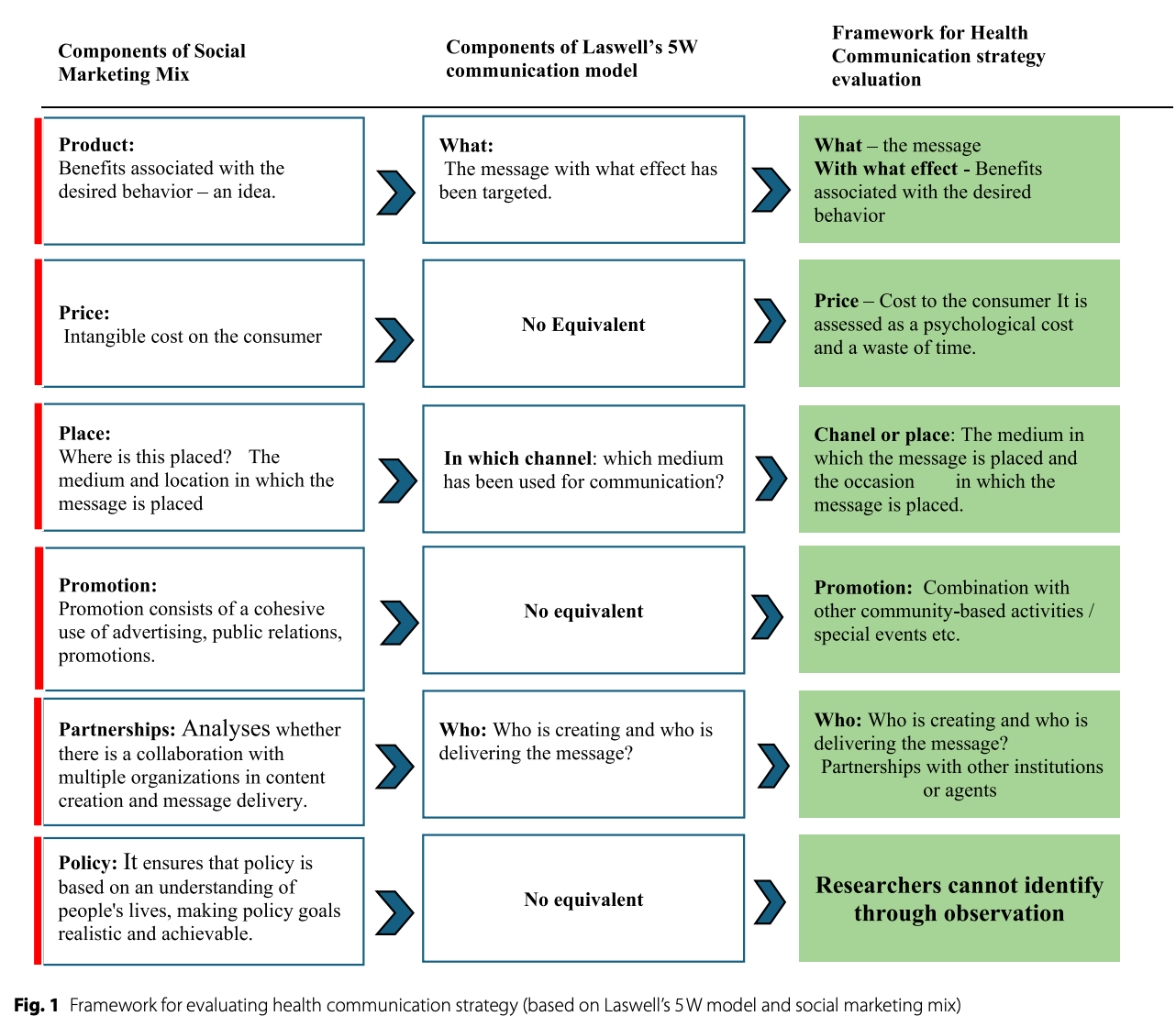
To answer this question, we needed a way to evaluate Facebook health content that went beyond counting likes. So we developed two evaluation frameworks: one based on the Health Belief Model (HBM), which examines whether content addresses perceived susceptibility, severity, benefits, barriers, cues to action, and self-efficacy; and another combining Lasswell's 5W model with the Social Marketing Mix, which evaluates how strategically the message is structured, targeted, and delivered.
We applied these frameworks to 15 purposively selected Facebook posts from three official Ministry of Health pages in Sri Lanka: the NCD Unit, the Health Promotion Bureau, and the Nutrition Division. The posts covered physical inactivity and unhealthy diet, the two leading modifiable NCD risk factors in the country.
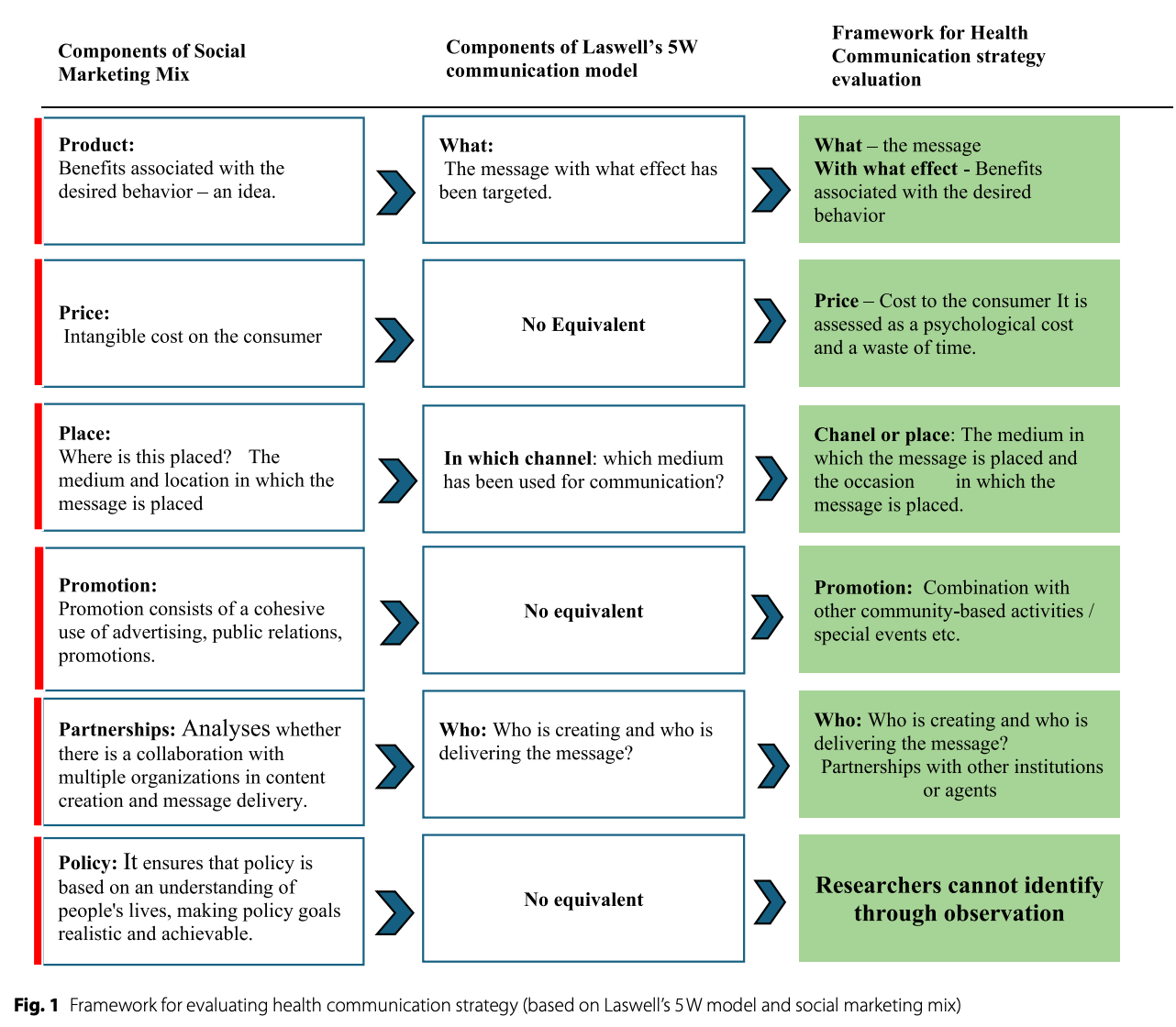
Framework for evaluating health communication strategy (based on Laswell’s 5 W model and social marketing mix)
The finding was clear and a little uncomfortable. The posts were generally strong strategically: they targeted audiences, used appropriate visuals, and structured their messages around clear health topics. But they were significantly weaker in their application of health communication theory. Most posts failed to engage the psychological constructs of the Health Belief Model in any meaningful way, particularly perceived barriers and self-efficacy, which are the dimensions most directly linked to behaviour change.
The Animated Video Exception
There was one content type that stood out: animated videos. These consistently achieved the highest theory scores, ranging from 88.8% to 94.4%, and also performed better strategically. The highest-scoring post of all was a paid animated video on unhealthy diet, which scored 94.4% on the theory evaluation framework.
But here is the catch. That same post reached 132,000 people and generated only 93 engagements. A still image posted organically on the same page reached 51,776 people and generated 8,441 engagements. This tells an important story: theoretically sound content does not automatically generate engagement. And high engagement does not mean the content is theoretically grounded.
This challenges a common assumption in digital health communication: that engagement is a proxy for effectiveness. It is not. A post can go viral for reasons that have nothing to do with whether it will change the dietary habits of the people who saw it.
What Was Missing: Physical Inactivity
A second finding that surprised us was the near-absence of physical activity content. Of the 137 posts we screened across four years and three Facebook pages, only a small proportion addressed physical inactivity, despite it being one of the most significant modifiable risk factors for NCDs in Sri Lanka. Unhealthy diet dominated the content landscape almost entirely.
This likely reflects a practical communication challenge: diet-related messages translate easily into visually appealing formats. A plate of colourful food, a recipe, a label guide. Physical activity is harder to communicate compellingly in a static image or short video without production investment. The result is a structural imbalance in the NCD prevention communication landscape that mirrors trends observed in the UK and other countries, and that deserves deliberate policy attention.
A Study Born Out of a PhD
This research sits within my doctoral work at the University of Kelaniya, Sri Lanka, supported by the NIHR Global Health Research Unit on Health Communication in South Asia, in partnership with Imperial College London. The study emerged from a straightforward observation: Sri Lanka has a sophisticated public health infrastructure, a significant NCD burden, and a government that is genuinely committed to prevention. Yet the digital communication produced by that infrastructure had never been systematically evaluated against the theoretical standards the field has developed over decades.
The frameworks we built in this study were developed from an extensive scoping review of health communication theories and strategies, the full methodology of which is reported in a companion manuscript currently under review at BMC Public Health. Together, these two papers form the core of my doctoral research on how theoretical grounding and strategic design can make digital health communication more effective for NCD prevention.
Health communicators, content creators, and policymakers in Sri Lanka and across the South Asian region now have a practical, evidence-based set of frameworks they can use to evaluate and improve their own digital health content. The frameworks are not complex, and they are not proprietary. They are built on theories that have been developed and validated over decades, applied to a context where they have rarely been used systematically.
The message from this study is not that Sri Lanka's health communication is failing. It is that it has the foundations of something genuinely effective, and that closing the gap between strategic strength and theoretical depth is both achievable and important. With the right training for content creators, the right policy mandate for theory-informed communication, and the right evaluation mechanisms, social media can become a far more powerful tool for NCD prevention than it currently is.
The posts are already reaching people. Now we need them to change behaviour.

I am Thilak Wanasinghe, a PhD candidate in Health Communication at the University of Kelaniya, Sri Lanka, and a researcher with the NIHR Global Health Research Unit South Asia- NIHR, in partnership with Imperial College London. My research sits at the intersection of health communication theory, Behaviour Change Communication, and Digital Determinants of Health, with a particular focus on how social media shapes NCD prevention in low- and middle-income country settings. Before my PhD, I spent time at Imperial College London's Centre for Health Economics and Policy Innovation as a Global Development Hub Fellow, working directly with the GHRU team on community health research in Sri Lanka. I also teach Mass Communication and Creative Media at NIBM and work as a farmer, which keeps my research grounded in the everyday realities of the communities I write about. My goal is to bridge the gap between health communication evidence and practice, so that the messages reaching people about their health are not just accurate, but genuinely designed to change behaviour.
Follow the Topic
-
BMC Public Health
An open access, peer-reviewed journal that considers articles on the epidemiology of disease and the understanding of all aspects of public health.

Related Collections
With Collections, you can get published faster and increase your visibility.
Appropriate use of antibiotics: public health strategies, knowledge, and practice gaps
BMC Public Health is calling for submissions to our Collection on Appropriate use of antibiotics: public health strategies, knowledge, and practice gaps.
Misuse of antibiotics contributes to antimicrobial resistance (AMR), posing a threat to the future management of bacterial diseases. However, it is a multi-faceted problem without a simple solution.
Antibiotic misuse can take various forms, each requiring different strategies to address. In healthcare systems, antibiotic overuse is often driven by the tension between clinical uncertainty and the desire to offer patients a treatment that may improve their symptoms or prevent them from developing complications. The prescription of antibiotics is often done empirically, driven by the difficulty of distinguishing between bacterial and viral infections at the point of care, or the worry that a lack of intervention could have consequences.
Added to this, people in the community can contribute to inappropriate use by reusing or sharing leftover antibiotics from prior prescriptions. Similarly, misplaced expectations around the benefits of antibiotics can drive misuse in the community, pointing to the need for community-focused and community-led initiatives to inform the public on the use of antibiotics and the collective impact of antimicrobial resistance.
However, social science reframes antibiotic overuse as more than an individual behaviour problem. Antibiotics frequently act as a social and structural “quick fix” that supports care, productivity, hygiene, and coping with inequality in everyday life. They are used to compensate for gaps in water, sanitation, social protection, and health-system capacity, suggesting that interventions focusing narrowly on individual knowledge and attitudes may be unlikely to succeed unless they also address these wider drivers.
This Collection aims to explore the various dimensions of the responsible use of antibiotics, examining the prevalence of misuse and strategies for reducing unnecessary use, covering interventions aimed at prescribers and pharmacists as well as 'bottom-up' strategies such as community education campaigns. We invite contributions that investigate the roles of healthcare providers, patients, professional guidance, communities, and policymakers in addressing this pressing issue.
Potential topics for submission include, but are not limited to:
Patterns of antibiotics overuse in various populations
The role of healthcare providers in preventing misuse
Public health campaigns and gross-roots initiatives to promote responsible use of antibiotics
Policy frameworks for improving the prescribing and dispensing of antibiotics
Social and structural drivers of antibiotic use (ethnographic, anthropological, and political-economy analyses).
Interventions that address upstream determinants (water, sanitation, social protection, labour conditions) alongside stewardship measures.
This Collection supports and amplifies research related to SDG 3 (Good Health and Well-being).
All manuscripts submitted to this journal, including those submitted to collections and special issues, are assessed in line with our editorial policies and the journal’s peer review process. Reviewers and editors are required to declare competing interests and can be excluded from the peer review process if a competing interest exists.
Publishing Model: Open Access
Deadline: Oct 03, 2026
Digital exclusion and health equity
Digital exclusion poses significant barriers to health equity, particularly in the context of an increasingly technology-driven healthcare landscape. Many individuals, especially from underserved communities face challenges in accessing digital health resources, including telehealth services, electronic health records, and health information online, alongside challenges from other social determinants of health. This Collection seeks to explore the intersection of digital health access and health equity, focusing on the disparities that arise from unequal access to digital tools and resources.
Addressing digital health exclusion is critical for promoting health equity and ensuring that all individuals can benefit from advancements in digital health. Recent strides in telehealth and digital health interventions have demonstrated the potential for technology to improve access to care, yet they also reveal significant disparities that must be acknowledged. By understanding the factors that contribute to eHealth disparities, we can develop targeted digital inclusion strategies that address the unique needs of diverse populations, ultimately fostering a more equitable health system.
Topics for submission include but are not limited to:
- Equitable digital health systems: policy, infrastructure, and community engagement
- Digital health access among underserved communities
- Digital literacy and health outcomes across diverse populations
- Innovations and implementation strategies for bridging digital health gaps in underserved communities
- Measuring and monitoring digital health disparities: metrics and methodologies
This Collection supports and amplifies research related to SDG 3 (Good Health and Well Being) and SDG 10: (Reduced Inequalities).
All manuscripts submitted to this journal, including those submitted to collections and special issues, are assessed in line with our editorial policies and the journal’s peer-review process. Reviewers and editors are required to declare competing interests and can be excluded from the peer review process if a competing interest exists.
Publishing Model: Open Access
Deadline: Dec 11, 2026


