Why prehospital intubation in severe trauma is difficult to evaluate
Published in Healthcare & Nursing and Surgery


Some clinical questions remain difficult precisely because they arise in the most critical moments of care.
Prehospital endotracheal intubation in severe trauma is one of those questions.
For clinicians working in emergency medical systems, securing a definitive airway can be a decisive intervention. It may be required in patients with severe traumatic brain injury, respiratory failure, cardiac arrest, profound neurological impairment, or rapidly deteriorating physiology. In the field, these decisions are rarely made in ideal conditions. They are made under time pressure, in uncontrolled environments, with incomplete information, and often in patients whose physiological reserve is already severely compromised.
At the same time, this is exactly what makes the intervention so difficult to study.
The central question is apparently simple: does prehospital endotracheal intubation improve survival in severe trauma?
But the answer is not simple at all.
Patients who are intubated before hospital arrival are usually not comparable to those who are not. They tend to be more severely injured, more unstable, more neurologically impaired, or more likely to have respiratory compromise. In other words, prehospital intubation is not randomly assigned. It is performed because the patient appears to need it. This creates one of the classic problems in observational trauma research: confounding by indication.
A crude comparison may therefore be misleading. If intubated patients die more often, is that because intubation is harmful, or because the patients selected for intubation were already much more severely injured? If intubated patients survive, is that because the procedure improved outcome, or because they were treated within a high-performing trauma system with experienced providers and rapid access to definitive care?
This was the starting point for our study.
Our article, recently published in European Journal of Trauma and Emergency Surgery, examined the association between prehospital endotracheal intubation and 30-day survival in patients with severe trauma using data from the Navarra Major Trauma Registry:
Zulet Murillo D, Ferraz Torres M, Fortún Moral M, Belzunegui Otano T, Tamayo Rodríguez I. Prehospital endotracheal intubation and 30-day survival in severe trauma: a matched cohort study from Navarra, Spain. European Journal of Trauma and Emergency Surgery. 2026;52:194. DOI: 10.1007/s00068-026-03234-0
The study included 1,909 patients with severe trauma. Among them, 212 underwent prehospital endotracheal intubation. As expected, intubated patients were clinically different from non-intubated patients. They were generally more severely compromised, which meant that a direct comparison between both groups would not be sufficient to interpret the potential association between intubation and survival.
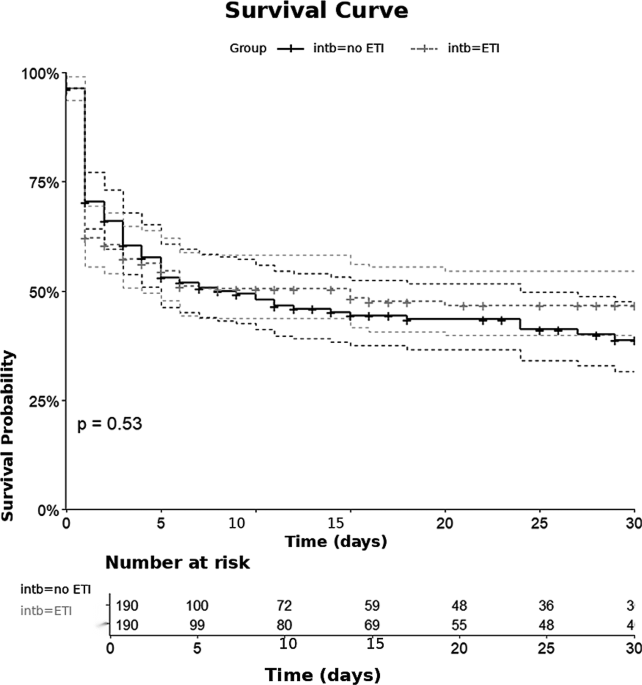
To reduce this imbalance, we performed 1:1 matching using key prehospital severity indicators closely related to airway decision-making: Glasgow Coma Scale, respiratory distress, and prehospital cardiac arrest. After matching, 190 intubated patients were compared with 190 non-intubated counterparts. Survival was then analysed using parametric Weibull models because the proportional hazards assumption required for Cox regression was not met.
The main finding was that, in the matched cohort, prehospital endotracheal intubation was not independently associated with improved 30-day survival.
This finding requires careful interpretation.
It should not be read as evidence that prehospital intubation is ineffective. It should not be read as a recommendation to avoid intubation when it is clinically indicated. And it should not be used to simplify a complex airway decision into a binary rule.
Rather, the result highlights something more important: the apparent relationship between prehospital intubation and mortality is strongly shaped by patient selection, baseline severity, physiological status, and the wider trauma-care context.
In severe trauma, intubation is not simply a procedure. It is part of a chain of decisions and events. Its potential impact depends on why the patient was intubated, who performed the procedure, how many attempts were required, whether hypoxia or hypotension occurred, how ventilation was managed, whether capnography was used, how long the scene time was, how rapidly definitive care was reached, and how the patient was managed after intubation.
This is why we believe prehospital endotracheal intubation should not be evaluated as an isolated binary exposure: intubated versus not intubated. It should be understood as part of a broader airway-management and trauma-system bundle.
A technically successful intubation may still be followed by harmful physiology if it is accompanied by peri-intubation hypotension, hypoxia, hyperventilation, or delays to definitive care. Conversely, a well-indicated and well-executed airway intervention may be essential in selected patients, particularly when it prevents secondary brain injury or corrects life-threatening respiratory failure.
The key question may therefore not be simply “Does prehospital intubation improve survival?” but rather:
Which patients benefit most?
Under what physiological conditions?
With which provider training and system configuration?
With what peri-intubation monitoring?
And as part of which broader trauma-care pathway?
A second relevant aspect of our study was the analysis of sex- and age-related heterogeneity. We observed a significant sex-by-age interaction, suggesting that the relationship between age and mortality differed between women and men in this cohort. This finding should be interpreted cautiously. It does not prove a specific biological mechanism, nor does it establish that sex modifies the effect of intubation itself. However, it supports the need to incorporate sex-informed analyses into trauma outcomes research.
This matters because trauma populations are not homogeneous. Older women, younger men, low-energy falls, high-energy traffic injuries, traumatic brain injury, frailty, comorbidity, and physiological reserve may all interact in ways that are not fully captured by traditional severity scores. If trauma research does not examine these patterns, clinically relevant heterogeneity may remain hidden.
For us, the broader message of the study is methodological as much as clinical.
In prehospital trauma care, some of the most important interventions are also the hardest to evaluate. Randomized trials are often difficult, and observational studies must deal with strong selection effects. This makes careful adjustment, transparent limitations, and cautious interpretation essential.
Our study contributes to the ongoing discussion on prehospital airway management in severe trauma by emphasizing the importance of confounding by indication, the limitations of crude comparisons, and the need for more granular data on airway procedures and peri-intubation physiology.
Future studies should ideally include detailed information on indication, timing, number of attempts, first-pass success, airway difficulty, drugs used, peri-intubation hypotension or hypoxia, ventilation parameters, end-tidal carbon dioxide, scene time, transport context, and post-intubation management. These process measures may help identify which patient subgroups are most likely to benefit from prehospital endotracheal intubation and under what conditions.
In the end, the question is not whether prehospital intubation is “good” or “bad”.
The real challenge is understanding when, how, by whom, and in which patients it can improve outcomes.
That is the question we hope this study helps to move forward.
The article is available at: https://doi.org/10.1007/s00068-026-03234-0

Follow the Topic
-
European Journal of Trauma and Emergency Surgery
This is an international English-language journal providing an interdisciplinary forum for the scientific exchange between research and hospital.

Related Collections
With Collections, you can get published faster and increase your visibility.
Polytrauma
Publishing Model: Hybrid
Deadline: Ongoing
Biomarkers, confounders and new therapeutic approaches in trauma
Tools for rapid and reliable assessment of trauma severity, for reliable assessment of organ damage and early detection of complications and organ failure but also new strategies to improve regeneration and healing are still on top positions of the trauma surgeons’ wish list.
Serum factors are a useful tool for categorising the severity of trauma and systemic inflammation. In addition to the assessment of systemic inflammation by cytokine profiles and complement factors, other markers have the potential to indicate organ-specific damage at an early stage, such as club cell protein 16 (CC16), neurofilament light chain (nfl) or tissue-specific µRNAs. From a diagnostic point of view, circulating extracellular vesicles, membrane-enclosed nanoparticles that have been cut off by cells, are of great interest in several respects. Surface proteins can be used to identify their cellular origin, and their cargo could provide further information about the state of the tissue of origin.
However, it is not only the injury pattern and the severity of the injury that determine the post-traumatic course. Confounding factors such as alcohol or direct oral anti coagulants (DOAC), which influence systemic inflammation or lead to increased intraoperative blood loss and thus to an increased need for blood reserves, are an important aspect to consider.
After the initial preservation of vital functions, the regeneration and repair of injured tissue is of critical importance to the patient and the treating physician. New strategies for the treatment of injured soft and hard tissues, as well as neuronal injury, are being explored and some have already been tested in prospective clinical trials.
With this collection, I would like to draw your attention to relevant developments in the field of diagnostics and therapy and motivate you to further develop our speciality for the benefit of the severely injured patient.
Publishing Model: Hybrid
Deadline: Ongoing