Why Silicon Is Gaining Attention in Climate-Resilient Agriculture
Published in Plant Science and Agricultural & Food Science
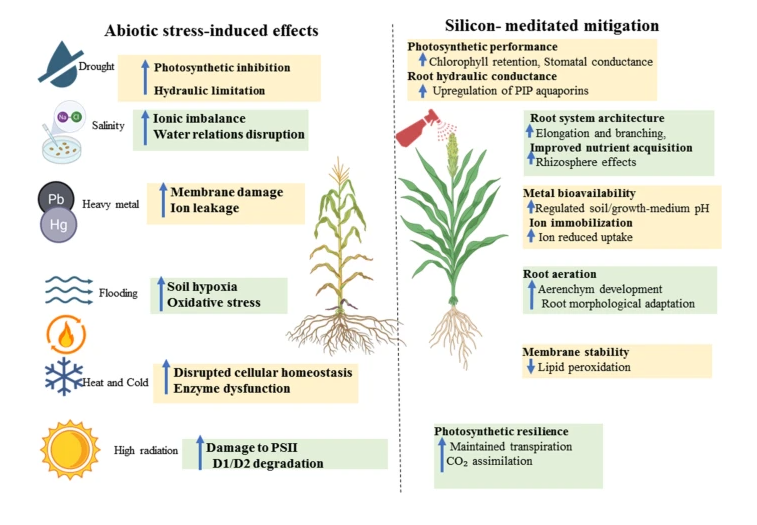
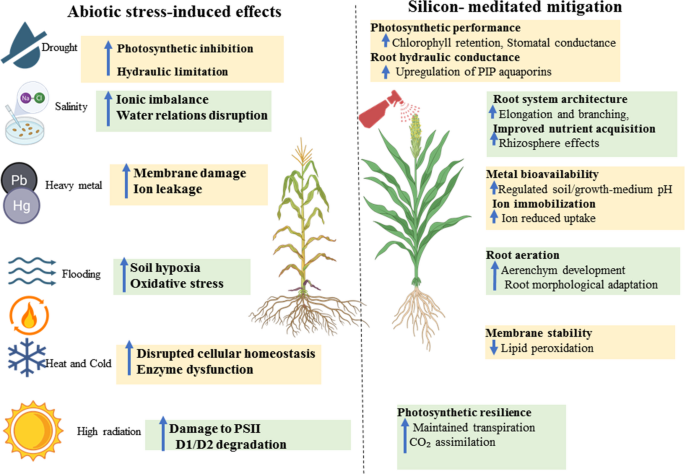

Climate change is altering the way crops experience environmental stress. Drought, salinity, flooding, heat waves, nutrient imbalances, and heavy metal contamination rarely occur in isolation, yet much of the research and management strategies developed so far have focused on individual stress factors. A highly accessed review recently published in the Journal of Soil Science and Plant Nutrition takes a broader view, examining how silicon may help plants respond to both single and combined abiotic stresses.
Although silicon is one of the most abundant elements in the Earth's crust, it is not classified as an essential plant nutrient. Even so, a growing body of research suggests that it can influence a wide range of physiological and biochemical processes. The review brings together evidence showing that silicon can improve water relations, support photosynthetic activity, help maintain nutrient balance, strengthen antioxidant defenses, and contribute to ion regulation under adverse environmental conditions.
One of the strengths of the review is its focus on stress combinations, an area receiving increasing attention in plant science. The authors discuss studies showing that silicon can help plants exposed simultaneously to stresses such as drought and heat, salinity and heavy metals, or flooding and nutrient limitations. According to the evidence reviewed, silicon-related responses are often more complex under combined stresses than under individual stress conditions, involving coordinated changes in antioxidant systems, nutrient acquisition, hormonal regulation, and carbon assimilation.
Interaction with plant hormones
The article also explores the molecular dimension of these responses. Recent transcriptomic studies suggest that silicon can influence the expression of genes associated with stress signaling, water transport, ion homeostasis, and antioxidant activity. The review further discusses interactions between silicon and plant hormones, highlighting how these relationships may contribute to stress adaptation and growth maintenance under challenging environmental conditions.
Beyond plant stress physiology, the authors examine an area attracting considerable interest in sustainable agriculture: the potential contribution of silicate fertilization to carbon sequestration. Through the formation of phytoliths, silicon-rich crops may contribute to longer-term carbon storage in soils. The review emphasizes, however, that the effectiveness of this process depends on factors such as soil properties, crop species, and long-term management conditions.
As with any review, the conclusions depend on the scope and quality of the available literature. The authors note that important knowledge gaps remain, particularly regarding the mechanisms underlying silicon responses under combined stresses, the interaction between silicon and hormonal signaling networks, and the translation of experimental findings into field-scale applications. By identifying these open questions while synthesizing a rapidly expanding body of research, this highly accessed review provides a useful reference for researchers interested in crop resilience, plant nutrition, soil management, and climate adaptation strategies.
Text created with the assistance of AI.

Follow the Topic
-
Journal of Soil Science and Plant Nutrition
The Journal of Soil Science and Plant Nutrition is an international, peer reviewed journal devoted to publishing original research findings in the areas of soil science, plant nutrition, agriculture, and environmental science.