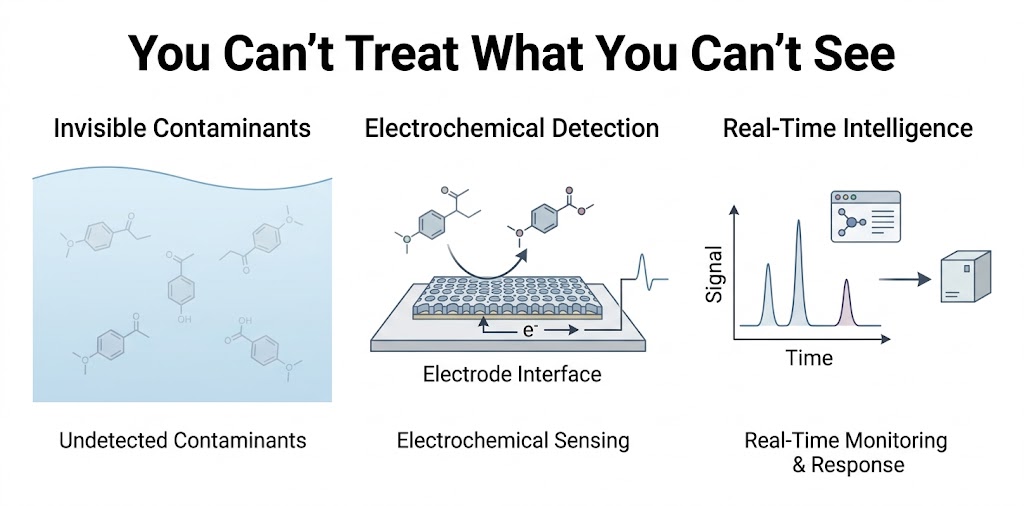
You Can’t Treat What You Can’t See: Why Emerging Contaminants Like Parabens Are Still "Invisible" in Our Water
Published in Chemistry, Earth & Environment, and Materials
Explore the Research

 sciencedirect.com
Just a moment...
Please confirm you are a human by completing the captcha challenge below.
The Blind Spot in Water Security
Parabens are everywhere. They are widely used as preservatives in cosmetics, pharmaceuticals, and personal care products. Inevitably, they enter wastewater streams, persist through conventional treatment processes, and eventually reach natural water bodies.
At environmentally relevant concentrations, many parabens act as endocrine-disrupting chemicals (EDCs), raising serious concerns about long-term ecological and health impacts. Yet despite this, they remain largely absent from routine monitoring frameworks.
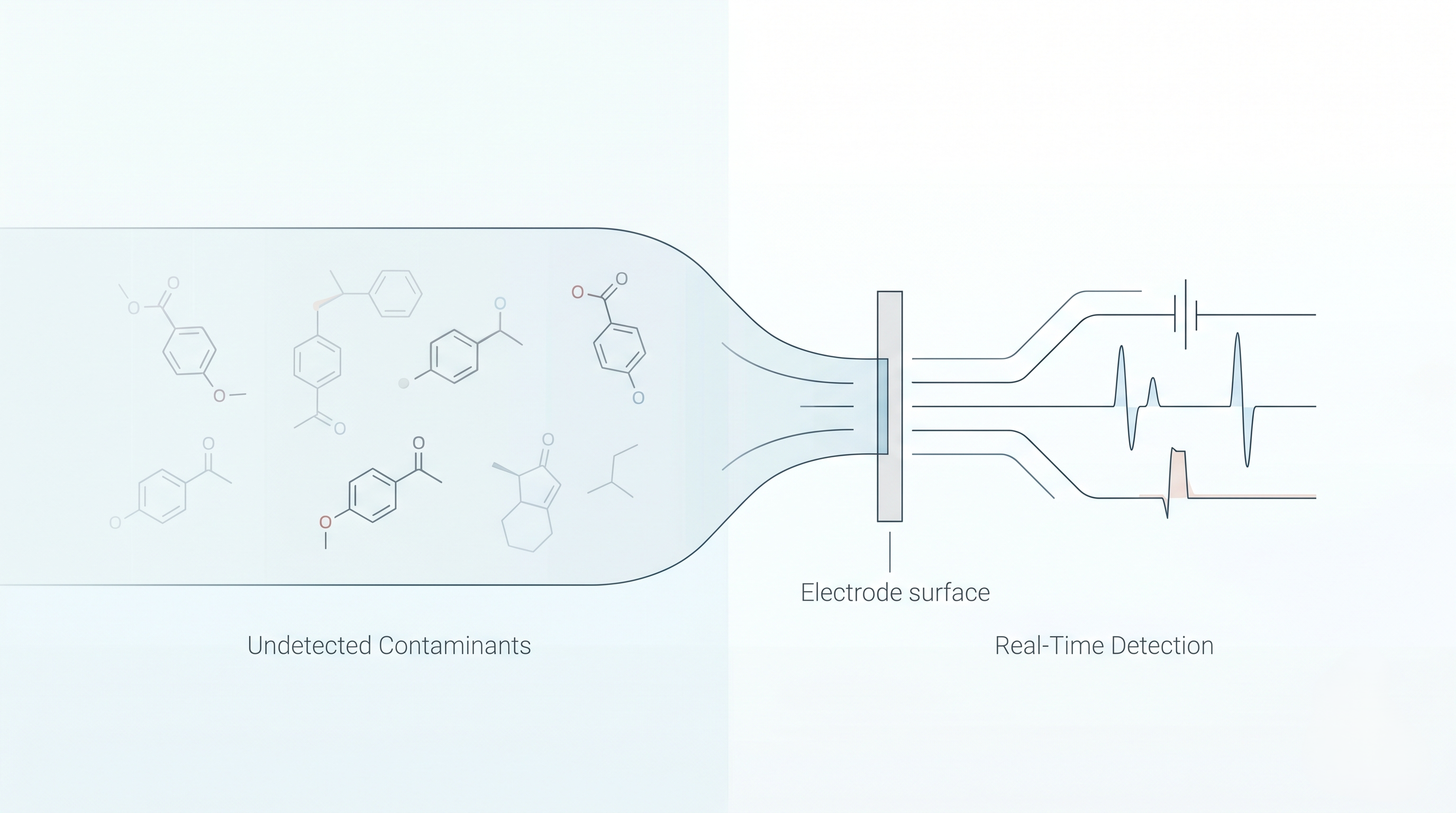
Why? Because regulatory systems are inherently biased toward what can be measured reliably and continuously. Most emerging contaminants do not yet meet that criterion. In practice, this makes them functionally invisible.
The Lab Trap: When Detection Becomes Delay
The current gold standard for detecting trace organic contaminants relies on techniques such as high-performance liquid chromatography (HPLC) and gas chromatography-mass spectrometry (GC-MS).
These methods are highly sensitive, highly selective, and scientifically robust. But they are also expensive, labor-intensive, and confined to centralized laboratories. The result is a fundamental mismatch between analytical capability and operational need. Sampling, transport, preparation, and analysis can take days. By the time results are available, the contamination event has already passed.
This is not monitoring—it is retrospective analysis. And retrospective analysis cannot support dynamic water management.
The Technology Shift: Electrochemical Sensing
To close this gap, we must move from centralized detection to distributed, real-time sensing. This is where electrochemical biosensors offer a compelling, deep-tech pathway.
Electrochemical sensors operate by converting molecular interactions at an electrode interface into measurable electrical signals. In my latest research, we demonstrate how engineering these interfaces—specifically using advanced architectures like bimetallic Ag-Ni@MOF (metal-organic framework) nanorods—allows us to achieve rapid and highly selective detection of trace contaminants like methylparaben.
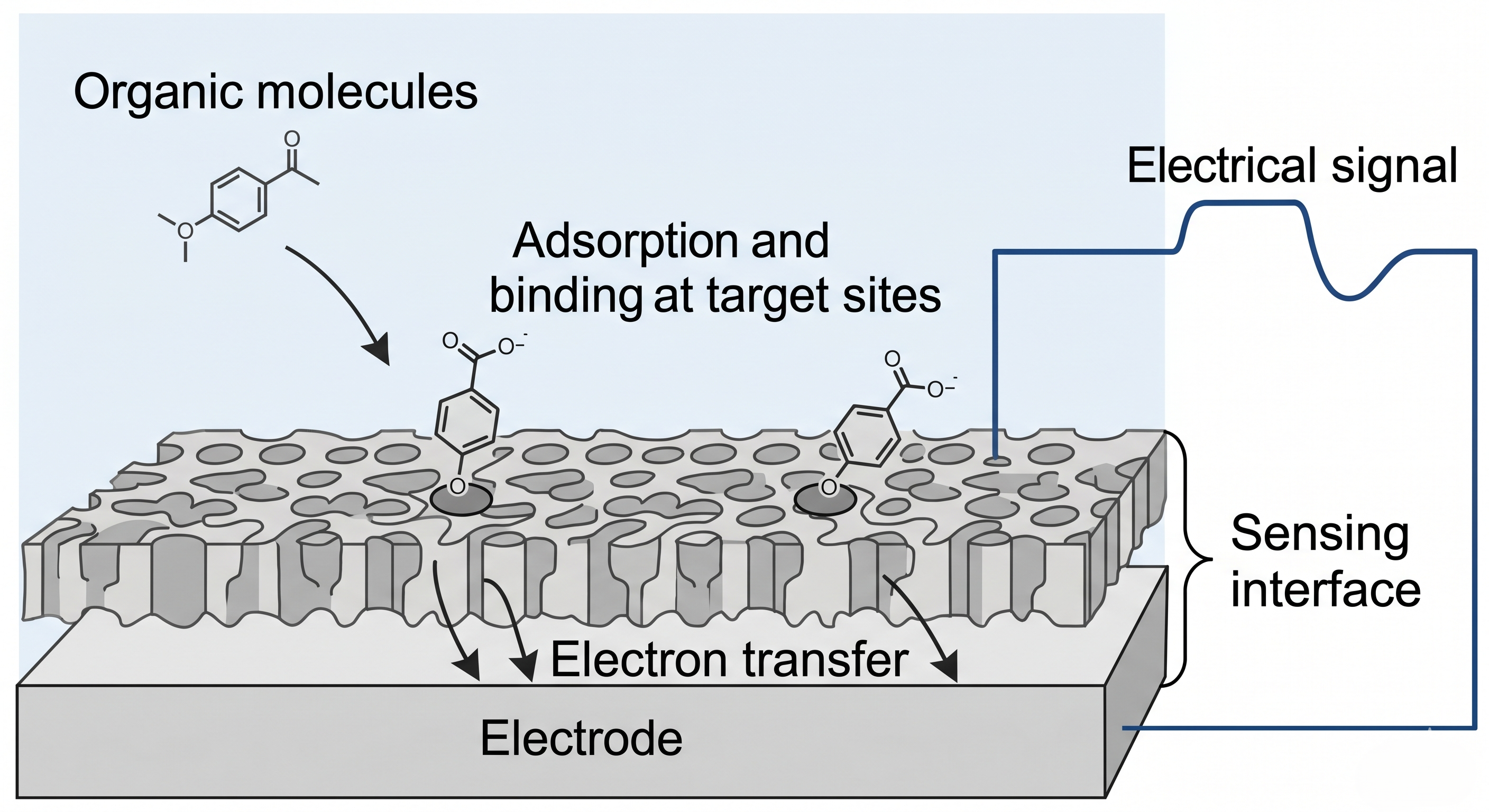
In practical terms, this enables:
-
Rapid response: Detection times reduced from days to the order of seconds or minutes.
-
High sensitivity: Detection at environmentally relevant concentrations (down to the ppb or low ppt ranges).
-
Miniaturization and deployment: Seamless integration into portable or in-line monitoring platforms.
From Detection to Intelligence: Toward Smart Water Systems
The real value of these sensors is not just detection—it is decision-making. When deployed in distributed networks, real-time sensors transform monitoring from a passive activity into an active control system.
In such a framework, contamination spikes can be detected immediately, and localized interventions can be triggered in real time. It connects directly with emerging treatment paradigms—such as the electro-driven membranes and advanced catalytic systems I have discussed previously—enabling a true closed-loop, "smart water" ecosystem.
Challenges We Cannot Ignore
Despite their immense promise, electrochemical sensing platforms are not without limitations. Key challenges that the materials science community must overcome include:
-
Selectivity in complex matrices (mitigating interference from co-existing aquatic species).
-
Long-term stability and fouling of the sensor surfaces.
-
Calibration drift under highly variable real-world environmental conditions.
Conclusion
We are entering an era where the challenge is no longer just removing contaminants—but detecting them fast enough to act.
Water systems that rely on delayed data will always be reactive. Water systems that integrate real-time sensing can become predictive and adaptive. The future of global water security will not be defined solely by how efficiently we treat water, but by how effectively we illuminate what was previously invisible.
Read the Full Research For a deeper exploration of how bimetallic MOF nanostructures are engineered to achieve rapid paraben detection, you can read my full study, "Mechanistic insights into rapid methylparaben sensing on bimetallic Ag-Ni@MOF nanorods," published in the Microchemical Journal here.
How do you see real-time environmental sensing reshaping regulatory frameworks for emerging contaminants? Let’s discuss in the comments below!

Dr. Akeem Adeyemi Oladipo is a globally recognized Research Professor of Materials and Environmental Chemistry at Eastern Mediterranean University. Ranked among the world's Top 2% Scientists, his expertise bridges nanotechnology, renewable energy, and electro-analytical chemistry. He specializes in advanced materials synthesis for wastewater treatment, highly sensitive electrochemical biosensors, and solar energy conversion. By integrating machine learning and artificial neural networks, his research drives scalable deep-tech innovations in environmental sustainability and energy storage.