Designed a tissue-like bandage for major pelvic nerve injury
Published in Biomedical Research

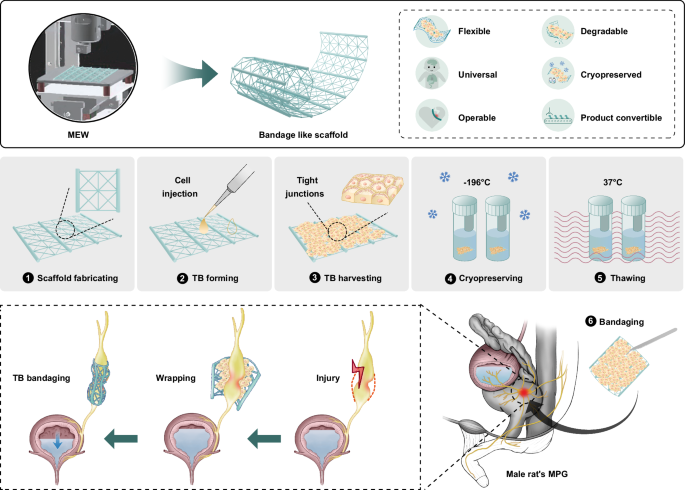

When the skin sustains an injury, we typically reach for a band-aid to provide essential protection and support healing. But what about nerve injuries? To address this challenge, we developed a tissue-like bandage that employed the melt electrowriting technique to create a bandage-like scaffold with polycaprolactone (PCL). We combined it with cell therapy for treating pelvic nerve injuries. Our goal with this approach is to minimize damage to the pelvic ganglia caused by surgical procedures or traumatic events. We aim to enhance recovery and improve outcomes for patients suffering from nerve injuries.
Follow the Topic
-
Nature Communications
An open access, multidisciplinary journal dedicated to publishing high-quality research in all areas of the biological, health, physical, chemical and Earth sciences.

Related Collections
With Collections, you can get published faster and increase your visibility.
Women's Health
Publishing Model: Hybrid
Deadline: Ongoing
Tumor Microenvironment Crosstalk and Therapeutic Implications
Publishing Model: Hybrid
Deadline: Nov 02, 2026