How Reinventing the Transistor Could Revolutionize AI Hardware
Published in Electrical & Electronic Engineering, Materials, and Physics
Explore the Research
Failed
Failed to retrieve the data.
Today, artificial intelligence depends on billions of transistors, but this incredible computing power comes at an enormous energy cost. Could there be a better way? In this video, we explore a groundbreaking 2025 discovery that transforms a single silicon transistor into an electronic neuron by harnessing impact ionization.
This innovation could pave the way for low-power neuromorphic computing, bringing powerful AI to smartphones, robots, autonomous devices, and the Internet of Things. Topics covered:
The history of the transistor
Boolean logic and the birth of computing
Why AI consumes so much energy
Neuromorphic computing explained
The single-transistor silicon neuron
The future of low-power artificial intelligence
If this technology succeeds, it could become one of the most important advances in computing since the invention of the MOSFET.
More information about the single-transistor neurons:
https://www.nature.com/articles/s4158...
More information about the developing team:
https://lanzalab.org/research
https://www.newmorphic.com/
#ArtificialIntelligence #Transistor #MOSFET #NeuromorphicComputing #Electronics #Semiconductors #Technology #Engineering #ComputerScience #AI
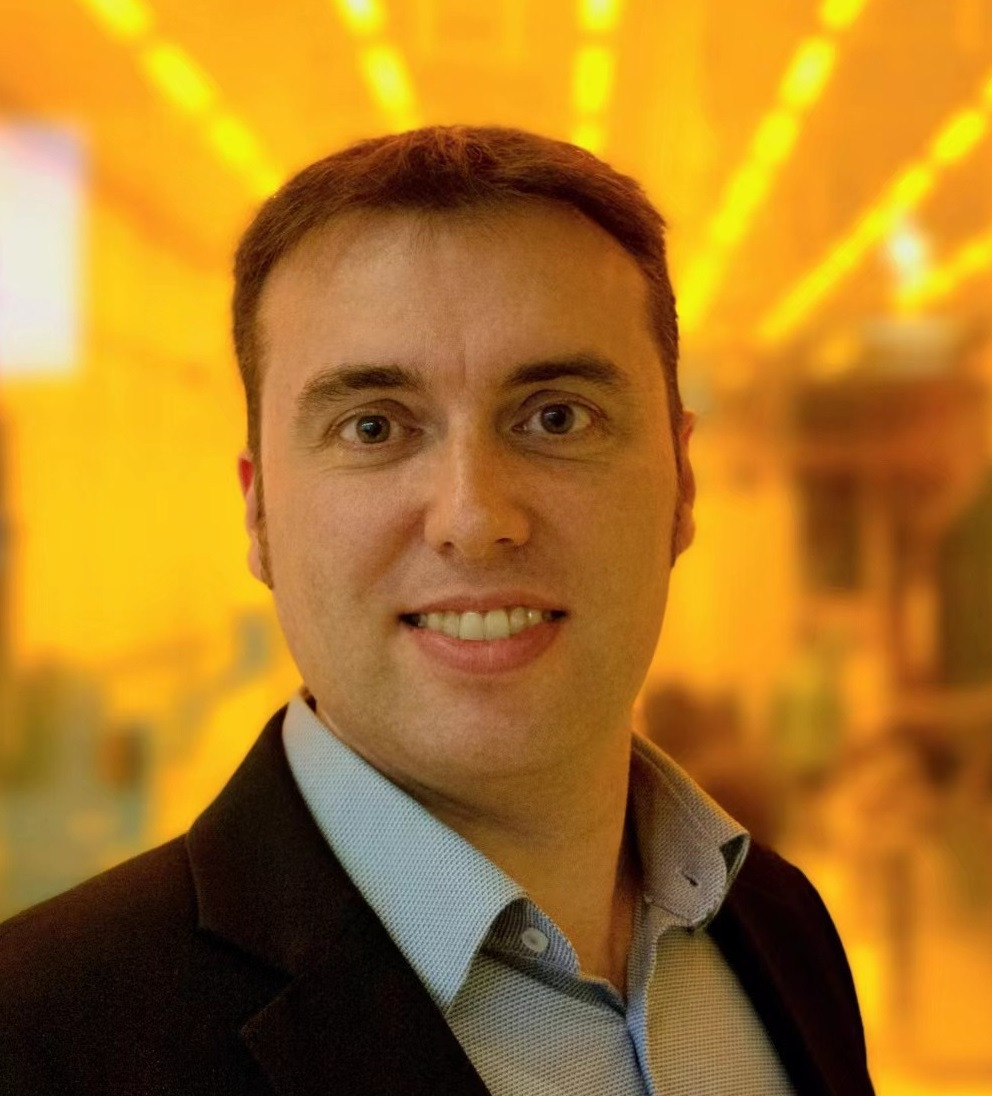
Mario Lanza is an IEEE Fellow and Full Professor of Materials Science and Engineering at the National University of Singapore (NUS). He was headhunted under the highly selective “Strategic Hire” program of the university, and he is currently acting as Deputy Head of the Materials Science and Engineering Department. Before joining NUS, he got the PhD in Electronic Engineering in 2010 at the Autonomous University of Barcelona, where he graduated with honors and won the extraordinary PhD prize. In 2010-2011 he was NSFC postdoctoral fellow at Peking University, and in 2012-2013 he was Marie Curie postdoctoral fellow at Stanford University. In September 2013 he joined Soochow University (in China), where he promoted until the rank of Full Professor. Between October 2020 and July 2024, he was full-time Associate Professor at the King Abdullah University of Science and Technology (in Saudi Arabia), where he became known for his work in nano-electronics.
He has published over 250 research articles in top journals like Nature, Science and Nature Electronics, many of them becoming highly cited, and he has been plenary, keynote, tutorial and invited speaker in over 150 conferences. Many of his former students are now Professors in top universities, such as Peking University and Fudan University, among others. He is often consulted by leading semiconductor companies and publishers. He serves on the board governors of the IEEE - Electron Devices Society, and is member of the technical and management committee of top conferences in the field of electron devices, like IEDM, IRPS and IPFA. He is the founder of two startup companies: Web of Talents (2021) and Newmorphic (2026). He speaks fluently five languages: English, Chinese, German, Spanish and Catalan.
Follow the Topic
-
Nature
A weekly international journal publishing the finest peer-reviewed research in all fields of science and technology on the basis of its originality, importance, interdisciplinary interest, timeliness, accessibility, elegance and surprising conclusions.
Related Collections
With Collections, you can get published faster and increase your visibility.
Carbon Dioxide Removal
Publishing Model: Hybrid
Deadline: Jan 16, 2027
Cancer Neuroscience: from mechanisms to therapy
Publishing Model: Hybrid
Deadline: Jan 30, 2027