MACTRI Summer School Programme 2025
Published in Social Sciences and Education

MACTRI's first International Decolonial Exchange Project with the Federal Universities of the Amazon and Mato Grosso
Read more here.
Background
My research partnership with the Federal University of the Amazon (UFAM) began in 2012 with a chance encounter with Professor Claudia Sampaio. Claudia was giving a talk about her work with young offenders and how singing in choir helped with their rehabilitation. Listening to her, I was immediately struck by the similarities in her research project with my own, as I had also worked on a project with young offenders using grime music to help them reflect on their offending behaviours.
We made an immediate connection as we recognised that we were working with the same issues across both our communities in Manaus and Manchester. We kept in touch after this chance meeting. But it wasn't until 2014 when Claudia visited Manchester Metropolitan University (ManMet) for a 6 month International Research Fellowship that we really began to envision a pathway towards collaborative research between our communities.
Research on transitioning from Community Psychology to Decolonial Praxis
In 2018, I was invited over to the Federal University of the Amazon (UFAM) as Visiting Professor to work with Claudia's research group. By this time, I was leading the Critical Race and Ethnicity Research Cluster at ManMet and we thought it a good idea to combine our research groups. In my visit to UFAM, I presented my work with communities which borrowed heavily from community arts (music) and Liberation Psychology in order to encourage young offenders to reframe their personal histories as positive (if challenging) lived experiences that could help them envision more positive futures for themselves a la Martìn-Barò. This involved guiding them through the process of 'defetishisation' so that they could begin to see themselves as full human beings again instead of criminal youth justice statistics.
However, the light bulb moments were my visits to Claudia's grassroots communities in Manaus. You see, in an almost another lifetime when I used to be a composer, I was involved in a school project about the decimation of rainforests. I was commissioned by the Scottish Chamber Orchestra to write a string quartet about the plight of the Amazon. I had listened to a track of the sounds of the Amazon and then used it as inspiration to write my protest piece, Hidden Song. The Amazon had always held a special fascination and affection for me. So decades later, finding myself there and meeting some of its people, as by then, an emerging decolonial scholar; it was a turning point for me
I remember meeting a shaman at an indigenous medical centre that collaborated with Western medicine.
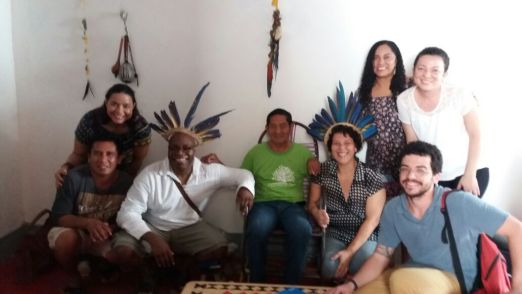
I remember the excitement of hearing about how Indigenous traditions of healing were making a difference for the local communities and how the healing effects were so significant that local Western medical practitioners had to take notice of what was going on. This coincided with my supervision of a doctoral candidate researching the hidden factors behind unequal health outcomes for African Diaspora health seekers in the UK. This was exciting as I could immediately see the connections between the shamanic health practices of that particular community in Manaus and the traditional spiritual and herbal practices of the local African and Caribbean communities my doctoral candidate was working with in Manchester.
Another visit, this time to a community centre in a Quilombola community in Manaus, also opened my eyes to living traditional/ancestral knowledges being used for community benefit and the provision of community services.
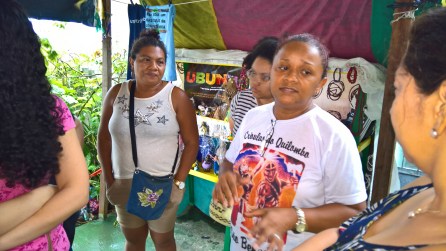
Quilombo Praça XIV was an amazing group of female activists who championed community health by organising pop-up health check stalls providing blood pressure and blood sugar monitoring amongst other services in their local communities who mostly were not able to afford mainstream healthcare. The women also fiercely advocated for better maternity services especially for Black women who were dying in higher numbers during child birth. My doctoral candidate happened to be working on the exact same phenomenon in the UK.
The workshops that I gave, the extremely rich conversations that I had and the amazing visits all coalesced around a question
What are decoloniality and decolonisation and how can they be used by our grassroots communities to help them to build sustainable community infrastructures for local service delivery?
Claudia did indeed return to be UK to meet my community networks in the same year. She met some of our community partners: Highway Hope, which is a community enterprise delivering many community services such a drop in healthy eating clubs and supplementary schools, Caribbean and African Health Network (CAHN), a community health advocacy group for Black health seekers that my doctoral candidate set up as part of her doctoral research (Claudia did meet my then doctoral student, too), GIFT Academy, a community enterprise that works with young people and the Windrush Millennium Centre, that is an enterprise hub for mainly but not exclusively Black social enterprises.
International Decolonial Exchange Project
Our scholarly work together continued to deepen and when I left ManMet to found The Manchester Community Training and Research Institute (MACTRI), UFAM entered a partnership with us via the Abdias Nascimento Programme funded by CAPES for Brazilian post graduates to come to Manchester to work with MACTRI Scholars as part of their research studies. The programme and our partnership was set up to find possible answers to this central question posed above.
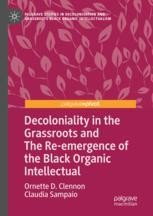
The volume, Decoloniality in the Grassroots and the Re-emergence of the Black Organic Intellectual, marks the consolidation of our work together; especially as a space where we explore the central question above from UK and Brazilian Higher Education perspectives. The volume also forms the scholarly foundation for our International Decolonial Exchange Programme.
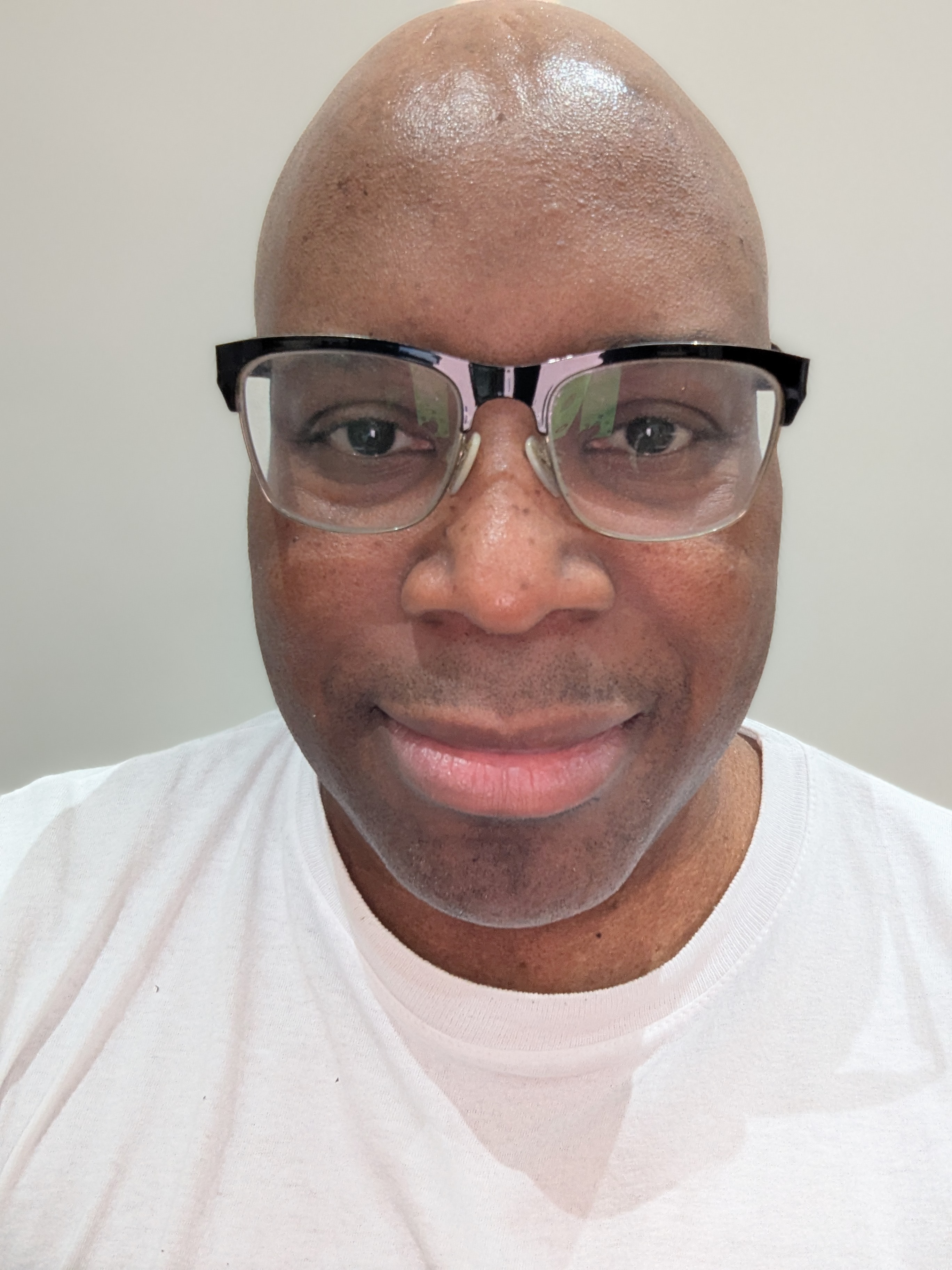
Dr. Ornette D. Clennon is the Head of Institute at MACTRI (Manchester Community Training & Research Institute). He is also a collaborating researcher and Visiting Professor at the Federal University of Amazon (UFAM), where he contributes to the theme of decolonial community and liberation psychology.
Ornette has also been a Visiting Research Fellow in critical race studies and lecturer in community arts practices and popular musicology at Manchester Metropolitan University (ManMet), where he led its Critical Race and Ethnicity Research Cluster.
As a ManMet representative, Ornette was a Public Engagement Ambassador for the National Co-ordinating Centre for Public Engagement (NCCPE). Ornette's engaged scholarship that bridges the gap between the academy and the grassroots has been recognized with the 2011 NCCPE New Partnership Award.
Ornette is a community activist at local, national and international levels, as he works with the MEaP Academy Community Education Centre where he is their Head of Online Learning, The Ubele Initiative, Locality, The Alci Matos Community (Manaus, Brazil), United Nations International Coalition of People of African Descent (ICPAD) in association with OHCHR, MACC (Manchester Community Central), CAHN (Caribbean and African Health Network), GMHSCP (GM Health and Social Care Partnership), Young Manchester, Young People’s Foundation (YPF) and the National Resource Centre for Supplementary Education (NRCSE), where he has been their Chair of Trustees.
Ornette is widely published, among his latest books are Alternative Education and Community Engagement: Making Education a Priority (Palgrave Macmillan, 2014), Urban Dialectics, The Market and Youth Engagement: The Black Face of Eurocentrism? (Nova Science Publishers, 2015), International Perspectives of Multiculturalism: The Ethical Challenges (Nova Science Publishers, 2016), The Polemics of CLR James and Contemporary Black Activism (Palgrave Macmillan, 2017) and Black Scholarly Activism between the Academy and Grassroots: A Bridge for Identities and Social Justice (Palgrave Macmillan, 2018).
Ornette is also the Series Editor for book series Palgrave Studies in Decolonisation and Grassroots Black Organic Intellectualism and co-author with Professor Claudia Sampaio of Decoloniality in the Grassroots: The Re-emergence of the Black Organic Intellectual (2023), the first volume in the series.
Follow the Topic
Introducing: Social Science Matters
Social Science Matters is a campaign from the team at Palgrave Macmillan that aims to increase the visibility and impact of the social sciences
Continue reading announcement