🎥 Breakthrough in Mechanoluminescence: Watch 2000 Cycles of Stretching Trigger a Stunning Luminescence Shift! 🔬✨


🎥 Breakthrough in Mechanoluminescence: Watch 2000 Cycles of Stretching Trigger a Stunning Luminescence Shift! 🔬✨
Mechanoluminescent (ML) materials are revolutionizing smart sensing, self-powered lighting, and flexible electronics—but how do they truly work? For the first time, our study captures direct experimental evidence of electron transfer-driven self-oxidation and self-reduction in Eu-doped ML composites.
This fascinating video reveals a remarkable color transition in ML materials after 2000 stretching cycles, providing unprecedented insight into triboelectric charge-driven luminescence shifts.
🔍 What Does the Video Show?
🔵 BPC@PDMS Film: Initially emits a blue glow (Eu²⁺), but after repeated stretching, it turns red (Eu³⁺), proving self-oxidation.
🔴 CPC@PDMS Film: Starts with a red emission (Eu³⁺), shifting to blue (Eu²⁺) over cycles, revealing the first direct evidence of self-reduction under mechanical stress.
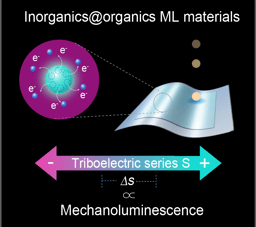
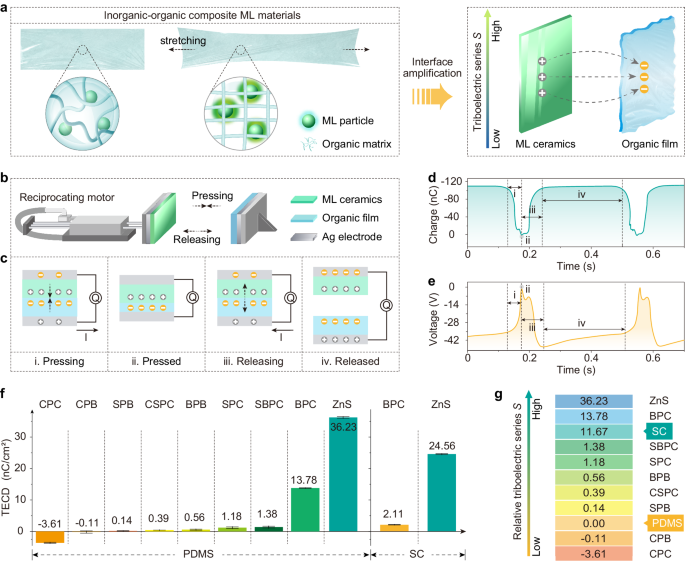
⚡ Why Does This Happen? Interfacial triboelectric charge transfer alters the oxidation state of Eu ions, directly driving reversible luminescence changes.
🧩 Why Is This a Game-Changer?
🔬 First real-time observation of self-recoverable luminescence via electron transfer.
💡 Confirms the role of triboelectric effects in controlling mechanoluminescence.
🚀 New design strategies for high-performance flexible sensors, stress visualization, and energy-free luminescent displays.
🎯 Paves the way for future bio-integrated and self-powered luminescent systems.
📖 Published in Nature Communications
📄 Title: Quantifying the interfacial triboelectricity in inorganic-organic composite mechanoluminescent materials
👨🔬 Authors: Pan Xin, Yixi Zhuang, Wei He, et al.
🔗 Read & Cite: 10.1038/s41467-024-46900-w
💬 Join the Conversation!
This discovery redefines mechanoluminescence technology—what applications do you see for triboelectric-enhanced ML materials? Comment below! 👇
📢 Spread the word—watch, share, and cite! Let’s push the boundaries of self-powered materials together!
#Mechanoluminescence #TriboelectricEffect #SmartMaterials #FlexibleElectronics #SelfPowered #NatureCommunications
Follow the Topic
-
Nature Communications
An open access, multidisciplinary journal dedicated to publishing high-quality research in all areas of the biological, health, physical, chemical and Earth sciences.

Related Collections
With Collections, you can get published faster and increase your visibility.
Women's Health
Publishing Model: Hybrid
Deadline: Ongoing
DNA repair and human disease
Publishing Model: Hybrid
Deadline: Oct 31, 2026