2026 BMC Ecology and Evolution and BMC Zoology Image Competition: The Winning Images
Published in Ecology & Evolution and Zoology & Veterinary Science


Now an anticipated annual event, the competition celebrates the creativity and curiosity of researchers worldwide. We invited anyone affiliated with a research institution to submit their best images to the following three categories: ‘Relationships in nature’, ‘Research in action’, and ‘Protecting our planet’.
Our Senior Editorial Board Members lent their expertise to judge the submissions, selecting the overall winner, overall runner-up, best in category, and runner-up from each category. The judges chose the winning images not only for their visual appeal, but also for the strength and clarity of the scientific stories they told.
Please enjoy viewing our winning images.
Overall winner
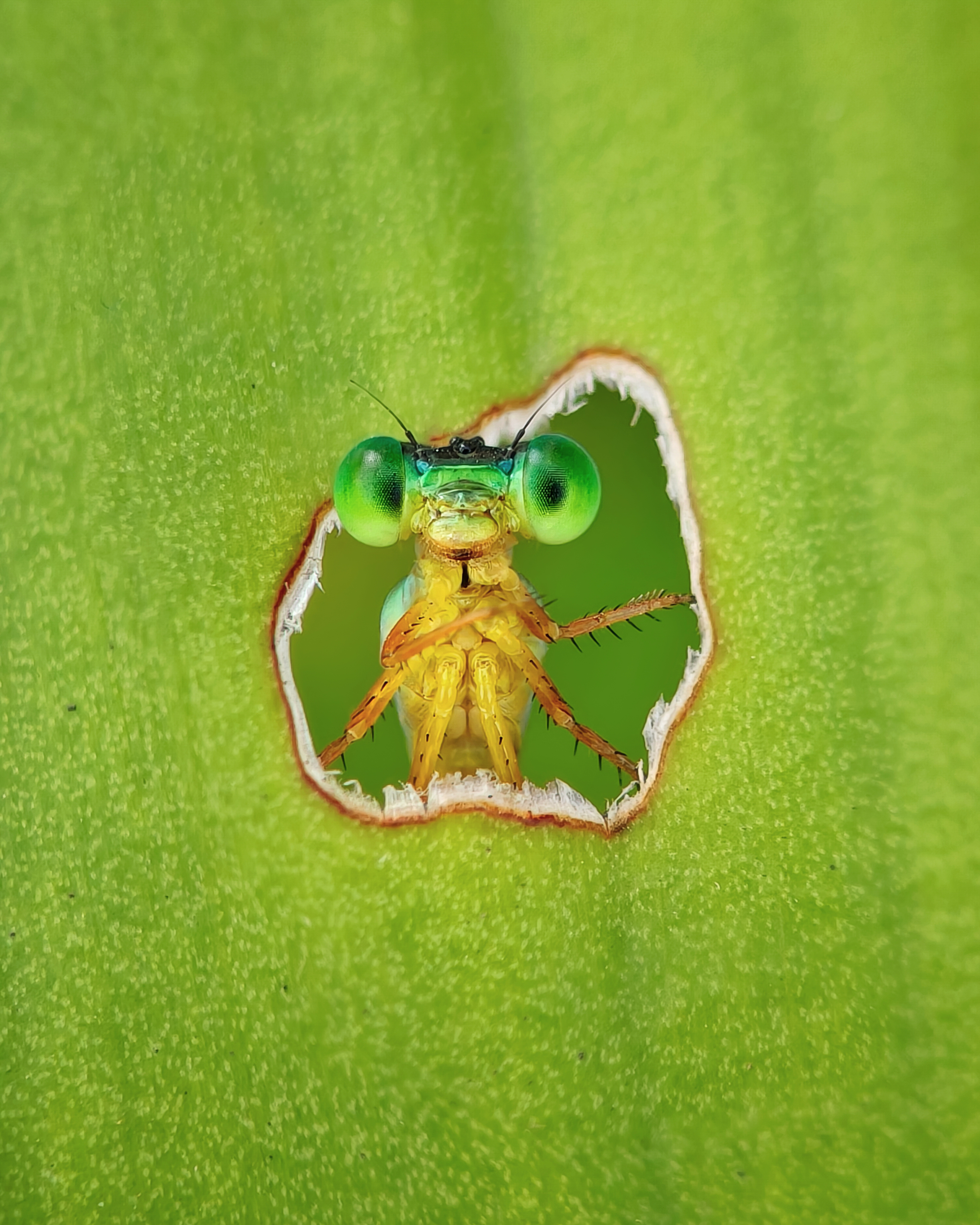
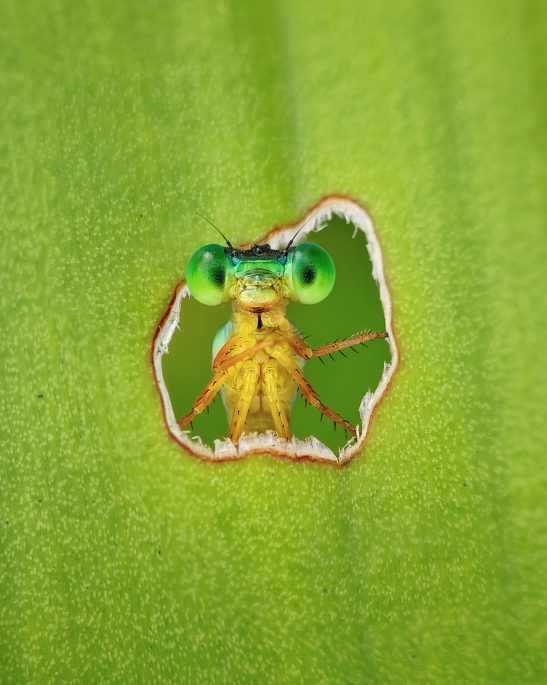
Sritam Kumar Sethy, a student at Berhampur University, was named overall winner. His photograph captures an Orange-tailed Marsh Dart damselfly peering through a natural opening in a leaf at a freshwater wetland habitat in the Balasore district of Odisha, India. Sritam says the image "offers a glimpse into the often-overlooked world of freshwater biodiversity."
Although wetlands cover just 6% of the Earth's surface, they support 40% of all plant and animal species. Yet 35% of the world's wetlands have been lost over the past 50 years due to human activities and climate change.
Sritam explains, "Damselflies are key predators in wetland ecosystems..." He notes that their dependence on healthy water bodies and surrounding vegetation makes them valuable bioindicators, with declines often signalling habitat degradation, pollution, wetland loss, or climate change impacts. "Protecting wetlands, freshwater corridors, and surrounding vegetation is important not only for damselflies but also for the countless organisms that depend on these ecosystems" (Figure 1).
Overall runner-up
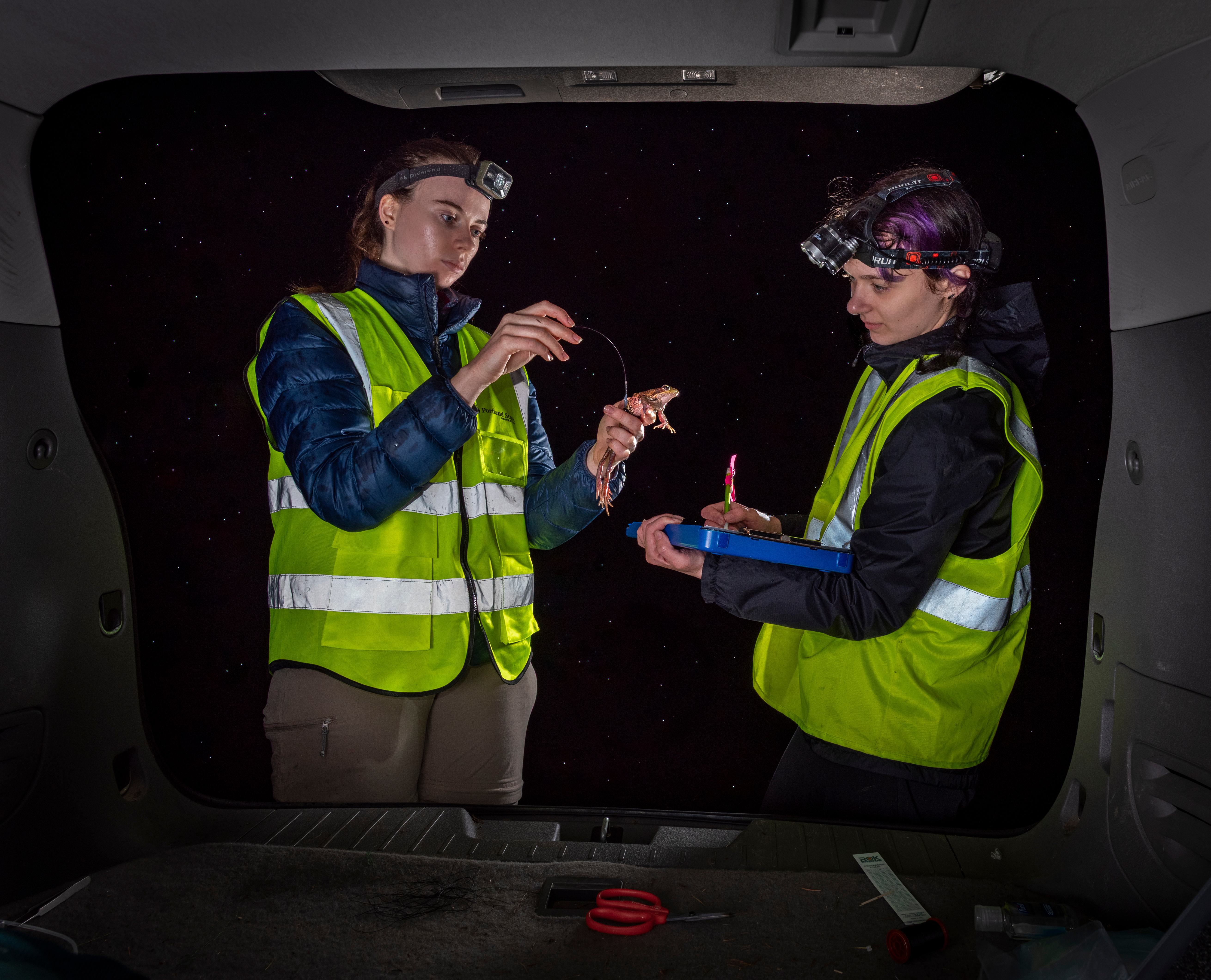
At first glance, the photograph appears to depict a space mission rather than a conservation project. The rain creates a star-like backdrop, while the radio transmitter attached to the frog makes it look almost as though it is preparing for launch. This captures the viewer's attention and invites them to look more closely and learn about the conservation story behind the photo.
The photo, taken by Ryan Wagner of Washington State University, shows researchers attaching a radio transmitter to a northern red-legged frog near Portland, Oregon. Using radio telemetry, they track frog movements and habitat use to inform efforts to improve habitat connectivity and support the construction of a frog underpass beneath Route 30, where thousands of frogs are killed each spring during migration.
The image highlights practical conservation solutions for amphibians, one of the world's most threatened vertebrate groups. According to the IUCN's State of the World's Amphibians report, two in five amphibian species are threatened with extinction (IUCN Red List of Threatened Species) (Figure 2).
Relationships in nature: Best in category
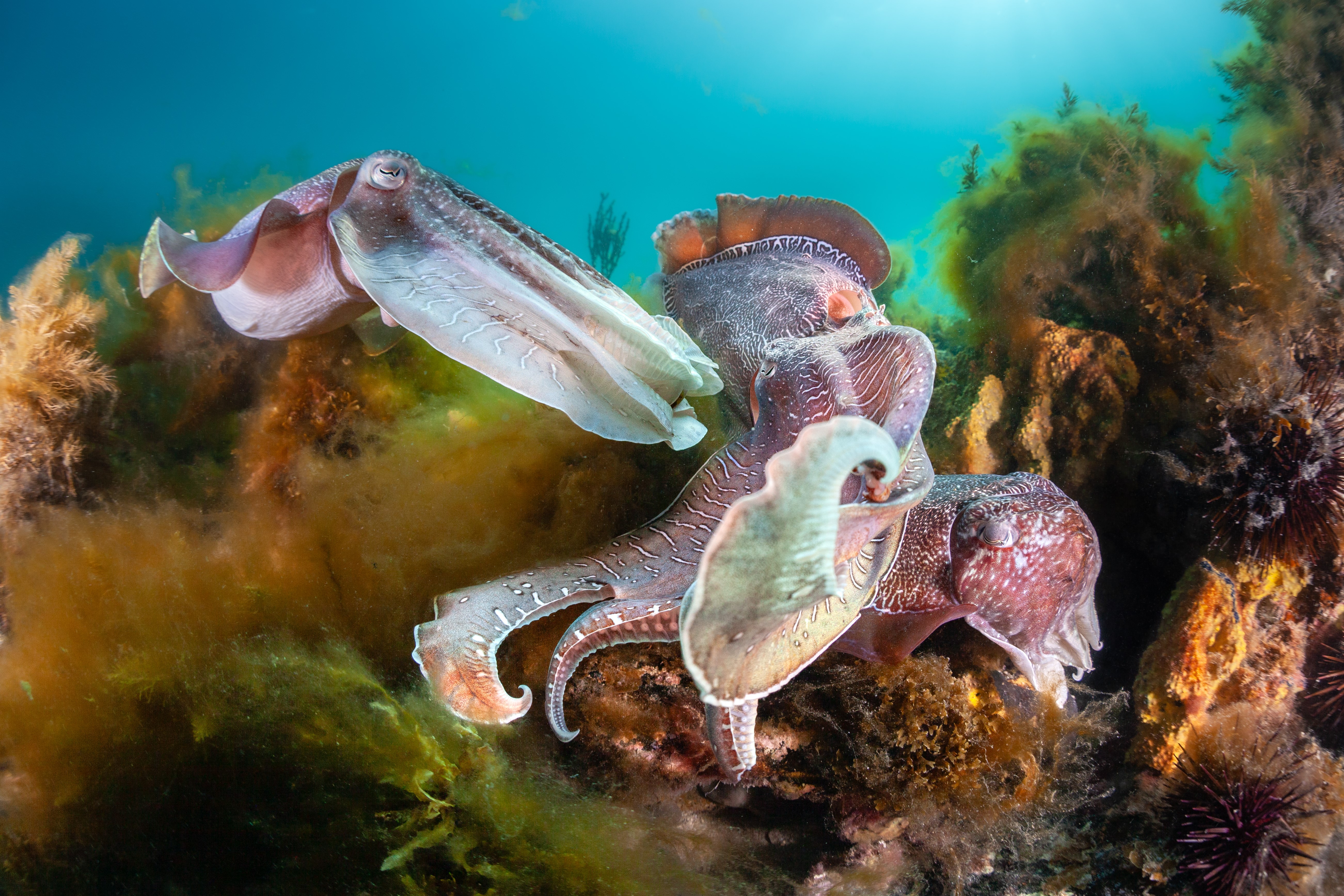
Every winter, the cold, nutrient-rich waters of South Australia's Upper Spencer Gulf host the world's only known mass aggregation of giant Australian cuttlefish (Sepia apama), with tens of thousands gathering to court, compete and spawn.
Photographed by Victor Huertas, Adjunct Research Fellow at James Cook University, Australia, this image captures a moment of intense competition as a dominant male blocks a rival's approach to a nearby female. These confrontations are fought not with sound but through rapid changes in colour and pattern used to signal, intimidate and defend.
Huertas explains, "Tens of thousands converge here to compete, court and spawn, turning the seafloor into a theatre of colour and conflict. Captured in the wild heart of this globally unique aggregation, this image freezes an ancient contest, one repeated for millennia in these waters alone, and increasingly vulnerable to a changing ocean. It's a reminder that some of the planet's most astonishing wildlife events are still unfolding, right here, right now. Yet even aggregations of this scale are not invincible: reports this season point to unusually much lower numbers gathering in the area, a sobering sign of how fragile even large-scale natural phenomena can be" (Figure 3).
Relationships in nature: Runner-up
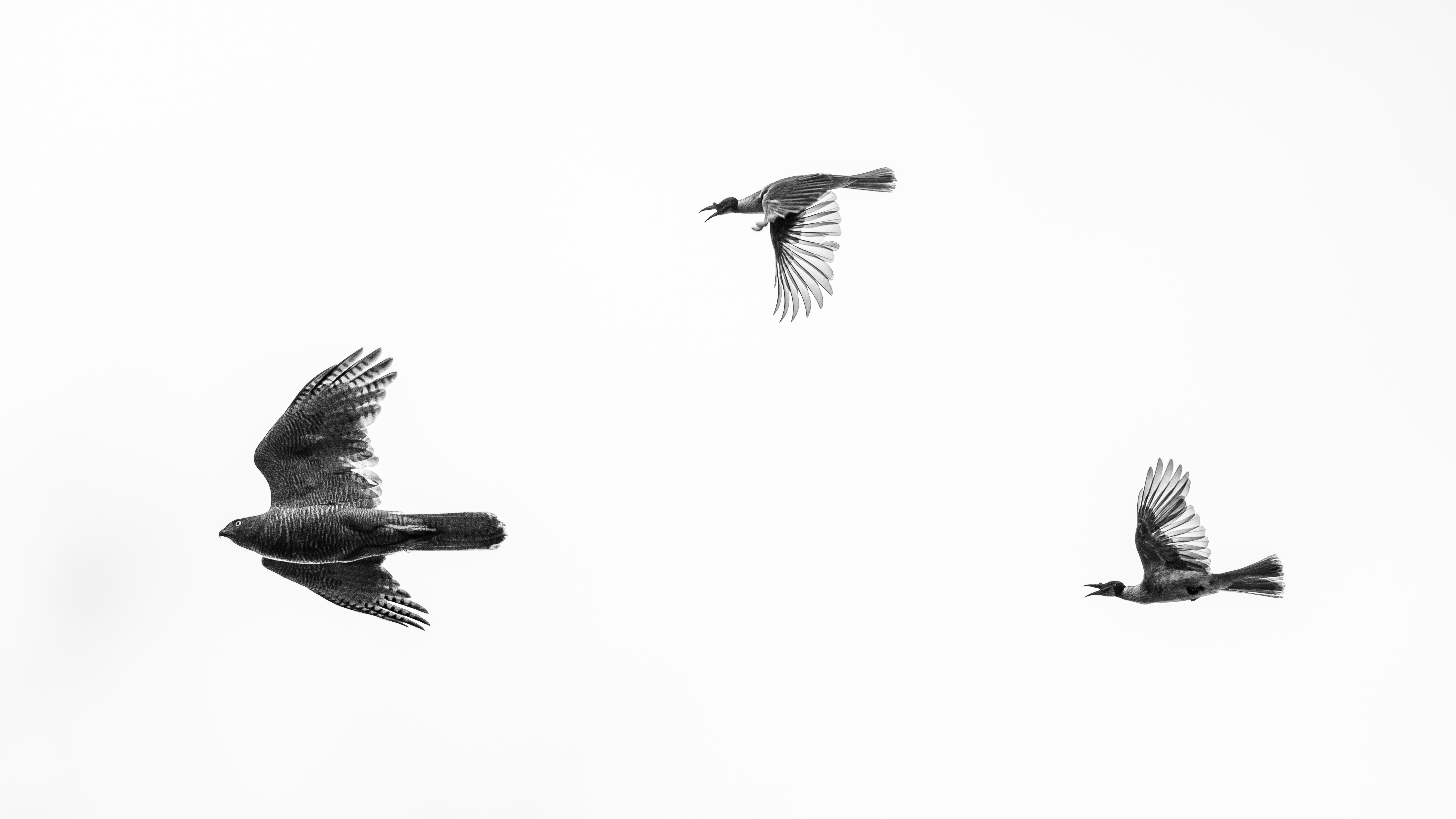
A Brown Goshawk (Accipiter fasciatus), a forest raptor that preys on birds, mammals, reptiles and large insects, finds itself outnumbered. Despite being a skilled predator, the raptor is harassed by a group of Noisy Friarbirds (Philemon corniculatus), highly social honeyeaters known for their aggressive territorial behaviour. The friarbirds surround the goshawk with close passes and swooping attacks in an effort to drive it away.
Alwin Hardenbol, a Postdoctoral Researcher at the Natural Resources Institute Finland, who submitted the image, explains, "A Brown Goshawk is being mobbed by Noisy Friarbirds in Mulligans Flat Woodland Sanctuary, Australia. Mobbing is a common anti-predator behaviour in birds, in which typically smaller species harass a potential predator through repeated calls, close approaches and swooping flights. This behaviour can alert other birds to danger, discourage hunting attempts, and sometimes drive the predator from the area” (Figure 4).
Research in action: Best in category
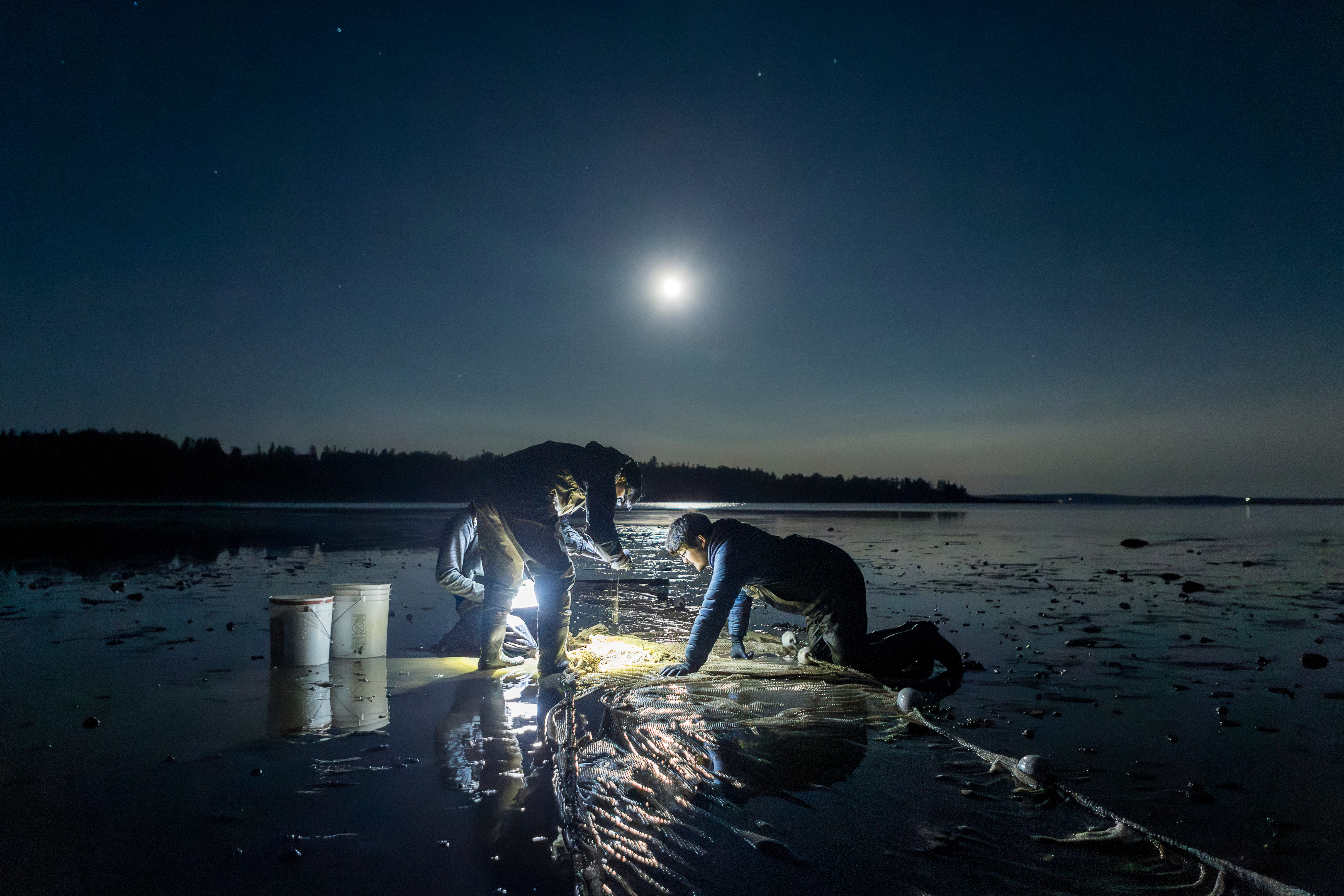
Three undergraduate students sort through the contents of a beach seine net, carefully counting fish and invertebrates collected from the shallow coastal waters of New Brunswick, Canada. Captured by Liam Brennan of the University of New Brunswick, this image was selected as the winner of the Research in Action category for its beautiful depiction of the next generation of ecologists at work.
The students were participating in the university's Marine Semester programme, where undergraduates design and conduct their own field-based research projects, gaining practical experience in data collection, species identification and ecological monitoring.
"Time in the field is important in offering students a hands-on understanding of both the challenges and rewards of field-based ecological research," says Brennan, who photographed the scene while working as a graduate teaching assistant. Brennan continued, “The project depicted in this photo wanted to better understand how fish community structure changed seasonally relative to environmental parameters. Every week, this group of students took out a five-metre fishing net, dragged it through the water, then pulled it up to shore to see what fish they caught. There were several sculpin species (Myoxocephalusspp.), winter flounder (Pseudopleuronectes americanus), and several other fish species that were regularly caught in the nets" (Figure 5).
Research in action: Runner-up

Florida International University field technicians sample small fishes and macroinvertebrates from within a throw trap in Everglades National Park, Florida. Like many wetlands around the world, the Everglades are threatened by human activity, including phosphorus in agricultural and stormwater runoff, which has significantly degraded the water quality, threatening the remarkable wildlife that resides there. The state and federal governments have recognized the importance of this delicate subtropical wetland and responded by funding the largest and most expensive ecosystem restoration project in the world - the restoration of the Everglades.
Brandon Güell explains, “using a standardized 1 m² enclosure and seine net, researchers quantify the abundance and diversity of aquatic organisms across marsh habitats. These data form part of a long-term monitoring program assessing ecosystem responses to Everglades restoration and changes in hydrology, with small fishes and invertebrates serving as key indicators of wetland health and food web structure in this globally significant ecosystem” (Figure 6).
Protecting our planet: Best in category
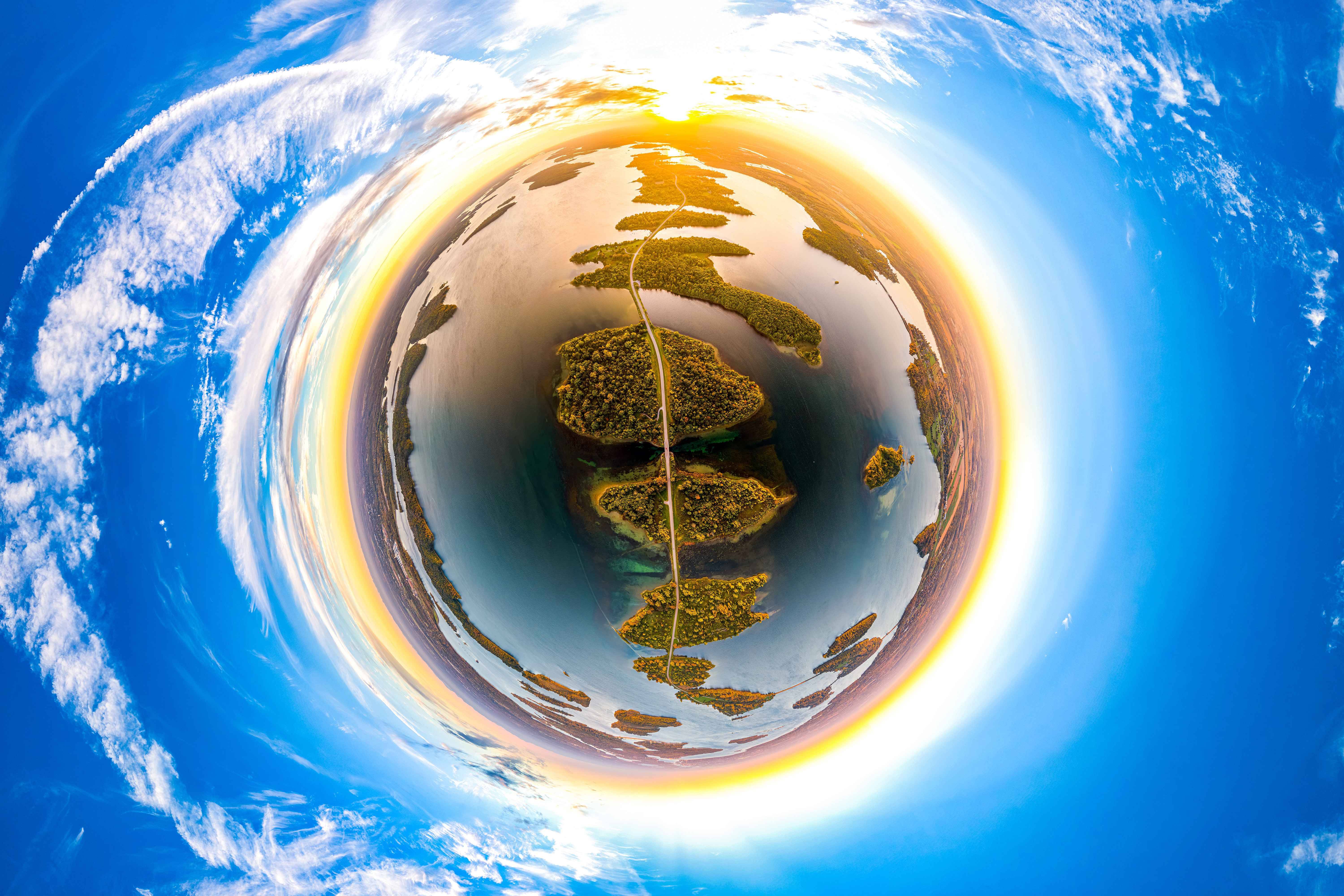
Allen Tian, a postdoctoral researcher affiliated with Queen’s University in Canada and Hangzhou Normal University and Zhejiang University in China, captured this "little planet" projection of the Long Sault Parkway, a 10.1 km route linking eleven islands in Lake St. Lawrence, while conducting an environmental DNA (eDNA) biodiversity survey.
Allen comments, "These Islands were formed from submerged hilltops following the construction of the Moses-Saunders Power Dam in the 1950s. This photo serves as a visual record of the significant impact of human activity on the environment. The creation of this waterway caused severe fragmentation of historically interconnected aquatic ecosystems and displaced thousands of residents. Today, the parkway serves as a bridge between the disruptions of the past and present conservation efforts. Protected from further development, the area now serves as a vital bird sanctuary, demonstrating the potential for sustainable land management and ecological recovery."
Captured during his field season on the St. Lawrence River, the image shows research combining high-resolution drone surveys of riparian vegetation and shoreline integrity with non-invasive eDNA sampling. As Allen notes, "we can continuously assess the health of aquatic communities without disturbing the ecosystem further" (Figure 7).
Protecting our planet: Runner-up
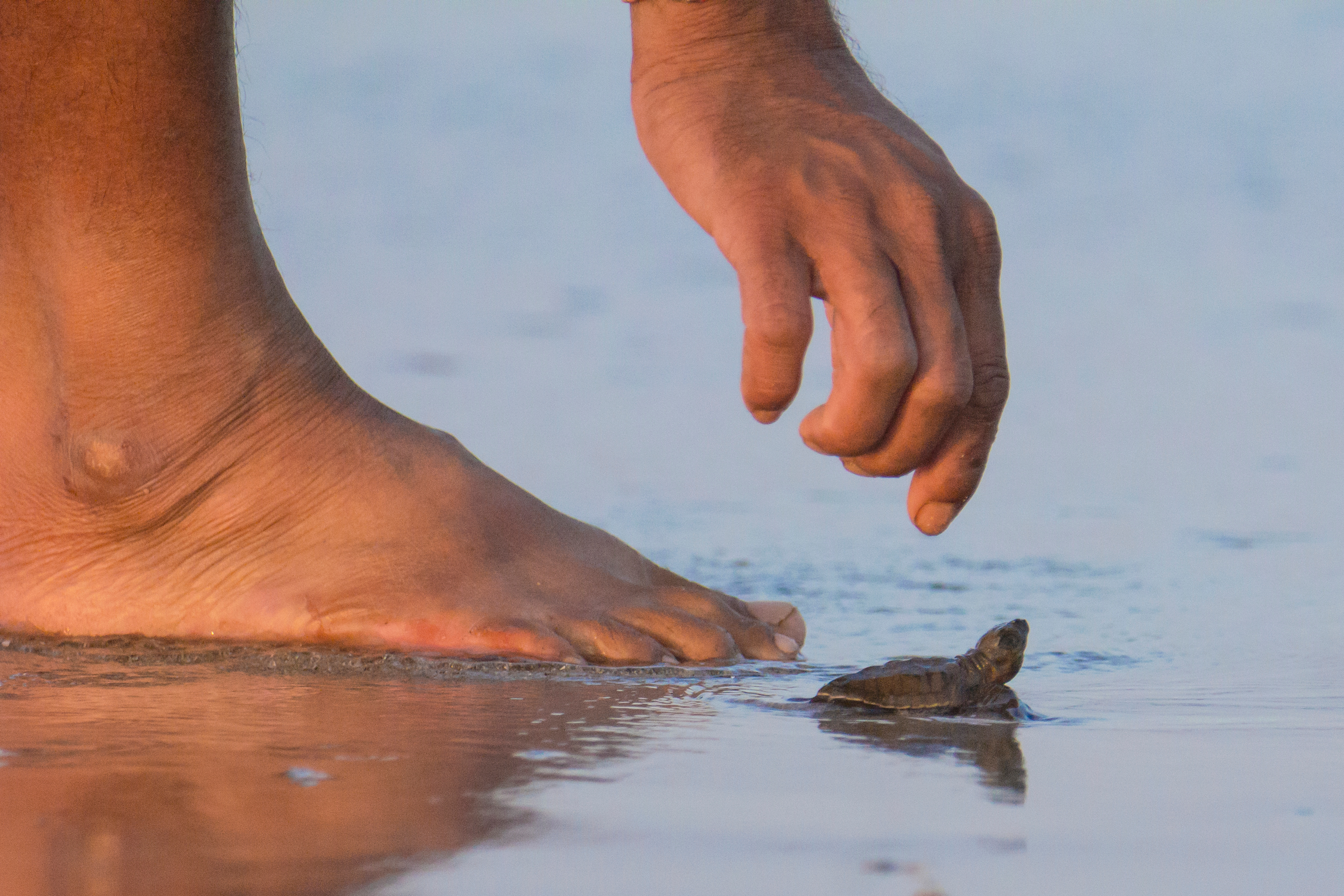
A tiny Olive Ridley turtle hatchling looks up to a human hand upon release. Photographed by Abhijeet Bayani, a biologist at MES Abasaheb Garware College, India, the image celebrates conservation action driven by local communities.
Along India's west coast, Olive Ridley turtles often nest solitarily rather than in the mass nesting events for which the species is best known. When protected from disturbance and predation, these scattered nests can achieve remarkably high hatching success. Community-led conservation efforts have therefore become an important lifeline, with local people safeguarding nests and helping ensure that hatchlings reach the sea.
"The release of hatchlings is not just a biological milestone, but an emotional one," says Bayani. "It brings a profound sense of joy and ownership to people, and a renewed promise of continuity to the species." After waiting several days for an unpredictable hatching event, Bayani captured this fleeting moment as a hatchling emerged and was carefully handled before release.
Highly commended
We received many fantastic photos beyond our winning images, and we’re excited to showcase some of our highly commended below.
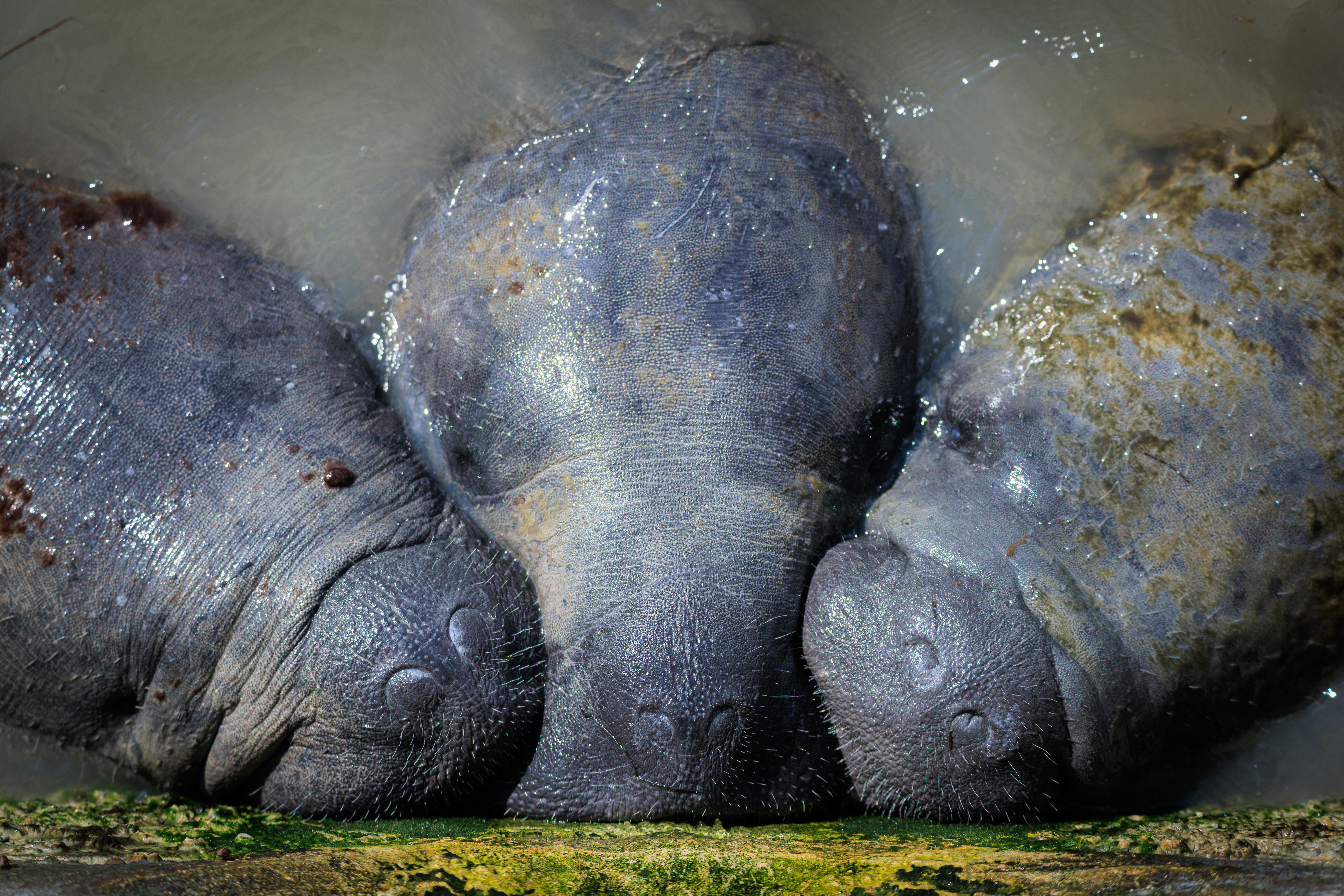
Although it was not selected as a winner, another photograph by Brandon Güell also attracted many votes. Brandon explains: “Three Florida manatees (Trichechus manatus latirostris) gather closely to drink freshwater from a drain at the edge of the Flamingo Visitor Center in Everglades National Park, Florida. In a landscape shaped by shifting salinity, access to freshwater is vital for manatee survival and often brings individuals together at a small number of reliable sources. This image captures both the species’ gentle social behaviour and the subtle influence of human infrastructure on wildlife in the Everglades, where natural and built environments are becoming increasingly interconnected” (Figure 9).
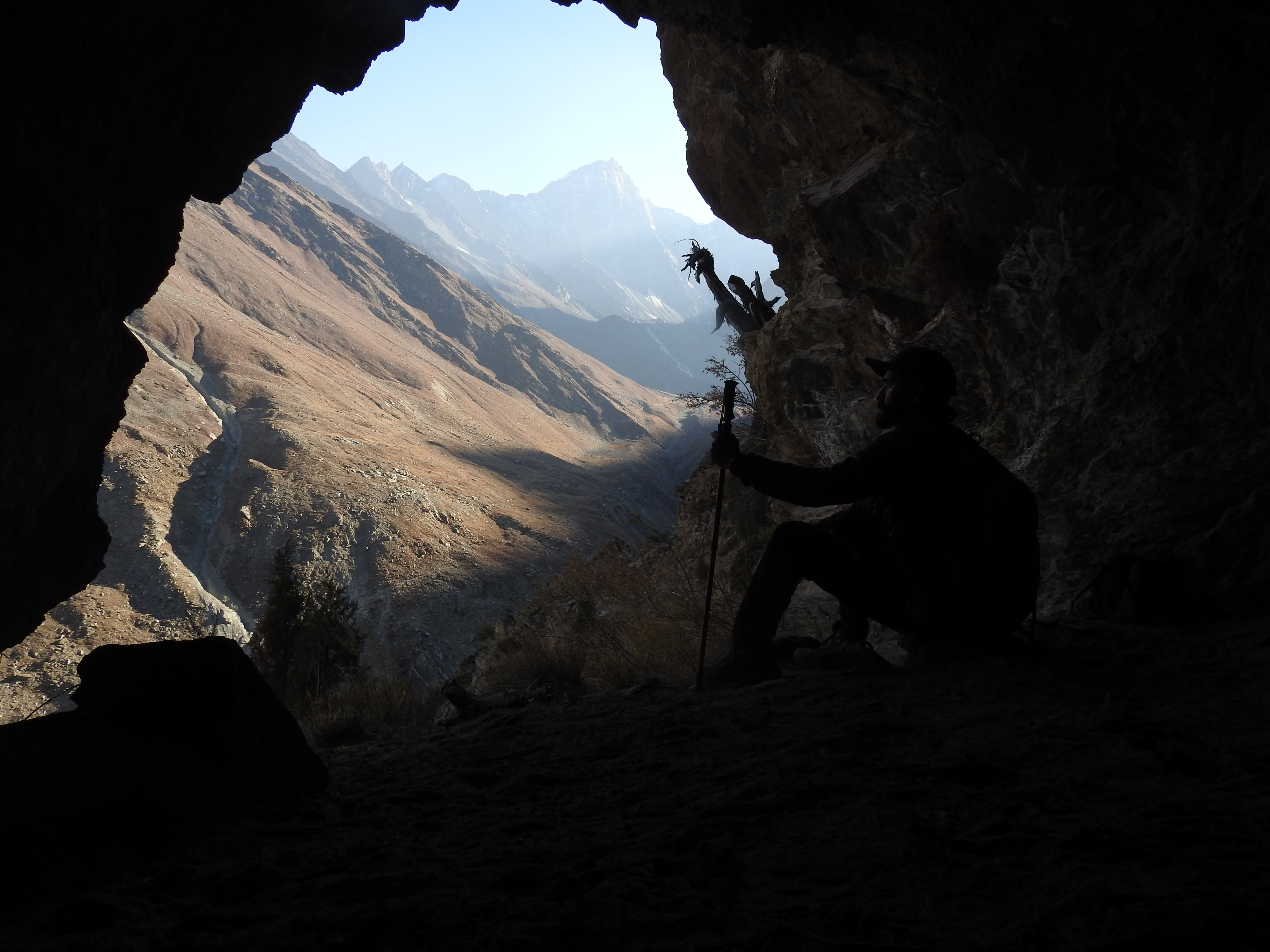
We received many strong entrants in the “Research in Action” category, making judging challenging. Among the favourites that did not win was a photo taken during a survey of Himalayan brown bear (Ursus arctos isabellinus) habitat in the Western Himalayas, India. Dr Vineet Kumar of the Zoological Survey of India spotted what appeared to be a potential bear den: a large cave overlooking a remote alpine valley. After a three-hour climb across rugged terrain, however, the cave revealed an unexpected occupant.
"What we discovered was entirely unexpected," says Kumar. "Rather than a bear den, the spacious cave was being used by nomadic shepherds as a natural shelter while grazing sheep and goats in these remote alpine pastures during summer."
The image highlights the overlap between human livelihoods and wildlife habitat in the Himalayas. The same alpine landscapes that support pastoral communities also provide important foraging grounds for the endangered Himalayan brown bear, creating challenges for both conservation and local livelihoods.
More than a photograph of a mountain shelter, the image captures a moment when a search for bears became a lesson in coexistence. As Kumar reflects, "Every expedition has a story beyond its original question."
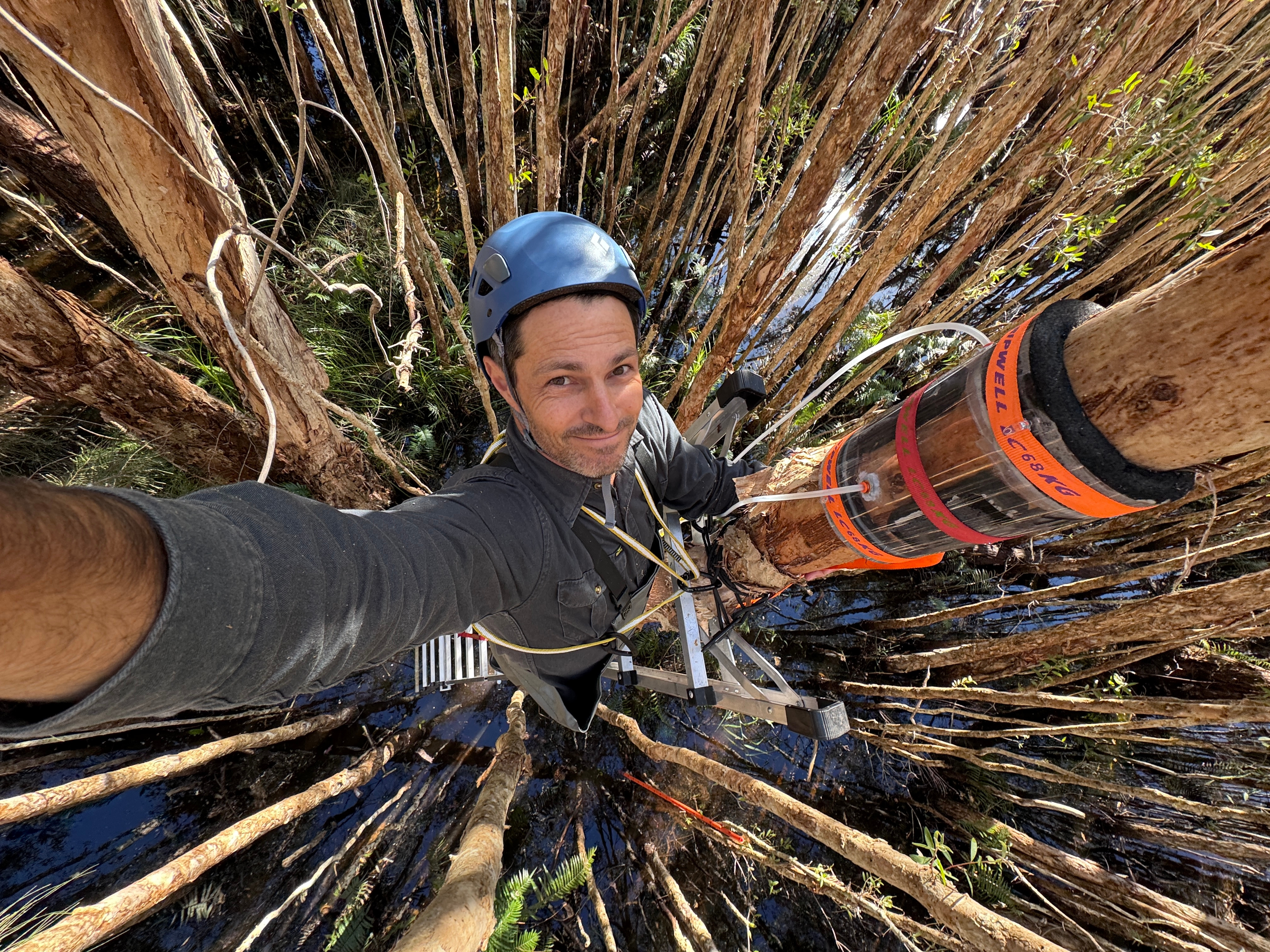
Perched several metres above the flooded floor of a Melaleuca wetland in a remote part of the Northern Territory, Australia, Luke Jeffrey samples the hidden microbial communities living within tree bark, a newly recognised frontier in ecosystem science. This photo was also highly commended by the judges. Jeffrey explained, “These bark-associated microbes may influence global biogeochemical cycles by regulating exchanges of methane, nitrogen, and other climate-relevant gases between the tree hosts and the atmosphere. By combining canopy gas flux measurements with microbial ecology, this research is reshaping how we understand trees: not simply as plants, but as thriving ecosystems hosting complex, busy microbial communities with planetary-scale implications. By revealing these cryptic, previously overlooked ecological and climate functions supplied by forests, this work may help strengthen the case for protecting and restoring forested ecosystems under increasing human and climate pressures” (Figure 11).
Many congratulations to all of our winners!
All the figures have been released under a Creative Commons Attribution License (CC BY), so everyone is welcome and encouraged to share them freely, as long as you clearly attribute the image to the author. To learn more about the competition and the winning images, please read our accompanying editorial.

Follow the Topic
-
BMC Ecology and Evolution
An open access, peer-reviewed journal interested in all aspects of ecological and evolutionary biology.
-
BMC Zoology
This is an open access, peer-reviewed journal that considers articles on zoology, including comparative physiology, mechanistic and functional studies, morphology, life history, animal behavior, signaling and communication, cognition, parasitism, systematics, biogeography and conservation.


Related Collections
With Collections, you can get published faster and increase your visibility.
Nighttime ecology and evolutionary adaptations to low-light environments
BMC Ecology and Evolution welcomes submissions of research exploring the remarkable adaptations and ecological dynamics that enable life to flourish in the dark and low light environments. Contributions will explore evolutionary adaptations such as sensory specialization (e.g., night vision, echolocation, bioluminescence, heat-sensitive pits, and specialized hairs) that allow organisms to navigate, forage, and communicate in low-light conditions from caves to the deep sea. The collection will also investigate behavioral and physiological mechanisms, including circadian rhythm adjustments and predator-prey interactions, that are essential for survival in nocturnal niches.
Submissions on the impact of anthropogenic influences, such as light pollution, on nocturnal ecosystems and biodiversity are encouraged. The Collection also welcomes research on nighttime bioacoustics and soundscapes, examining how sound is used to adapt to and shape nocturnal environments. Contributions discussing the role of citizen science in advancing our understanding of nighttime ecology are also encouraged.
Publishing Model: Open Access
Deadline: Nov 20, 2026
Evolution of disease: From pathogens to proliferating cells
Evolution of disease: From pathogens to proliferating cells is a special Collection that explores how evolutionary processes shape health and disease—from infectious microbes to cancerous cells. We invite research within the discipline of evolutionary medicine that examine how forces such as natural selection, genetic drift, host-pathogen coevolution, and environmental change contribute to disease susceptibility, resistance, and progression. We welcome submissions that deepen our understanding of disease as a dynamic outcome of evolutionary interactions.
Topics of research may include but are not limited to research which uses evolutionary principles to understand:
1. Pathogen evolution, resistance, and host interactions
•
The evolution of antibiotic, antiviral, antifungal, and antiparasitic resistance
•
Mechanisms of immune evasion, persistence, and transmission
•
Experimental evolution and molecular insights into pathogen adaptation
•
Host-pathogen coevolution and the impacts of medical or environmental interventions
•
Comparative host-pathogen dynamics across species
2. Evolutionary mismatch and modern disease
•
Evolutionary insights into metabolic disorders, autoimmune conditions and cancer
•
When a previously advantageous trait becomes maladaptive due to change in the environment
3. Evolution of cancer
•
Evolutionary and ecological models of cancer progression and resistance
•
Comparative oncology: insights from cancer-resistant and long-lived species
•
Somatic evolution, immune escape, and tumor heterogeneity
4. Genetic variation, adaptation, and disease susceptibility
•
Adaptive and maladaptive genetic variants in human and animal populations
•
Pleiotropy and trade-offs in immune function, metabolism, and reproduction
•
Population genetics, admixture, and the evolutionary roots of health inequality
5. Microbiome evolution and host symbiosis
•
Coevolution and community ecology of host-associated microbiota
•
Functional evolution in microbial genomes and implications for host health
•
Microbiome shifts due to modern environments, drugs, or host genetic factors
6. Viral evolution and endogenous elements
•
Evolutionary arms races between hosts and viruses
•
Evolution and function of endogenous viral elements in animal genomes
•
Phylogenomic approaches to uncover ancient viral influences on host evolution
7. Experimental and computational approaches
•
Experimental evolution in microbial or model systems
•
Genomics, phylogenomics, and systems biology in disease evolution
•
Machine learning and AI in evolutionary medicine research
Publishing Model: Open Access
Deadline: Dec 04, 2026