Highlights from the European Conference for Behavioural Biology (ECBB) 2026
Published in Ecology & Evolution and Zoology & Veterinary Science

The European Conference for Behavioural Biology (ECBB) 2026 was held from 1 to 4 September 2026 in Cambridge, UK, bringing together more than 300 delegates from around the world. The meeting featured six plenary lectures, 86 poster presentations, and 127 talks across four parallel symposia, showcasing the latest in animal behaviour research. The theme for 2026 was Animal Behaviour in the Anthropocene, inviting attendees to reflect on how human-driven environmental change is shaping animal behaviour across ecosystems.
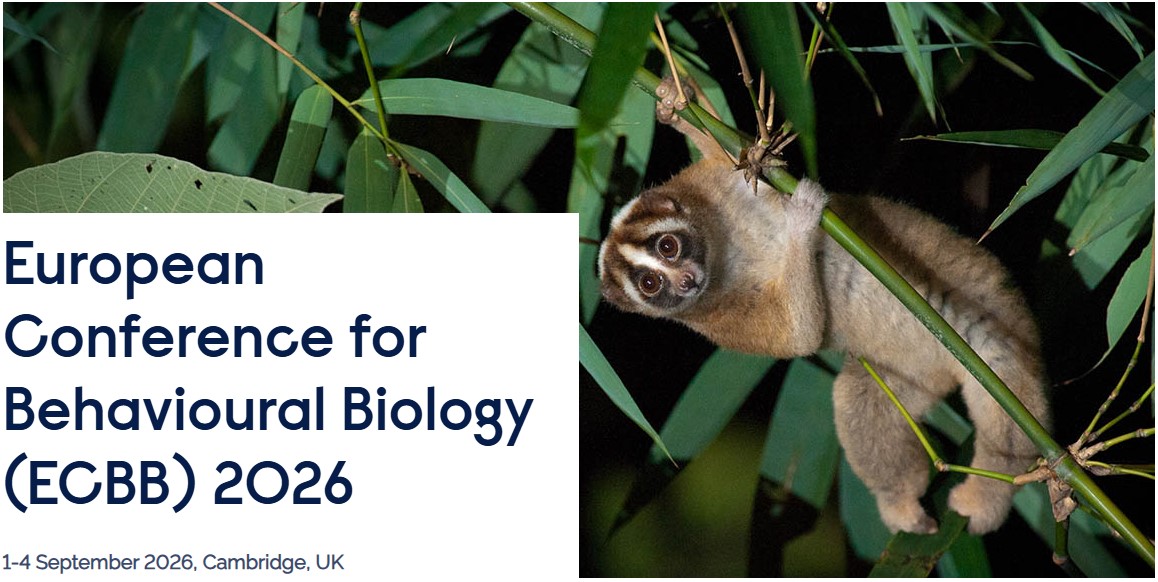
With so many fantastic presentations, it was difficult to plan my schedule. Here, I share some of my highlights from the meeting.
Reducing the Impact of Artificial Light at Night on Animal Behaviour
A recurring theme throughout the conference was the impact of artificial light at night (ALAN) on animal behaviour. With around 15 presentations on the topic, it was clear that research on the ways in which ALAN affects animal behaviour is needed to help conservationists reduce one of the major drivers of biodiversity loss.
One of the stand out talks was given by Prof Ulrika Candolin from the University of Helsinki. She began by reminding the audience that life on Earth evolved under predictable cycles of light and darkness, yet artificial lighting is now altering these environmental cues on a global scale, with consequences for populations, communities, and ecosystems.
Prof Candolin highlighted the many ways ALAN can disrupt animal behaviour, from disorientating sea turtle hatchlings that rely on celestial cues to reach the sea, to trapping nocturnal insects around artificial lights and disrupting plant-pollinator interactions.
A particularly fascinating example came from the Candolin Research Lab's work on glow-worms, whose reproductive success depends on females attracting males with bioluminescent signals. Her group has shown that prolonged exposure to artificial light can drive females underground, reducing mating opportunities and ultimately contributing to population declines. She emphasised that effective mitigation requires consideration not only of light intensity, but also its timing, duration, spectrum, and shielding to help inform conservation policy.
Prof Candolin concluded by highlighting a poster from her PhD student, Linnea Kivelä, who is investigating whether smart public lighting strategies can reduce the impacts of ALAN on insects while maintaining the practical benefits of outdoor lighting. By testing measures such as part-night lighting, seasonal lighting breaks, and dimming profiles in real municipal lighting systems, her work aims to provide evidence that can directly inform wildlife-friendly lighting policy and urban planning.
The Impact of Sensory Pollution on Life Below Water
A number of presentations also highlighted that artificial light is not only impacting life on land, but also life below water. Alongside artificial light, human-generated noise is altering the sensory landscapes on which aquatic animals depend.
A particularly engaging talk was presented by Dr Robyn Grant from Manchester Metropolitan University who spoke about the impact of noise on vibrissal sensing in pennipends. Her research focuses on pinnipeds, such as seals and sea lions, which use highly sensitive whiskers to detect water movements produced by prey. She discussed evidence that boat noise may interfere with this remarkable sensory system.
Another memorable presentation came from Dr Nora Carlson, who stressed that noise pollution does not only affect marine mammals but many other species that live in our seas and oceans. Dr Carlson introduced her research on the effects of anthropogenic noise on Pacific sand lance, a small forage fish that plays a key role in marine food webs. By experimentally modelling noise generated by wind farms, vessel traffic, and pile-driving activities, her group found significant impacts on fish growth, body condition, and behaviour. Noise exposure altered both the proportion of fish occupying the water column and their tendency to display startle responses. Interestingly, fish appeared less sensitive to disturbance during their dormant stage when buried within sediment.
Several presentations highlighted the fact that sensory pollution extends far beyond marine mammals and can affect a wide variety of aquatic organisms. As offshore development and marine traffic continue to expand globally, understanding these effects will become increasingly important for conservation and environmental management.
Exploring the Social Microbiome
A thought-provoking theme discussed at the conference was the emerging concept of the social microbiome. Several presentations explored how social behaviour can influence the transfer of microbes between individuals, shaping the composition of animal microbiomes. Researchers highlighted how behaviours such as grooming, close social contact, and group living can facilitate microbial exchange, with individuals that share stronger social bonds often possessing more similar microbiomes.
A particularly interesting discussion emerged around the question of what these socially transmitted microbes actually do for their hosts. While growing evidence suggests that social networks can act as pathways for microbial transmission, the functional consequences of this exchange remain poorly understood. During a presentation by Dr Krishna N. Balasubramaniam, audience members raised exactly this question, highlighting an important knowledge gap in the field. Understanding how socially transmitted microbes influence health, behaviour, and adaptation represents an exciting area for future research.

Follow the Topic
-
BMC Zoology
This is an open access, peer-reviewed journal that considers articles on zoology, including comparative physiology, mechanistic and functional studies, morphology, life history, animal behavior, signaling and communication, cognition, parasitism, systematics, biogeography and conservation.

Related Collections
With Collections, you can get published faster and increase your visibility.
Host–parasite interactions in wildlife
BMC Zoology welcomes research on host–parasite interactions in wild animals. Parasites are diverse and are associated with nearly all animal taxa and ecosystems. Parasites influence host physiology, behavior, reproduction, and life histories, while hosts impose selective pressures that shape parasite traits, strategies, and patterns of diversification. Together, these reciprocal interactions drive evolutionary change, ecological dynamics, and biological diversity in animals.
We welcome original research on, but not limited to:
Phylogenetics and systematics of parasites
- Systematics and taxonomy of animal parasites
- Phylogenetic relationships among parasite lineages and their hosts
- Cryptic diversity and species boundaries in parasite taxa
- Phylogeographic and historical patterns of parasite diversification
Evolutionary ecology and coevolution
- Host–parasite coevolution and reciprocal adaptation
- Parasite‑mediated divergence, local adaptation, and speciation
- Host switching and the evolutionary dynamics of parasite lineages
- Macroecological and comparative perspectives on host–parasite associations
Host defence, physiology, and immune responses
- Evolutionary and behavioural defences against parasitism in animals
- Natural variation in defence strategies across taxa, life stages, and environments
- Physiological and energetic costs of parasitism in relation to life‑history strategies
- Plastic and locally adapted host responses to parasitic interactions
Parasite diversity, biology, and evolution
- Evolutionary origins and repeated emergence of parasitism in animals
- Diversification of parasitic life histories, strategies, and transmission modes
- Phenotypic plasticity and context‑dependent traits in parasites
- Parasite development, behavior, and interactions with hosts
Behavior, life history, and reproductive interactions
- Behavioral changes associated with parasitism
- Effects of parasites on host reproduction, mating systems, and parental care
- Parasite‑mediated sexual selection, signaling, and conflict
- Behavioral and life‑history trade‑offs shaped by parasitic interactions, including reproductive and social forms of parasitism such as brood parasitism
Effects of anthropogenic stressors on parasite ecology and communities
- Climate change, land-use change, pollution, and other human-mediated factors
- Changes in abundance, distributions, dispersions, host associations, pathogenicity, phenology, species compositions, etc.
- Control of parasites
This Collection supports and amplifies research related to SDG 14: Life Below Water and SDG: 15 Life on Land.
All manuscripts submitted to this journal, including those submitted to collections and special issues, are assessed in line with our editorial policies and the journal’s peer-review process. Reviewers and editors are required to declare competing interests and can be excluded from the peer review process if a competing interest exists.
Publishing Model: Open Access
Deadline: Mar 10, 2027
Citizen science for zoological research
BMC Zoology is calling for submissions to our Collection, Citizen science for zoological research.
Citizen science has emerged as a powerful tool in zoological research, enabling the public to actively participate in scientific inquiry and data collection. This approach harnesses the observations and contributions of non-experts, allowing researchers to gather valuable information on wildlife populations, behaviors, and ecosystems. Citizen science initiatives span various methods, from organized wildlife monitoring projects to online platforms that facilitate species identification and distribution mapping. By incorporating public engagement into the scientific process, citizen science fosters a collaborative environment that can lead to more comprehensive and inclusive research outcomes.
Engaging the public in scientific research not only enhances data collection but also promotes awareness and appreciation for biodiversity and conservation efforts. Recent advances in technology, such as mobile applications and social media platforms, have made it easier for citizens to participate and share their findings, thereby expanding the reach of conservation efforts. Furthermore, citizen science has demonstrated its effectiveness in addressing pressing ecological challenges, allowing researchers to harness the collective knowledge and enthusiasm of communities to better understand and protect wildlife.
As research in citizen science continues to evolve, we may witness innovative methodologies and frameworks that enhance collaboration between scientists and the public. Future advances could lead to the establishment of more robust partnerships that bridge gaps in scientific knowledge and engage diverse populations in conservation efforts. Additionally, advancements in data analysis techniques may facilitate the integration of citizen-generated data into formal research, paving the way for more informed decision-making in wildlife management and conservation policies.
This Collection will consider studies on:
- Community engagement in wildlife monitoring
- Public participation in conservation initiatives
- Evaluating citizen science initiatives
- Impact of citizen science on public engagement
This Collection supports and amplifies research related to SDG 14: Life Below Water and SDG: 15 Life on Land.
All manuscripts submitted to this journal, including those submitted to collections and special issues, are assessed in line with our editorial policies and the journal’s peer-review process. Reviewers and editors are required to declare competing interests and can be excluded from the peer review process if a competing interest exists.
Publishing Model: Open Access
Deadline: Nov 11, 2026