Why post-fire management matters for resilient European landscapes
Published in Earth & Environment and Sustainability

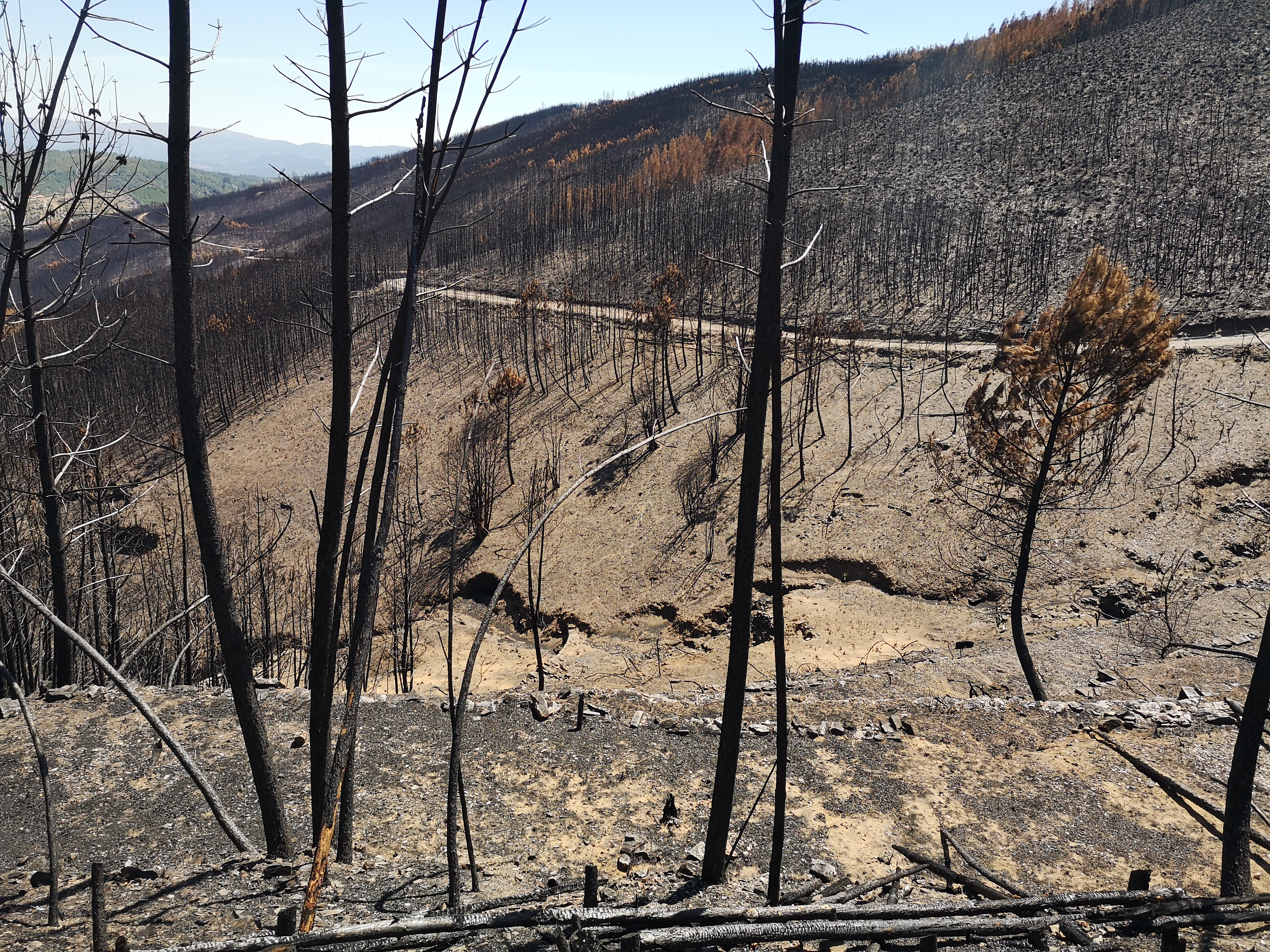

When a wildfire is finally extinguished, attention often shifts elsewhere. Emergency response teams leave, media coverage fades, and ecosystems are left carrying the visible scars of fire. Yet, for researchers and land managers working in fire-prone regions, an equally important phase is only beginning. What happens in the weeks, months and years after a wildfire can strongly influence whether ecosystems recover, adapt and become more resilient, or instead enter trajectories of long-term degradation.
In my previous blog post, I explored how wildfires and land degradation can reinforce one another in a dangerous feedback loop. Wildfires do not simply remove vegetation. They can accelerate soil erosion, alter hydrological processes, reduce ecosystem functioning and increase vulnerability to future disturbances. This raises an important question: once the flames are gone, how do we support recovery in ways that reduce future risks?
This challenge motivated our recent work on post-fire management strategies for the European Union. Our team brings together researchers from countries that have historically experienced some of the highest percentages of burned area in Europe and where wildfire impacts are part of lived scientific and management realities. Working across regions repeatedly affected by fire, we sought to address a critical gap: how can post-fire management be strengthened and better coordinated across the EU?
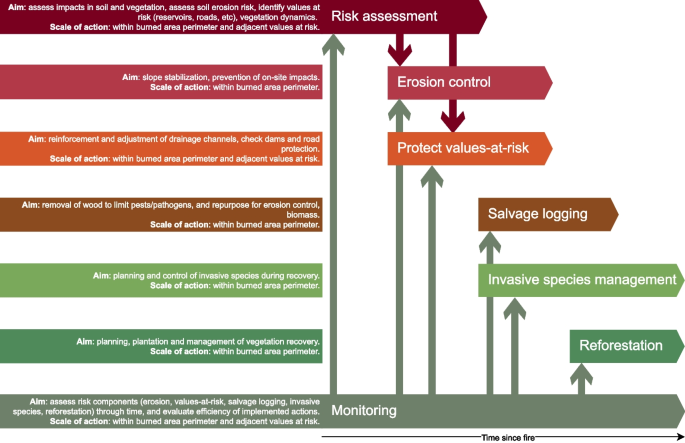
Our paper builds on recent advances in integrated fire management while focusing on a dimension that has historically received insufficient attention: the implementation of post-fire recovery measures. Too often, management actions are delayed, fragmented or disconnected from available scientific knowledge, reducing their effectiveness precisely when timely intervention is most needed.
At the same time, science already provides substantial guidance to support more effective recovery. Over recent decades, research has considerably improved our understanding of post-fire impacts and ecosystem responses. Scientific evidence can help guide soil stabilization efforts, reduce erosion risks, support vegetation recovery, anticipate hydrological hazards, prioritize restoration actions and improve ecosystem resilience. Europe is therefore not starting from scratch. A strong scientific foundation already exists to support more coordinated and evidence-based post-fire responses.
In our work, we bring together this knowledge and provide a roadmap for strengthening post-fire management across the European Union. We highlight areas where science can better support implementation and identify opportunities to strengthen coordination across governance levels and regions. More importantly, we argue that post-fire management should become an integral part of wildfire policy rather than a delayed response activated only after damage has already unfolded.
Perhaps one of the most important shifts we propose is in how we think about burned landscapes. Areas affected by wildfire should not only be viewed through the lens of damage and loss. If managed strategically, they can also become opportunities to restore ecosystems in ways that better prepare them for future climate and fire conditions. Recovery should not necessarily aim to recreate exactly what existed before the fire, but instead to strengthen the resilience and adaptive capacity of forests of ecosystems.
As wildfires become an increasingly persistent feature of European landscapes, resilience will depend not only on preventing and suppressing fires, but also on how we recover from them. Post-fire management should no longer remain an overlooked phase of wildfire management. It should become a central component of Europe’s strategy for building resilient landscapes.
Follow the Topic
-
Fire Ecology
This is the international scientific journal of the Association for Fire Ecology. It publishes peer-reviewed, impactful articles on all ecological and management aspects relating to wildland fire.

What are SDG Topics?
An introduction to Sustainable Development Goals (SDGs) Topics and their role in highlighting sustainable development research.
Continue reading announcementRelated Collections
With Collections, you can get published faster and increase your visibility.
Indigenous Stewardship: Addressing the fire crisis in the western USA
As the wildfire crisis grows, the western United States is seeing increased damage from wildfire, declines in biodiversity, increased carbon emissions, loss of life and human health impacts, and significant economic costs, all at a pace both unprecedented and unanticipated. Thoughtful stewardship of frequent fire adapted landscapes is essential to alleviating these impacts. Yet federal land management and environmental policies are ill-adapted to meeting this urgent need.
In this Collection, Western scientists and Indigenous practitioners come together to explore ways to prioritize forest resilience on private, tribal, and public lands for the long-term. This unique partnership highlights the broad support for finally addressing the roots of the wildfire crisis.
Students and Early Career Researchers (especially SAFE members) are encouraged to submit their research to this collection and take advantage of the SERC incentive.
Pre-submission enquiries are welcome.
Keep up with the latest Fire Ecology content by signing up for article alerts today!
Publishing Model: Open Access
Deadline: Ongoing
Pyro-ecophysiology: Unraveling the physiological connections between climate, fuel dynamics, fire behavior and fire effects
Pyro-ecophysiology is a novel discipline that bridges gaps between traditional fire ecology, plant physiology and combustion science. It explores the interdependent mechanisms governing the impacts and interactions of fire on living plants, shifting the paradigm from solely relying on moisture content as an indicator.
This evolving field seeks to explain fire behavior and fire effects phenomena through physical and physiological processes at the leaf, whole plant, species and plant functional type scales; and explores how these factors scale across landscapes.
This Collection of new knowledge will help improve process-based ecological models as well as fire behavior and fire effects models.
Students and Early Career Researchers (especially SAFE members) are encouraged to submit their research to this collection and take advantage of the SERC incentive.
Pre-submission enquiries are welcome.
Keep up with the latest Fire Ecology content by signing up for article alerts today!
Publishing Model: Open Access
Deadline: Dec 31, 2026