A predator’s footprint in Eocene Antarctica
Published in Earth & Environment and Ecology & Evolution

A new piece in the puzzle of Antarctica’s land-mammal fossil record
When we think about Antarctic fossils, we usually imagine the spectacular marine record. In contrast, evidence of terrestrial mammals was mostly limited to the allochthonous isolated teeth and bones from Seymour (Marambio) Island.
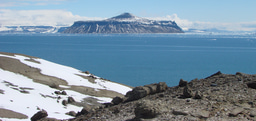
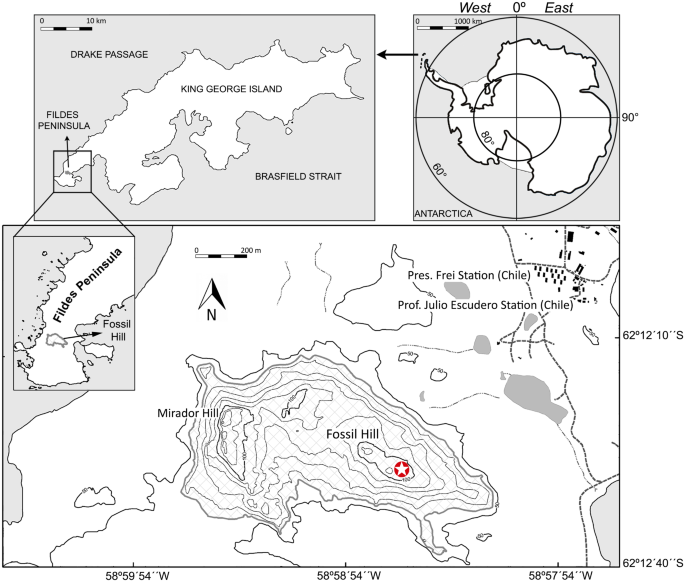
A new study in Polar Biology (Mansilla-Vera, H., de Valais, S., Goin, F., Gelfo, J.N. First mammal tracks from the Eocene of Antarctica. Polar Biol 49, 101 (2026). https://doi.org/10.1007/s00300-026-03539-1) describes a small mammalian footprint from the Fossil Hill Formation on King George (25 de Mayo) Island, in the South Shetland Islands. The site lies within Antarctic Specially Protected Area 125a, a locality already known for its exceptionally well-preserved Eocene fossils, including plant remains, feathers, bird footprints, and invertebrate trace fossils. The Fossil Hill Formation has been assigned an early Eocene age, and the footprint-bearing horizon is estimated to be approximately 55.5 million years old.
The specimen, catalogued as T-373, consists of a partial set of a footprint and handprint preserved as natural casts in fine-grained volcanic sediment. The footprint is only about two centimetres long and wide, but it contains important information. It shows a digitigrade posture, a compact sole or metapodial pad, and at least three digital impressions arranged in an anteriorly convex arch. From its preserved area, we estimated a minimum body mass of approximately 1.3 kg for the animal that produced it.
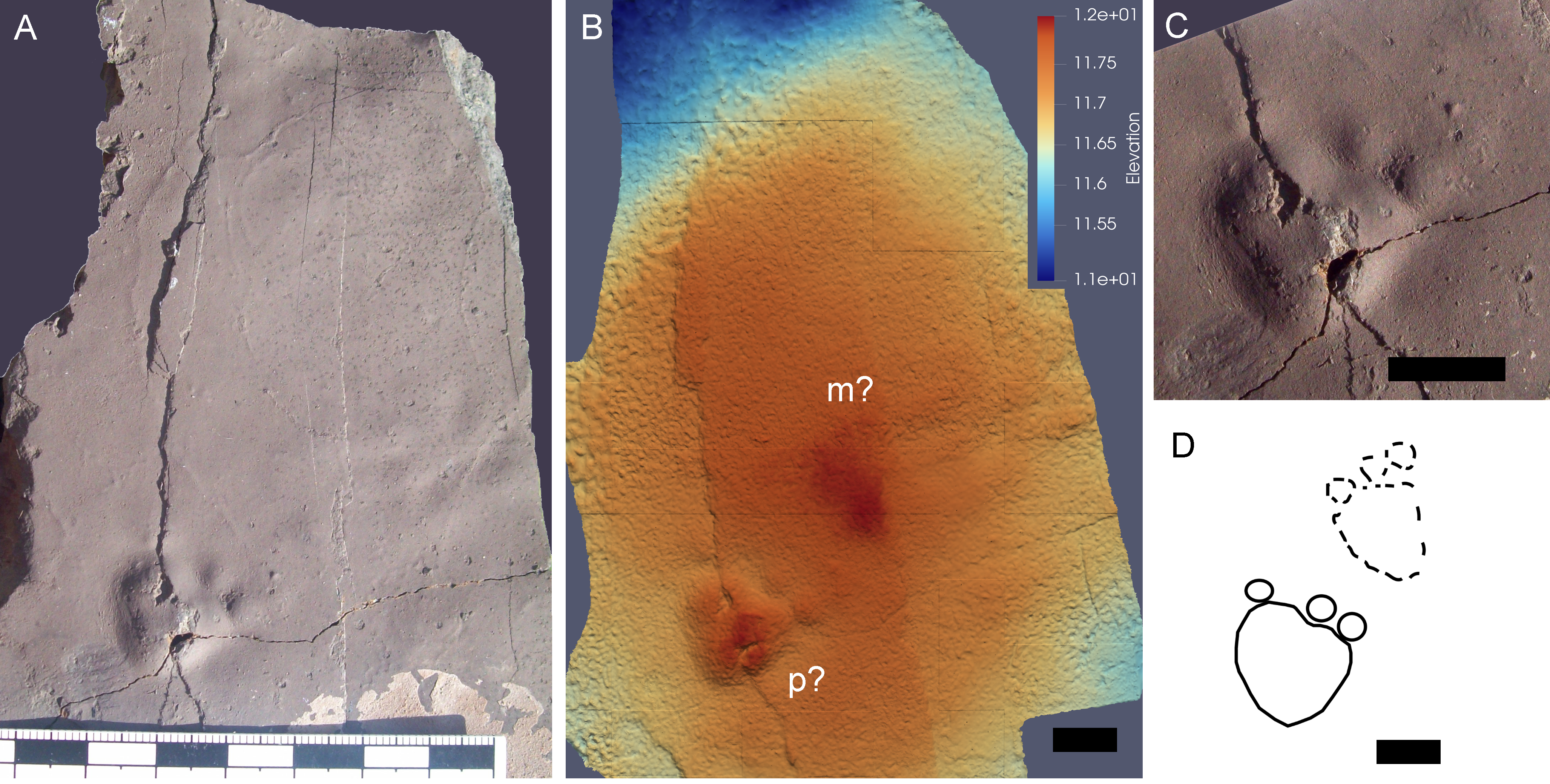
from the three-dimensional surface model; (C) detailed view of the footprint morphology; (D) interpretative drawing based on the original photograph (A). Scale bars: 10 mm in B–D.
What kind of mammal made the track?
This is where the evidence becomes particularly interesting and also where caution is essential. The track is not sufficiently well preserved to assign it confidently to a particular ichnotaxon or species. Several types of carnivorous mammal footprints have superficially similar characteristics, but T-373 differs from established ichnogenera in important details. Its combination of proportions, pad morphology, digit arrangement, posture, and estimated body size nevertheless provides useful clues.
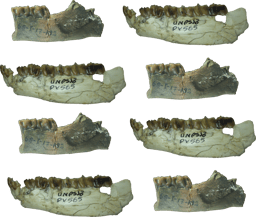
Probably the track was generated by a small sparassodont metatherian. Sparassodonts were an extinct group of South American predatory mammals that occupied carnivorous niches during much of the Cenozoic. Their fossil record is particularly important for understanding the evolution of mammalian predation in South America.
Why consider a sparassodont if no sparassodont skeleton has been found on King George (25 de Mayo) Island?
The answer lies in combining several independent lines of evidence.
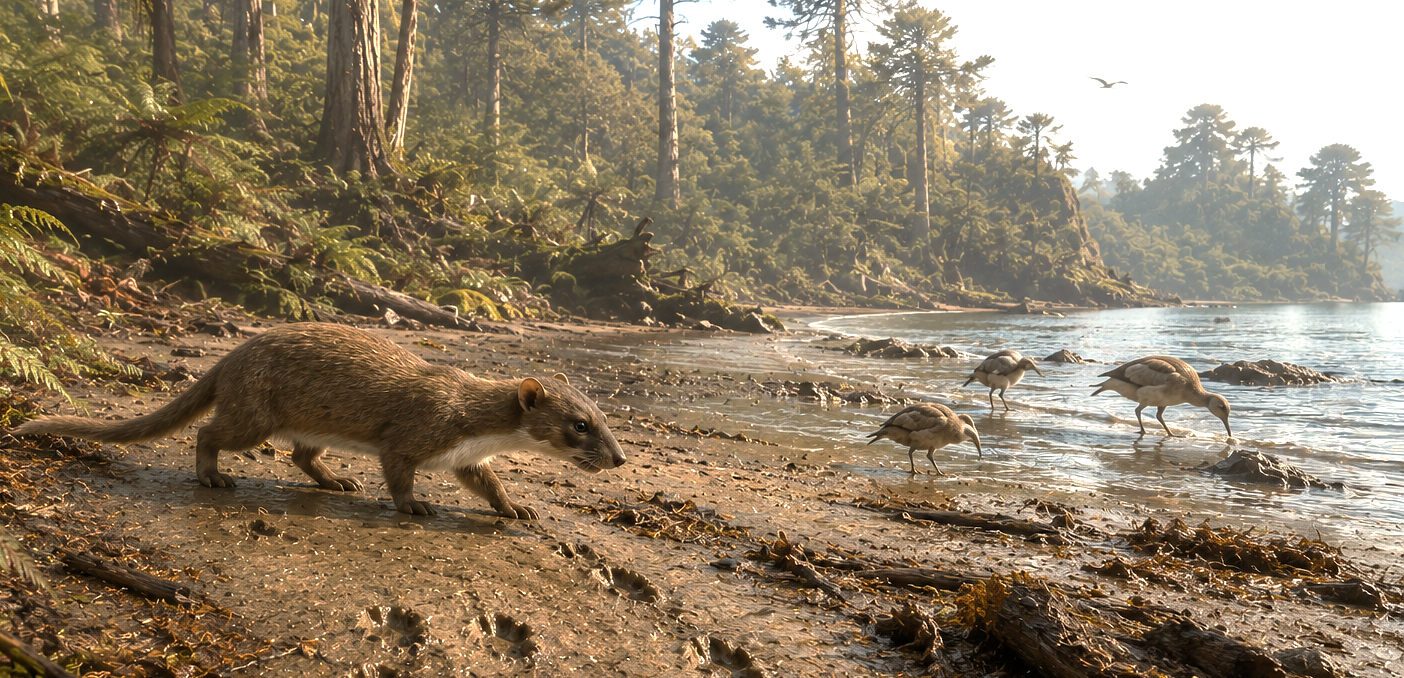
First, the estimated size of the trackmaker—at least about 1.3 kg—is substantially larger than the smallest mammals known from the Eocene Antarctic fossil record, while remaining consistent with the size of small hathliacynid sparassodonts. Second, the morphology of the footprint is compatible with a small, digitigrade mammal with a broadly mustelid-like body plan. Third, sparassodonts were already present in South America during the Paleocene and Eocene, while land connections between South America and Antarctica provided potential routes for terrestrial dispersal.
None of these observations, individually, proves that a sparassodont produced T-373. Together, however, they make this interpretation the most plausible among the available alternatives.
A missing predator in the Antarctic fossil record
The importance of the footprint extends beyond identifying its possible producer.
The land-mammal fossil record in Antarctica is remarkably sparse. Most known Paleogene mammalian remains come from the La Meseta and Submeseta formations of Seymour (Marambio) Island and consist primarily of isolated teeth, with fewer skeletal remains. Until now, the Antarctic record of terrestrial mammals has therefore been strongly biased both geographically and anatomically.
King George (25 de Mayo) Island tells a different story. The Fossil Hill Formation preserves a terrestrial ecosystem outside Seymour (Marambio) Island, including abundant plant remains and avian traces. This track adds a mammalian component to this record and, importantly, represents the first direct ichnological evidence of a land mammal in the Eocene of Antarctica.
Footprints are particularly valuable in this context because they record an animal at the place where it walked. Unlike isolated bones or teeth transported after death, a track can provide direct evidence that an animal occupied a particular terrestrial environment. In the case of this footprint, it therefore represents the first autochthonous evidence of a mammal from the Antarctic Eocene, rather than remains transported into a marine or estuarine setting.
Reconstructing a more complex Antarctic food web
The discovery adds a new piece to the Antarctic mammalian history puzzle.
The Austral continent was very different 55 million years ago. Despite its high-latitude position, warmer climatic conditions and forested landscapes supported terrestrial ecosystems that included mammals, birds, plants, and other organisms. The known mammalian community included small metatherians and other mammals occupying insectivorous, frugivorous, folivorous, and granivorous niches, together with larger herbivorous and browsing forms such as xenarthrans, and some South American native ungulates (SANU) astrapotheres, and litopterns.
Predation was already recognized as an important component of these ecosystems. Birds, including large phorusrhacids—the famous “terror birds”—have been proposed as major terrestrial predators and were present in these ecosystems. The new footprint adds another possibility: a small mammalian carnivore moving through the same landscape.
A single footprint cannot reconstruct an entire ecosystem. But until we find continental Antarctic outcrops with a non-transported mammalian fossil assemblage, this indirect evidence is crucial. It reveals the presence of a group that might otherwise remain invisible in ancient communities.
A fossil bone tells us that an animal existed. A footprint can tell us that an animal was moving across a particular substrate, in a particular environment, at a particular moment in geological time. When direct evidence from fossil teeth and bones is scarce—as they are in Antarctica—these traces can provide one of the lost pieces of the ancient biodiversity puzzle.
A glimpse of Antarctica before isolation
The Eocene was a transitional period in Antarctica's history. Terrestrial ecosystems persisted while the continent was still connected to other southern landmasses, but this configuration eventually changed. The final Gondwana breakup led to Antarctica's progressive isolation. Following the Eocene–Oligocene transition, the establishment of the Antarctic Circumpolar Current, progressive cooling, and the development of a major Antarctic ice sheet profoundly altered the environmental conditions that had previously supported diverse terrestrial ecosystems, ultimately contributing to the extinction of land mammals from Antarctica.
The footprint is only a few centimetres across. Its scientific significance is considerably larger. It provides evidence for a terrestrial mammal on King George (25 de Mayo) Island, extends the known geographic record of Antarctic Paleogene mammals, and suggests that a small mammalian predator may have been part of the Eocene Antarctic food web.
Although there are now no autochthonous land mammals—or even terrestrial vertebrates—in Antarctica, its scarce and incomplete fossil record reminds us that profound climatic changes can reshape the conditions that make life possible. At a time of unprecedented anthropogenic impacts on the environment and Earth’s climate, palaeontology offers us a unique perspective. By reconstructing the puzzle of ancient life from isolated pieces, we can learn from the past and gain valuable insights into the possible trajectories of our future.

I'm a lecturer at the Faculty of Natural Sciences and Museum of the National University of La Plata (UNLP), Argentina. I also conduct my research as a CONICET researcher in the Vertebrate Paleontology Division of the Museo de La Plata, Argentina. Main research: Origin, evolution, paleobiogeography, and paleobiology of mammals, particularly South American and Antarctic native ungulates, as well as their biostratigraphic and biochronological importance. The taxonomic groups included in these studies are the orders Notoungulata, Litopterna, Astrapotheria, Pyrotheria, Xenungulata, and the "Condylarthra" of the families Diodolodontidae and Kollpaniinae.
Follow the Topic
-
Polar Biology
This is a hub for biologists researching the diverse ecosystems of polar and subpolar regions.

Related Collections
With Collections, you can get published faster and increase your visibility.
Climate-Driven Dynamics of Arctic Terrestrial Systems: Evidence from the Svalbard Islands
The Svalbard Islands represent one of the most intensively studied High Arctic regions and constitute a unique natural laboratory for investigating terrestrial polar ecosystems under rapid and unprecedented environmental change. Located at the frontline of Arctic warming, Svalbard experiences pronounced increases in air temperature, altered precipitation regimes, permafrost thaw, and shifts in snow cover dynamics, making it a key reference area for understanding climate-driven ecological processes in Arctic terrestrial systems.
This Topical Collection aims to bring together original research articles and synthesis papers that advance our understanding of biological, ecological, and biogeochemical processes operating within the terrestrial environments of the Svalbard Islands. We welcome contributions spanning multiple levels of biological organization, from microbial communities inhabiting soils, snowpacks, and permafrost to vegetation dynamics, soil fauna, and ecosystem-scale processes. By encompassing this broad range of biological complexity, the collection seeks to capture the interconnected nature of Arctic terrestrial systems.
Topics of interest include, but are not limited to, patterns of biodiversity and adaptations to extreme environmental conditions; ecosystem responses to climate warming and associated disturbances; carbon, nitrogen, and nutrient cycling; plant–microbe interactions; microbial functional diversity; and the effects of both natural and anthropogenic disturbances on ecosystem structure and function. Contributions addressing emerging phenomena such as permafrost degradation, altered freeze–thaw dynamics, extreme weather events, and changing biotic interactions are particularly encouraged.
We place strong emphasis on studies that integrate multiple methodological approaches, including field observations, manipulative experiments, molecular and omics-based techniques, long-term ecological monitoring, remote sensing, and modeling frameworks. Interdisciplinary and comparative studies that link local-scale processes in Svalbard to broader Arctic or global contexts are especially welcome, as they provide critical insights into the generality and scalability of observed patterns.
By synthesizing evidence across disciplines and temporal scales, this Topical Collection seeks to enhance our mechanistic understanding of how High Arctic terrestrial ecosystems function and respond to ongoing environmental change. Ultimately, the collection aims to highlight the Svalbard Islands as a cornerstone site for terrestrial polar biology and to generate knowledge that is essential for predicting the future trajectories of Arctic ecosystems in a rapidly warming world.
Publishing Model: Hybrid
Deadline: Jan 31, 2027
The Ross Sea in focus: synthesizing a decade of science for conservation
The Ross Sea is one of the most studied ecosystems in the Southern Ocean. It is characterized by a highly productive continental shelf, heterogeneous habitats, rich biodiversity, an intact suite of top predators, and serves as an important foraging ground for marine mammals, seabirds, and invertebrates. Since 2017, the region has been designated as a Marine Protected Area (MPA), the largest high-seas MPA in the world. It is governed by the Commission on the Conservation of Antarctic Marine Living Resources (CCAMLR), which takes decisions based on the best available science.
In 2027, the RSrMPA will undergo its 10-year review, providing an opportunity to strengthen coordination among scientific, data, and policy communities. This process aims to ensure that the evaluation is grounded in robust scientific information, comprehensive analyses, and policy-relevant insights. Coordinated efforts are currently underway, to update key regional datasets, review predator censuses, synthesize existing literature, consolidate animal-tracking data, develope ecological indicators, and integrate knowledge and methodologies into common frameworks to better understand the ecology and human interactions with the marine ecosystem.
This Special Issue is intended as a compilation and synthesis of the most recent scientific advancements in the Ross Sea. We encourage the submission of review papers and original research studies, with the goal of consolidating current knowledge on regional biodiversity, habitats, ecosystems, and processes, thereby facilitating access to the best available science in support of the upcoming RSrMPA evaluation.
The volume is dedicated to the memory of Dr. Marino Vacchi, whose genuine curiosity and enthusiasm for research greatly contributed to advance our knowledge on Antarctic fish ecology. He was instrumental in establishing the RSrMPA, and was a strong advocate for grounding Antarctic policy in the best available science.
Publishing Model: Hybrid
Deadline: Dec 31, 2026