A Research Transformation Beside Glacial Lakes: From Wastewater Treatment to Greenhouse Gas Emissions in the Tibetan Plateau
Published in Earth & Environment

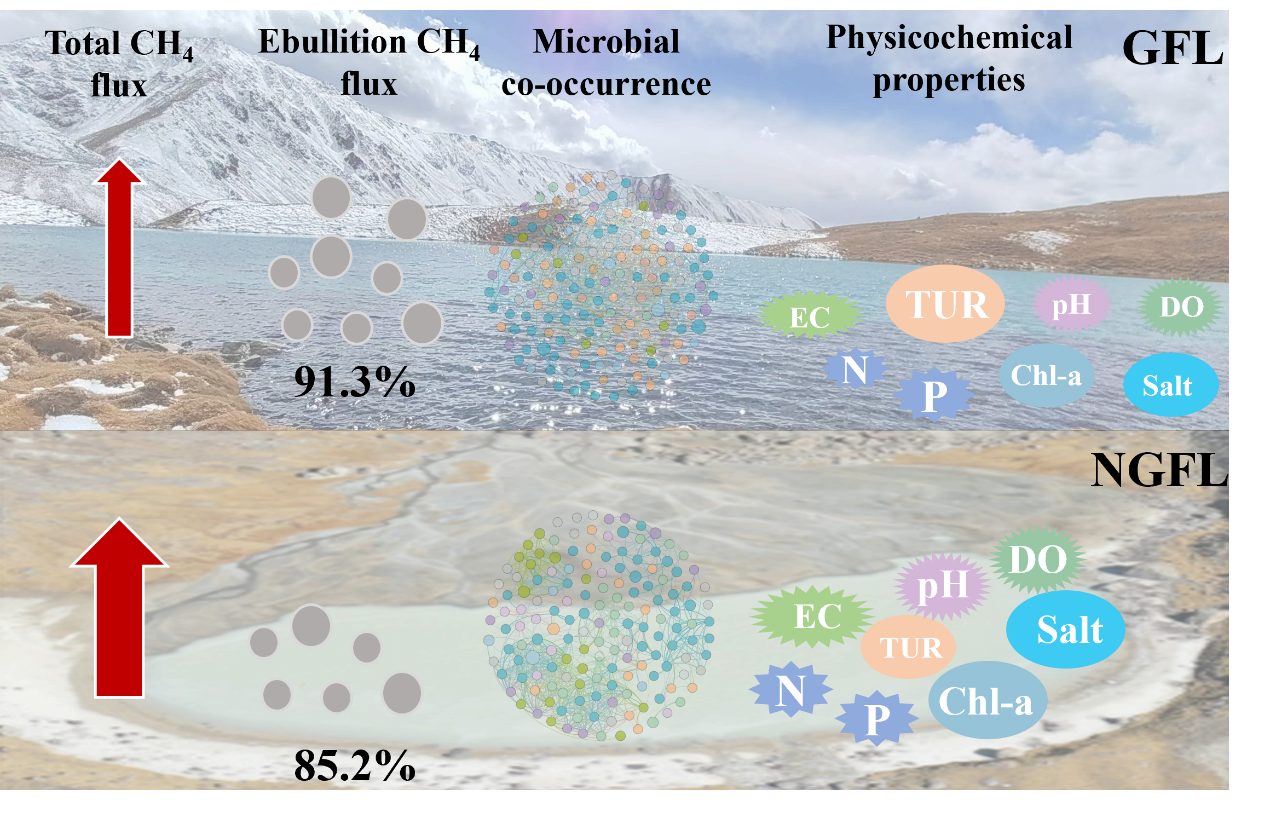





As global climate change intensifies, lake ecosystems on the Tibetan Plateau are undergoing dramatic transformations. The study "Glacier-fed lakes produce lower methane fluxes than non-glacier-fed lakes on the Tibetan Plateau," conducted by Professor Yindong Tong’s team at Tibet University, investigates these changes in depth. The research highlights significant differences in methane emission intensity and microbial community structure between glacier-fed and non-glacier-fed lakes. Rather than focusing on technical details, this post offers a glimpse into the journey behind the science—what we saw, felt, and learned while working in one of the harshest environments on Earth.
Before becoming an ecological researcher, my work mainly focused on urban wastewater treatment—a highly engineered and controllable system with clear operational procedures. However, during my PhD, I followed Professor Tong to the Tibetan Plateau, leaving behind the familiar urban plains and stepping into the remote, glacial frontier. It was a complete scientific shift—from drainage networks to natural lakes, from human-controlled systems to wild ecosystems, from lab benches to rugged field stations. For the first time, I experienced that scientific exploration is not only about data and technology, but also about a deep and ongoing dialogue between people and nature.
In 2024, under the guidance of Professor Tong, I left my hometown for the first time to pursue a PhD at Tibet University and joined a research project focused on greenhouse gas emissions from glacial lakes on the Tibetan Plateau. Professor Yindong Tong is not only a dedicated scientist but also a long-term participant in China’s “Aid Tibet” initiative, working on the front lines of high-altitude research. He is not a “hands-off” academic advisor who only talks theory—he is a hands-on researcher who leads students across mountains and frozen lakes. As he often reminds us, “Scientists don’t belong behind closed doors. We need to go to the frontlines, to the field—because the most important changes on this planet are happening in the places hardest to reach.”
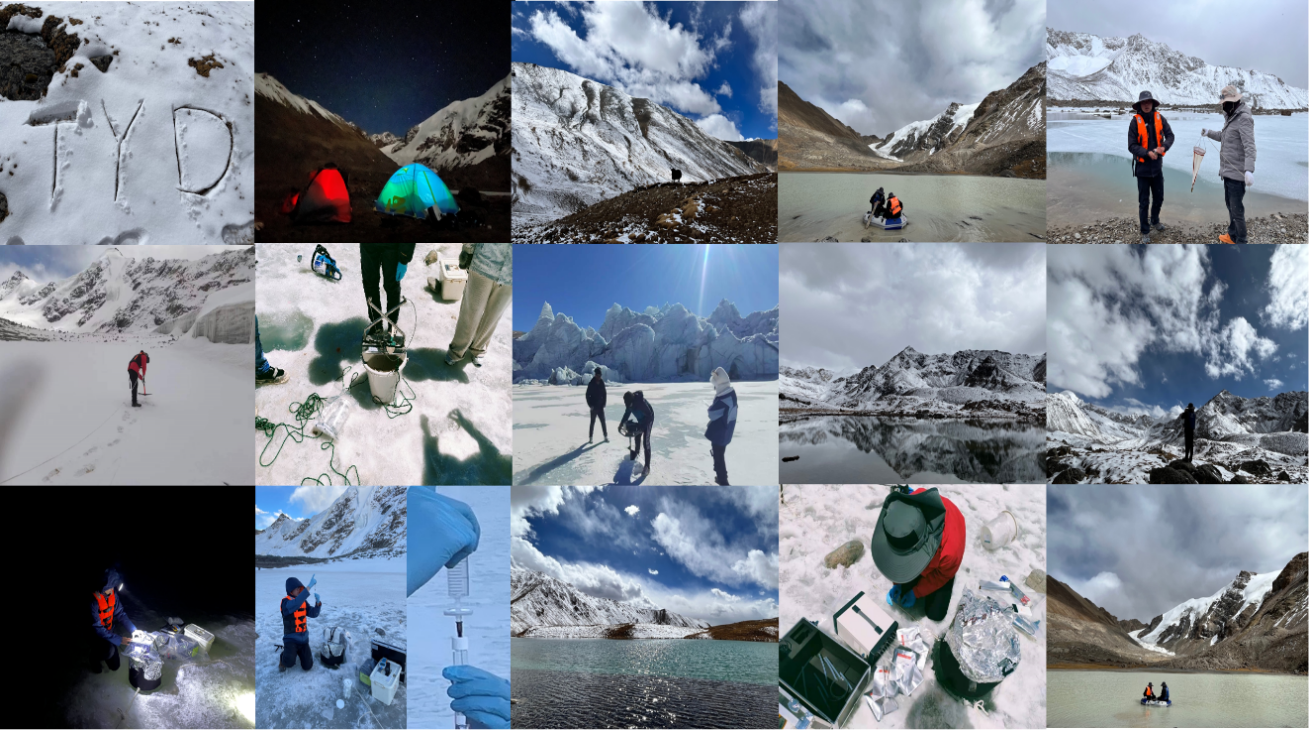
During one field expedition, we unexpectedly discovered Glacier No. 1 in the Lhasa River Valley, which opened a new chapter in our investigation of glacier-fed lakes. Compared to urban wastewater research, fieldwork in these glacial regions is full of uncertainty and extreme difficulty. Harsh cold, low oxygen levels, thin air pressure, intense UV radiation, and dangerous terrain turned every day into a test of endurance and willpower. Our sampling sites were situated above 5,000 meters, where every step felt like military training. Equipment would fail in the cold, fingers would go numb, and altitude sickness haunted our nights. These memories (Fig. 1) have become some of the most vivid moments of my research career. In such conditions, science is no longer about equations and models, but about confronting nature and the unknown—directly and honestly. As Professor Tong often says, “Many people hope to do world-class research in comfort, but truly important questions never come to you—you have to go to them.” That message has left a lasting mark on me.
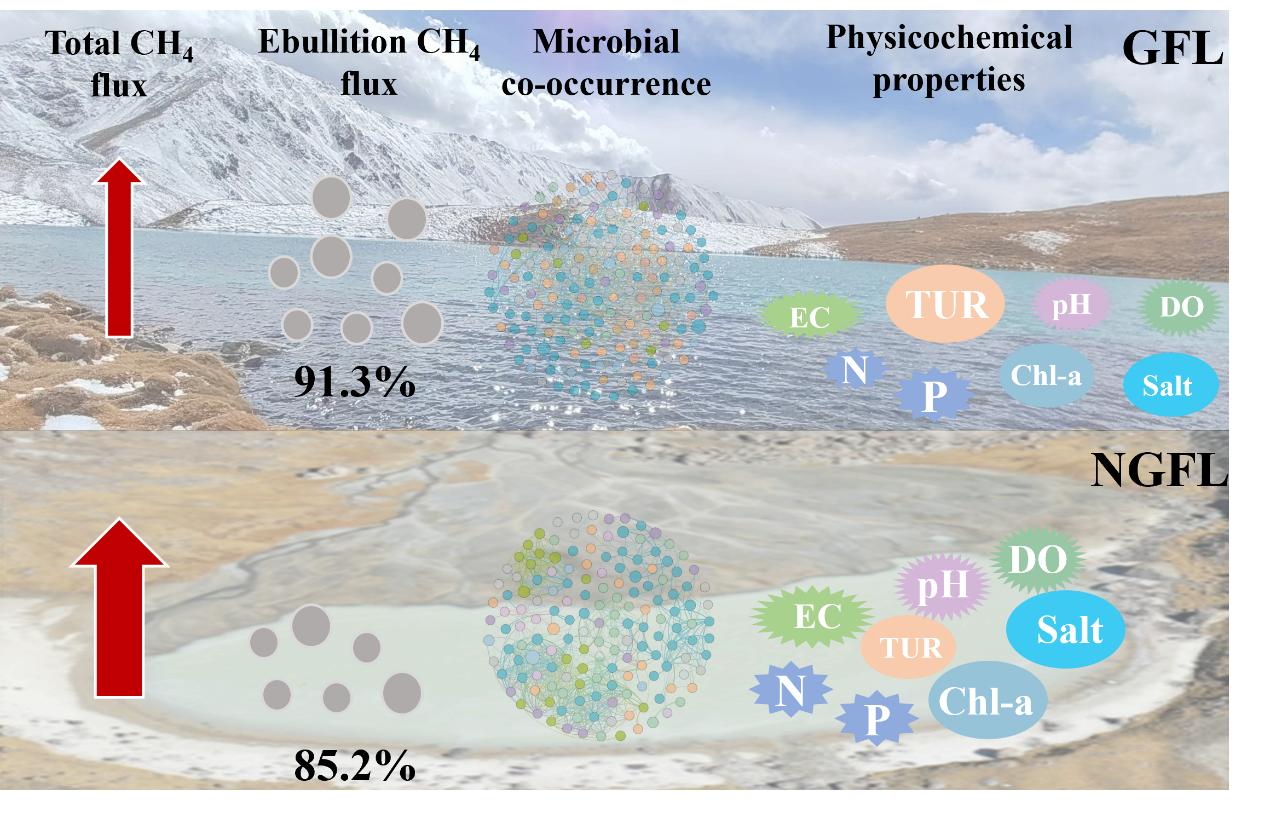
While this project is just the beginning of our scientific journey, it has opened my eyes in new ways. We found that non-glacier-fed lakes emit about three times more methane than glacier-fed lakes, and their microbial communities differ significantly in structure and stability (Fig. 2). These results contribute valuable insight into the carbon cycle of high-altitude lake ecosystems and offer important data for global climate change research.
Looking back on this journey, I am most grateful to Professor Yindong Tong. Through his actions, he taught me that scientific research is not just a profession—it is a responsibility and a commitment. More than the results, what matters is the process. Science can be painful and difficult; it offers no poetry or grandeur. But I firmly believe that someone must go—someone must see, must witness. Because only by being there can we truly understand; and only through understanding can we better protect this rapidly changing world.
Follow the Topic
-
Communications Earth & Environment
An open access journal from Nature Portfolio that publishes high-quality research, reviews and commentary in the Earth, environmental and planetary sciences.
Related Collections
With Collections, you can get published faster and increase your visibility.
Ecological resistance and resilience under global change
Publishing Model: Open Access
Deadline: Apr 07, 2027
Hazards in Mountain Regions
Publishing Model: Open Access
Deadline: Nov 02, 2026