A surprising isotopic fingerprint in β-alanine from asteroid Bennu and the Murchison meteorite
Published in Astronomy, Chemistry, and Earth & Environment

1. Aim of our research
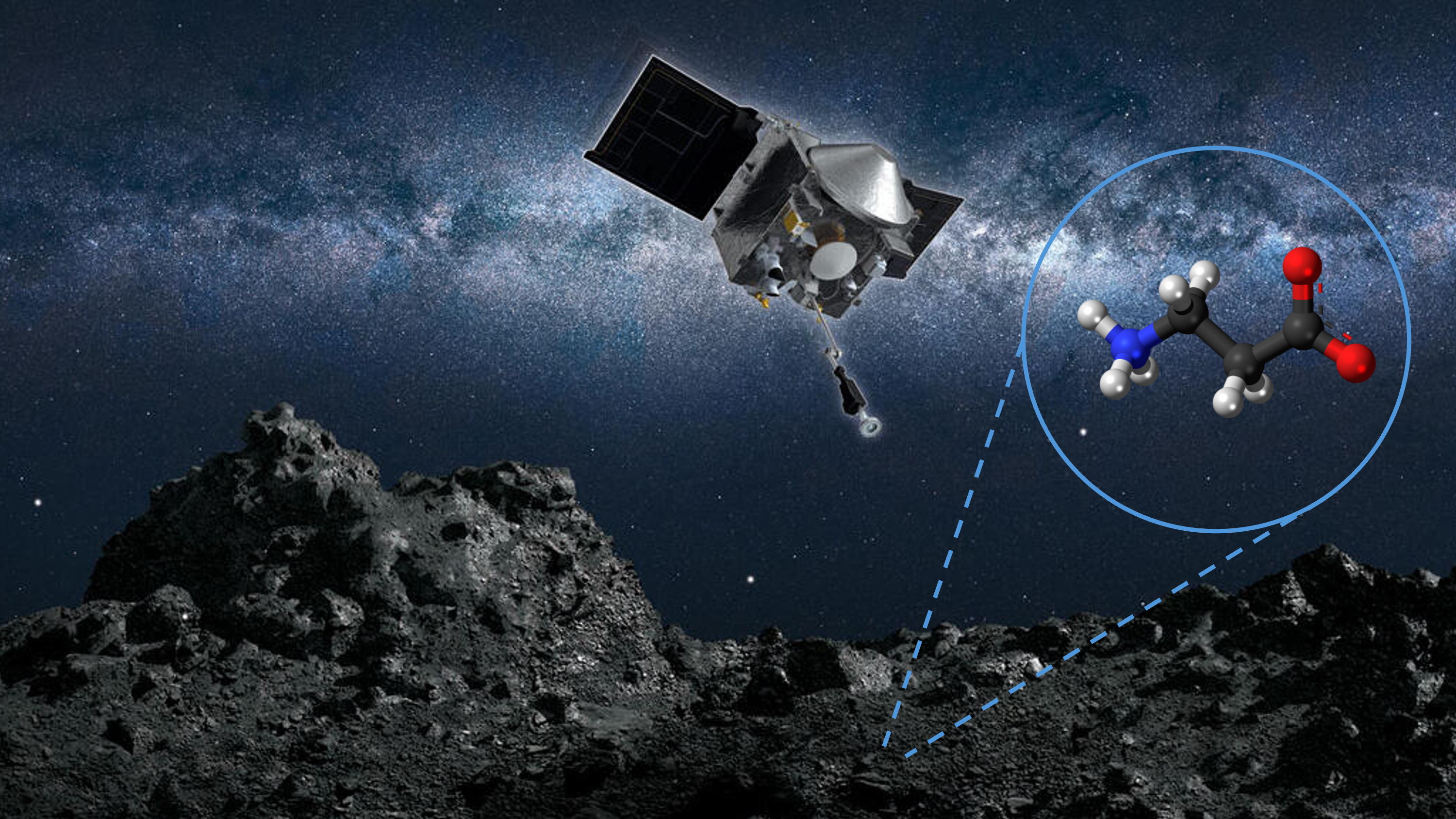
Why are amino acids of such interest to astrobiologists? Amino acids are the building blocks of proteins and peptides, and they are also found in carbonaceous meteorites, asteroid samples and comets. They, therefore, provide a direct link between chemistry in space and the origins of life on Earth. Understanding how these molecules formed in the early Solar System can tell us more about the chemical environments that produced the organic matter that was eventually incorporated into planets and asteroids, and may have contributed to the emergence of life on Earth and potentially elsewhere.
To investigate how amino acids formed, we can use isotopes as chemical clues. Different reactions and environments can leave characteristic isotopic patterns in molecules, allowing us to trace the processes and environments involved in their formation. We previously used carbon and nitrogen isotopes to investigate how glycine, the simplest amino acid, formed in samples from asteroid Bennu and the Murchison meteorite (Baczynski and Mcintosh et al. 2026). In this study, we applied this approach to another amino acid commonly found in extraterrestrial samples, β-alanine.
2. How did we do it?
We combined two highly sensitive techniques, pico-GC-IRMS and GC-Orbitrap, which allowed us to measure the isotopic composition of amino acids from extremely small quantities of material. The GC-Orbitrap was particularly important because it allowed us to measure the carbon isotope composition at different positions within the β-alanine molecule, rather than only obtaining an average value for the whole molecule. This intramolecular information provides a much more detailed isotopic fingerprint: instead of simply asking whether a molecule is enriched or depleted in a particular isotope, we can investigate how that isotope is distributed within the molecule and use this pattern to distinguish between possible formation pathways.
3. An unexpected result and a puzzle
What we found was much more striking than we expected. The β-alanine in our Bennu and Murchison samples shows an enormous difference in carbon isotope composition between the carboxylic carbon and the other two carbon positions (Cα and Cβ), with the Bennu value representing the largest intramolecular carbon isotope anomaly yet reported in an organic molecule from an asteroidal or meteoritic sample.
But this remarkable isotope pattern also presented us with a puzzle. None of the β-alanine formation pathways traditionally proposed in the literature could explain the intramolecular isotope pattern we observed in either sample. Our measurements could not distinguish the isotope compositions of the Cα and Cβ carbon positions individually, so we turned to mass-balance calculations to estimate possible values for each carbon and explore a wider range of formation pathways. This led us to two possible formation scenarios involving different carbon reservoirs, although we cannot yet identify a single definitive pathway.
What makes the result particularly intriguing is that, despite their very different overall isotope compositions, β-alanine from Bennu and Murchison shows a remarkably similar pattern of isotopic distribution within the molecule. This suggests that the two samples may record related underlying chemistry, while their distinct isotope compositions indicate that this chemistry occurred in different environments. Together, these results provide new clues about the chemical processes that produced amino acids in the early Solar System and the environments in which the building blocks of life were formed.

Follow the Topic
-
Communications Earth & Environment
An open access journal from Nature Portfolio that publishes high-quality research, reviews and commentary in the Earth, environmental and planetary sciences.

Related Collections
With Collections, you can get published faster and increase your visibility.
Ecological resistance and resilience under global change
Publishing Model: Open Access
Deadline: Apr 07, 2027
Hazards in Mountain Regions
Publishing Model: Open Access
Deadline: Nov 02, 2026