Anti-tussive activity of Arenaria serpyllifolia L. and Fragaria nubicola (Hook. f.) L. on sulfur dioxide–induced cough in rats
Published in Chemistry, Research Data, and Biomedical Research
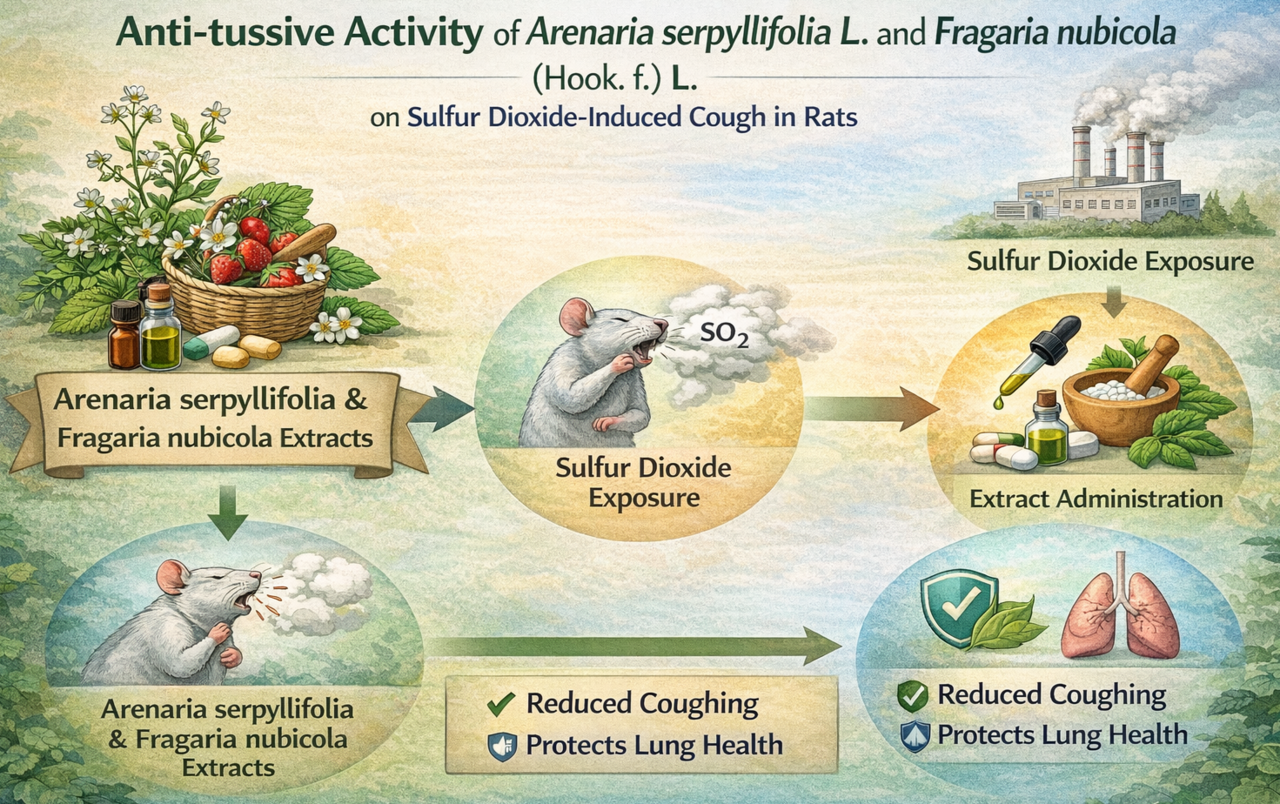

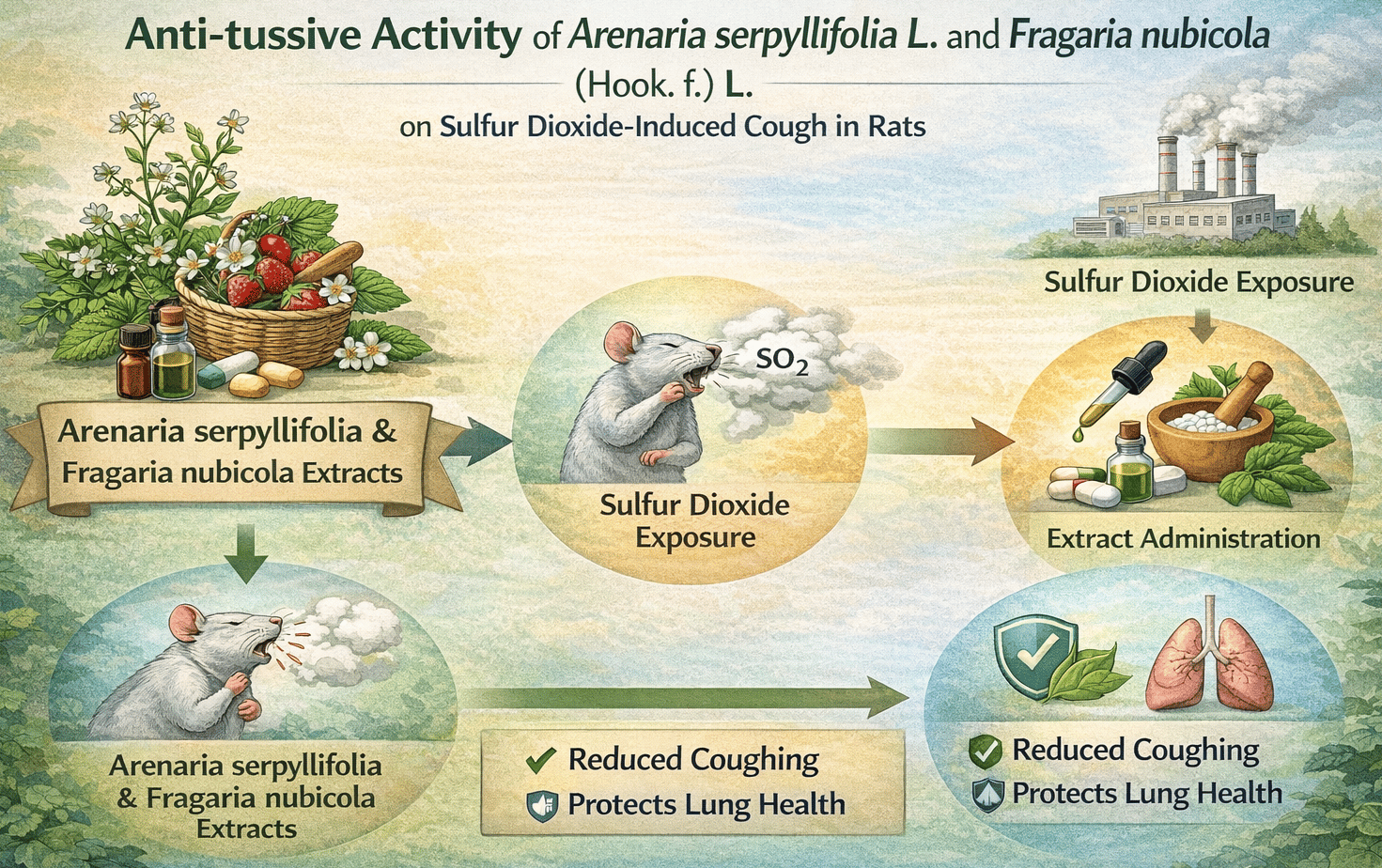
When Tradition Meets Evidence: Exploring Herbal Antitussives Through Experimental Science
Cough is one of those symptoms that feels deceptively simple. Almost everyone has experienced it, yet persistent cough remains a major clinical challenge worldwide. As a researcher with a long-standing interest in medicinal plants, I have often been struck by how frequently traditional remedies are used for respiratory conditions—sometimes with remarkable effectiveness, long before modern pharmacology enters the picture.
This curiosity led me to investigate the antitussive (cough-suppressing) potential of two traditionally valued plants: Arenaria serpyllifolia and Fragaria nubicola. What began as an ethnobotanical interest gradually evolved into a controlled experimental study aimed at answering a key question: can traditional knowledge about cough relief stand up to scientific scrutiny?
Why Look at Plants for Cough Suppression?
Conventional cough suppressants are effective, but they are not without limitations. Sedation, dependency concerns, and limited suitability for long-term use often drive people toward herbal alternatives. In many parts of the world, plant-based remedies remain the first line of treatment for cough, especially in rural and mountainous regions.
As a pharmacognosy researcher, I see these traditional practices not as anecdotal curiosities, but as hypotheses waiting to be tested.
The Plants Behind the Study
Arenaria serpyllifolia is a small annual herb with a surprisingly rich medicinal history. In traditional systems, it has been used for relieving cough, managing bladder complaints, and treating inflammatory conditions such as cystitis. Its continued use across generations gives it cultural depth and medicinal credibility.
Fragaria nubicola, a wild strawberry found on mountainous slopes, has its own legacy. Traditionally, it has been used to manage cough, cold, and fever—conditions closely linked to respiratory inflammation and irritation.
What fascinated me was how both plants, despite their different habitats and appearances, converged on similar traditional uses.
Designing the Experiment: From Folklore to the Laboratory
To scientifically evaluate these claims, we prepared ethanol extracts of both plants and assessed their antitussive activity using a sulfur dioxide–induced cough model in rats. This model is widely accepted for studying cough reflex suppression because it mimics airway irritation and allows objective measurement.
We administered the extracts at three doses—100, 200, and 400 mg per kilogram of body weight—and monitored cough suppression at different time intervals.
Throughout the study, I was reminded how important it is to respect both sides of the research process: ethical animal handling and methodological rigor, alongside curiosity and openness to traditional knowledge.
What the Results Revealed
The findings were both exciting and reassuring.
Both Arenaria serpyllifolia and Fragaria nubicola showed dose-dependent suppression of cough. The highest dose (400 mg/kg) produced highly significant effects at 60 and 90 minutes after administration for both extracts.
This dose-dependent response is particularly important. It suggests that the observed effects were not random or placebo-driven, but pharmacologically meaningful. For me, this was the moment where tradition and data clearly aligned.
How Might These Plants Suppress Cough?
While our study focused on antitussive activity rather than molecular mechanisms, the results suggest that these plant extracts may act on the neuronal pathways of the medulla, which play a central role in regulating the cough reflex.
This aligns well with what we know about plant-derived bioactive compounds—many of them modulate neural signaling, reduce airway irritation, or dampen inflammatory responses.
Importantly, the study does not claim that these plants are replacements for conventional medicines. Instead, they represent promising leads for developing safer, plant-based antitussive agents.
Why This Research Matters
From a broader perspective, this work highlights several important themes:
- Traditional medicine can guide modern drug discovery
- Dose and timing matter, even in herbal remedies
- Scientific validation strengthens cultural knowledge, rather than replacing it
As someone who works closely with ethnomedicinal literature, I believe that validating traditional uses through controlled studies builds trust—both within scientific communities and among the populations that have preserved this knowledge for generations.
Reflections from the Research Journey
Conducting this study reminded me why I entered this field in the first place. There is something deeply satisfying about taking a plant used by local communities and demonstrating, through careful experimentation, that its effects are real and measurable.
It also reinforced the responsibility we carry as researchers: to investigate traditional remedies rigorously, without exaggeration or dismissal.
Looking Ahead
These findings open the door for further studies, including:
- Isolation of active compounds
- Mechanistic investigations
- Safety and toxicity profiling
- Eventually, clinical evaluation
Plant-based antitussives are particularly attractive in regions where access to modern medicines is limited, and where cultural acceptance of herbal remedies is already strong.
Final Thoughts
Cough may be a common symptom, but effective and safe long-term management remains a challenge. Studies like this demonstrate that traditional medicinal plants are not relics of the past—they are starting points for future therapies.
By bringing ethnobotanical wisdom into the laboratory, we move closer to respiratory treatments that are not only effective, but also culturally grounded and biologically sound. I hope this work encourages fellow researchers to continue exploring the scientific value hidden within traditional herbal practices

Salman Ahmed (ORCID: 0000-0003-2033-0181) holds a B.Pharm. degree from the University of Karachi, Pakistan, and a PhD and M.Phil. in Pharmacognosy from the same institution. He has gained valuable experience in the pharmaceutical industry, having worked at Helix Pharma, Pharm Evo (Pvt.) Ltd., and Searle Pakistan Ltd. Currently, he holds the position of Assistant Professor in the Department of Pharmacognosy at the Faculty of Pharmacy, University of Karachi, Pakistan.
Salman Ahmed has made significant contributions to the field with a decade-long career dedicated to teaching Pharmacognosy, also known as Natural Products Sciences. He has authored 125 research papers with an impact factor of 100 with 2297 citations, a h-index of 24, and an i10-index of 59. He has secured multiple research grants in Pharmacognosy (2021, 2018, 2016, and 2014) to study plants traditionally used for analgesic, anti-inflammatory, diuretic, and antidiarrheal purposes and their effects on digestive enzymes. Additionally, he has authored seven books and presented 16 posters at national and international conferences. Salman Ahmed's expertise is acknowledged by various esteemed journals published by Elsevier, Springer Nature, Wiley, MDPI, Hindawi, and Dove Medical Press Limited, as he serves as an invited reviewer for these publishers.
Scientific Achievements (2011–2015): He pioneered a cost-effective copper sulfate-induced chick emesis model for evaluating natural antiemetics. His research explores antiemetic, analgesic, and anti-inflammatory properties in Pakistani plants, herbs, and spices, reporting fixed oil's analgesic effects and discovering Bergenin as an antiemetic. He authored two state-of-the-art reviews on natural antiemetics, "Antiemetic effects of bioactive natural products" and "Natural antiemetics- an overview". He was awarded Nishan-e-Zafar by the University of Karachi in 2014.
Scientific Achievements (2016–2024): Dr Salman Ahmed pioneered glass slide models to grow Whewellite, Brushite, and Urate crystals for the evaluation of antiurolithiatic and anti-gout drugs, presenting key findings at international conferences such as MMDR-7, STEP-5, ISNPC-14, and ISNPF-2. His book “How to Grow Urinary Stone and Gouty Crystals on Glass Slide” provides detailed methodologies for replicating crystal growth in vitro and discusses the implications for understanding crystal morphologies, disease mechanisms and developing herbal treatment strategies.
Dr Ahmed's research highlights the antiurolithiatic potential of pentacyclic triterpenes and polyphenols. These compounds inhibit calcium oxalate crystallization, reduce oxidative stress, and modulate inflammation. They also promote nephroprotection, diuresis, and ACE inhibition, advancing natural therapeutics for kidney stone prevention.
His contributions include “Glossary of Globally Used Herbs and Animals for Urolithiasis” (2024), a comprehensive book exploring medicinal plants covering botanical families from A to Z and animal-based remedies covering their historical use, mechanism of action, and therapeutic spectrum against Whewellite, Brushite, and Urate crystals separately. His research on antiurolithiatic formulations compiles mono- and polyherbal remedies from diverse regions, including Appalachia, Canada, India, and the Middle East. His work provides critical data for future phytochemical, pharmacological, and toxicological studies, aiding in the discovery of safer, more effective treatments for kidney stones.
Additionally, he explores the anticancer potential of marine peptides against breast, ovarian, cervical, malignant melanoma, prostate, neuroblastoma, glioblastoma, leukemia and lymphoma, advancing natural therapeutics for cancer treatment.

Please sign in or register for FREE
If you are a registered user on Research Communities by Springer Nature, please sign in