Applying a Novel Climate Technology Infrastructure Readiness Framework Tailored to Climate Extremes
Published in Social Sciences, Earth & Environment, and Sustainability
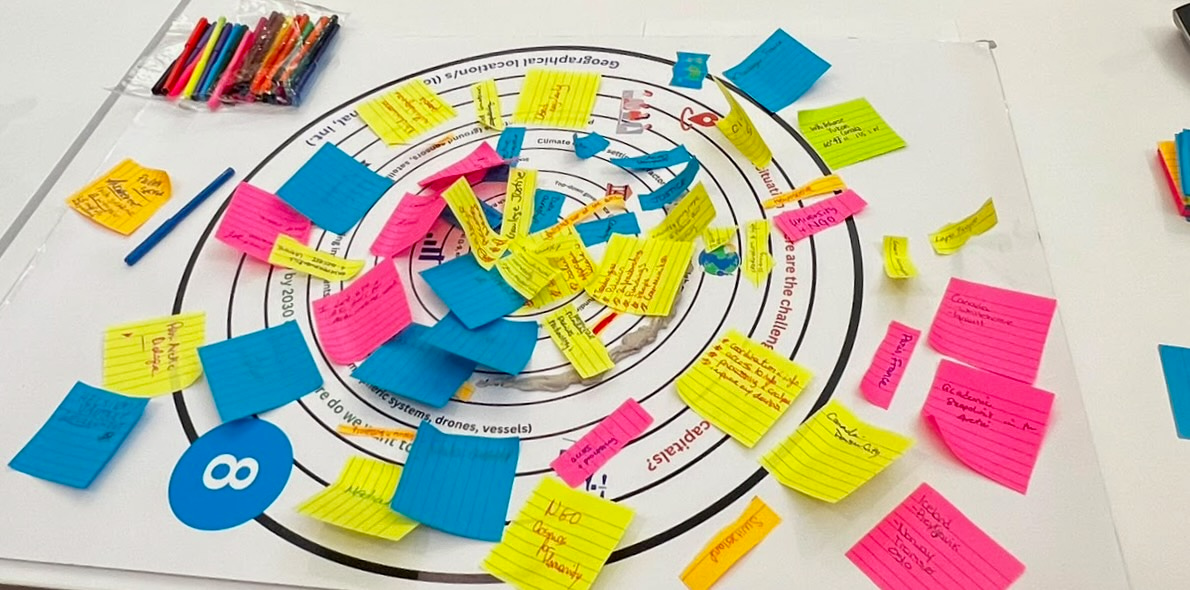
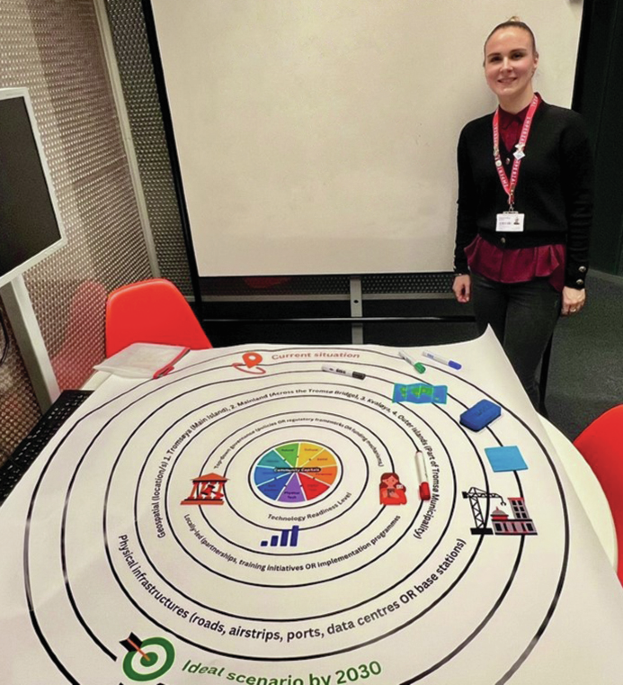

The original paper published in 2025 introduced a novel climate technology asset mapping Framework tailored to climate extreme settings first developed in 2024 as a practical stakeholder approach and research tool for assessing how ready communities, institutions and wider systems are to adopt, use and benefit from interconnected digital and physical technologies for environmental and climate action.
The Framework adapts and expands the Community Capitals Framework, originally developed by sociologists Cornelia and Jan Flora as a holistic asset-based approach to community development which identifies core types of capital that communities can leverage to drive sustainable growth, combat inequality and build long-term resilience. This was adapted by adding explicit digital and physical technology dimensions and connecting them with technology-readiness thinking and recent regional and international policy developments related to the social, political and economic foundations needed for successful and responsible digital technology development and deployment. These demonstrate how local and national institutional environmental and climate knowledge can be combined with geospatial information to map existing technologies, enabling assets, critical gaps, system dependencies and future opportunities, both short-term and long-term.
Developing and piloting the Framework in one setting, however, was not the endpoint.
The next question was whether the Framework could travel beyond the pilot climate extreme settings in the Artic to those spanning major global climate extremes in both developed and developing countries, including floods, droughts, heatwaves, wildfires, storms and coastal hazards in settings including the sub-Arctic, High Mountain Areas, the Sahel, Horn of Africa, Amazon, Caribbean and Pacific Small Island Developing States (SIDS), Mediterranean, Australia and the Americas.
Since publication, our research team has begun applying the Framework through international workshops involving participants working in four continents across a range of climate-extreme settings. Rather than just presenting a finished model for others to adopt, the workshops use the Framework as a shared diagnostic, mapping and co-design tool.
Applying the Framework in global stakeholder engagement workshops
The workshops are convening representatives from international organisations, local and national policymakers, researchers, industry and civil society working across digital innovation, artificial intelligence, Earth intelligence, environmental monitoring, climate adaptation and sustainable development.
Together, participants explore the readiness of digital and physical technologies to support environmental and climate outcomes in climate-extreme settings using the multi-level step by step guidance provided by the Framework. Participants also examine the Framework's assumptions, identify missing dimensions and explore how the meaning of readiness changes across technologies, hazards, locations and governance contexts. In doing so, they are helping transform the Framework from a published and piloted research concept into a practical global tool for stakeholder environmental and climate action technology infrastructure mapping informed by key international climate technology policy frameworks, including the UNFCCC Technology Mechanism, Paris Agreement Article 10, the UN Sustainable Development Goals and the Arctic Council’s Telecommunications Infrastructure Task Force.
Digital technologies may include artificial intelligence (AI), Earth observation platforms, climate models, geospatial information, environmental data platforms, communications networks, decision-support systems and digital early-warning services.
Physical technologies may include environmental sensors, weather stations, monitoring equipment, resilient energy and communications infrastructure, transportation infrastructure, water-management systems, agricultural technologies, emergency equipment and other technologies deployed directly within communities and ecosystems.
In our workshops conducted in the last year, contributors from across partner organisations have brought complementary perspectives on digital environmental, agriculture and food-system resilience; ethical and participatory AI governance; climate modelling and forecasting; cross-border and sector science cooperation and digital education; innovation systems and their intellectual property; and access to less resource-intensive adaptation technologies.
This breadth matters because technology readiness cannot be assessed by engineers, policymakers, researchers or communities in isolation. Readiness is not simply a feature of the technology. It is a property of the wider system in which that technology must operate and be as successful and accessible as possible in doing so.
How the workshops are applying the Framework methodology
The process begins by identifying the settings where they have local experience and expertise for geospatial mapping and then defining the environmental, climate and sustainable development outcomes that technology is expected to support. These outcomes might include reducing flood risk, improving drought preparedness, strengthening food-system resilience, monitoring ecosystem change, managing water resources, protecting infrastructure, expanding access to climate information or improving emergency response.
Participants then identify and map the digital and physical technologies that already exist, those that are planned and those that may be required in the future. Mapping these assets helps stakeholders assess more than whether, where and how a digitial and physical technology exists. It enables them to examine whether the surrounding system is ready to adopt, operate, maintain, govern and sustain it, and whether the data sharing environment is truly interoperable.
The Framework therefore links top-down governance with bottom-up implementation. Participants consider short and long-term national and international policies, standards, strategies and funding mechanisms alongside the everyday realities of access, affordability, maintenance, trust, local relevance and decision-making in line with the most recent international policy developments. For example, the Aarhus Convention pillar on public access to environmental data highlights the importance of empowering communities, including in climate extreme settings, with the right to access information and participate in decision-making in environmental matters.
The holistic and cross-sector nature of the Framework through elements like these allows these temporal technological, institutional, environmental and social factors to be placed and linked on the same map in a novel way.
Assessing readiness across the whole technology ecosystem
The Framework incorporates NASA’s nine-level Technology Readiness Level scale to assess the maturity and deployment readiness of physical and digital technologies. However, applying the Framework has reinforced that readiness should not be reduced to a single technology-readiness score. A technology may be technically mature but institutionally unsupported. It may operate successfully in a pilot but lack the financing, infrastructure or skills required for wider deployment. It may be environmentally valuable in principle but too energy-, water- or resource-intensive for the setting in which it is proposed.
The most technologically advanced or frontier intervention is not automatically the most appropriate. In some contexts, a simpler, lower-cost or less resource-intensive solution may deliver greater or more immediately accessible public value.
Inclusion as a key component of digital readiness
The most important result so far is not merely a ranking of technology readiness in a particular climate or environmental context. It is a change in the questions stakeholders and decision-makers are encourged to ask. This change moves the discussion away from technology selection alone and towards urgent infrastructure gap identification and long-term system readiness.
It also helps distinguish between the mere presence of, or access to, technology and the capacity to use it effectively. A country, institution or community may have access to advanced digital tools but still lack the data governance, physical infrastructure, institutional coordination, technical skills or trusted relationships required to translate those tools into true environmental and climate outcomes.
The Framework and workshops have reinforced that inclusion is a critical dimension of assessing the infrastructures underpinning digital technology readiness. Young people, women, Indigenous knowledge holders, local communities, marginalised groups and people living in low-resource or infrastructure-stressed settings cannot be treated only as end users of technologies chosen and developed elsewhere. They are sources of environmental knowledge, governance insight, operational experience and practical understanding of how hazards affect daily life.
The Framework, especially its novel addition of a "culture capital" dimension, therefore encourages stakeholders to map not only technologies and formal institutions, but also relationships, informal knowledge and information networks and patterns of problem identification and participation. This makes it possible to identify who has decision-making power, whose knowledge is being used, who has full access to the technology and data collected and shared, and who may bear unintended costs.
Making sustainable digitalisation and AI criteria a key part of climate technology readiness assessment
Applying the Framework has also shown that the majority of conventional technology-readiness approaches are not sufficient for assessing newer AI and other resource-intensive digital systems. AI can strengthen forecasting, Earth intelligence, environmental monitoring, early warning, climate-risk analysis and resource planning and accounting for the environmental footprint of these AI solutions is an essential part of assessing their readiness.
The refined Framework therefore assesses digital lifecycle impacts alongside technical performance and social value. This direction is consistent with recent international policy advancements in this space, such as the ITU-T L.1801 (02/2026) Guidelines for Assessing the Environmental Impact of Artificial Intelligence Systems, Global Digital Compact, the UNEA-7 UNEP/EA.7/Res.9 Resolution on Environmental Sustainability of AI Systems, Aarhus Convention pillar on public access to environmental data, COP29 Azerbaijan Declaration on Green Digital Action and the Hamburg Declaration on Responsible AI for the Sustainable Development Goals. This work also aligns with the efforts of the Coalition for Digital Environmental Sustainability, or CODES, a global, multi-stakeholder alliance established in 2021 in response to the UN Secretary-General’s Roadmap for Digital Cooperation, and the Coalition for Sustainable AI, a global, multistakeholder alliance initiated by France, the UN Environment Programme (UNEP), and the International Telecommunication Union (ITU), which connects digital transformation with environmental and social sustainability.
When assessing the readiness of a digital or AI system, workshop participants can ask whether its energy, water, carbon and material footprint is proportionate to the environmental or climate benefit it is expected to deliver; whether a simpler digital, physical or non-digital option could achieve the same outcome; where computing, data storage and processing will take place, and who has access and when; whether the required electricity, water and connectivity infrastructure is available and resilient; who receives the benefits and who bears the environmental costs; whether the system can be maintained, updated, repaired or discontinued responsibly; and whether it will remain operational during the climate extreme events it is intended to address.
These questions are especially important in resource-limited climate extreme environments where electricity, water, connectivity and physical infrastructure are already under stress.
Importance of mapping Digital Public Infrastructure resources for environmental and climate action
Applying the Framework has also highlighted the need to assess the readiness of the wider supporting digital ecosystem, not only individual applications. Many environmental and climate data services depend on Digital Public Infrastructure (DPI) or Digital Public Goods (DPGs): shared and interoperable foundations that enable data, services and institutions to work together in the public interest. For example, the Digital Public Goods Alliance (DPGA) is a multi-stakeholder initiative, launched in December 2019, in response to recommendation 1B of the UN Secretary-General’s High-level Panel on Digital Cooperation, while the DPGs for Climate Action initiative, co-stewarded by the UN Climate Technology Centre and Network (CTCN), UNFCCC Technology Executive Committee and the DPGA, is a curated set of digital public goods that are both technically ready and proven in real-world climate applications.
However, climate and environmental DPI must not become a new form of data extraction, exclusion or institutional dependence. The Universal Digital Public Infrastructure Safeguards Framework also provides an important foundation for this work. Communities need a meaningful role in deciding what data are collected, how they are governed, who can access them, how they are interpreted and how benefits are shared. Systems must account for privacy, security, Indigenous and community data rights, multilingual access, accessibility, low-connectivity conditions and continuity during infrastructure failure.
Applying the Framework via a Global Multi-Stakeholder Implementor Coalition
The current phase of our work is consolidating these lessons from developing and applying the Framework via a science and policy-informed Global Framework Implementor Coalition.
The Coalition is bringing together partners from government, international organisations, research, industry and civil society to apply the Framework across different climate extreme environments. Its purpose is not simply to promote a fixed methodology. It will support a structured feedback loop between research, mapping, assessment and implementation. Partners are comparing which readiness indicators are useful across different settings; which indicators must remain locally defined; how digital and physical technologies should be categorised and mapped; how geospatial information can be combined with participatory evidence; how technology dependencies and infrastructure gaps can be represented; how environmental lifecycle impacts should be assessed; how community and Indigenous knowledge can inform readiness decisions; and how emerging standards and safeguards for sustainable AI and climate-related DPI should be incorporated.
Lessons from each application can then inform the next version of the Framework as version 3.0 is currently in development.
The growing Coalition is also helping to move workshop findings towards practical action by identifying changing technology and capacity-building gaps, institutional barriers, pilot opportunities, research priorities, investment needs and potential partnerships. Over time, this is creating a shared evidence base on what sustainable climate technology readiness looks like under different combinations of climate hazard, environmental pressure, infrastructure capacity and institutional and geographical context.
From a published framework to a living (and breathing) mapping and assessment tool
The post-publication journey has changed how we understand the Framework.
It began as an approach for mapping climate-related digital and physical technology infrastructure and the community and institutional assets surrounding it. Through the workshops, it is becoming a living implementation tool for mapping digital and physical technologies, assessing their readiness and identifying the wider conditions required for them to support environmental and climate action. It is also being actively shaped through dialogue, tested against operational constraints and refined as technologies, climate risks and regional and global governance arrangements evolve. The central lesson is that climate technology readiness is not to be viewed as an endpoint, a fixed score or a property of technology alone. It is a continuing process of assessing how to better build and connect technologies and the relationships, institutions, skills, infrastructure, safeguards, financing and trust that serve as foundations for further developing and deploying those technological solutions. In climate extreme settings, these foundations determine whether digital and physical technologies strengthen environmental resilience or deepen existing vulnerabilities.
By applying the Framework with stakeholders across different settings and refining it through our growing Framework Implementor Coalition, the aim is to turn this published research tool into a practical and collaborative scalable approach to help global stakeholders continue to assess these three connected questions:
- Which digital and physical technologies and supporting assets exist now, and where are they being used?
- How ready are they to deliver meaningful environmental and climate outcomes?
- What must be strengthened, connected or redesigned to ensure that they create lasting value without generating new environmental or social costs?
Disclosures
The author declares no competing interests. The views expressed in this article are those of the author and do not necessarily represent the positions of Imperial College London or funder or partner organisations.
The Framework and Framework Implementor Coalition refer to ongoing work and may evolve through further consultation, application, testing and evaluation in different institutional and climate extreme settings.
Acknowledgements
The author thanks the United Nations System Staff College (UNSSC), UK Natural Environment Research Council (NERC) & Foreign, Commonwealth & Development Office/Department for Science, Innovation & Technology 'UK Science & Technology Network' and Imperial College London Faculty of Natural Sciences Dean's Fund for supporting this work.
The author also gratefully acknowledges the participants, partner organisations and funders involved in the workshops and in the advancement of the Framework Implementor Coalition for their expertise, case examples and practical insights which are continuing to help apply the Framework.

Marta Koch is a PhD Researcher and Teaching Facilitator at Imperial College London and UN Research Consultant (UNOPS, UN-Habitat, UNDP, UNICEF) specialising in AI, Earth intelligence and digital technology development, deployment and governance for climate action and progress towards the UN SDGs.
She is a Coordinating Lead Author for the UNESCO Science Report, Policy Lecturer & Curriculum Reviewer for the MIT Sustainable AI course, Research Associate at Oxford University and UNFCCC Technology Executive Committee RD&D and Technological Transition Pathways Activity Groups Member.
Her work has been endorsed by the UNESCO International Decade of Sciences for Sustainable Development and featured on the UN Global Dialogue on AI Governance Partnerships Hub, published in leading journals including International Affairs, Science of the Total Environment, The Innovation, Journal of Education and Training Studies, Journal of Interactive Media in Education and Nature Portfolio publications and she has authored technical reports and policy contributions for organizations such as the UN Climate Technology Centre and Network, WMO Group on Earth Observations, IEEE Communications Society, London School of Economics, University College London, International Institute for Sustainable Development, UN Sustainable Development Solutions Network and the UN Office of Information and Communications Technology.
Follow the Topic
-
Nature Reviews Earth & Environment
An online-only journal publishing high-quality Review, Perspective, and Commentary articles across the entire spectrum of Earth and environmental sciences.