April Highlights from the Humanities and Social Sciences Communities
Published in Behavioural Sciences & Psychology, Education, and Arts & Humanities
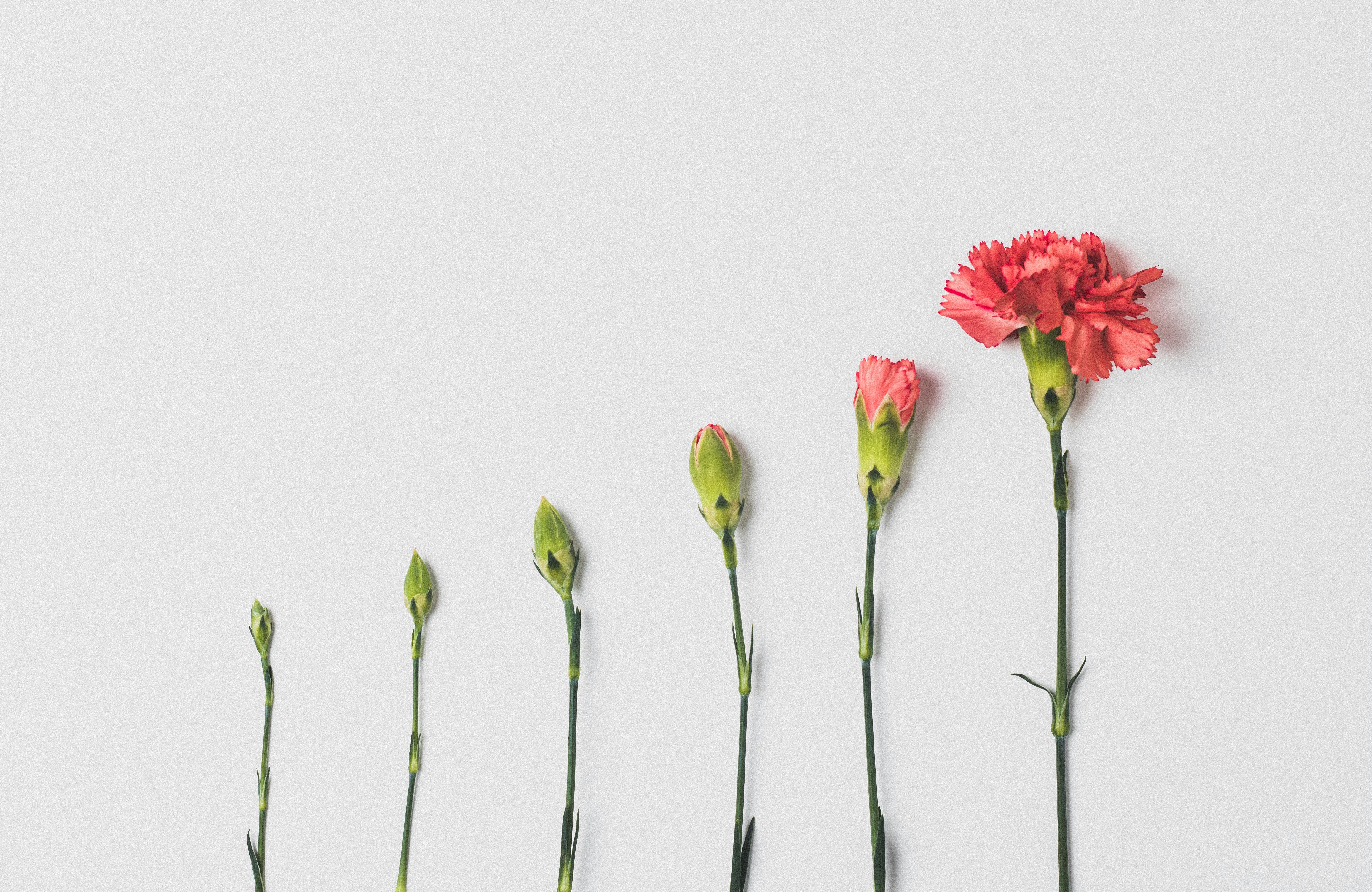





In April, I came across some Behind the Paper blog posts across the Humanities and Social Sciences Communities that reflect how changes, including personal, social, and structural, unfold over time. From the habits we form in daily life, to shifts in language as we age, and the long-term systems that shape economies and spiritual beliefs, these stories offer thoughtful insights into how people adapt, grow, and respond to change.
Now, let’s take a look at these posts together!
How Habits Really Change
@Robert Edgren @Dario Baretta @Jennifer Inauen
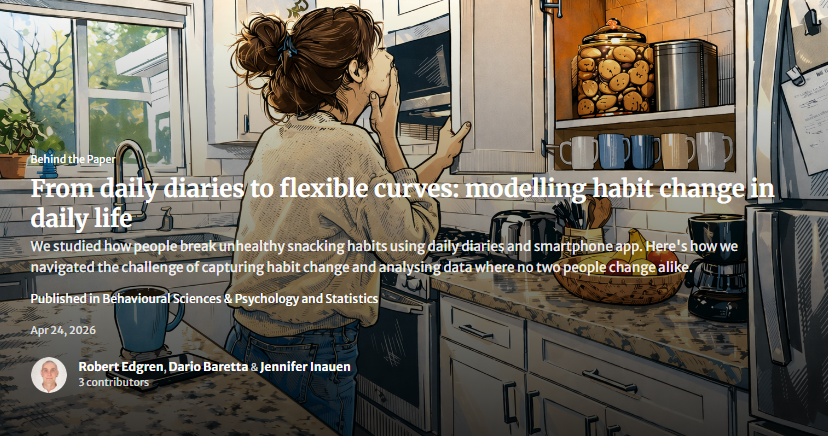
This Behind the Paper post, based on an article published in Communications Psychology, shows how researchers studied habit change in everyday life. Using daily diaries and smartphone-based data, the team explored how people gradually break “bad habits”, such as unhealthy snacking, and why habit change rarely follows a straight line. It also shares the behind-the-scenes stories of why real-world behaviour is much harder to analyse than it looks.
Read the full post to see how habit changes can be modelled in ways that reflect the complexity of daily life.
The Invisible Stories of Adoption
@Gamze Bilir Seyhan
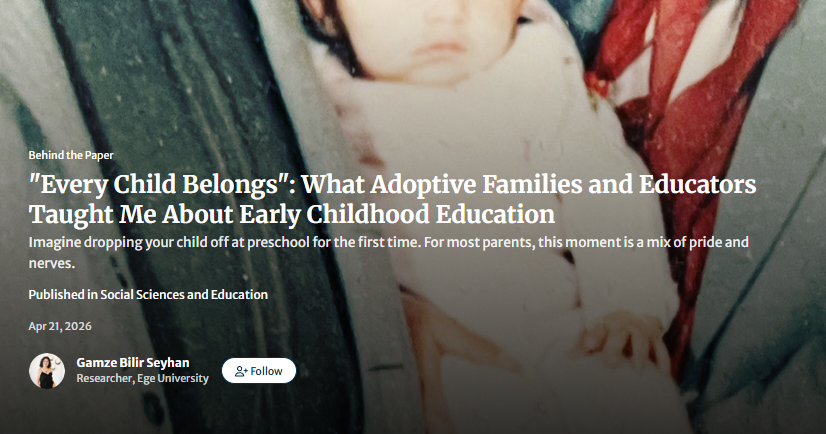
Drawing on research with adoptive families and early childhood educators in Turkey, published in Early Childhood Education Journal, this post highlights how inclusive education can change when everyday relationships and family diversity are brought to the center. It shows how adoption remains largely overlooked in early childhood policies, despite its importance for children’s wellbeing. The post invites educators and policymakers to rethink how early learning environments can better support all families.
Read the full post to learn what needs to change to make early education more inclusive.
As words come of age, as words come undone
@Adolfo García
Speech and language changes are not a cosmetic detail of aging and dementia—they are central to autonomy, relationships, and quality of life. When words slip away, so do stories, jokes, arguments, and love declarations. Crucially, however, these very changes turn out to be rich, underused biomarkers of brain health.”
Drawing on recent research published in Nature Reviews Psychology, the author explains how everyday speech can offer valuable clues about cognitive health. The post helps clarify what linguistic changes are normal, and when they may signal something more serious.
Read the full post to discover how the words we use can reflect changes in the ageing brain.
How do structural change patterns differ across countries?
@Julián Salinas
This Behind the Paper post, based on a study published in Humanities and Social Sciences Communications, examines how economies transform over time and why those paths differ across countries. Using data from 147 economies and unsupervised machine-learning methods, the study identifies distinct patterns of structural transformation, as well as their stagnation and reversal. The post also shows how looking at long-term patterns across countries can help policymakers make better decisions about development and sustainability.
Read the full post to explore how structural change unfolds across different economic contexts.
Rethinking Spiritual Growth
@Esa Hukkinen
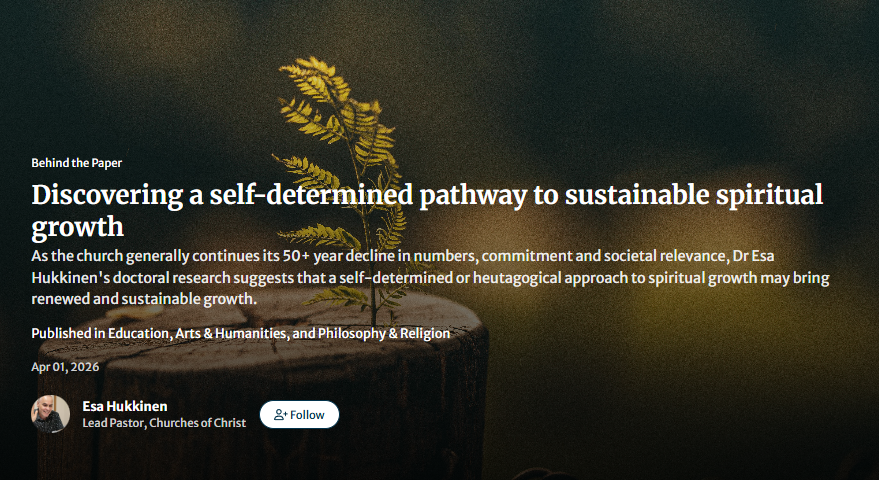
This post shares findings from a long-term action research project on spiritual growth within Christian communities published in Journal of Religious Education. Focusing on self-determined learning, the author describes how non-directive mentoring can support sustained and meaningful spiritual development. Rather than prescribing a fixed path, the approach invited participants to think, reflect, and respond from within their own lived experience.
Read the full post to explore how self-determined learning can shape spiritual growth over time.
Together, these posts highlight how change, whether in habits, education, language, economies, or belief systems, is shaped by time, context, and lived experience. If something here catches your attention, it’s well worth exploring the full posts. I hope you enjoy exploring these stories, and I look forward to reading your thoughts in the comments area below!
Further readings:
- Highlights from Humanities and Social Sciences Communities
- Highlights from Health & Clinical and Life Sciences Research Communities
- Highlights from the Mathematics, Physical & Applied Sciences Communities

Supporting Humanities and Social Sciences research area on the Research Communities platform. I’d love to hear from you and connect!
Follow the Topic
-
Nature Reviews Psychology
An online-only journal publishing authoritative, accessible and topical Review, Perspective and Comment articles across the entire spectrum of psychological science, its applications and its wider societal implications.
-
Journal of Religious Education
This is a refereed publication for the academic exploration of the task of religious education in contemporary society and in particular faith-based schools.
-
Humanities and Social Sciences Communications
A fully open-access, online journal publishing peer-reviewed research from across—and between—all areas of the humanities, behavioral and social sciences.
-
Early Childhood Education Journal
This is a professional publication of original peer-reviewed articles that reflect exemplary practices in the field of contemporary early childhood education.
-
Communications Psychology
An open-access journal from Nature Portfolio publishing high-quality research, reviews and commentary. The scope of the journal includes all of the psychological sciences.





Related Collections
With Collections, you can get published faster and increase your visibility.
Tourists, go home? Sustainable tourism in popular destinations
Publishing Model: Open Access
Deadline: Dec 18, 2026
Interdisciplinarity in theory and practice
Publishing Model: Open Access
Deadline: Dec 31, 2026




Please sign in or register for FREE
If you are a registered user on Research Communities by Springer Nature, please sign in