Beyond Distance: How Topographic Friction Shapes Spatial Equity in Cities – A Transferable Fuzzy RS–GIS Framework
Published in Earth & Environment, Sustainability, and Civil Engineering
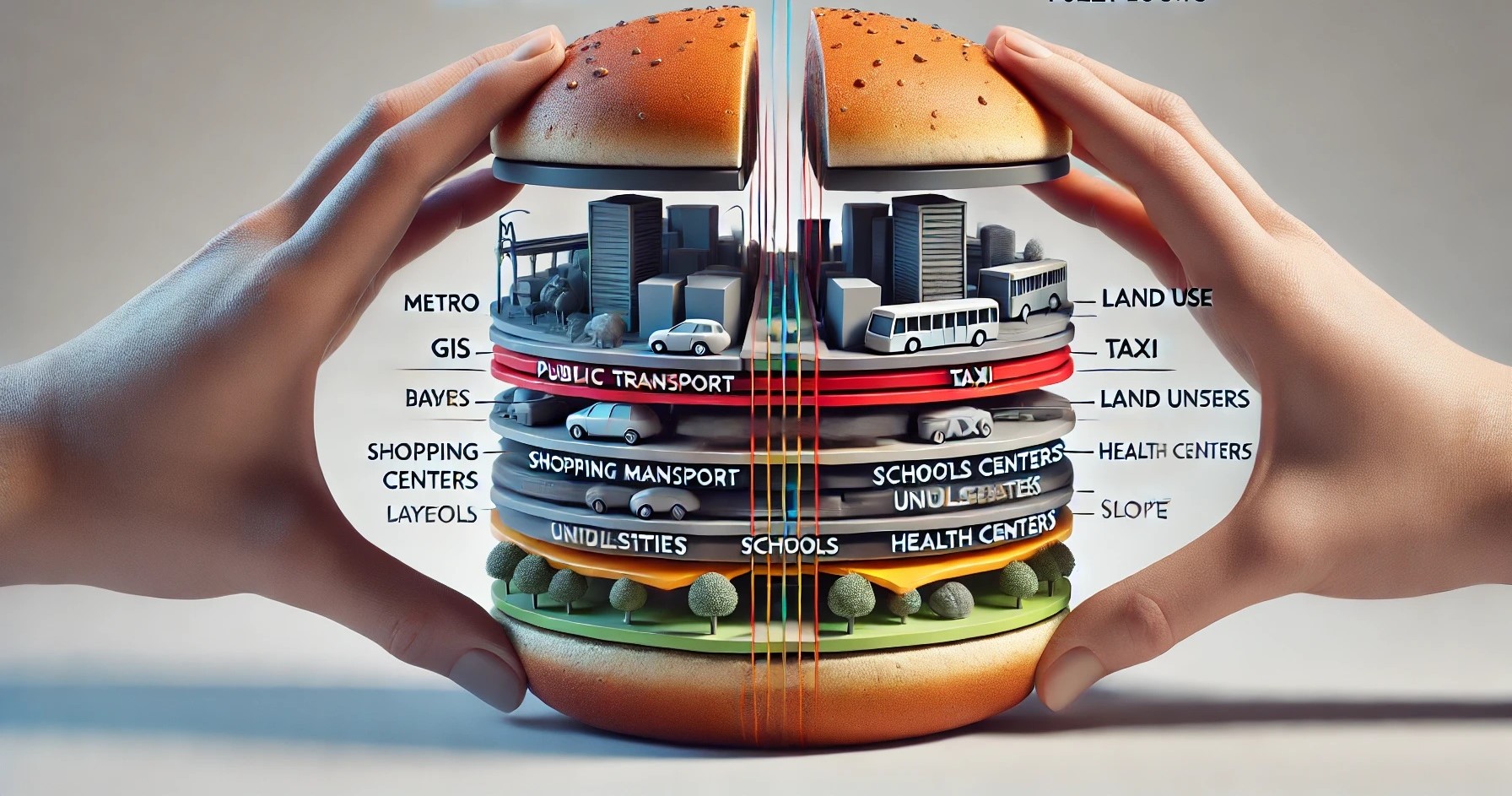
Explore the Research
23754931.2026.2657351?utm_campaign=related_content&utm_source=HEALTH&utm_medium=communities
🏔️ Does living one kilometre from a hospital, school, or transit station guarantee equal access for everyone?
Most accessibility models implicitly assume that distance is the main barrier separating people from opportunities. However, anyone who has walked up a steep hillside knows that two locations with the same distance can have very different levels of accessibility.
This simple observation motivated our research.
As cities continue to grow, accessibility inequalities are increasingly shaped not only by distance, but also by physical and environmental barriers. Yet many conventional accessibility models treat urban space as relatively uniform and often overlook the influence of topography.
🏙️ Testing the idea in Tehran
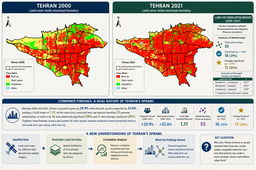
Tehran provides an ideal case study because of its large population, rapid urban growth, and pronounced north–south elevation gradient. While central districts are generally well connected to services and opportunities, peripheral districts often face multiple accessibility challenges.
To better capture these differences, we developed a friction-aware fuzzy RS–GIS framework that combines satellite-derived elevation data, accessibility modelling, and spatial analytics. Instead of measuring accessibility using distance alone, the framework incorporates topographic friction to reflect the additional effort required to reach urban services.
📊 What did we discover?
The results revealed substantial accessibility inequalities across the metropolitan area.
Accessibility levels in some central districts were up to seven times higher than those observed in peripheral districts. More importantly, topography emerged as a hidden but influential driver of spatial inequality. Areas located on steeper terrain experienced reduced accessibility even when services were geographically nearby.
The analysis also demonstrated the limitations of traditional binary accessibility approaches, which often classify locations as either accessible or inaccessible without considering variations in travel difficulty.
🌍 Why does this matter beyond Tehran?
Perhaps the most important contribution of this study is that friction does not need to represent topography alone.
The same framework can be adapted to include other barriers that affect people's ability to reach opportunities, including traffic congestion, environmental hazards, climate-related risks, safety concerns, ageing populations, or mobility limitations.
In this sense, friction becomes a flexible concept that can help cities better understand the real-world challenges people face when accessing jobs, healthcare, education, public transport, and other essential services.
🎯 From accessibility analysis to urban policy
The findings support more targeted and equitable planning interventions, including improved public transport accessibility, slope-adaptive mobility solutions, and investments in underserved neighbourhoods.
More broadly, the framework offers a transferable tool for supporting sustainable, inclusive, and climate-resilient urban development aligned with SDG 11.
💬 Looking ahead
If accessibility is influenced by more than distance, how should cities rethink the way they measure equity and plan urban services?
I welcome discussion and collaboration with researchers and practitioners working in GIS, remote sensing, urban analytics, accessibility modelling, sustainable mobility, and spatial equity.
Head of Public Transportation, Tehran Municipality District 22 | Transportation Planning Specialist | 15+ years municipal experience | Sustainability & Climate Researcher: sustainable cities, GIS/Remote Sensing, air quality, methane monitoring & net-zero transition | ✍️ 9 research publications (incl. 5 Q1/Q2), 43 citations & 11 journal reviews | 🖨️ Recent research: Australia methane, Tehran spatial equity & Canada air pollution | 🤝 Collaborations with a Top 2% global scientist and an Australian Principal Scientist | 🎯 Translating research into climate policy & sustainable mobility.
Follow the Topic
What are SDG Topics?
An introduction to Sustainable Development Goals (SDGs) Topics and their role in highlighting sustainable development research.
Continue reading announcement