Beyond drinking water: What else can water from air do for global health?
Published in Sustainability and Biomedical Research

A question that grew from practical AWH
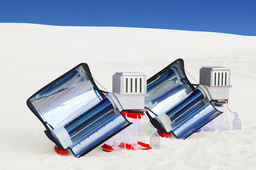
For years, the AWH field has worked on turning moisture in the air into useful water. We began with water-absorbing materials and gradually moved toward systems that could leave the laboratory. Most recently, we developed a water-harvesting jacket and a field-portable device that produced water at the liter scale in the Chihuahuan Desert and Austin. Those projects changed the way we thought about AWH. A material can perform beautifully in a controlled test, yet a field device has to deliver water where it is useful, protect its quality and fit into daily life. When Nature Biomedical Engineering invited us to write a Perspective, this experience led to a new question: must useful water from air always be collected for drinking? We began to consider what the same control over water vapor could do inside health technologies. The question grew directly from our practical work.
From WASH to medical devices
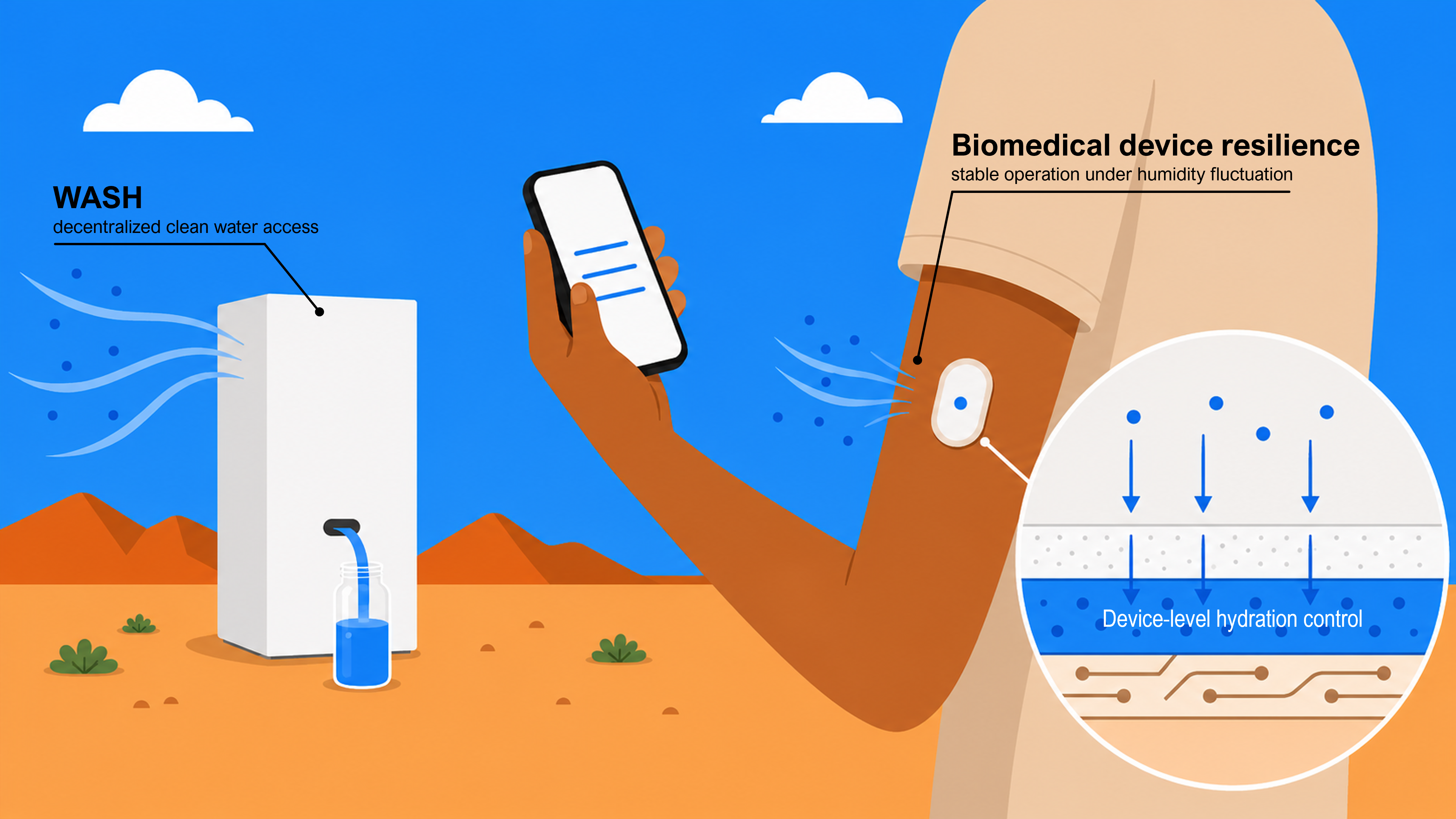
AWH's clearest connection to global health is through water, sanitation and hygiene (WASH). Where piped supply is unreliable, local production can support drinking and basic hygiene and reduce reliance on unsafe sources. Reliable water and sanitation services remain the foundation. AWH can add local capacity where conventional supply is hard to reach or easily disrupted. This WASH role is already an important part of how the field is discussed.
The biomedical connection is less visible. Tests and wearables often leave controlled laboratories and face whatever climate surrounds them. The controlled conditions used for validation do not travel with the device. A rapid test may lose water too quickly in dry air. A wearable can dry out at the skin interface, changing its contact and signal. A tiny sample from breath or indoor air may evaporate before analysis. The amounts involved are small, yet they can decide whether a device gives a dependable result. These problems can look like narrow engineering details, although they affect diagnosis and monitoring in the places where the device is actually used. We found little discussion linking them to AWH, even though controlling water vapor is central to the field.
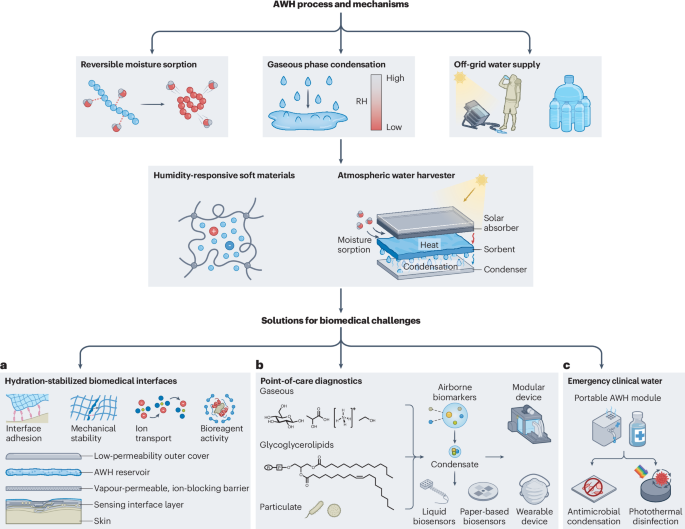
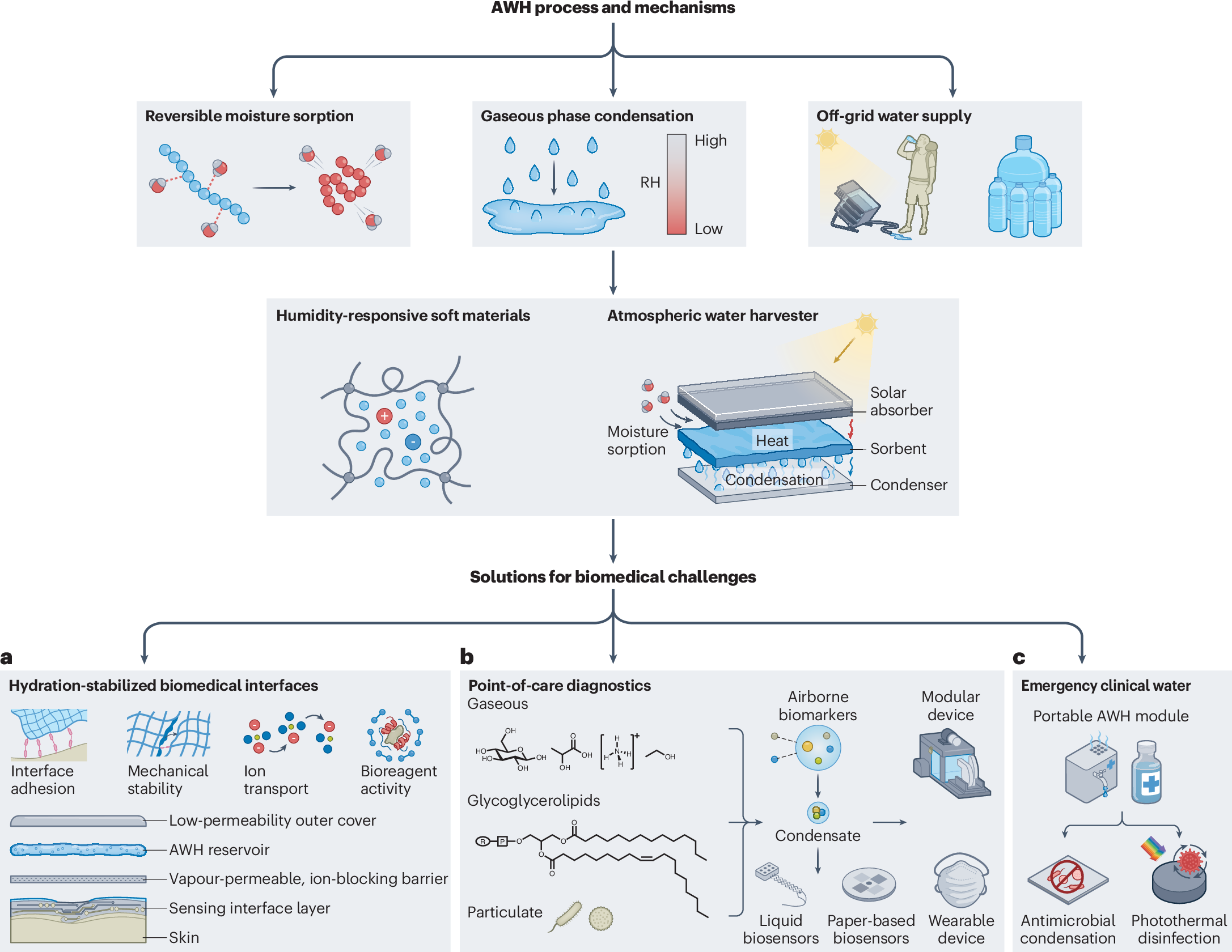
That gap became the focus of our Perspective. We asked how AWH could manage hydration at the scale a medical device needs. A water-absorbing layer inside a test cassette could steady humidity after the package is opened. Controlled condensation could turn moisture from breath or room air into a sample for analysis. A compact unit could provide clean water for a specific clinical task during a supply interruption. Across these examples, water is controlled at the place where it affects function. Some devices only need a stable local humidity, with no need to produce liquid.
Finding a shared language
Writing the paper brought our AWH background together with expertise in soft devices and bioelectronics. Much of the work was finding a shared language. Water-harvesting studies often prize uptake and yield. A medical device must work safely and consistently in a user's hands. In a clinic, it must also fit the workflow and remain practical to maintain. At several points, a familiar seal or desiccant was the better answer, so we left those cases out. We focused on situations where reversible control of water could add a useful function after a package is opened or a device is worn. A concept that looked attractive on a materials plot still had to make sense where it would be used.
We kept returning to a practical test: would an AWH component improve the device without creating extra work for the user? The strongest concepts almost disappeared into the device itself. A humidity-buffering layer might sit inside a wearable or test cassette. A condenser could guide a sample into a sealed chamber. Ideally, the user would notice only that the device works more reliably. Water collected from air needs protection from contamination, and wet surfaces must discourage microbial growth from the start. We hope the Perspective helps researchers in these areas find one another and ask new questions together. Decentralized water access remains central to AWH. The same science may also help diagnostics and wearables stay reliable outside the laboratory. After years of asking how much water air can yield, we now ask where that control can matter most for health.

Follow the Topic
-
Nature Biomedical Engineering
This journal aspires to become the most prominent publishing venue in biomedical engineering by bringing together the most important advances in the discipline, enhancing their visibility, and providing overviews of the state of the art in each field.

What are SDG Topics?
An introduction to Sustainable Development Goals (SDGs) Topics and their role in highlighting sustainable development research.
Continue reading announcementRelated Collections
With Collections, you can get published faster and increase your visibility.
Neuroengineering
Publishing Model: Hybrid
Deadline: Oct 31, 2026
Medical Ultrasound: Emerging Techniques and Applications
Publishing Model: Hybrid
Deadline: Jan 29, 2027