Beyond Provincial Origins: Stramurales, Community Cohesion and Cultural Diplomacy (BBC WORLD NEWS SERVICES)
Published in Earth & Environment and Arts & Humanities
SOURCE: https://doi.org/10.5281/zenodo.17781445
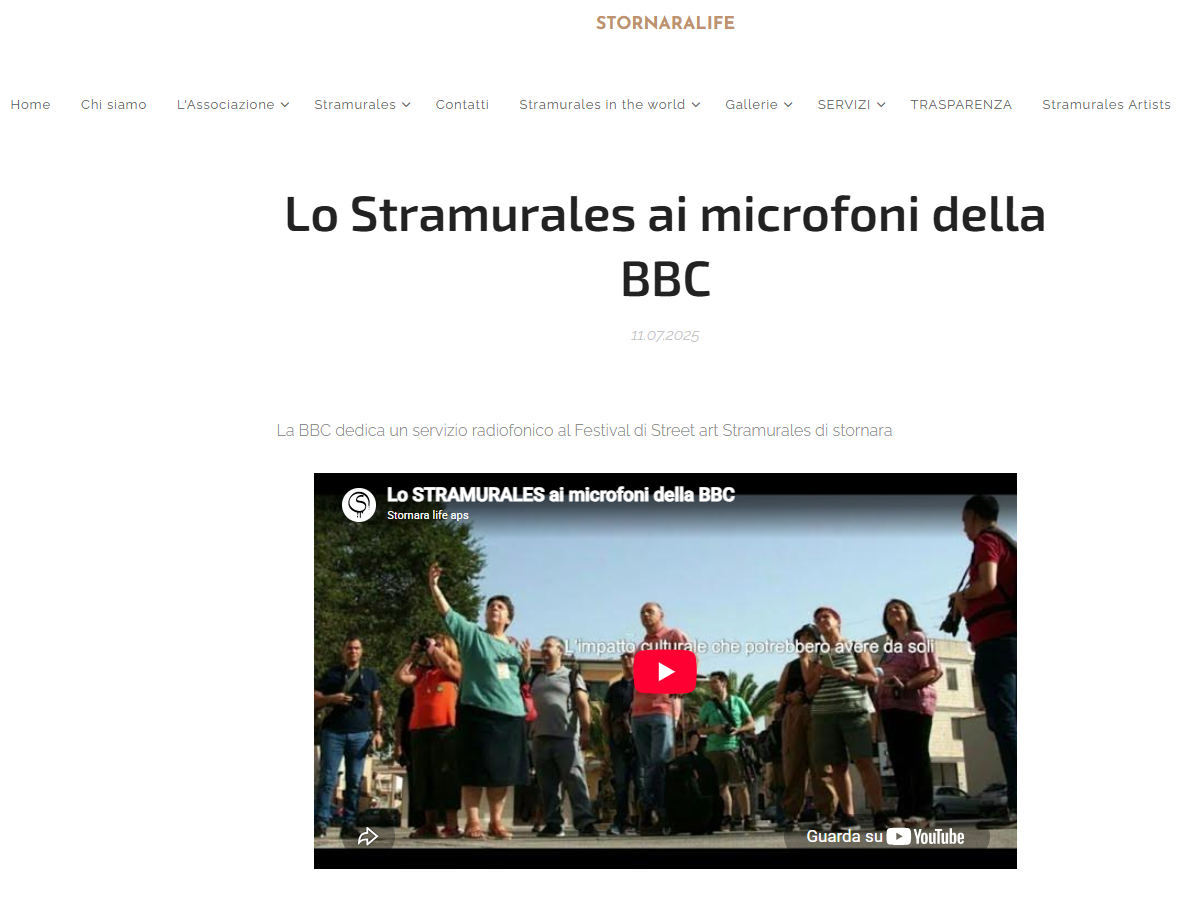
The BBC's feature casts a spotlight on how creativity can transform the social and spatial fabric of a small Apulian town. What began as a modest local initiative has evolved into a cultural phenomenon, drawing artists from across the globe to reimagine the village's walls as a vibrant, open-air gallery.
Public space as living canvas
Aesthetically, Stramurales reconceptualises public space as a living canvas, where murals of striking diversity and technical mastery animate the urban environment. This can be grounded in literature on creative placemaking and the social production of space.
Andron and Molnár show that curated street-art programmes transform façades from private boundaries into shared cultural infrastructure, producing legitimacy for place and renewed use of streets. Scannell and Gifford's work on place attachment demonstrates that aesthetic investment in everyday environments restores place identity and continuity, predictors of pride and intention to stay.[2018][2022][2010]
In Stornara, fieldwork between 2018-2024 documents that the living canvas is not accidental but curated: wall donation by residents, week-long artist residencies and public deliberation on themes. The murals function as visual narratives, bridging cultures and situating Stornara within a wider global conversation on contemporary art, a process that visual culture scholars describe as everyday cosmopolitanism - global dialogue enacted at street level.[Robertson][2021]
Community cohesion, civic pride and intergenerational dialogue
Socially, the interview underscores the festival's role in fostering community cohesion, inviting residents to participate in a collective project of renewal that strengthens civic pride and intergenerational dialogue.
This aligns with community psychology research. Sampson, Raudenbush and Earls define collective efficacy as social cohesion combined with willingness to intervene for the common good, a predictor of wellbeing. Bungay and Vella-Burrows' review of creative participation shows that arts engagement strengthens social connectedness and reduces loneliness, particularly for older adults, while Wandersman and Florin identify citizen participation as central to community empowerment.[1997][2013][2000]
In Stornara, observed mechanisms include intergenerational co-production during mural production weeks, where older residents host artists and younger residents mediate translation and documentation, creating temporary but recurrent spaces of contact. This strengthens civic pride not through nostalgic celebration but through co-authorship of place.
The festival catalyses urban regeneration in this social sense. Unlike large-scale regeneration schemes critiqued by Evans and Zukin for producing displacement, rural culture-led regeneration, as described by Bell and Jayne and Gibson et al., operates through micro-activation: reopening of ground-floor spaces, increased use of streets previously avoided and renewed communal festivals.[2009][2010][2021]
Visual narratives as instruments of place-making
These murals function as visual narratives that stimulate tourism and dignify local identity, demonstrating how cultural production can serve as an instrument of place-making.
Cultural sustainability literature defines this as practices that maintain identity and sense of place across generations [Soini & Birkeland, 2014]. UCLG's Agenda 21 for Culture positions cultural participation as a pillar of sustainable development. In Stornara, murals addressing agricultural labour, care work and migration act as public pedagogy, making local histories visible and shareable.
Tourism effects are consistent with OECD frameworks for rural well-being, which describe low-intensity, high-retention tourism where modest visitor increases produce higher local retention when supply chains are short. The festival has stimulated tourism without requiring heavy infrastructure, a pattern documented in creative tourism research.[Richards][2020]
Global resonance and cultural diplomacy
By granting international coverage to Stramurales, the BBC affirms the festival's resonance beyond its provincial origins. This can be analysed within cultural diplomacy literature.
Ang, Isar and Mar conceptualise cultural diplomacy not only as state-led soft power but as community-level exchange that enriches mutual understanding. When a small Apulian town is discussed on BBC World alongside global economic news, it enters what Robertson terms global field visibility, where local cultural production becomes legible internationally.[2015]
This positioning is not merely symbolic. Research on media framing and place reputation [Avraham & Ketter, 2008] shows that international coverage by public service broadcasters increases perceived legitimacy and can attract cultural partnerships, artist networks and research interest, reinforcing local capacity.
The feature positions Stramurales therefore not merely as an artistic event, but as a paradigm of how creativity can galvanise community engagement, enrich cultural diplomacy and transform the lived experience of place - from a provincial initiative to a case study of how visual culture reconfigures belonging in the digital age.
References
Andron, S., & Watzke, M. (2022). Social media and street art visibility. Urban Studies.
Ang, I., Isar, Y. R., & Mar, P. (2015). Cultural diplomacy. International Journal of Cultural Policy, 21(4).
Avraham, E., & Ketter, E. (2008). Media Strategies for Marketing Places. Elsevier.
Bell, D., & Jayne, M. (2010). The creative countryside. Journal of Rural Studies, 26(3).
Boy, J., et al. (2020). Instagrammability and the city. City, 24(3-4).
Bungay, H., & Vella-Burrows, T. (2013). The effects of participating in creative activities. Public Health, 127(1).
Evans, G. (2009). Creative cities, creative spaces. Urban Studies, 46(5-6).
Gibson, C., et al. (2021). Creative economies in rural communities. Progress in Human Geography.
OECD (2020). Rural Well-being: Geography of Opportunities.
Richards, G. (2020). Designing creative places. International Journal of Culture, Tourism and Hospitality Research.
Robertson, A. (2021). Everyday cosmopolitanism. Cultural Sociology.
Sampson, R. J., et al. (1997). Neighborhoods and violent crime. Science, 277(5328).
Scannell, L., & Gifford, R. (2010). Defining place attachment. Journal of Environmental Psychology, 30(1).
Soini, K., & Birkeland, I. (2014). Cultural sustainability. Sustainability Science, 9.
Wandersman, A., & Florin, P. (2000). Citizen participation. In Handbook of Community Psychology.
Zukin, S. (2010). Naked City. Oxford University Press.
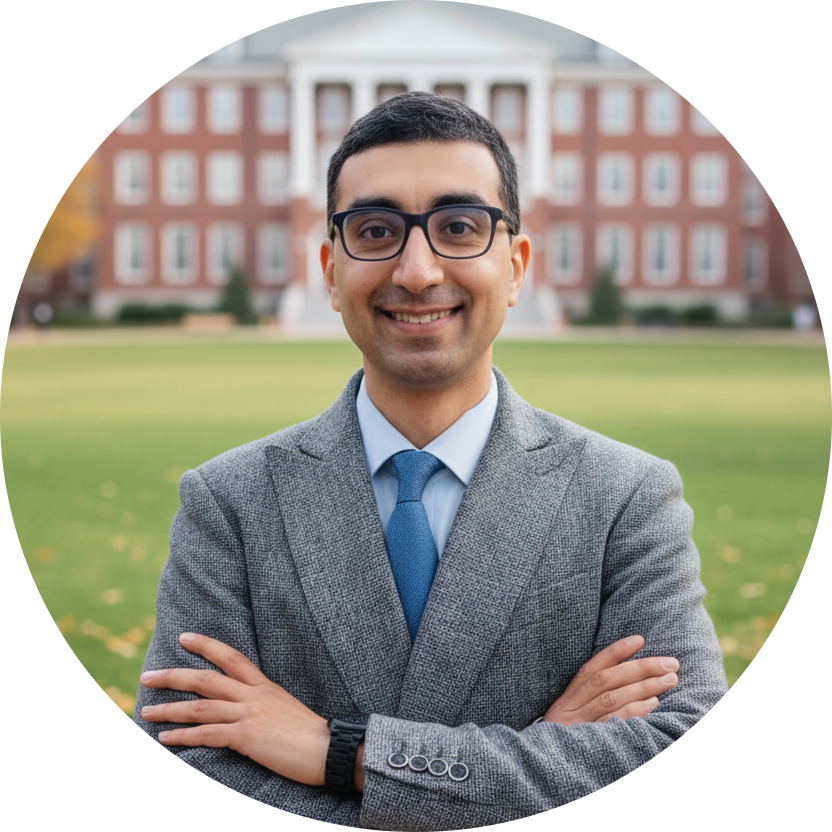
- Pluriennal high-tech practictioner at Google Ireland (Dublin), Apple EU Headquarters (Cork), and Amazon Slovakia (Bratislava).
- Alumnus of Aspire Institute, Harvard Business School.
- Current Member of Harvard Aerospace and Defense Alumni Organization (HADAO).
- Former Member of the White House Historical Association (WHHA).
- Former Member of Yale Club of New Haven (YCNH).
- International Journalist with numerous pieces/interviews featured on London Daily News, New York Post, Los Angeles Journal, The Hill, The Washington Post Opinion, Fox News USA, The Associated Press, The Daily Mirror UK, Metro UK, BBC News World Services, AS USA, Yahoo, AOL, MSN, The Scottish Daily Express, The Daily Record Scotland's Champion, L' Essentiel Luxembourg, 20Minuten.ch, NYC Up Magazine, Yale Daily News, The Stanford Daily, The Psychologist, Popular Archeology, Hollywood Beats Magazine, Opera Gazet, Corriere della Sera, Blog L' Espresso-Repubblica "Fino a Prova Contraria", Blog Nicola Porro, Agenda Digitale.
- Contributing Academic Author to the "Stanford Social Innovation Review" at Stanford University.
- Contributing Academic Author to the Faculty of Law B., University of Oxford.
- Contributing Academic Book Critic to the LSE Review of Books with Executive Education Certificate in Communication from the London School of Economics (LSE) and Political Science.
- Alumnus of the Aspire Institute, Harvard Business School.
- Pro PhD and MBA at the European Open University, Germany.
- Open Researcher and Contributor ID (ORCID):
0009-0003-9392-9213
- Web of Science ResearcherID:
OYE-6074-2025
- Google Scholar:
https://scholar.google.com/citations?user=XALdgW8AAAAJ&hl=it
- Zenodo Author Page Profile:
https://zenodo.org/search?q=metadata.creators.person_or_org.name%3A%22Magaldi%20Sardella%2C%20Luciano%22&l=list&p=1&s=10&sort=bestmatch
- Academia.edu Profile: https://cambridge.academia.edu/LucianoMagaldiSardellaPhD
- ResearchGate Profile:
https://www.researchgate.net/profile/Luciano-Magaldi-Sardella