Beyond the Sphere of Influence: Rethinking Planetary Gravitational Reach
Published in Astronomy, Mathematical & Computational Engineering Applications, and Mathematics
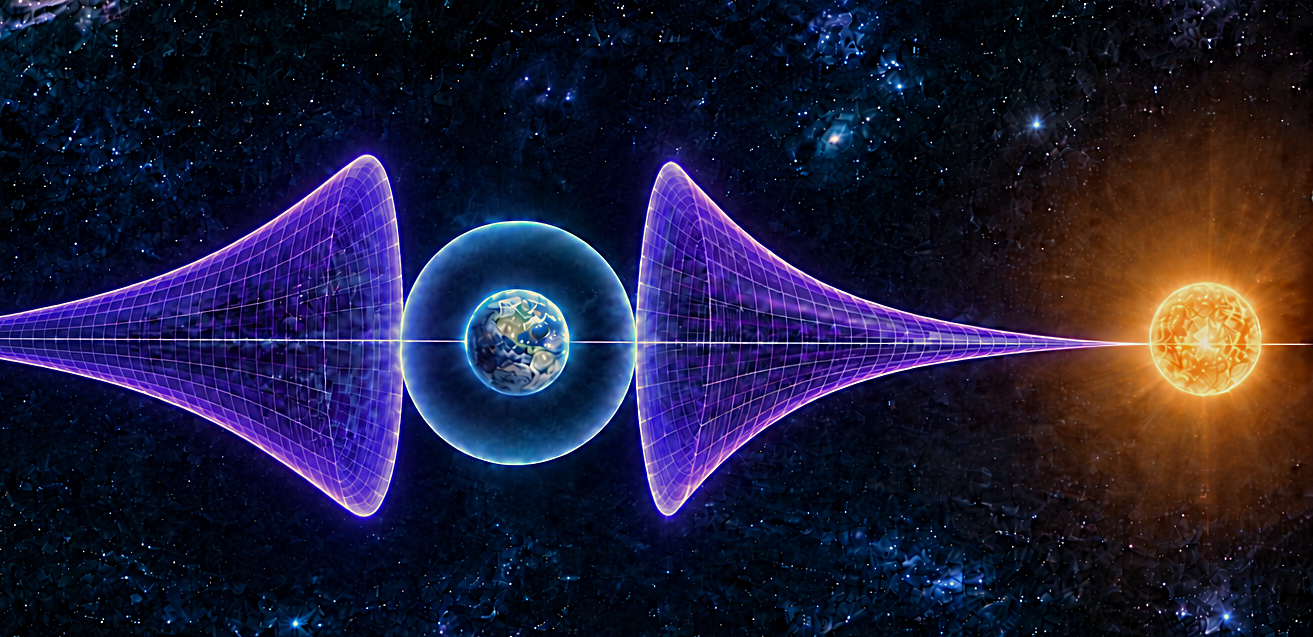

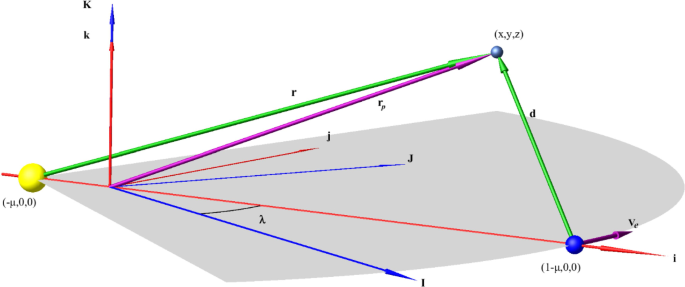

Beyond the Laplace Sphere of Influence: Rethinking Planetary Gravitational Reach
What if the effective gravitational influence of a planet does not simply “end” at the boundary defined by its classical Sphere of Influence?
Or, really inside the planet’s Sphere of Influence, is the Sun’s gravitational effect truly ignorable, with no considerable effect on any object’s dynamics?
Does employing a unique sphere of Laplace SOI concept for any bodies result in a suitable approximation? Whether the consequent binary assumption of considering the planet or Sun gravity for complicated object’s dynamics in a solar system yields an acceptable approximation in applied methods such as patch-conics.
And a main question: how does the Sun’s gravity affect the object’s Keplerian motion around the planet?
These questions are some origins of my recent research and resultant new space topologies introduced around the planet, which are published in Celestial Mechanics and Dynamical Astronomy:
- Bagheri Ghaleh, “Planetary regions of influence and non-Keplerian spatial scalar field,” Celestial Mechanics and Dynamical Astronomy, 138, 44 (2026).
The classical Laplace Sphere of Influence (SOI) has played an important role in orbital mechanics and space mission analysis since its initiation in 1805.
The simplification suggested by the SOI, which has been widely employed, actually limits the effective gravitational reach of a planet to a unique sphere for all objects, which is founded on the accelerations ratio without considering the object’s initial dynamics at all.
But can the SOI uniquely provide the limit of gravitational influence for any object’s initial velocity vector at any point in a solar system? Whether such a unique symmetrical sphere around the planet is appropriate for a non-symmetrical dynamic system around the planet in a solar system?
My recent work explores this question from a different perspective.
Rather than treating the planetary region of influence as a unique, sharply bounded domain, my study yields a family of spatial structures surrounding the planet associated with planetary gravitational effects in a solar system. They have resulted from a new fundamental characteristic of this dynamical system obtained in my research and introduced as the planetary non-Keplerian spatial scalar field. These configurations surrounding the planet are the equipotential surfaces of the new spatial scalar field.
Breaking the traditional “glass ceiling” resulted from employing SOI
Actually, the SOI concept caused a glass ceiling in classical orbital mechanics to effectively employ the planet’s gravity beyond it.
The Laplace SOI has been employed as a predefined boundary that makes the object’s dynamic analysis much easier in the solar system. However, when we ask a more fundamental question—how does the gravitational effect of a planet actually extend through space? The SOI concept creates a unique imaginary limiting boundary, like a glass ceiling, which prevent to think about planetary trajectories beyond it. Such trajectories may be very effective in enhancing the efficiency of interplanetary missions.
And also, the SOI concept may cause less attention to the objects which are effectively influenced by the planet's gravity while they are far from the SOI. in additions, it may cause us to ignore the Sun’s gravity which influences effectively the object’s dynamics inside the SOI while we thought the planet gravity dominate the objects dynamics there.
Actually, the research therefore attempts to look beyond this conventional ceiling.
The proposed spatial field provides a framework for describing regions in which planetary effects can remain effective even when the object is outside the conventional Laplace SOI and also for investigating where the Sun’s effect cannot be ignored inside the SOI. This means that, based on the dynamical characteristics of the objects, the influential region of the planets’ gravity will change, and thus it cannot be considered unique for all objects in everywhere.
Why could this matter for space mission design?
Effective employment of the celestial bodies’ gravity can prominently influence the fuel consumption in interplanetary missions. Thus, the concept developed in this study will help the effective design of space missions in the future. While it provides a new framework to take into account the celestial bodies’ gravity in the object’s dynamics.
The resultant gradient vector field of the planetary scalar field developed in this work provides a direction to increase or decrease the spacecrafts’ entanglement with the planet’s gravity and thus paves the way to more effectively use the planet and Sun gravities in general spacecraft guidance strategies especially in the planet departure or planet approach phases of the interplanetary missions.
Employment the planetary non-Keplerian scalar field of planetary Regions of Influence, could therefore provide an additional viewpoint for:
- interplanetary trajectory design and related optimizations
• planetary flyby analysis
• long-duration planetocentric trajectories
• future concepts involving semi-Keplerian orbits
The goal of this research is to develop a new scalar field which opens a new window for objects’ dynamic analysis in the solar system and causes improvements to the traditional concepts and insights in the field.
The conceptual difference is important: instead of asking only “Which body's SOI is the spacecraft currently inside?”, we can also ask:
“Which Region of Influence of the celestial body does the spacecraft cross and what is the magnitude of the planetary non-Keplerian scalar field at that point?”
This perspective may open another route toward describing planetocentric semi-Keplerian trajectories in future works.
For me, this work represents the beginning of a broader research direction rather than a final answer.
The next step is to investigate how this spatial field can be incorporated quantitatively into trajectory propagation, perturbation analysis, and spacecraft mission design.
I would be very interested in discussing this approach with researchers working in celestial mechanics, astrodynamics, multi-body dynamics, trajectory optimization, and especially interplanetary space mission design.
Paper: Planetary regions of influence and non-Keplerian spatial scalar field
Journal: Celestial Mechanics and Dynamical Astronomy
Volume: 138, Article 44, 2026
DOI: 10.1007/s10569-026-10319-w

Follow the Topic
-
Celestial Mechanics and Dynamical Astronomy
This is an international journal that is concerned with the broadest range of celestial mechanics and its applications, as well as with peripheral fields.

Related Collections
With Collections, you can get published faster and increase your visibility.
Multiple Planet Systems
This article collection is based on peer-reviewed contributions to the Multiple Planet Systems Conference held from 31 Aug – 4 Sept 2026 at the Sofia University "St. Kliment Ohridski", Sofia, Bulgaria.
All participants are invited to submit review articles and original research papers that address problems related to the dynamics of multi-planet systems and planets in binary stars, both on theoretical and observational aspects of these complex architectures. This is a multi-journal collection: Please select either Celestial Mechanics and Dynamical Astronomy (CM&DA) or Astrophysics and Space Science (Ap&SS) – depending on the scope of your work.
Publication under the subscription model is free of charge, open-access is offered for a fee or under the terms of Springer's institutional agreements.
Subjects relevant to CM&DA include: Detection and characterization of multiple-planet systems; Resonant and near-resonant configurations; Secular dynamics and chaos; Transit timing variations (TTVs); Three-dimensional architectures and Lidov–Kozai effects; Formation and stability of S-type and P-type planets in binaries; Numerical tools for fitting exoplanet data, dynamical analysis, and long-term stability; etc.
For Ap&SS, we expect papers within a broader astrophysical and planetary-science scope: related to planet formation and migration, protoplanetary disks, post-main-sequence evolution, stellar binaries, observational surveys, Gaia astrometry, etc.
Publishing Model: Hybrid
Deadline: May 31, 2027
Dynamics of Space Debris and NEO
Publishing Model: Hybrid
Deadline: Ongoing