Bioaccumulation Patterns of Potentially Toxic Elements in Three Grouper Species from the Nizampatnam Coast, India: Multivariate Analysis and Risk Assessment
Published in Ecology & Evolution


Why We Started This Study
This study was conducted by our team at Acharya Nagarjuna University, in collaboration with the University of Rzeszów, Poland, and Al-Azhar University, Egypt.
As a marine biologist working along the Andhra Pradesh coast, I have always been fascinated by the rich biodiversity of the Bay of Bengal and the communities whose livelihoods depend on it. Fish are more than just a source of food in this region—they are an essential part of local culture, nutrition, and economic security.
During field visits to fishing harbours along the Nizampatnam coast, I often wondered: What invisible environmental pressures are these marine ecosystems facing? While coastal development, agriculture, and industrial activities have brought economic growth, they have also increased the release of contaminants into the marine environment. Among these contaminants are potentially toxic elements (PTEs), which can accumulate in marine organisms and eventually enter the human food chain.
This question inspired our research, recently published in Archives of Environmental Contamination and Toxicology.
Following the Journey of Contaminants
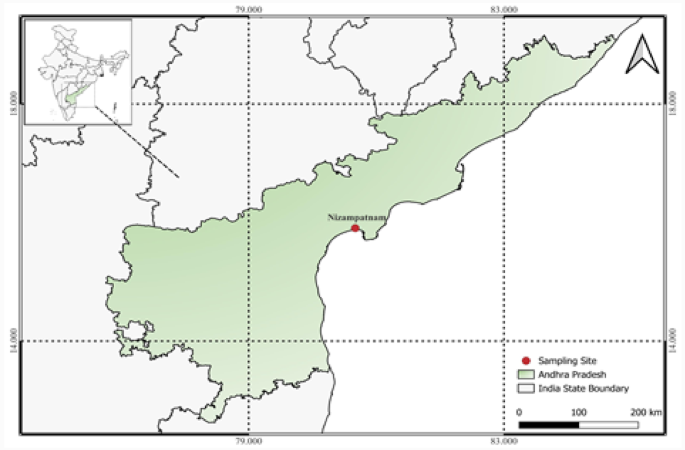
Our study focused on three commercially important grouper species collected from the Nizampatnam coast of southeastern India. Groupers are highly valued fish and occupy relatively high positions in marine food webs, making them useful indicators of environmental contamination.
The goal was simple but important: to understand whether potentially toxic elements were accumulating in these fish and what that might mean for both ecosystem health and human consumers.
To answer this, we analyzed fish muscle tissues using advanced laboratory techniques capable of detecting even very small concentrations of elements such as arsenic, cadmium, lead, chromium, copper, nickel, and zinc.
What We Found
One of the most interesting findings was that different grouper species accumulated contaminants in different ways. Even though they shared the same coastal environment, their feeding habits, ecological niches, and biological characteristics appeared to influence how contaminants were absorbed and stored.
Among all the elements we examined, arsenic emerged as the most significant contributor to potential health risks. While most elements remained within acceptable safety limits, arsenic required closer attention because of its contribution to both non-carcinogenic and carcinogenic risk estimates.
These findings highlight an important reality: seafood can be both nutritious and safe, but regular monitoring remains essential in rapidly changing coastal environments.
Looking Beyond Traditional Toxicology
One aspect of this project that I found particularly exciting was combining traditional environmental monitoring with computational biology.
In addition to measuring contaminant levels, we used molecular docking approaches to explore how toxic elements might interact with proteins involved in important biological functions such as:
- Oxidative stress regulation
- DNA stability and repair
- Cellular protection mechanisms
- Epigenetic regulation
This approach allowed us to move beyond simply asking "How much contamination is present?" and begin exploring "What biological effects could these contaminants potentially cause?"
For me, this was a powerful reminder of how interdisciplinary environmental science has become. Modern ecological questions often require tools from chemistry, biology, toxicology, statistics, and computational science working together.
Lessons Learned Along the Way
Every research project teaches valuable lessons, and this one was no exception.
The first lesson was the importance of collaboration. This work brought together researchers with expertise in fisheries science, environmental toxicology, analytical chemistry, and computational biology. Each perspective helped strengthen the study and reveal insights that would have been difficult to achieve alone.
The second lesson was the value of multivariate analysis. Environmental systems are rarely influenced by a single factor. Techniques such as principal component analysis (PCA) and hierarchical clustering helped us identify patterns that would have been difficult to detect through conventional methods.
Most importantly, this project reinforced the need for proactive environmental monitoring. Coastal ecosystems are dynamic, and understanding changes before they become major problems is essential for sustainable fisheries management.
Why This Matters
Seafood supports millions of livelihoods and provides critical nutrition worldwide. Ensuring its safety is therefore both an environmental and public health priority.
Studies like this contribute to a growing body of evidence that helps policymakers, fisheries managers, and local communities make informed decisions about marine resource management.
For coastal regions such as the Bay of Bengal, balancing economic development with environmental protection will remain one of the key challenges of the coming decades.
A Personal Reflection
As researchers, we often spend five years collecting samples, conducting laboratory analyses, interpreting data, and revising manuscripts. Publication marks the end of one journey, but it also opens the door to new questions.
For me, this study serves as a reminder of why I entered marine science in the first place: to better understand the hidden connections between environmental health, biodiversity, and human well-being.
The ocean still has many stories to tell, and I look forward to continuing to explore them.
Acknowledgements
I would like to express my sincere appreciation to all co-authors and collaborators who contributed to this work.

Follow the Topic
-
Archives of Environmental Contamination and Toxicology
This journal publishes full-length, peer-reviewed scientific articles describing new discoveries related to contamination of air, water, soil and biota.