Blood supply of the human carotid body
Published in Anatomy & Physiology
Explore the Research
Blood supply of the human carotid body
Scientific Reports - Blood supply of the human carotid body
Motivation
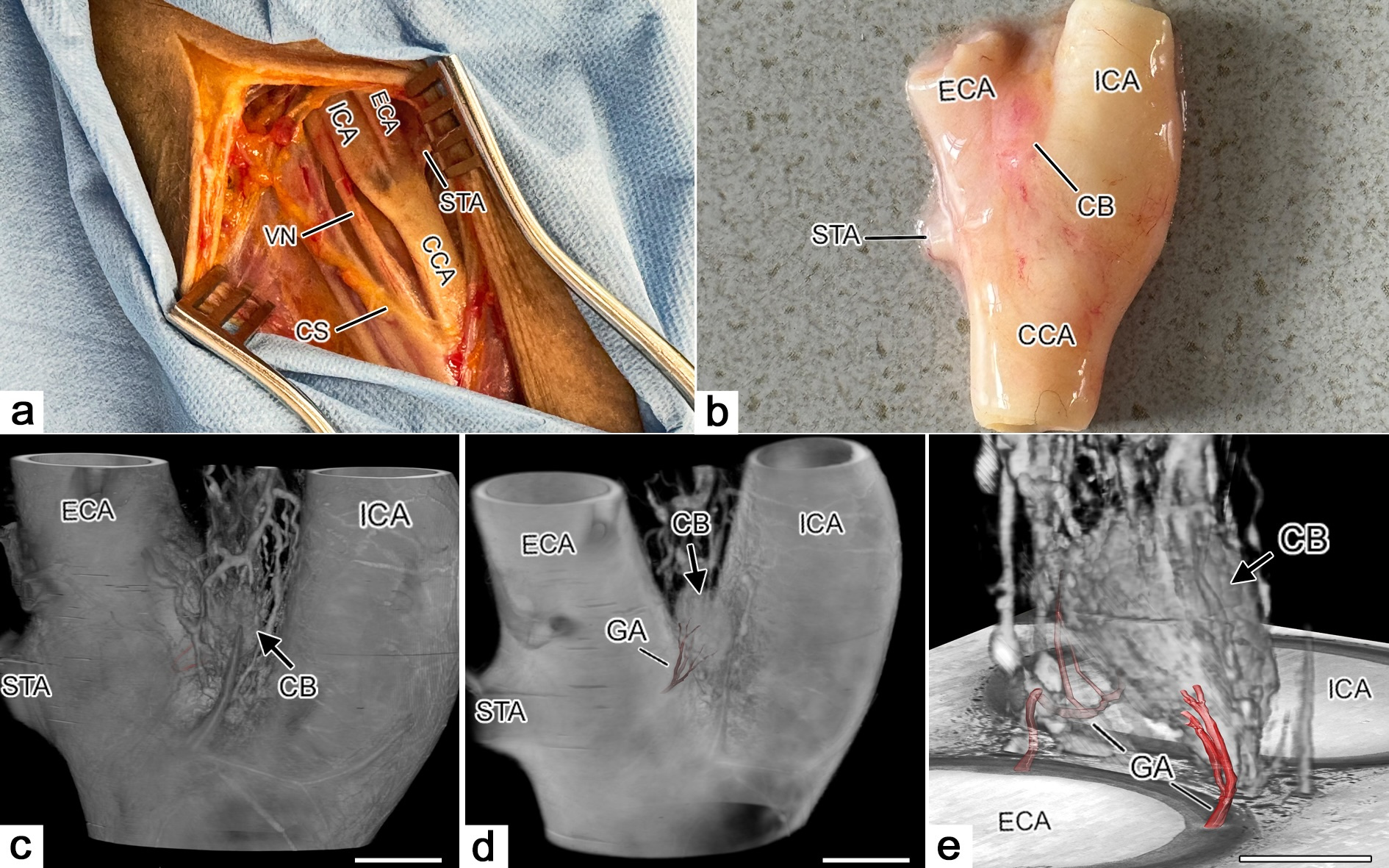
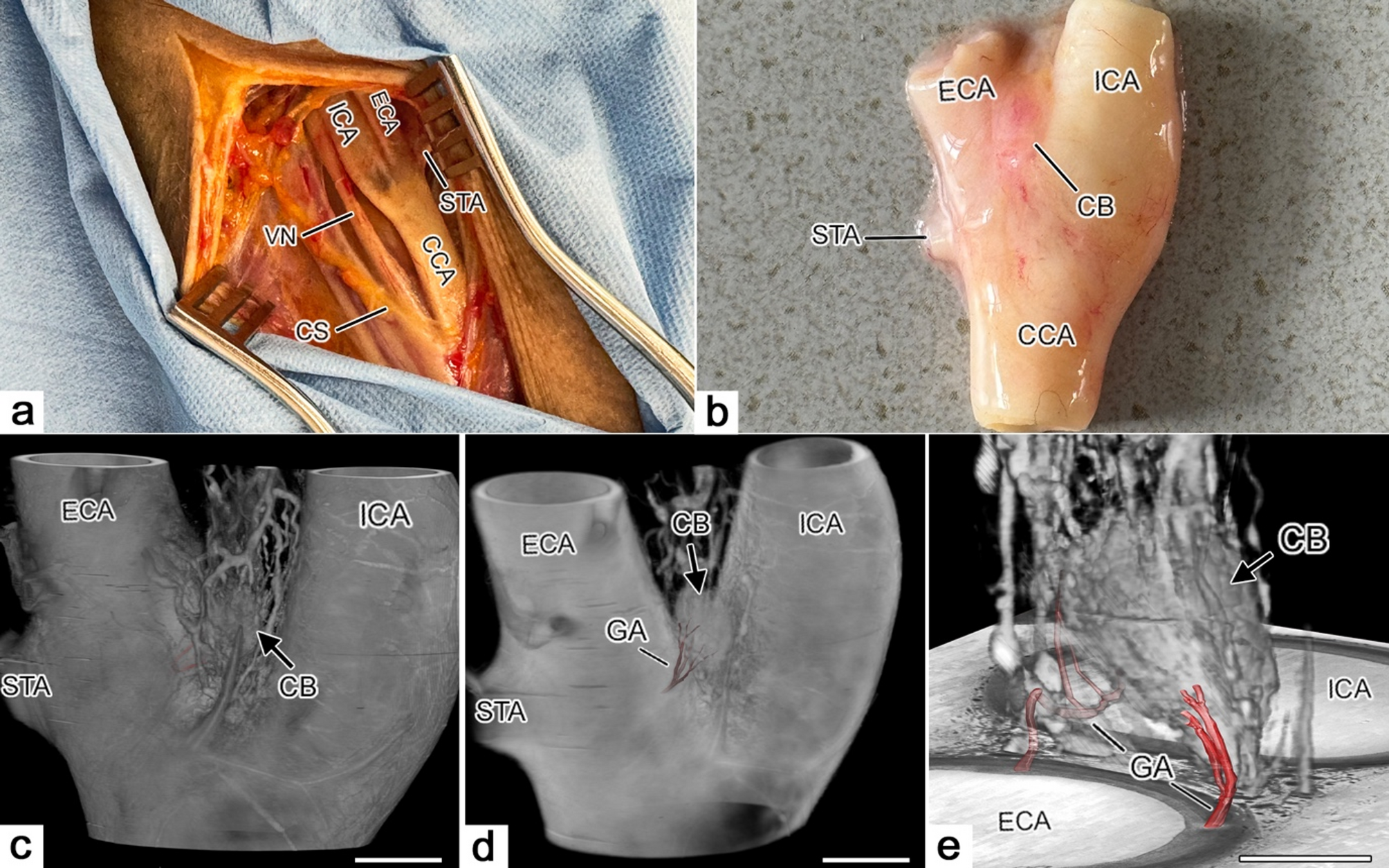
The carotid body (CB) is a highly vascularized chemosensory organ located near the bifurcation of the common carotid artery. Despite its clinical importance—in surgeries, tumor development, and cardiorespiratory regulation—there was a lack of detailed, large-scale 3D anatomical data on its arterial blood supply. The study aimed to fill this gap using high-resolution 3D imaging techniques to better understand the vascular architecture of the CB and its variability.
Challenges
* Complex and variable anatomy: The glomic arteries (GAs) supplying the CB have diverse origins and patterns, making them difficult to classify.
* Technical demands: Achieving high-resolution imaging and 3D reconstruction from human cadaveric samples required advanced techniques such as High-Resolution Episcopic Microscopy (HREM) and Amira®-based 3D rendering.
* Manual segmentation and vessel tracing were time-consuming and required expert anatomical validation.
Key Findings
1. Location of the CB relative to the carotid bifurcation:
* 66.7% were posterior to the bifurcation
* 25.8% above it
* 7.5% anterior to it
2. Number of Glomic Arteries (GAs):
* Up to five arteries per CB
* In 25% of cases, only one GA was present
* In 54% of cases, two GAs were found
3. Origin of GAs:
* In 60% of cases, at least one GA originated from the external carotid artery (ECA)
* In 85% of cases with multiple GAs, at least one arose from the ECA
4. Vascular parameters:
* Mean length of GAs: 2.36 mm
* Mean tortuosity (vessel curvature): 1.56
* Gender and side differences: Longer vessels were found in males and on the left side
The Bigger Picture
* Clinical relevance: Understanding the detailed vascular anatomy of the CB helps improve surgical safety, especially in carotid body tumor resections.
* Physiological insight: Vascular variation could influence chemosensory function (e.g., in oxygen sensing or blood pressure regulation).
* Research implications: The data provide a foundation for studying CB-related pathologies such as hypertension, sleep apnea, and atherosclerosis.
Limitations
* The study was conducted on cadaveric specimens; hence, no functional (hemodynamic) data were available.
* The imaging provided only static 3D anatomy, not dynamic vascular function.
* Although large for an anatomical study (120 CBs from 60 donors), the sample may not fully represent all age groups or pathological conditions.
Future Directions
* Combine static 3D imaging with functional imaging (e.g., Doppler ultrasound, contrast-enhanced CT/MRI).
* Investigate CB blood supply in atherosclerosis, CB tumors, or hypertension patients.
* Extend anatomical mapping to diverse populations and age groups.
Final Thought
This study provides the first comprehensive 3D mapping of the human carotid body’s arterial supply. The findings significantly advance our anatomical understanding, offer insights for clinical interventions, and open new research avenues in cardiovascular and respiratory physiology. The work sets a new benchmark for future anatomical and clinical studies of the carotid body.

Follow the Topic
-
Scientific Reports
An open access journal publishing original research from across all areas of the natural sciences, psychology, medicine and engineering.

Related Collections
With Collections, you can get published faster and increase your visibility.
Healthy Aging
Publishing Model: Open Access
Deadline: Dec 31, 2026
Health Policy and Systems Research
Publishing Model: Hybrid
Deadline: Jul 14, 2026


Please sign in or register for FREE
If you are a registered user on Research Communities by Springer Nature, please sign in