Blowin’ the wind: how many modules must exist to lose energy?
Published in Earth & Environment, Electrical & Electronic Engineering, and Physics
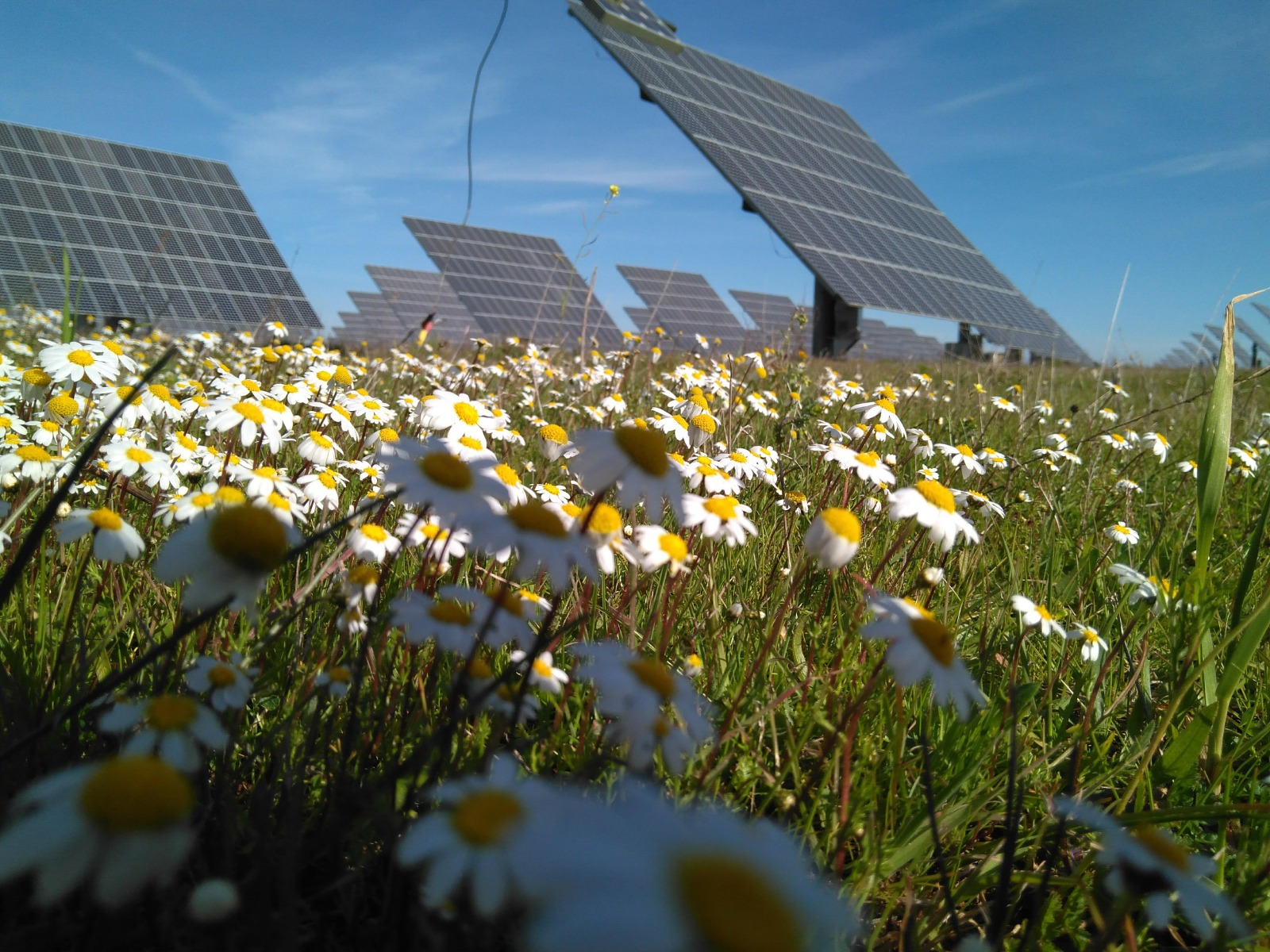



Imagine this scenario: you have a substantial dataset collected over years of PhD research. You publish a paper outlining the long-term phenomena observed in your data and, as is customary in scientific research, you answer some questions while raising new ones. As you delve deeper into the subject, drawing on your existing knowledge and the latest research, you discover something unexpected. Your initial hypotheses, or even the dataset itself, begin to seem questionable. However, on revisiting your notes, data, and theoretical framework, you embark on a cyclical process of exploration, going back over your notes, your theory and your data, then your notes again, refining your understanding and gradually unravelling the puzzle.
The case described here was the starting point for the paper recently published in Nature Communications Engineering, "Energy losses in photovoltaic generators due to wind patterns" (https://www.nature.com/articles/s44172-023-00119-7). In an earlier publication, my colleagues and I had identified a medium-term, year-by-year variation in mismatch losses, evaluated on a monthly basis. At the time, we had no satisfactory explanation for it. Suspecting a link to wind patterns, I began analysing local wind measurements and their corresponding temperature variations. Given the well-established influence of wind on standalone PV/PVT systems, I believed a numerical assessment was necessary to quantify its real impact on energy losses in a large photovoltaic generator. Observing this effect for the first time in a larger system, the key was to determine numerically how much increased wind speed would benefit energy production, as the extensive literature on the advantages of PV cooling led me to expect. Surprisingly, my results showed an increase in energy losses with rising wind speed, as assessed through the experimental analysis of mismatch losses between photovoltaic modules. At first, such an outcome might lead one to suspect a data error. So it was time to revisit the theoretical underpinnings of our analysis. Again.
The temperature differences induced by the wind
First, we can picture the photovoltaic generator as a flat plate exposed to a fluid, in this case wind. Imagine that wind flowing parallel to the generator, transitioning from laminar to turbulent flow. In the initial laminar stage, heat transfer is high, but it decreases quickly up to the transition zone, where turbulence begins to develop. As the turbulent boundary layer thickens, heat transfer from the panels to the air decreases, so temperatures tend to be higher where turbulence is more developed. This generates temperature differences within the generator, with larger differences at higher wind speeds and lower or even negligible differences when the wind is weak or absent.
Two observations are noteworthy:
- Temperature differences increase in proportion to in-plane irradiance: photovoltaic panels are more sensitive to wind incidence, and therefore to temperature differences, at higher irradiance values.
- The temperature distribution remains consistent even when the photovoltaic generator is not producing electricity. This reinforces the notion that the thermal behaviour within photovoltaic generators is governed primarily by the properties of fluid mechanics rather than by the Joule effect. It also suggests that wind-induced losses occur in all types of photovoltaic generators, regardless of the underlying technology.
One might argue that this is an idealised scenario, since a real generator is exposed to natural, inherently turbulent wind. Yet the observations show that the temperature distributions behave just as the ideal case predicts, and are accurately explained by the same reasoning. These considerations could potentially simplify large-scale analysis, for instance for a photovoltaic plant exposed to regional wind patterns. Moreover, the same behaviour holds even when the wind reaches the generator diagonally, from either the front or the rear.
What about the benefits of PV cooling?
Having established the relationship between temperature and wind incidence, the next step is to examine how mismatch losses behave in similar conditions. Contrary to the expectation of greater energy yield at higher wind speeds, mismatch losses actually increase as wind speed rises; conversely, they are lower when the wind is weak or absent.
While many scientific publications have highlighted the potential benefits of wind for cooling photovoltaic panels, this is only partially correct. The results indicate that temperatures can vary significantly even between adjacent modules, especially for modules positioned at the start of the airflow, because of the rapid drop in heat transfer before the regime transition. This raises a question: how many modules need to differ before these differences add up to a loss? Perhaps just a few, maybe even two.
A similar pattern in mismatch losses repeats over the annual cycle. The highest values appear during the warmest months in this region, when a thermal low over the Iberian Peninsula drives southerly and southwesterly winds. For this particular south-facing generator, winds from those directions are responsible for the higher mismatch losses.
As we can see, for larger photovoltaic generators the story is somewhat different.
Does this mean that the energy yield estimations were wrong?
No, absolutely not. The key point is that local wind patterns, so often overlooked, must be considered for accurate energy estimation throughout the lifespan of a photovoltaic power plant, even if the losses involved are relatively small. As photovoltaic module manufacturing technology advances, the differences between modules tend to shrink further. This makes every remaining source of mismatch, wind included, weigh more heavily, so every detail matters in reducing the uncertainties of energy yield estimations.
While many studies have explored the potential benefits of harnessing wind, even in large installations, these results point in a different direction. The impact of wind on energy production from large photovoltaic power plants remains uncertain. It is possible that wind, by inducing thermal variations within the generator, could accelerate module ageing. And the wind patterns of a given site may themselves need to be factored in throughout the plant's lifespan, since they can shift across decades due to global climate change.
There are still unanswered questions, and some may take time to resolve. The answer is blowin' the wind.

Physicist, PhD in Photovoltaic Systems. My research addresses energy losses and their long-term climatic drivers , in particular wind-induced thermal effects, soiling dynamics, and the response of solar infrastructure to changing climate conditions.
Follow the Topic
-
Communications Engineering
A selective open access journal from Nature Portfolio publishing high-quality research, reviews and commentary in all areas of engineering.

Related Collections
With Collections, you can get published faster and increase your visibility.
Generative AI for mechanical engineering design and optimization
Publishing Model: Open Access
Deadline: Dec 31, 2026
Industry Showcase 2026: Solutions for Sustainability
Publishing Model: Open Access
Deadline: Oct 28, 2026