Building Sustainable Cities in the Metaverse: A Geospatial Revolution in Urban Planning
Published in Social Sciences and Earth & Environment
Explore the Research
Failed
Failed to retrieve the data.
Introduction: Urban Challenges Meet Digital Innovation
Cities face unprecedented pressures rapid urbanization, climate threats, and infrastructure demands that outpace traditional planning tools. In our recent study published in Sustainable Futures, we propose a transformative solution: leveraging the metaverse to simulate, optimize, and democratize urban planning. By merging geospatial analytics, AI-driven digital twins, and participatory virtual environments, cities can become more resilient, sustainable, and inclusive.
The Geospatial-Metaverse Framework: Key Innovations
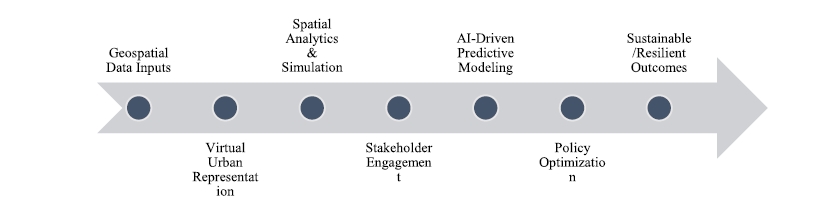
Our tripartite framework bridges critical gaps in current urban planning:
-
Virtual Urban Simulations
-
Digital twins enable real-time testing of infrastructure designs, traffic flows, and disaster responses (e.g., flood simulations in Jakarta reduced evacuation times by 34%).
-
Impact: Pre-empt environmental risks and optimize resource use before breaking ground.
-
-
Inclusive Stakeholder Engagement
-
Citizens interact with 3D urban models via VR/AR, providing instant feedback (e.g., Helsinki’s metaverse zoning integrated 18,000+ citizen inputs via NFT voting).
-
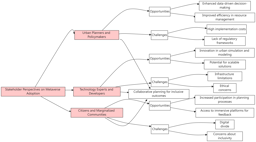
Caveat: Address digital divides low-income groups and seniors need simplified interfaces (AR adaptations) to ensure equity.
-
-
AI-Powered Predictive Analytics
-
Machine learning algorithms forecast urban growth, housing demand, and climate impacts with 92.7% accuracy (using IoT, blockchain-verified data).
-
Challenge: Mitigate data biases through federated learning protocols.
-
Why This Matters for Sustainable Cities
-
Resilience → Model climate disasters (floods, heatwaves) and test adaptive infrastructure.
-
Efficiency → Optimize land use, energy, and transport via real-time geospatial data.
-
Democracy → Turn passive citizens into active co-designers of their urban future.
"The metaverse isn’t just a virtual playground it’s a policy lab for sustainable cities."
Overcoming Barriers: Our Call to Action
While promising, scaling metaverse planning requires:
🔹 Interdisciplinary Collaboration → Urban planners, data scientists, and ethicists must co-develop tools.
🔹 Digital Equity Policies → Invest in connectivity and literacy programs to prevent exclusion.
🔹 Standardized Data Protocols → Ensure interoperability between IoT, GIS, and metaverse platforms.
Looking Ahead: From Theory to Practice
Our framework is a starting point. Next steps include:
-
Piloting large-scale deployments in smart districts.
-
Exploring blockchain for decentralized governance.
-
Quantifying impacts of digital exclusion in virtual planning.
Conclusion
The metaverse transcends tech hype it offers a tangible pathway to build cities that are adaptive, sustainable, and shaped by their communities. As urban challenges grow in complexity, geospatial-metaverse tools will empower planners to turn uncertainty into opportunity.
Read the full study:
Ziari, K., & Dorostkar, E. (2025). The role of metaverse in urban planning: A geospatial framework for simulating sustainable and resilient cities. Sustainable Futures, 10, 100859. https://doi.org/10.1016/j.sfrr.2025.100859
Engage with us:
How could your city benefit from metaverse-enabled planning? Share your insights below!