Call for papers and Q&A: Star formation and evolution
Published in Astronomy and Social Sciences

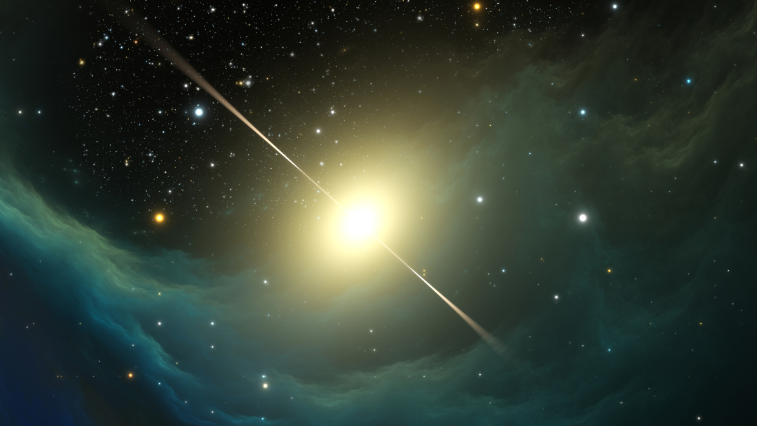


Collection Overview
Scientific Reports has launched a Guest-Edited Collection on Star formation and evolution.
The formation and evolution of stars are fundamental processes that shape the universe, influencing the structure and dynamics of galaxies as well as the creation of elements; such processes are also essential in our understanding of planetary systems (e.g. the Sun has shaped and will continue to shape our solar system). Recent advancements in astronomical instrumentation and data analysis have provided unprecedented insights into the formation, life, and death of stars, from the initial collapse of molecular clouds to the explosive endpoints of supernovae and the formation of compact stellar remnants like neutron stars and black holes. The study of nuclear fusion events – which are the sources of energy in stars – has been also the focus of research in the scientific community.
This will be a Collection of original research papers and will be open for submissions from all authors – on the condition that the manuscripts fall within the scope of the Collection and of Scientific Reports more generally. We are welcoming submissions until 1st July 2026.
Q&A with Dr. Archana Soam
1. Why do you feel this topic is relevant and important to the field or wider world?
Understanding star formation of different masses is crucial to investigate. How the planetary systems like our own solar system are made, is an important aspect of this area. To really know the rates of start formation in our Galaxy and in others, we need to understand this process on individual level.
2. Why are you excited about this Collection?
It will be exciting to see the community working [observationally and theoretically] in this area progressing in understanding the process of star formation.
3. What do you think the impact of this Collection could be for the field?
It is definitely going to have a great impact. This topic generally lacks in various other fronts and we miss details of the ongoing efforts in this direction.
4. In your view, why should a researcher submit to this Collection in particular?
Most of the time, this topic is merged with the other topics of the ISM because of which the visibility of articles particularly on this topic is low. Therefore, a separate Collection on this topic itself will provide proper visibility to those articles.
Why submit to a Collection?
Collections like this one help promote high-quality science. They are led by Guest Editors, who are experts in their fields, and In-House Editors and are supported by a dedicated team of Commissioning Editors and Managing Editors at Springer Nature. Collection manuscripts typically see higher citations, downloads, and Altmetric scores, and provide a one-stop-shop on a cutting-edge topic of interest.
Who is involved?
Guest Editors:
- Shanghuo Li, Nanjing University, China
- Keping Qiu, Nanjing University, China
- Archana Soam, Indian Institute of Astrophysics, India
Internal Team:
- In-House Editor: Silvia Butera, Scientific Reports, Germany
- Commissioning Editor: Robert Moran, Fully OA Brands, Springer Nature, UK
- Managing Editor: Rebecca Chan, Fully OA Brands, Springer Nature, UK
How can I submit my paper?
Visit the Collection page to find out more about this Collection and how to submit your article.
Follow the Topic
-
Scientific Reports
An open access journal publishing original research from across all areas of the natural sciences, psychology, medicine and engineering.
-
A Collection of original research articles on the mechanisms driving star formation, the lifecycle of various stellar types, and the complex interactions between stars and their environments.

Related Collections
With Collections, you can get published faster and increase your visibility.
Phytochemicals and health
Publishing Model: Open Access
Deadline: Oct 28, 2026
AI in clinical decision-making
Publishing Model: Open Access
Deadline: Feb 28, 2027