Call for papers: Coral Biology Under Climate Stress
Published in Ecology & Evolution



What is this collection about?
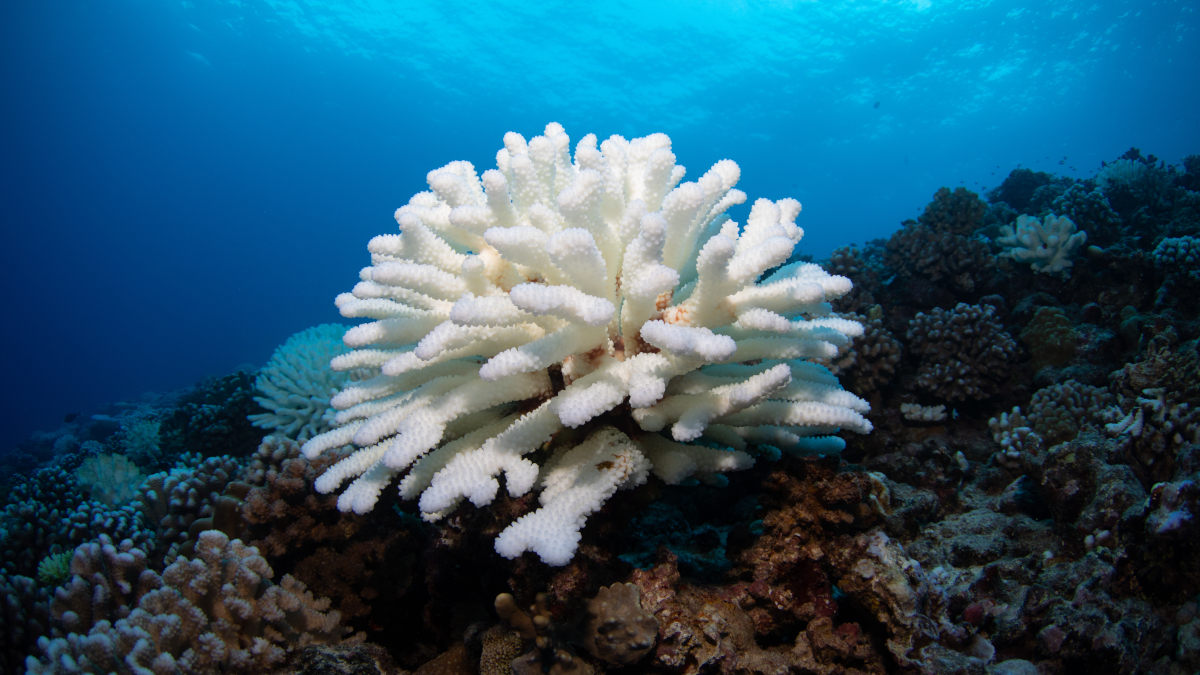
Coral reefs are undergoing rapid transformation as rising temperatures, ocean acidification, deoxygenation, and other climate driven stressors challenge the biological foundations of reef ecosystems. Understanding the mechanisms that shape coral resilience—including thermal tolerance, microbial interactions, nutrient cycling, genetic connectivity, early life physiology, and responses to interacting stressors—is essential for predicting coral responses and informing effective conservation strategies.
With this cross-journal Collection, the editors at Communications Biology, Nature Ecology & Evolution and Nature Communications invite manuscripts that advance the scientific understanding of coral stress responses and climate resilience across molecular, physiological, ecological, and restoration focused dimensions. Topics of interest include coral microbiomes and symbioses, environmental stress thresholds, population and genetic dynamics, and innovative restoration methodologies. Interdisciplinary and multiscale studies that consider multiple stressors to support future reef management and conservation are particularly encouraged. Submissions are encouraged by 27 January 2027.
Why is this collection important?
Coral reefs are undergoing rapid transformation as rising temperatures, ocean acidification, deoxygenation, and other climate driven stressors increasingly challenge the biological foundations of reef ecosystems. This Collection is important because it focuses on understanding the mechanisms that shape coral resilience, including thermal tolerance, microbial interactions, nutrient cycling, genetic connectivity, early life physiology, and responses to interacting stressors. By advancing scientific understanding across molecular, physiological, ecological, and restoration focused dimensions, the Collection supports efforts to better predict coral responses and inform effective conservation strategies.
This Collection supports SDG 13 (Climate Action) by addressing coral stress responses and climate resilience in the face of rising temperatures and other climate driven stressors, and contributes to SDG 14 (Life Below Water) by advancing understanding of reef ecosystems, coral microbiomes and symbioses, environmental stress thresholds, and restoration focused methodologies that support future reef management and conservation.
Why submit to a collection?
Collections like this one help attract and promote high-quality science. They are led by internal In-House Editors and supported by a dedicated team of Commissioning Editors and Managing Editors at Springer Nature. Collection manuscripts typically see higher citations, downloads, and Altmetric scores, and provide a one-stop-shop on a cutting-edge topic of interest.
Who is involved?
Communications Biology is edited by both in-house professional editors and Editorial Board Members.
Guest Editors for Communications Biology
Mark McCauley, PhD, United States Geological Survey, the United States
Dr. Mark McCauley is a Research Biologist at the United States Geological Survey. After completing his B.Sc in Marine Biology (University of St. Andrews, Scotland) and his Ph.D. in Biology (University of Mississippi, USA), he completed his post-doctoral trainings in microbiology and chemical sciences (University of Florida, USA). His current position primarily focuses on coral restoration (shallow, mesophotic, and deep-sea species), cnidarian microbiomes, as well as investigating the ecology of environmental DNA. Part of this research includes leading a global team of researchers to complete a ‘genetic map’ of the ocean, synthesizing 25 years of microbial and eDNA sequences.
Verena Schoepf, PhD, University of Amsterdam, Netherlands
Dr. Verena Schoepf is an Associate Professor at the University of Amsterdam. Her research expertise is coral reefs and climate change, with special focus on understanding how multiple stressors (ocean warming, acidification and deoxygenation) impact coral physiology and stress resilience, and which mechanisms and traits promote coral adaptive capacity in a future ocean.
Nature Ecology & Evolution is edited by in-house professional editors.
Nature Communications is edited by in-house professional editors.
Our editors work closely together to ensure the quality of our published papers and consistency in author experience.
How can I submit my paper?
Visit the Collection page to find out more about this collection and submit your article.

Follow the Topic
-
Communications Biology
An open access journal from Nature Portfolio publishing high-quality research, reviews and commentary in all areas of the biological sciences, representing significant advances and bringing new biological insight to a specialized area of research.
-
Nature Communications
An open access, multidisciplinary journal dedicated to publishing high-quality research in all areas of the biological, health, physical, chemical and Earth sciences.
-
Nature Ecology & Evolution
This journal is interested in the full spectrum of ecological and evolutionary biology, encompassing approaches at the molecular, organismal, population, community and ecosystem levels, as well as relevant parts of the social sciences.



Related Collections
With Collections, you can get published faster and increase your visibility.
Women's Health
Publishing Model: Hybrid
Deadline: Ongoing
Biosensing
Publishing Model: Hybrid
Deadline: Sep 30, 2026