Call for papers: Technological advances in fisheries Collection
Published in Earth & Environment


Collection Overview
Scientific Reports has launched a Guest-Edited Collection on Technological advances in fisheries.
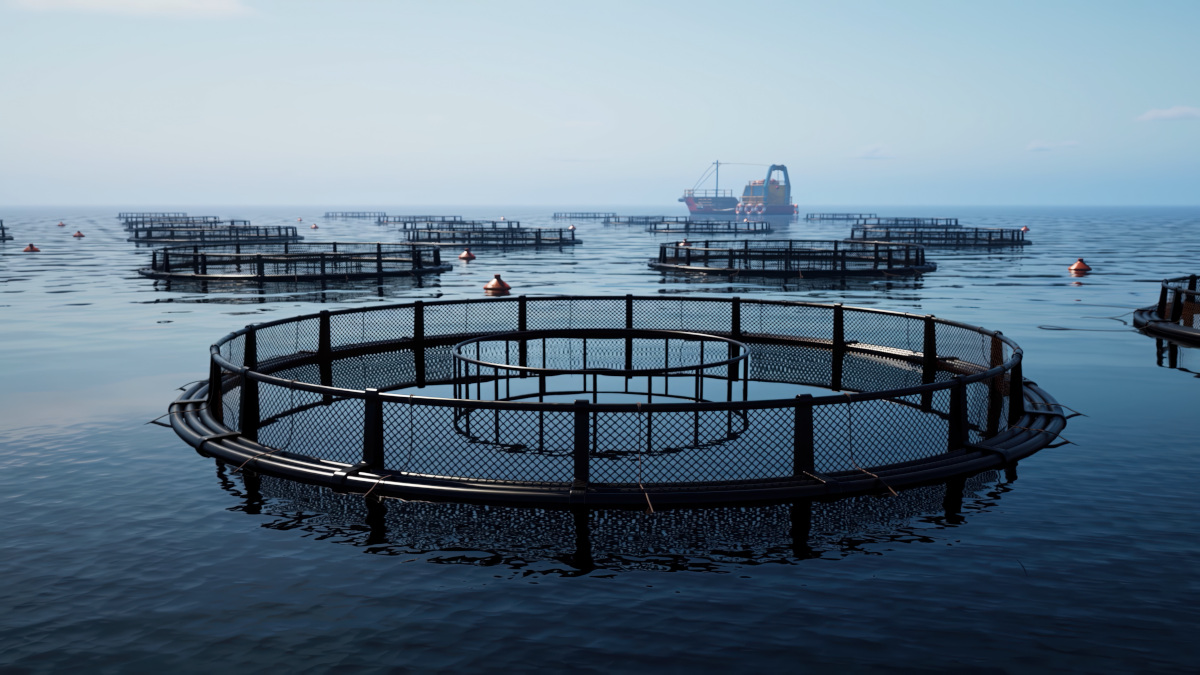
The fishery industry is vital to ensure global food security and sustainability of coastal communities across the world. However, its high environmental footprint still represents one of the major threats to aquatic ecosystems and biodiversity. Together with the growing demand for fish and unsustainable fishing practices, the negative impact of the industry also imposes major challenges to its own sustainability and survival of affected populations. Innovative technology can be valuable to maintain a high yield in the sector, while simultaneously increasing selectivity and reducing chemical and acoustic pollution or physical damage to the ecosystems. In addition, technologies, such as tracking tags, drones, or sonars, can open doors to the continuous collection of comprehensive datasets on water quality, species distribution, or environmental conditions, which are valuable to develop evidence-based sustainable solutions.
This will be a Collection of original research papers and will be open for submissions from all authors – on the condition that the manuscripts fall within the scope of the Collection and of Scientific Reports more generally. We are welcoming submissions until 25th June 2026.
Why is this Collection important?
"Technological advances are profoundly reshaping fisheries science and management, from acoustic and optical sensing to satellite observations, AI, integrated ecosystem modelling, and in situ data collection. These tools are essential to observe, assess, and sustainably manage marine resources in a context of climate change, increasing exploitation, and persistent data gaps, particularly in the Global South. I am excited about this collection because it links methodological innovation with real-world decision-making, bridging science and policy. Its impact lies in accelerating reproducible, scalable, and inclusive approaches. Researchers are encouraged to submit cutting-edge solutions that strengthen ecosystem-based, climate-resilient fisheries governance worldwide."
- Dr. Patrice Brehmer, Guest Editor
"This research field will be fruitful for researchers and fisheries management programs to collect the information gathered here. Researchers should submit their studies because this is well circulated information, so their work will attract more readers who can benefit from the information."
- Dr. Ajai Kumar Srivastav, Guest Editor
Why submit to a collection?
Collections like this one help promote high-quality science. They are led by Guest Editors, who are experts in their fields, and In-House Editors and are supported by a dedicated team of Commissioning Editors and Managing Editors at Springer Nature. Collection manuscripts typically see higher citations, downloads, and Altmetric scores and provide a one-stop-shop on a cutting-edge topic of interest.
Who is involved?
Guest Editors:
- Bijay Kumar Behera, Ministry of Fisheries, Government of India, India
- Patrice Brehmer, French National Research Institute for Sustainable Development (IRD), Senegal
- Ajai Kumar Srivastav, Deen Dayal Upadhyay Gorakhpur University, India
Internal Team:
- In-House Editor: Githa George, Scientific Reports, India
- Commissioning Editor: Louisa Beckett, Fully OA Brands, Springer Nature, UK
- Managing Editor: Aliya Anwar, Fully OA Brands, Springer Nature, UK
How can I submit my paper?
Visit the Collection page for more information on the Collection, and how to submit your article.
Follow the Topic
-
Scientific Reports
An open access journal publishing original research from across all areas of the natural sciences, psychology, medicine and engineering.
-
A Collection of original research articles on innovative technologies applied to fisheries and aquaculture, contributing to reducing its environmental impact, or improving monitoring and processing.

Related Collections
With Collections, you can get published faster and increase your visibility.
Cancer Prevention and Control
Publishing Model: Hybrid
Deadline: Feb 19, 2027
Healthy Aging
Publishing Model: Open Access
Deadline: Dec 31, 2026