Can a Common Qualifications Framework Help Solve the Raw Materials Skills Gap?
Published in Earth & Environment, Electrical & Electronic Engineering, and Sustainability
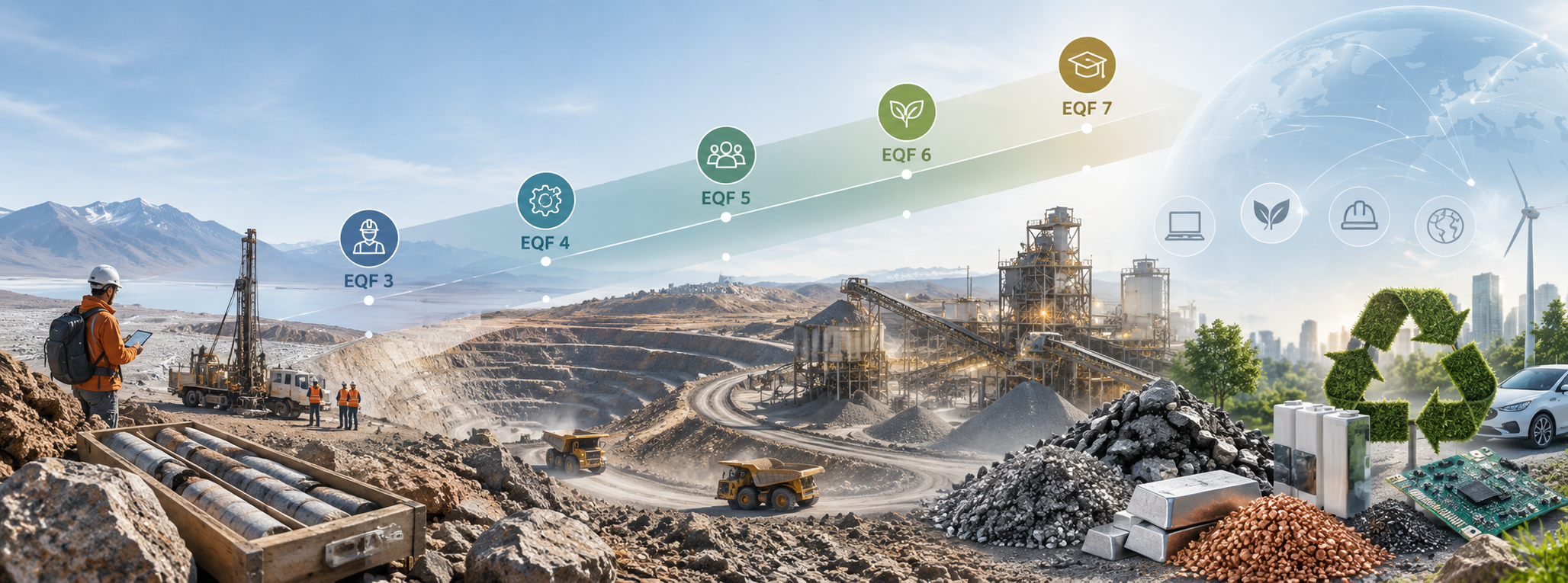



The raw materials sector is undergoing profound change. The energy transition, digitalisation, automation and the circular economy are transforming not only which mineral resources we need, but also the knowledge and skills required from the people who explore, extract, process and recycle them.
At the same time, the sector faces an important challenge: qualifications and educational pathways remain highly fragmented across countries, institutions and disciplines. A geologist, mining engineer, processing specialist or recycling professional may have comparable competences but qualifications that are difficult to compare internationally. This can restrict professional mobility, complicate recruitment and make it harder to anticipate and respond to skills shortages.
In our new paper, “Developing a sectoral qualifications framework for the raw materials sector: Rationale, architecture, and implications for workforce development”, published in Mineral Economics, we propose a Sectoral Qualifications Framework for Raw Materials, or SQF-RM.
https://link.springer.com/article/10.1007/s13563-026-00684-1
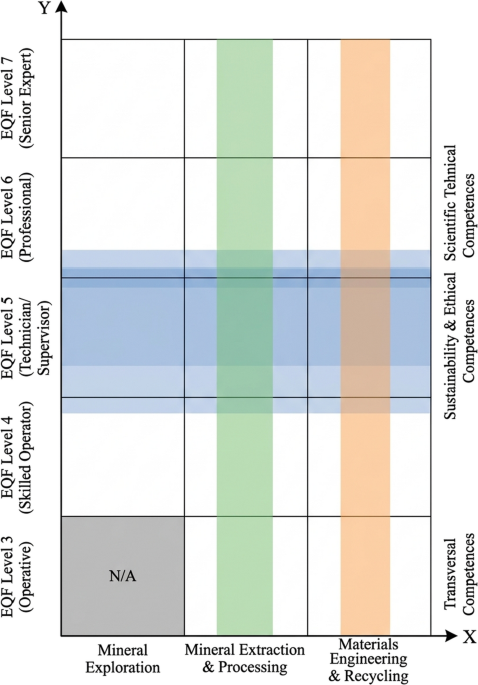
The framework covers five qualification levels, EQF Levels 3 to 7, across three interconnected areas of the mineral value chain:
• Mineral exploration
• Mineral extraction and processing
• Materials engineering and recycling
Rather than comparing qualifications simply by programme duration or institutional labels, the SQF-RM focuses on learning outcomes: what professionals know, what they are able to do, and the level of autonomy and responsibility they can assume.
Three groups of competences run across the framework: scientific and technical competences, sustainability and ethical competences, and transversal competences. Sustainability, digital literacy, safety, communication and professional responsibility are therefore treated as integral elements of professional competence rather than optional additions.
Why does this matter?
A common reference framework could help universities and training organisations compare and redesign curricula, help employers understand qualifications obtained in different countries, support professional bodies in recognition and continuing professional development, and provide policymakers with a clearer basis for workforce planning.
It could also facilitate international mobility. Instead of relying mainly on the name of a degree or the reputation of an institution, qualifications could be compared through transparent learning outcomes and competence levels.
The SQF-RM is not presented as a finished international standard. It is a conceptual framework that now requires empirical validation. The next steps should include consultation with employers, professionals and qualification authorities, mapping the framework against existing educational programmes, and testing it in different national qualification systems.
The objective is therefore not simply to create another classification system. It is to provide a shared language between education, industry, professional organisations and public authorities.
As demand for raw materials grows and technologies evolve rapidly, developing the workforce may become just as strategically important as developing the resources themselves.
How should universities, industry and professional organisations work together to define the skills that the raw materials workforce will need over the next decade?
Follow the Topic
-
Mineral Economics
This is an international, multidisciplinary journal focusing on economics and policy issues in the minerals, metals, mining industries, and its role in society.

What are SDG Topics?
An introduction to Sustainable Development Goals (SDGs) Topics and their role in highlighting sustainable development research.
Continue reading announcement