Cannabinoids Modulate Angiotensin II-Induced Calcium Signaling in Striatal Neurons: Implications for Parkinson's Disease
Published in Neuroscience
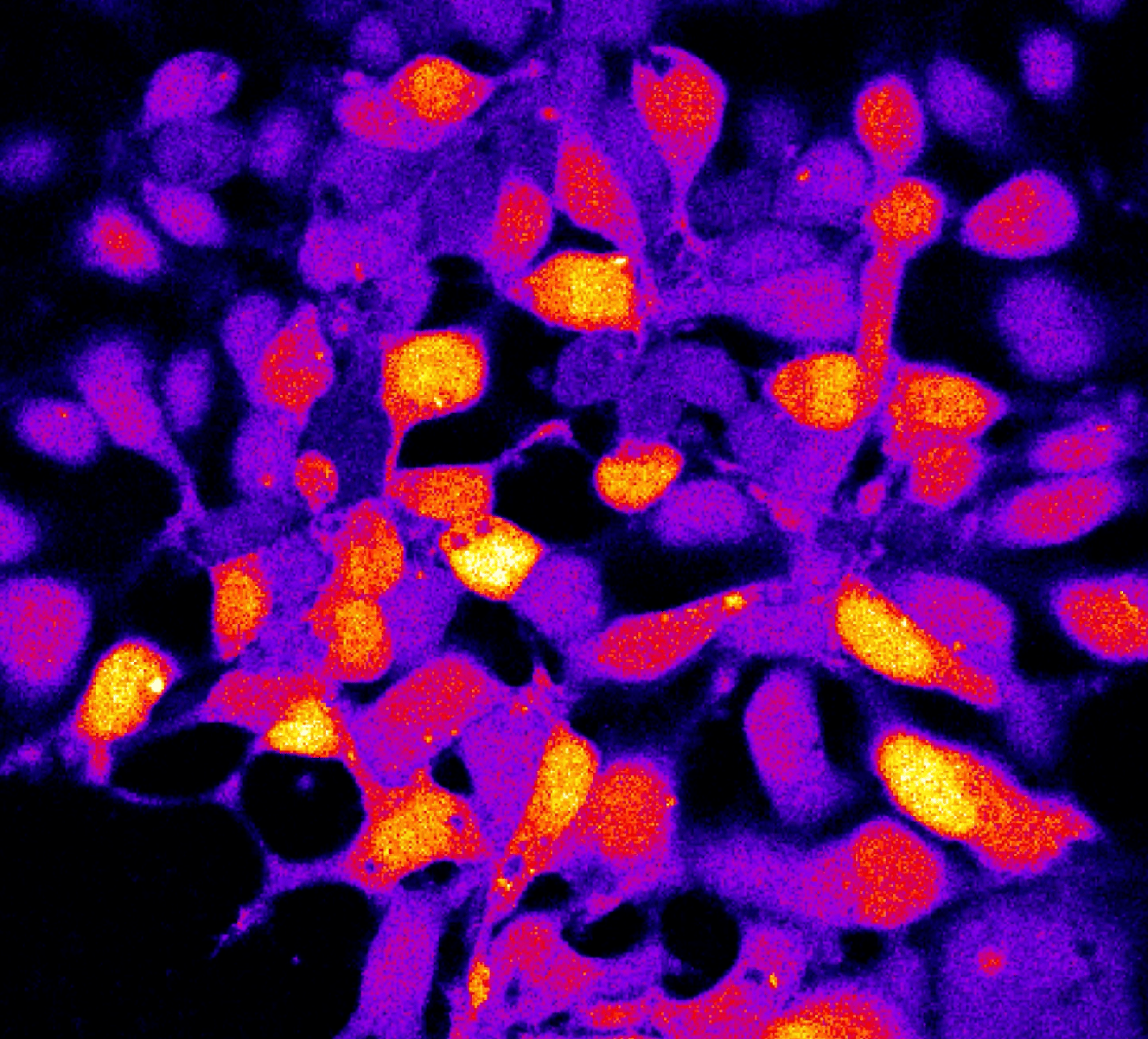



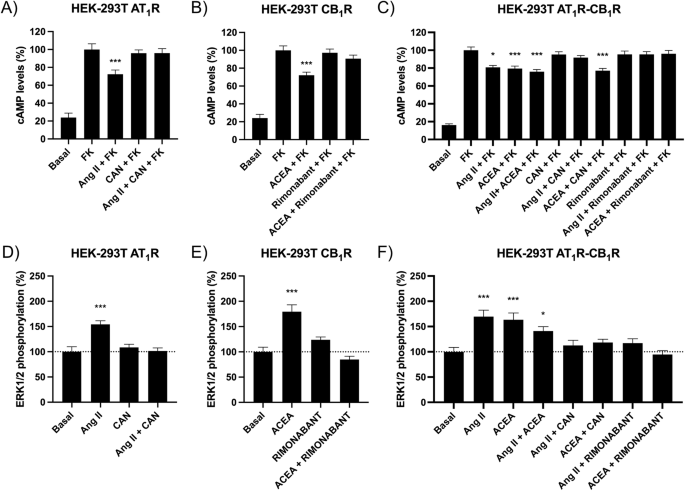

In “Cannabinoid regulation of angiotensin II-induced calcium signaling in striatal neurons” we investigated the functional interactions between AT1 and CB1 receptors in the striatum, a brain region critical for motor control and dramaticallyaffected by Parkinson's Disease (PD).
First, using bioluminescence resonance energy transfer (BRET) assays, we demonstrated that AT1R and CB1R form heterodimers (AT1CB1Hets) in HEK-293T co-transfected cells. These findings were supported by in situ proximity ligation assays (PLA) that confirmed the natural formation of AT1CB1Hets in striatal neurons.
Next, we examined the AT1CB1Hets functionality. Through cAMP determination assays in HEK-293T co-transfected cells and striatal neurons, we discovered a "cross-antagonism" effect: blocking one receptor with its specific antagonist also prevented the agonist of the other receptor from working.
We also investigated calcium signaling, as activation of AT1Rs leads to an increase in intracellular Ca2+ levels. Our results showed that this AT1R-mediated increase in Ca2+ was significantly reduced by the activation of CB1Rs with a selective cannabinoid. These results indicate the potential of cannabinoids in regulating calcium homeostasis.
Interestingly, analysis of a 6-hydroxydopamine (6-OHDA) hemilesioned rat model of PD shown a lower expression of AT1CB1Hets in striatal neurons of lesioned animals compared to non-lesioned controls. In fact, AT1CB1Hets expression change depending on the presence and effects of levodopa administration, with partial recovery in animals that developed dyskinesias. These data suggest a compensatory mechanism in response to dyskinesias involving the AT1CB1Hets.
In conclusion, our findings suggests that cannabinoids may hold promise in mitigating calcium dyshomeostasis associated with PD and levodopa-induced dyskinesias. Future studies should examine AT1CB1Hets in PD pathophysiology and determine their potential as a novel target for pharmacological research.

Follow the Topic
-
npj Parkinson's Disease
This journal publishes original basic science, translational and clinical research related to Parkinson's disease, including anatomy, etiology, genetics, cellular and molecular physiology, neurophysiology, epidemiology and therapeutic development and treatments.

Related Collections
With Collections, you can get published faster and increase your visibility.
Non-motor symptoms in PD and how those are modeled in animals
Publishing Model: Open Access
Deadline: Oct 05, 2026
Proteomics to Transform Parkinson’s Disease: Mechanisms, Biomarkers, and Therapeutic Targets
Publishing Model: Open Access
Deadline: Oct 27, 2026