Comprehensive Life Cycle Analysis of Bioethanol from Molasses: Addressing Energy Use and Uncertainty
Published in Earth & Environment, Sustainability, and Education

Transitioning Toward Sustainable Energy Systems
The accelerating global demand for energy, coupled with mounting environmental concerns, has intensified the need for cleaner and more sustainable energy alternatives. Fossil fuels continue to dominate the global energy mix, accounting for a significant share of greenhouse gas emissions and environmental degradation. This dependence poses serious challenges, particularly for developing economies where energy security and environmental sustainability must be balanced simultaneously.
In this context, biofuels have emerged as a viable pathway to reduce reliance on fossil resources. Among them, bioethanol stands out due to its compatibility with existing fuel infrastructure and its potential to lower net carbon emissions. When derived from agro-industrial byproducts such as molasses, bioethanol also supports waste valorization and circular economy principles, making it an attractive renewable energy option.
Evaluating Bioethanol Through a Systems Perspective
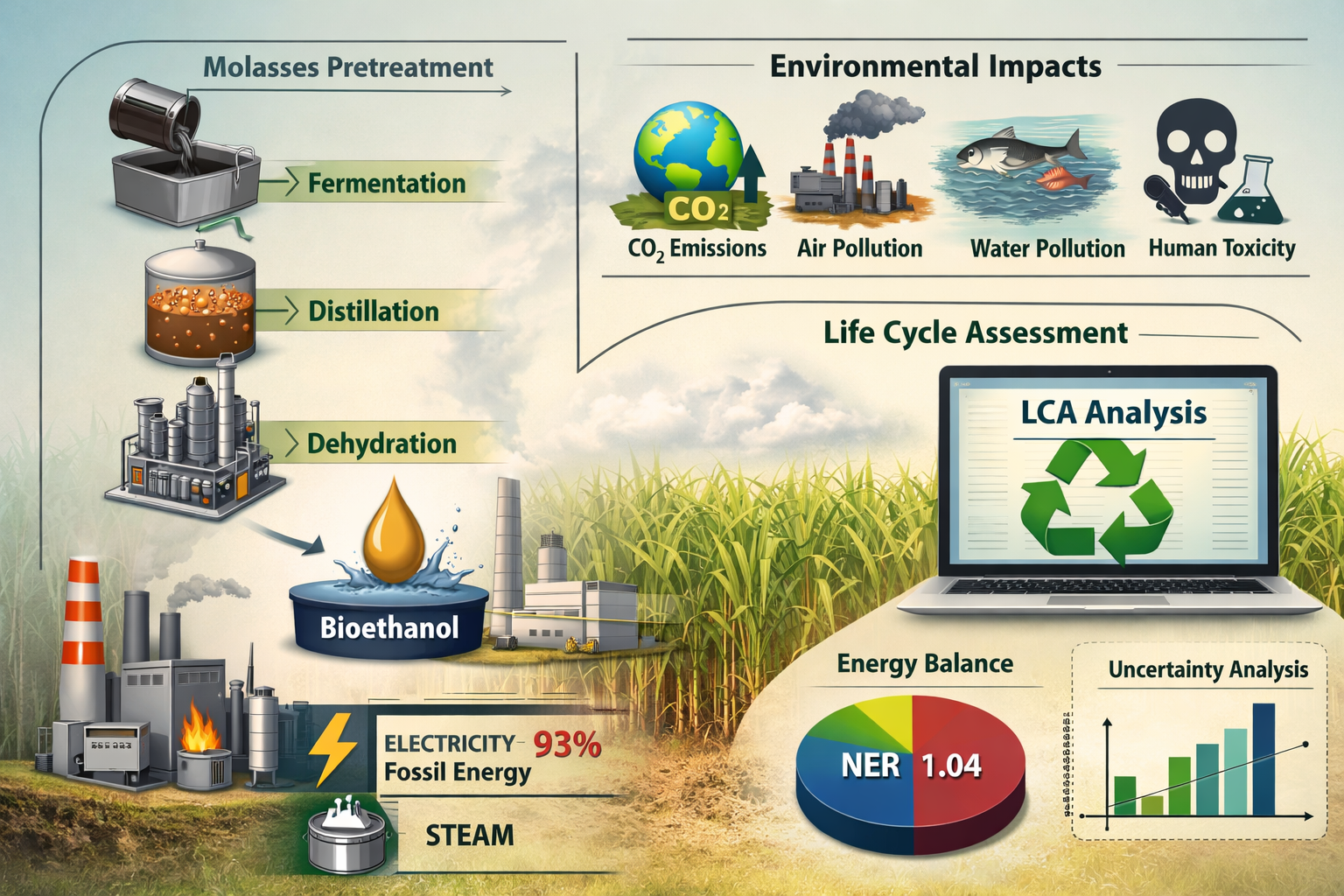
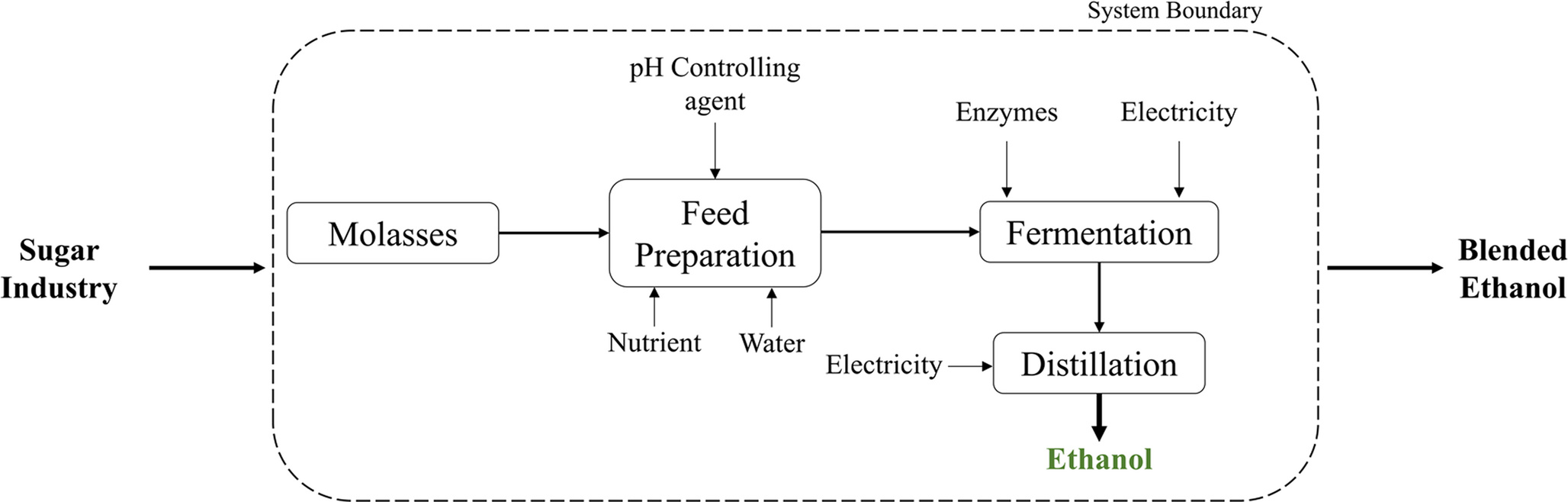
Understanding the true sustainability of bioethanol requires a comprehensive evaluation that goes beyond simple emission comparisons. This study adopts a life cycle approach to assess the environmental and energy implications of producing bioethanol from sugarcane molasses. By focusing on a gate-to-gate system boundary, the analysis captures all major processing stages within the production facility, including preparation, fermentation, distillation, and purification.
The assessment integrates environmental impact analysis with energy demand evaluation and uncertainty quantification. This multi-dimensional approach ensures that both the efficiency and reliability of the system are examined, providing a more robust basis for sustainability evaluation.
Process Dynamics and Resource Inputs
Bioethanol production from molasses involves a sequence of biochemical and thermal processes. Initially, molasses is diluted and conditioned with nutrients to facilitate microbial activity. During fermentation, yeast converts fermentable sugars into ethanol and carbon dioxide. The resulting mixture is then subjected to distillation to separate ethanol, followed by dehydration to achieve fuel-grade purity.
These stages are resource-intensive, requiring substantial inputs of water, chemicals, electricity, and steam. Electricity and thermal energy, in particular, play a dominant role in driving the process, influencing both energy consumption and environmental emissions. As a result, the efficiency of these inputs becomes a critical determinant of overall system performance.
Environmental Performance Across Impact Domains
A detailed life cycle assessment reveals that bioethanol production from molasses generates a range of environmental impacts across multiple categories. Climate-related impacts, especially global warming potential, are primarily driven by electricity consumption and steam generation. Although fermentation contributes to emissions, its share is relatively smaller compared to energy-related sources.
Air quality impacts, including particulate matter formation and acidification, are similarly influenced by upstream energy production. Emissions of sulfur dioxide, nitrogen oxides, and fine particulates are closely linked to electricity generation, highlighting the indirect environmental burden associated with energy use.
Water-related impacts, such as eutrophication, arise from nutrient discharges and chemical usage during processing. These effects underscore the interconnected nature of industrial emissions and ecosystem health, emphasizing the need for integrated environmental management strategies.
Toxicity and Ecological Implications
Beyond conventional impact categories, toxicity-related effects represent a significant concern in bioethanol production. The analysis indicates notable contributions to both ecological and human toxicity, primarily due to trace metal emissions associated with energy generation processes.
Terrestrial and aquatic ecosystems are affected by pollutants such as copper, zinc, and other heavy metals, which can disrupt biological processes and reduce biodiversity. Human health impacts, particularly non-carcinogenic toxicity, are also influenced by these emissions, reflecting the broader implications of industrial energy use.
These findings highlight the importance of addressing not only carbon emissions but also pollutant release pathways when evaluating the sustainability of biofuel systems.
Energy Demand and System Efficiency
The cumulative energy demand analysis provides insight into the total energy required to produce bioethanol. The results indicate that the process is highly energy-intensive, with the majority of energy inputs derived from fossil sources. Electricity and steam account for the largest share of energy consumption, reinforcing their role as key drivers of both environmental and energy performance.
Despite this high energy demand, the system demonstrates a slightly positive energy balance. The energy output in the form of bioethanol marginally exceeds the total energy input, indicating limited but meaningful energy gains. This suggests that while the process is technically viable, its sustainability is constrained by the nature and efficiency of its energy inputs.
Reliability of Results Under Uncertainty
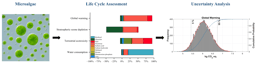
To ensure the robustness of the findings, uncertainty analysis was conducted using stochastic simulation techniques. The results show relatively low variability across most environmental impact categories, indicating a high level of confidence in the model outcomes.
However, certain impact categories, particularly those related to toxicity and radiation, exhibit higher variability. This suggests that these areas are more sensitive to changes in input parameters and assumptions. Identifying such uncertainties is essential for improving model accuracy and guiding future research efforts.
Key Drivers of Sustainability
A central outcome of the analysis is the identification of electricity and steam as the dominant contributors to environmental impacts and energy consumption. These inputs influence nearly all impact categories, from climate change to toxicity, making them critical leverage points for improving system performance.
The reliance on fossil-based energy sources significantly limits the environmental benefits of bioethanol. Therefore, transitioning to cleaner energy sources and improving process efficiency are essential steps toward enhancing sustainability.
Pathways for Process Optimization
Several strategies can be adopted to improve the environmental and energy performance of molasses-based bioethanol production. Integrating renewable energy sources, such as solar or wind power, can reduce dependence on fossil fuels and lower emissions. Similarly, optimizing steam generation through waste heat recovery can enhance thermal efficiency.
Advancements in process technology, including improved fermentation techniques and more efficient separation methods, can further reduce resource consumption. Additionally, adopting cleaner production practices for auxiliary inputs, such as enzymes and chemicals, can minimize indirect environmental impacts.
Implications for Sustainable Energy Development
The findings of this study contribute to a broader understanding of the role of bioethanol in sustainable energy systems. While molasses-based bioethanol offers clear advantages in terms of resource utilization and emission reduction, its overall performance is closely tied to energy inputs and process efficiency.
From a policy perspective, the results highlight the need for integrated approaches that combine technological innovation with supportive regulatory frameworks. Encouraging the use of renewable energy in industrial processes and promoting efficiency improvements can significantly enhance the sustainability of biofuel production.
Concluding Perspective
Bioethanol derived from molasses represents a promising renewable fuel option with the potential to reduce fossil fuel dependence and support circular economy practices. However, its environmental and energy performance is strongly influenced by upstream energy use and process efficiency.
The study demonstrates that while the system achieves a marginally positive energy balance, substantial improvements are required to fully realize its sustainability potential. By addressing key hotspots such as electricity and steam consumption, and by incorporating renewable energy solutions, bioethanol production can become a more robust and environmentally sound alternative in the transition toward low-carbon energy systems.

Working on Life cycle assessment (LCA), sustainability, circular economy of biofuels, wastewater management, solid waste management.
Follow the Topic
-
BioEnergy Research
BioEnergy Research is a comprehensive journal that focuses on feedstock biology research related to biomass, and its conversion into biofuels, bioenergy, biochemicals, and biomaterials.

What are SDG Topics?
An introduction to Sustainable Development Goals (SDGs) Topics and their role in highlighting sustainable development research.
Continue reading announcementRelated Collections
With Collections, you can get published faster and increase your visibility.
Advances in Algal Biofuels and Bioproducts
This collection focuses on the latest developments and research in the field of algal (micro and macroalgae) biofuels and bioproducts. The articles within this collection provide insights into the current state-of-the-art in algal biofuel and conversion research and offer perspectives on the future direction of this rapidly evolving field in the development of 3rd generation biorefineries.
Publishing Model: Hybrid
Deadline: Ongoing
Advancing the United Nations Sustainable Development Goals (SDG) through biomass and bioenergy research
There are 17 SDGs designed as “a shared blueprint for peace and prosperity for people and the planet, now and into the future” (https://sdgs.un.org/goals). Many of the goals such as Affordable and Clean Energy, Sustainable Cities and Communities, Climate Action, or Life on Land are aligned with articles published in BioEnergy Research. The collection of articles below contains recent research, which contribute to a better understanding of how to achieve the SDGs.
Publishing Model: Hybrid
Deadline: Ongoing