Cross-Equatorial Wind Surges Could Bring More Extreme Rainfall to the Maritime Continent in the Near Future
Published in Earth & Environment
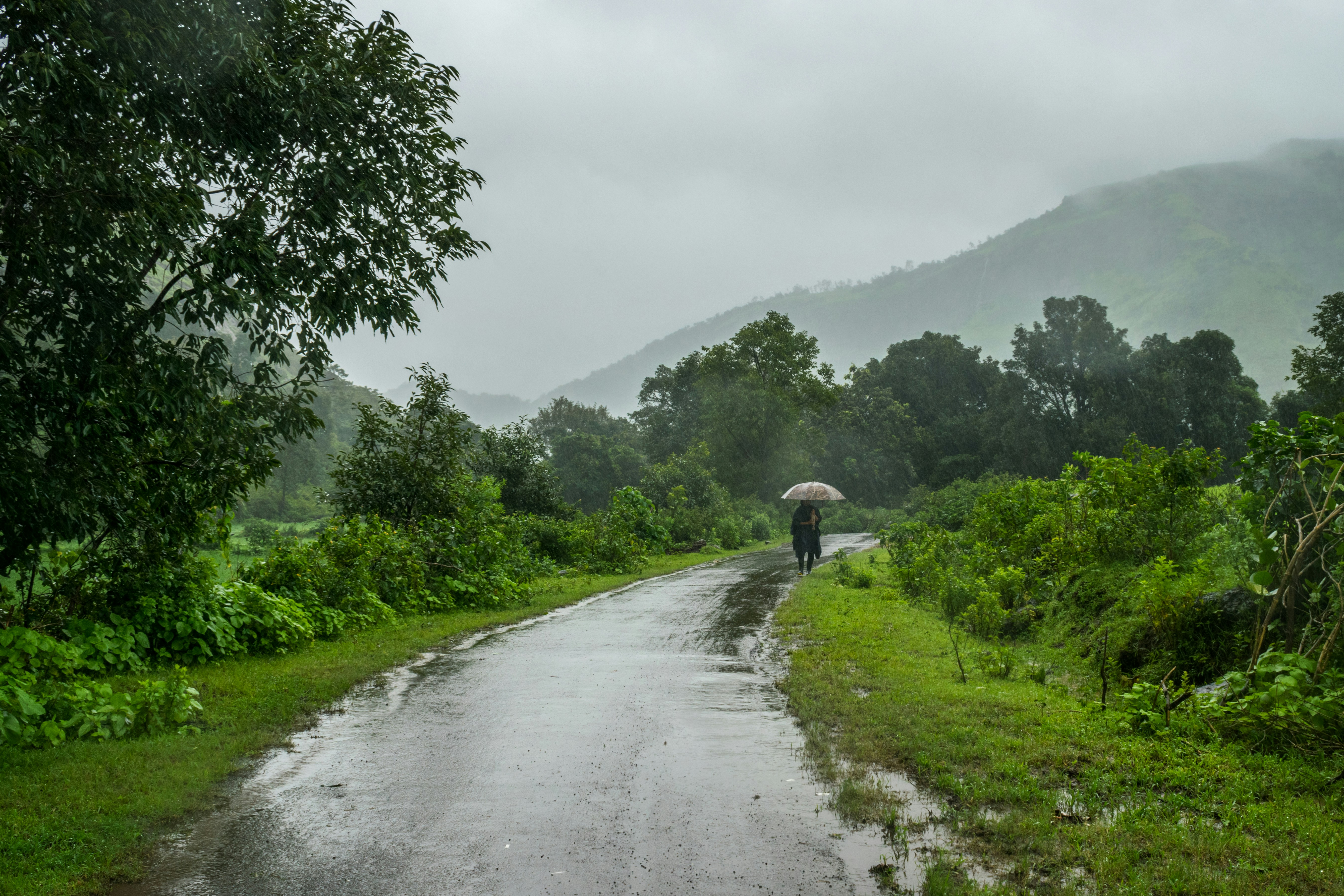
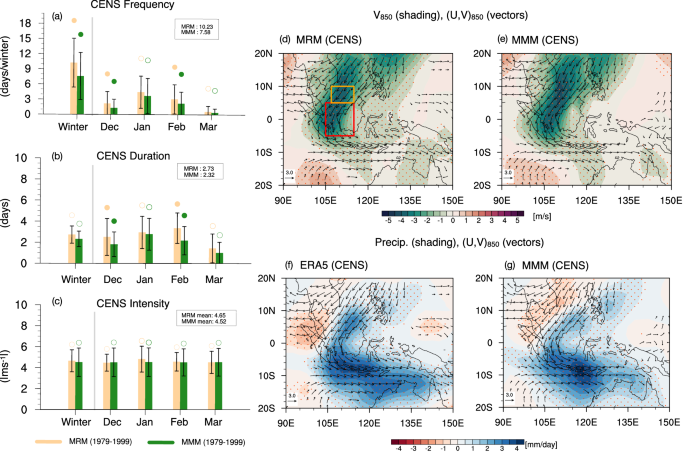

Heavy rainfall and destructive flooding frequently affect some of the most densely populated regions of Southeast Asia during boreal winter. Many of these events occur when strong bursts of low-level northerly monsoon winds cross the equator over the western Maritime Continent. These events, known as cross-equatorial northerly surges, or CENS, transport large amounts of moisture toward southern Indonesia and northwestern Australia, creating favorable conditions for intense rainfall. In this study, researchers used an ensemble of high-resolution Earth system model simulations to investigate how CENS and their hydrological impacts may change in the coming decades. They compared a historical period, 1979–1999, with a near-future period, 2030–2050.
The results reveal a striking contrast: the frequency, intensity, and spatial structure of the wind surges are not projected to change substantially, yet the rainfall they produce could become considerably more severe. During CENS events, the likelihood of daily extreme rainfall is projected to increase by approximately 10% to nearly 40% relative to historical conditions, with the largest increases occurring along the coastal regions of southern Indonesia and northwestern Australia.
The findings show that future rainfall hazards will not depend only on whether the surges become stronger or more frequent. Instead, a warmer and more humid atmosphere will allow similar wind surges to generate more intense convection and heavier rainfall.
Why Does It Matter?
This study shows that cross-equatorial wind surges may become more damaging even if the winds themselves change subtantially. What matters most is how the surrounding atmosphere responds when a surge occurs.
As the climate warms, the atmosphere can hold and transport more moisture. Greater moisture availability, combined with stronger convective instability, allows CENS events to produce deeper and more organized convection. These thermodynamic changes increase the efficiency with which the surges generate heavy rainfall. Changes in large-scale atmospheric circulation also contribute. In the near-future simulations, high-pressure ridges associated with equatorial Rossby waves weaken over the southern Maritime Continent. This creates a more favorable dynamical environment for rising motion and deep convection, further supporting CENS-related rainfall.
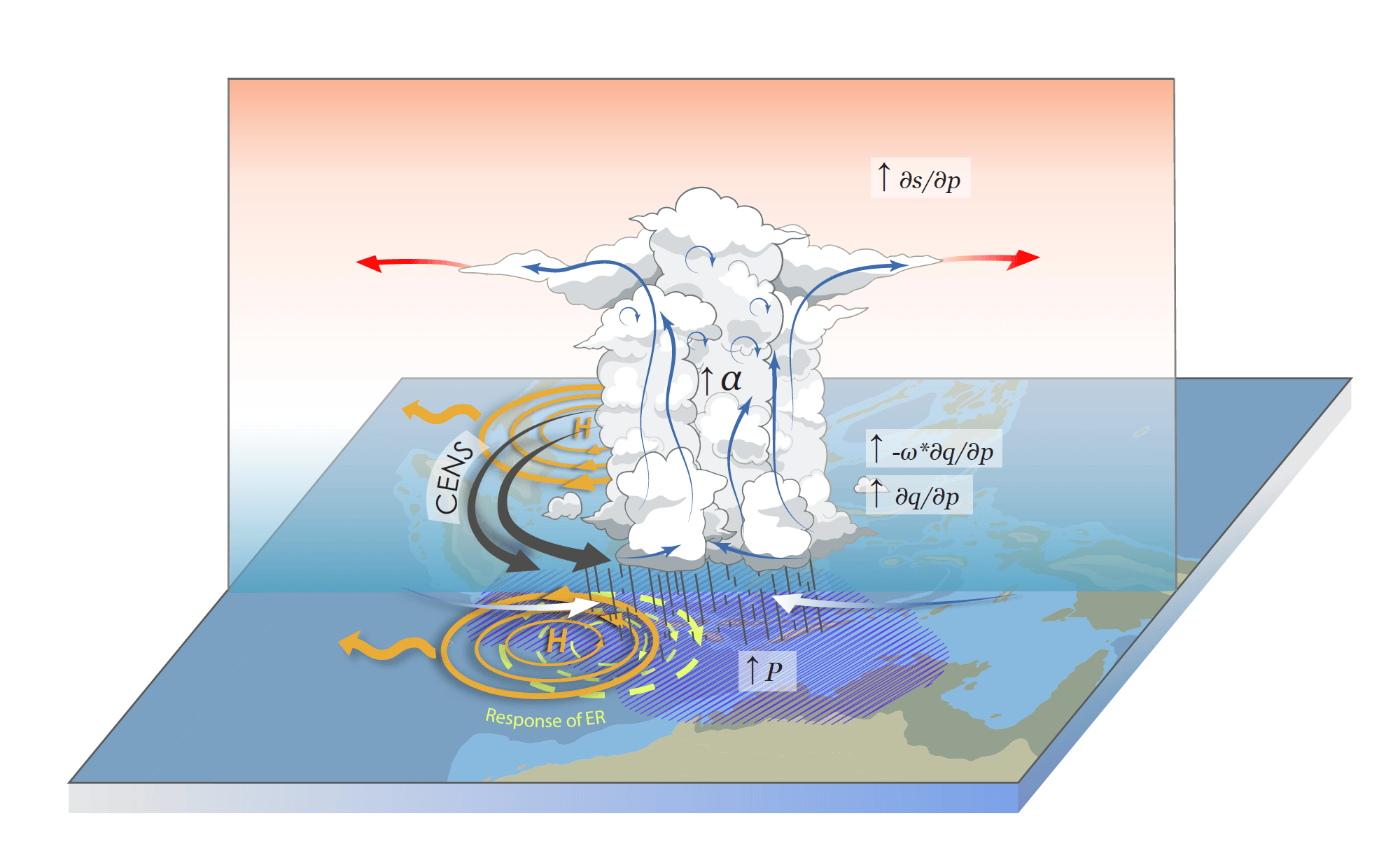
Together, these processes explain why the risk of extreme rainfall during CENS events could increase by as much as 39%, despite little projected change in the characteristics of the surges themselves. The results highlight the importance of considering atmospheric moisture and convective instability-not wind strength alone-when assessing future flood risks across the Maritime Continent.
Key Takeaways
-
Cross-equatorial northerly surges are major drivers of extreme rainfall across southern Maritime Continent.
-
The frequency and structure of these wind surges are projected to remain largely unchanged during 2030-2050. However, rainfall associated with CENS events is nevertheless projected to intensify substantially.
-
The likelihood of CENS-related extreme rainfall could increase by approximately 10% to 39% relative to historical conditions.
-
A warmer, more humid, and more convectively unstable atmosphere allows similar wind surges to produce heavier rainfall. Also, weaker equatorial Rossby wave-induced ridges provide an additional dynamical environment favorable for deeper convection.
Looking Ahead
These findings improve our understanding of how large-scale circulation and thermodynamic changes jointly shape future rainfall extremes in the tropics. The results also demonstrate that apparently modest changes in atmospheric circulation can produce much larger hydrological impacts when they occur in a warmer and moister climate. Improved monitoring, forecasting, and disaster-risk planning will therefore be essential for coastal communities across the Maritime Continent, where CENS-related rainfall and flooding may become increasingly severe in the coming decades.
Citation:
Lubis, S. W., Chang, C.-C., Hagos, S., Zhao, M., Chen, Z., Balaguru, K. & Leung, L. R. Projected changes in cross-equatorial northerly surges and their hydrological impacts in the near future. npj Clim. Atmos. Sci. 8, 375 (2025). https://doi.org/10.1038/s41612-025-01239-x
Related Links

Dr. Lubis is an atmospheric scientist with a broad interest in atmospheric dynamics and climate variability and change.
Follow the Topic
-
npj Climate and Atmospheric Science
This journal is dedicated to publishing research on topics such as climate dynamics and variability, weather and climate prediction, climate change, weather extremes, air pollution, atmospheric chemistry, the hydrological cycle and atmosphere-ocean and -land interactions.

Related Collections
With Collections, you can get published faster and increase your visibility.
Atmosphere-Biosphere Interactions
Publishing Model: Open Access
Deadline: Oct 31, 2026
AI-Driven Innovation in Atmospheric Chemistry and Composition–Climate Interactions
Publishing Model: Open Access
Deadline: Oct 31, 2026

