Changing Cultural Landscape of the Tons River Basin
Published in Social Sciences




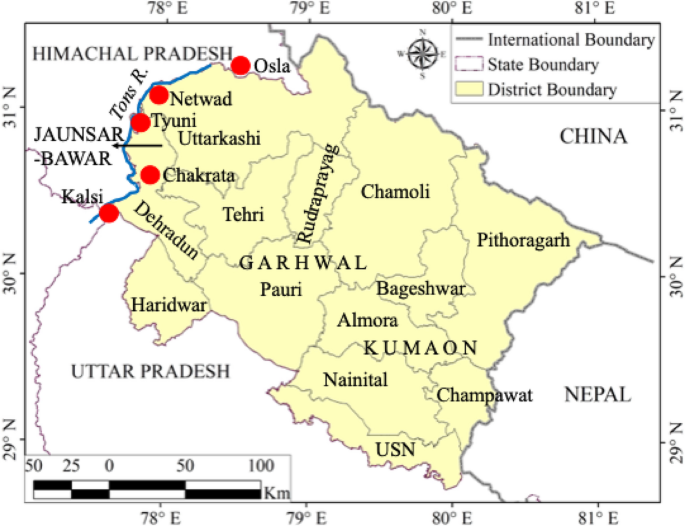

The cultural landscape of the Tons River Basin of the Himalayan region is one of the most culturally diversified regions in the world with deep-rooted history, migration, settlement of different communities and it is shaping this landform over centuries . This dynamic cultural corridor situated between the Indian subcontinent and the Tibetan plateau has undergone several changes due to trade, movement of people creating distinctive cultural zones reflecting through vibrant fairs and festivals, rich oral traditions, different communities’ delectable cuisines, mythological belief systems which are widely practiced over this region with utmost enthusiasm. Within the broader Himalayan context, the Uttarakhand Himalaya is identified as pivotal juncture of archeological remnants, topographically modified by the rivers Alakananda, Bhagirathi, Yamuna, Tons, Ramganga and Sarayu and agrarian society which made it a culturally significant place from the past till today beckoning as ‘Dev Bhumi’, the land of Gods and Goddesses associated with riverine morphology and sacred cultural sites. The Tons River Basin is such evidence of cultural geomorphological region where precipitous slope, rugged terrain, river valleys of the Rupin and Supin rivers (tributaries of the Tons River), terraced agricultural fields, forest lands have shaped the land as distinctive yet colloquial Himalayan cultural den. Among the three sub cultural realms of Uttarakhand Kumaon, Garhwal and Jaunsar-Bawar and Rawain reign the Tons River Basin forms part of the Jaunsar-Bawar and Rawain sub cultural realm reflecting history and culture through each architectural structure, traditions, cultural practices. Local mythology echoed in every corner of this small riverine place where major rural settlements such as Purola, Mori, Hanol, Netwar, Gaichwan, Dharkot, Gangad, Osla (the very first village of the Tons River Basin) and Har ki Dun are the treasure house of regions’ temple history, folk deities and their present forms practiced during vibrant festivals.
Navigating through this place, interacting with the villagers, priests, elderly people, spending hours in informal chatting and formal interviews have given multiple insights regarding traditional livelihood practices and their role in cultural identity, cultural riches, folk deities, mythology and its impact on social and cultural landscape. Seasonal migration is the essential character of practicing traditional agriculture and livestock rearing. The temperate- cold climate and vast grazing lands profoundly support cultivation of coarse grains, temperate fruits, livestock products and selling them from farms to local markets. Interestingly customary customary rituals are closely interconnected, as cultivation and harvesting processes traditionally begin with offerings to local deities. Drawing references for Uttarakhand it is popularly known that important Hindu scripts and Mythological derivation like the Rigveda, Mahabharata, and the Skanda Puran, all have given sacred status to this state which in evidently reflects through cultural riches of the Tons Valley too. It’s a valley predominantly comprising the Hindu population consisting of various castes like Bhramins, Rajputs, Scheduled Castes and Scheduled Tribes. It’s a saying that the residents of this region are considered more ancient compared to those in other parts of Uttarakhand.
The Tons Basin Region due to its strong mythological reference exhibits exquisite diversity expressed through traditions, folklore, religious beliefs, festivals, and food practices closely shaped by the physical environment and sacred temple landscape dedicated to the Lord Shiva, Lord Vishnu the Pandavas and the Kauravas. From social organization to cultural practices, the worship of deities in diverse forms is regarded as sacred and deeply integrated into the regional culture.
The presence of the Lord Shiva, considered as the guardian deity is felt in structural and non-structural form in every nook and corner of this Himalayan reign. Shiva resides here in Someshwar form, he is the chief of the villages, lives in a wood, stone carved temple and makes his annual appearance – Dev Avataran, with an annual journey in a palanquin to ensure the well-being, prosperity of this region’s inhabitants.
The evolution of the temple region, the Tons also comes from its mythological scripts. It is said ‘Tons’ come from ‘Tamas’(sorrow) River after Karna’s death his followers wept profusely and tears became ‘Tamas’. The people here worship the Pandavas and the Kauravas which is the unique sacred identity of this region which distinguishes this region from the rest of the country. However, Tons River Valley is popularly known for Mahasu Devta- as an incarnation of the Lord Shiva whose temple is located on the left bank of the Tons River in Hanol village. The journey to the temple and villages itself is an experience as the road passes through cedar trees, lush green meadows and steep agricultural fields. One can relish the regional cuisines like Mandu ki Roti, Chaulai ka Saag, Rajma and popular fermented drink made with millets while conduiting through these highlands and river valleys of this region.
For a longer time, Tons Valley was cut from the contemporary world and retained its unique rich cultural traditions and heritage. But in recent times even with minimal infrastructural development, connectivity and a shift in cultural practices have been noticed. For a recreational retreat, development of the transport system has contributed to the growth of cultural and adventurous tourism. As a significant amount of youth out migrated, women of the villages took charge in conserving cultural traditions and led to community-based tourism activities. Regardless of any changes Tons River Basin is maintaining its history, captivating natural beauty and mythological stories will continue to emulate through its oral traditions.
Follow the Topic
-
Discover Global Society
This is an interdisciplinary, international journal that welcomes research on the complexities of modern global society, its development and its challenges.

Related Collections
With Collections, you can get published faster and increase your visibility.
Business Transformation in the Age of AI and ESG: A Framework for Social Equity, Governance and Sustainability
This Collection explores the profound impact of Artificial Intelligence (AI) and Environmental, Social, and Governance (ESG) practices on business transformation. It focuses on how these evolving forces are reshaping business models while addressing the critical need for social equity, effective governance, and long-term sustainability.
As AI technologies revolutionize industries, they bring opportunities for increased efficiency, innovation, and personalized services. However, they also present ethical challenges, including concerns about data privacy, algorithmic bias, and labor displacement. Simultaneously, the growing focus on ESG standards demands that businesses take responsibility for their environmental and social impacts, ensuring that their operations contribute positively to society and the planet.
This collection aims to highlight how AI and ESG can be integrated to drive business transformation in a way that promotes both technological innovation and social good. It will investigate how companies are adopting AI-driven solutions while adhering to ESG frameworks to foster responsible practices. In particular, it will focus on how businesses can balance profit-driven objectives with the need for credibility, transparency, and sustainability in their operations.
Through a critical examination of emerging trends, case studies, and strategies, this collection will reveal how AI and ESG together create opportunities for businesses to become agents of positive change. It will also highlight the challenges of aligning AI advancements with ethical governance and the social imperative for inclusivity, diversity, and environmental stewardship.
Keywords: Business Transformation, Artificial Intelligence, ESG, Social Equity, Governance, Sustainability, Ethical Business Practices, Technological Innovation, Corporate Responsibility, AI Ethics, Environmental Impact, Social Justice
Publishing Model: Open Access
Deadline: Jul 02, 2026
Gender, Environment, and Sustainability: Bridging Gaps and Building Future
The pressing challenges of environmental degradation and climate change demand innovative solutions that are sustainable, inclusive, and equitable. Gender, as a critical dimension of social structure, shapes the vulnerabilities, experiences, and responses of communities worldwide facing environmental risks. Women play diverse and pivotal roles as leaders, decision-makers, resource managers, activists, and scientists in addressing ecological issues; yet, they continue to face barriers to access, participation, and recognition within environmental sectors.
This collection, "Gender, Environment, and Sustainability: Bridging Gaps and Building Future," explores the intersection of gender and the environment as a transformative lens for achieving sustainability and social justice. The collection welcomes contributions that examine how gender-based disparities influence environmental outcomes, how women’s empowerment enhances ecological stewardship, and how Sustainable Development Goals (SDGs) can be advanced through gender-inclusive policies and practices. Submissions may cover topics such as gendered impacts of climate change, women’s leadership in environmental governance, gender mainstreaming in sustainability science, and case studies from diverse social, cultural, and geographical contexts.
By bringing together global perspectives, empirical analyses, and practical frameworks, this topical collection aims to foster rigorous research and constructive dialogue on the shared journey toward a more sustainable and equitable future for both genders. Researchers, practitioners, and policymakers from diverse backgrounds are invited to contribute their insights and innovations to bridge the gaps and build resilient pathways for future generations.
Keywords:Climate Action, Women’s Empowerment, Gender Equality, Reduced Inequalities, Environmental Sustainability, Quality Education
Publishing Model: Open Access
Deadline: Aug 31, 2026


Please sign in or register for FREE
If you are a registered user on Research Communities by Springer Nature, please sign in